

Product Details

Manufacturing, processing, and sales of chemical production equipment, metal structural components, and mechanical parts; metal processing; sales of pressure vessels.
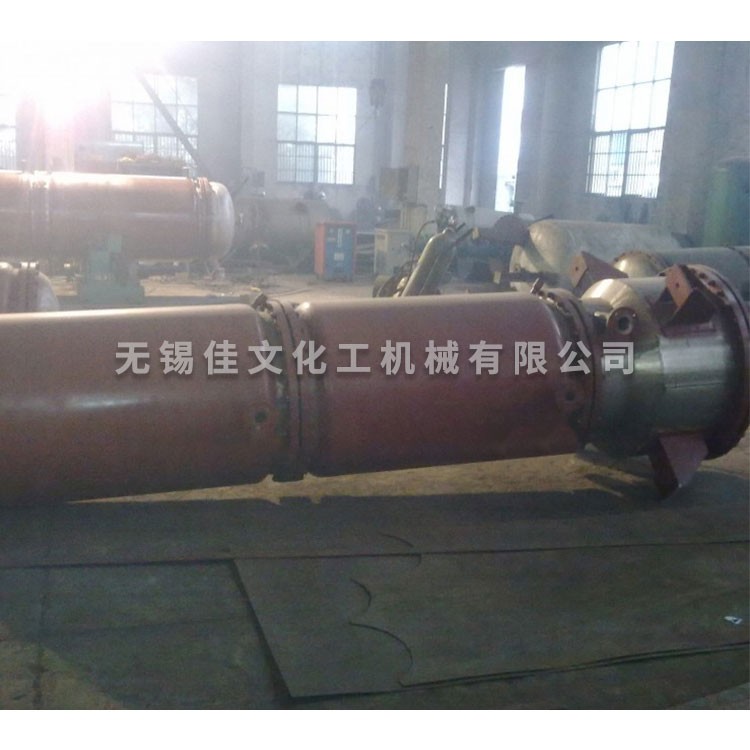


价 格Negotiable
最小起订1 Piece库存100 Piece
 Business Card
Negotiable

Negotiable

Negotiable

Negotiable
 Stainless Steel Reactor
Negotiable
Stainless Steel Reactor
Negotiable
 Heat Exchanger
Negotiable
Heat Exchanger
Negotiable
 Spiral Plate Heat Exchanger
Negotiable
Spiral Plate Heat Exchanger
Negotiable
 Copper Red Reactor
Negotiable
Copper Red Reactor
Negotiable
 Cooler
Negotiable
Screw Type Evaporator
Negotiable
Cooler
Negotiable
Screw Type Evaporator
Negotiable
 Three-effect falling film evapora
Negotiable
Three-effect falling film evapora
Negotiable
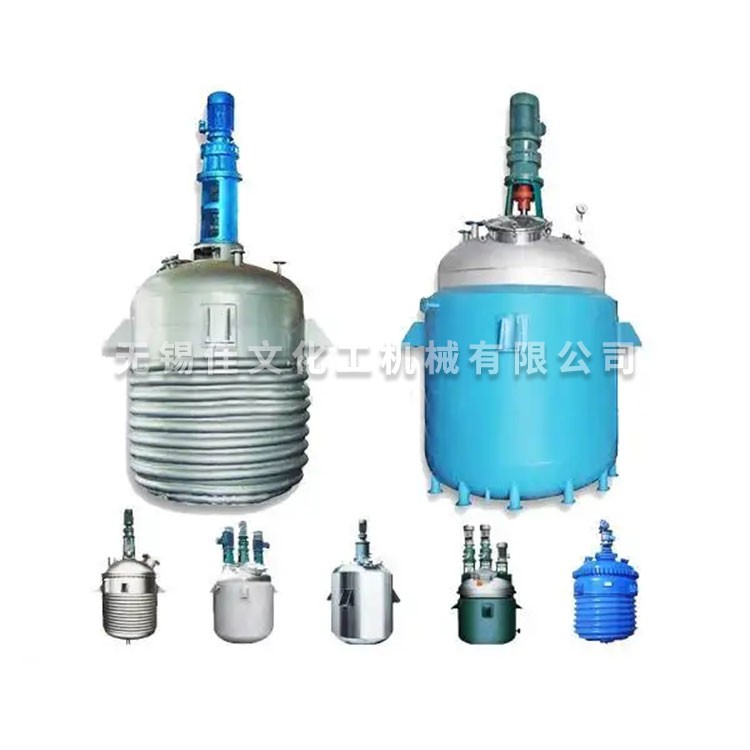 Ssquared jacketed reactor
Negotiable
Fractionating column
Negotiable
Screw Evaporator
Negotiable
Ssquared jacketed reactor
Negotiable
Fractionating column
Negotiable
Screw Evaporator
Negotiable
Application Scope
Widely used in the oil and chemical industries, particularly suitable for high-viscosity materials (such as gum, honey, etc.) and those prone to crystallization, scaling, and heat sensitivity.
Material continuously enters the horizontal evaporator from the large diameter end, accelerated and distributed by the刮膜片, and immediately forms a thin [1] flowing film on the heating surface. The conical film evaporator relies on a centrifugal force applied to the material by the rotor, which has two effective forces: one perpendicular to the heating surface and another towards the large diameter end body (note: the same result also occurs in the vertical cone film evaporator). These forces generate material acceleration, and the incoming material ensures the heating surface is adequately moistened, independent of the evaporation ratio or feed rate. Consequently, localized material overheating and thermal degradation are reduced or completely eliminated.
During this process, the light components (low boiling substances) flow in the same direction as the liquid film through the horizontal film evaporator into the vapor-liquid separator. Here, the liquid droplets and foam produced by the vapor-liquid separation are broken up and enter the liquid phase (high boiling substances), while the separated vapor enters the external condenser or the next process; the heavy components (high boiling substances) climb along the heated wall to the small end outlet and are discharged.
The evaporator shell features an internal heating steam jacket, housing rotatable blades or scrapers. The scrapers come in two types: fixed and rotor-style, with the former having a gap of 0.5 to 1.5mm between the shell inner wall, and the latter's gap varying with the rotor speed. The feed liquid is added to the evaporator from the top along the tangent direction (or to a spinner disk coaxial with the scrapers). Due to gravity, centrifugal force, and the scraping action of the rotating blades, a downward spiraling film forms on the inner wall of the vessel, which is evaporated and concentrated during this process. The liquid is then discharged from the bottom. This type of evaporator is a single-pass evaporator that utilizes external power to form the film.
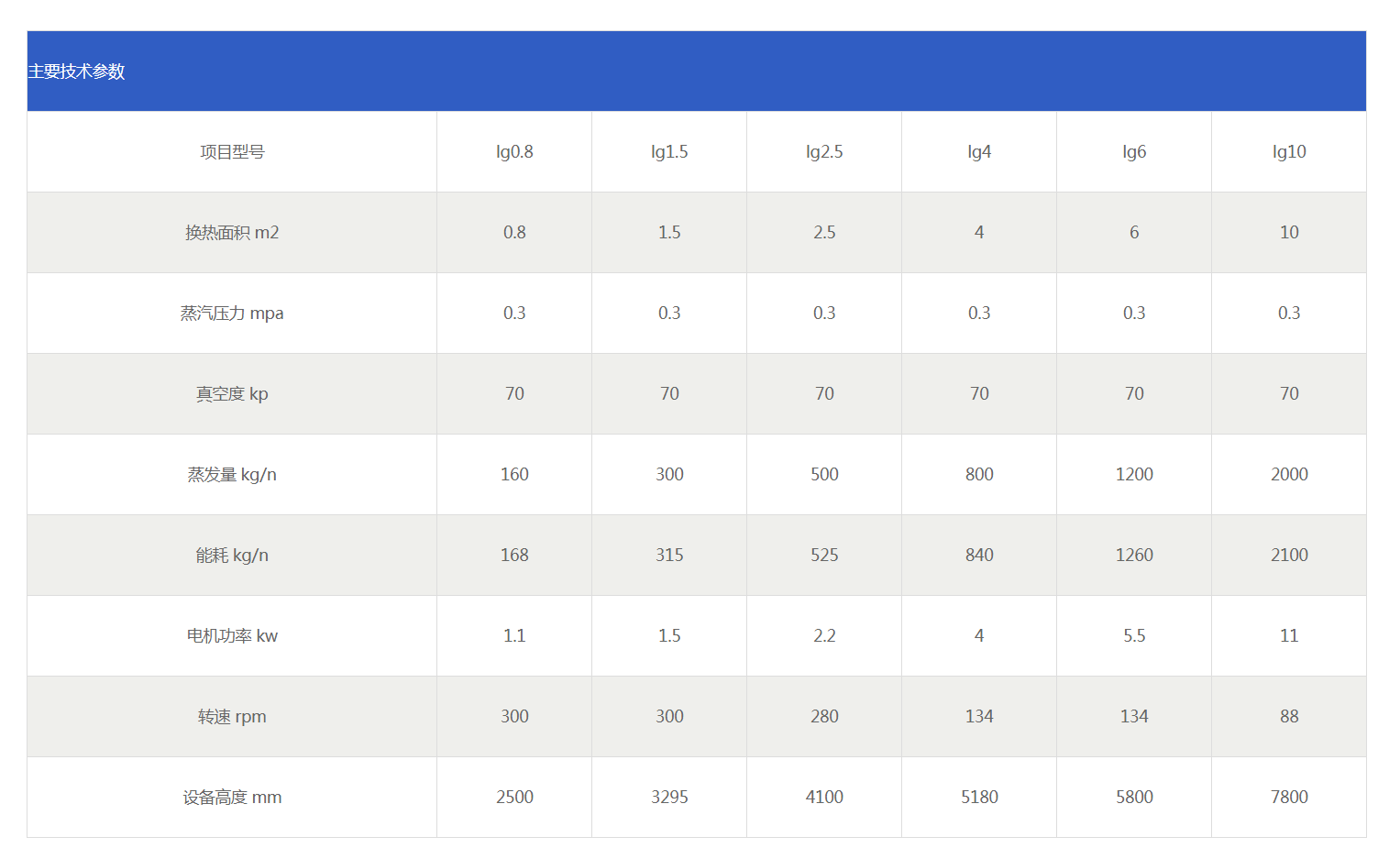
Equipment specifications and main parameters

Phone Consultation