

Product Details

Manufacturing, processing, and sales of chemical production equipment, metal structural components, and mechanical parts; metal processing; sales of pressure vessels.


价 格Negotiable
最小起订1 Piece库存100 Piece
 Business Card
Negotiable

Negotiable
Negotiable
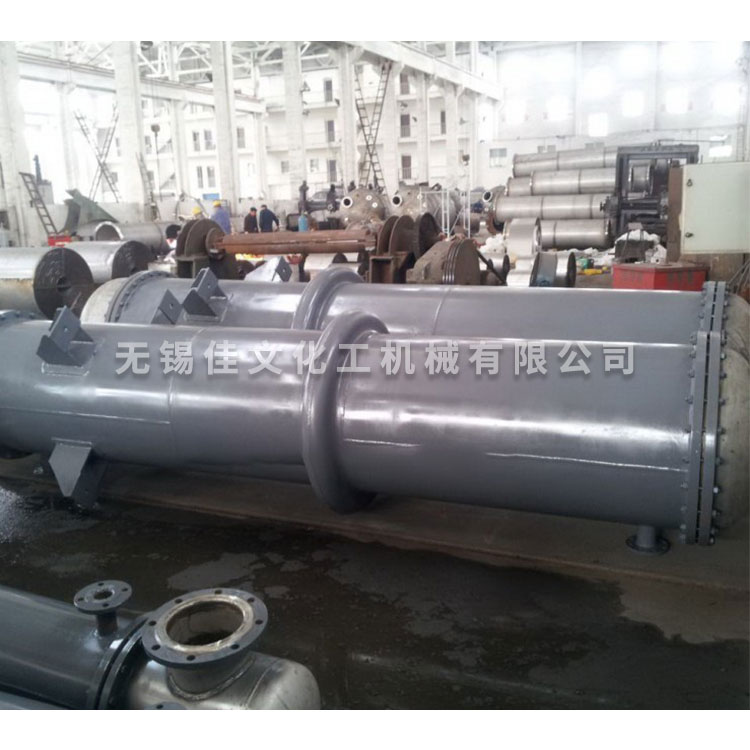
Negotiable
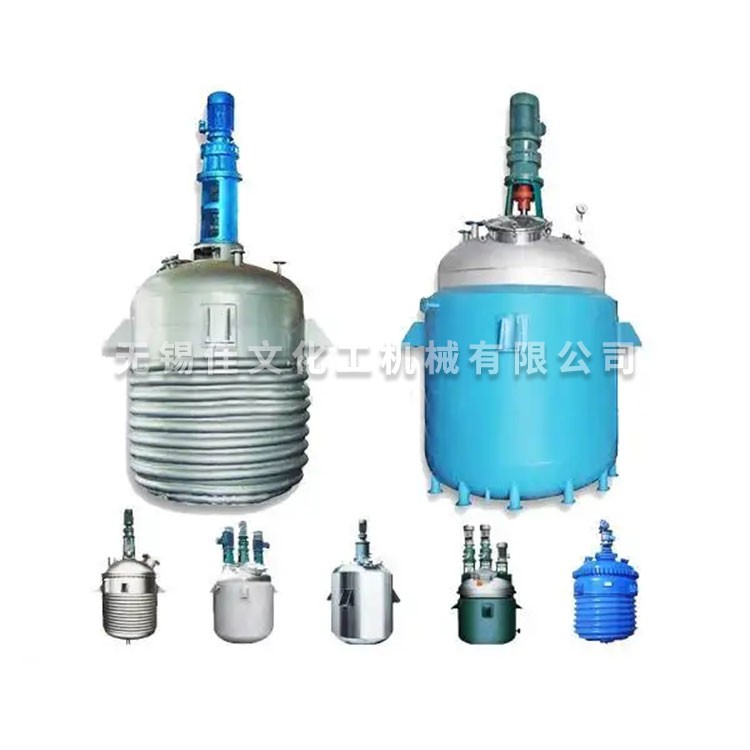 Ssquared jacketed reactor
Negotiable
Ssquared jacketed reactor
Negotiable
 Cooler
Negotiable
Cooler
Negotiable
 Three-effect falling film evapora
Negotiable
Three-effect falling film evapora
Negotiable
 External half-shell reaction kett
Negotiable
External half-shell reaction kett
Negotiable
 Filter Machine
Negotiable
Filter Machine
Negotiable
 Stainless Steel Reactor
Negotiable
Stainless Steel Reactor
Negotiable
 Distillation Tower
Negotiable
Distillation Tower
Negotiable
 Copper Red Reactor
Negotiable
Heat Exchanger
Negotiable
Copper Red Reactor
Negotiable
Heat Exchanger
Negotiable
 Spiral Plate Heat Exchanger
Negotiable
Spiral Plate Heat Exchanger
Negotiable
Fractional distillation is a separation process that utilizes the different volatilities of the components in a mixture to separate them, commonly using equipment such as plate-type and packed distillation columns. The principle and equipment process of precise distillation are the same as those of ordinary distillation, but the relative volatility between the components of the mixture to be separated is smaller (<1.05~1.10), so precise packing is used to achieve the separation and purification of the components. In the production of single-isolated fragrances, such as natural essential oils, there are often cases where isomers coexist, for example, the isomeric menthol and rose alcohol present in the natural essential oils of geranium, rose, and rosemary are optical isomers.
Fractional distillation is a separation process that utilizes the different volatilities of the components in a mixture to separate them, with commonly used equipment including plate-type fractional distillation towers and packed fractional distillation towers. The principle and equipment process of precise fractional distillation are the same as those of ordinary fractional distillation, but the relative volatility between the components in the mixture to be separated is smaller (<1.05~1.10), so precise packing is used to achieve the separation and purification of the components. In the production of single-isolated fragrances, such as natural essential oils, there are often coexisting isomers, for example, the isomers of citronellol and geraniol, which exist simultaneously in natural oils like geranium oil, rose oil, and rosemary oil. These isomers have a relatively small difference in boiling points, making it difficult to achieve effective separation of these single-isolated fragrances using general fractional distillation processes. Therefore, precise fractional distillation is widely used in the production of single-isolated fragrances. The packing used in precise fractional distillation towers includes disassembled packings such as Q net ring (Dixon) packing, net saddle (McMahon) packing, and regular packings represented by wire mesh corrugated packing (Sulyer packing). These packings have a large specific surface area, good wettability, low liquid holding capacity, and low fluid resistance. However, the diameter of the disassembled packing tower should not be too large, otherwise, the mass transfer separation efficiency will sharply decrease, which is known as the "scaling effect" of the packing tower. The scaling effect of regular packings is smaller, so the application of wire mesh corrugated regular packings is becoming more and more widespread.
Distillation typically occurs in a distillation column, where the gas and liquid phases contact in countercurrent, facilitating interphase heat and mass transfer. Volatile components in the liquid phase enter the gas phase, while non-volatile components in the gas phase transfer to the liquid phase. As a result, nearly pure volatile components are obtained at the top of the column, and nearly pure non-volatile components at the bottom. The feed liquid is added at the middle of the column; the section above the feed point further enriches the volatile components in the rising vapor, known as the rectifying section; the section below the feed point extracts volatile components from the descending liquid, called the stripping section. The vapor drawn from the top of the column is condensed, with part of the condensate returned as reflux to the top of the column, and the remaining distillate is the top product. The liquid drawn from the bottom of the column is partially vaporized in the reboiler, with the vapor rising up the column, and the remaining liquid is the bottom product. The ratio of the liquid reflux to the top product quantity is called the reflux ratio, which affects the separation efficiency and energy consumption of the distillation process.
The separation of the two-component mixture is a simple distillation operation. Typical distillation equipment includes a continuous distillation unit, which is composed of a distillation column, a reboiler, and a condenser, etc. The distillation column allows for the contact of vapor and liquid phases for mass transfer between phases. The condenser at the top of the column partially condenses the vapor, with part of the condensate returned as reflux to the top of the column, while the remaining distillate is the top product.
1. Reflux Condenser 2. Fractionating Column 3. Tray 4. Feed Preheater 5. Condenser 6. Distillate Condenser 7. Bottom Product Condenser
The reboiler at the bottom of the tower vaporizes a portion of the liquid, with the vapor rising through the tower and the remaining liquid serving as the bottom product. Feed is added at the middle of the tower, where the liquid from the feed and the liquid from the upper tower section descend together, while the vapor from the feed and the vapor from the lower tower section ascend together. Throughout the distillation tower, the two phases of vapor and liquid counter-currently contact each other, facilitating mass transfer between phases. Volatile components in the liquid phase enter the vapor phase, and non-volatile components in the vapor phase transfer into the liquid phase. For systems that do not form a constant-boiling mixture, with proper design and operation, the distillate will be a high-purity volatile component, and the bottom product will be a high-purity non-volatile component. The section above the feed inlet, where the volatile components in the ascending vapor are further concentrated, is called the rectifying section; the section below the feed inlet, where volatile components are extracted from the descending liquid, is called the stripping section. The combination of these two sections allows for the complete separation of the two components in the liquid mixture, producing two products of the required purity. When the distillation tower operates,nWhen a high purity single component product is obtained by the complete separation of the mixed liquid, a tower is required.
The key to the complete separation of liquid mixtures in distillation lies in the application of reflux. Reflux involves both the return of high-concentration, volatile liquid components to the top of the tower and the return of high-concentration, non-volatile vapor components to the bottom of the tower. The liquid-vapor reflux forms a two-phase liquid-vapor contact in countercurrent, thereby yielding relatively pure single-component products at both ends of the tower. The ratio of the liquid returned to the tower at the top to the quantity of product taken from the top is known as the reflux ratio, which is a critical control parameter in distillation operations. Changes in the reflux ratio affect both the separation efficiency and energy consumption of the distillation process.

Phone Consultation