

 Cooler
 Fractionating column
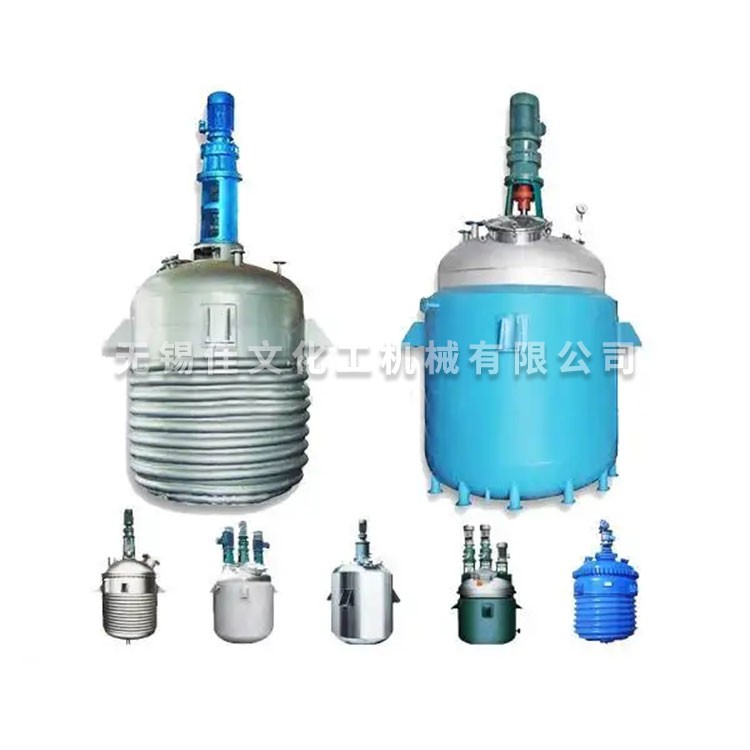 Ssquared jacketed reactor
 Cooler
 Distillation Tower
 Heat Exchanger
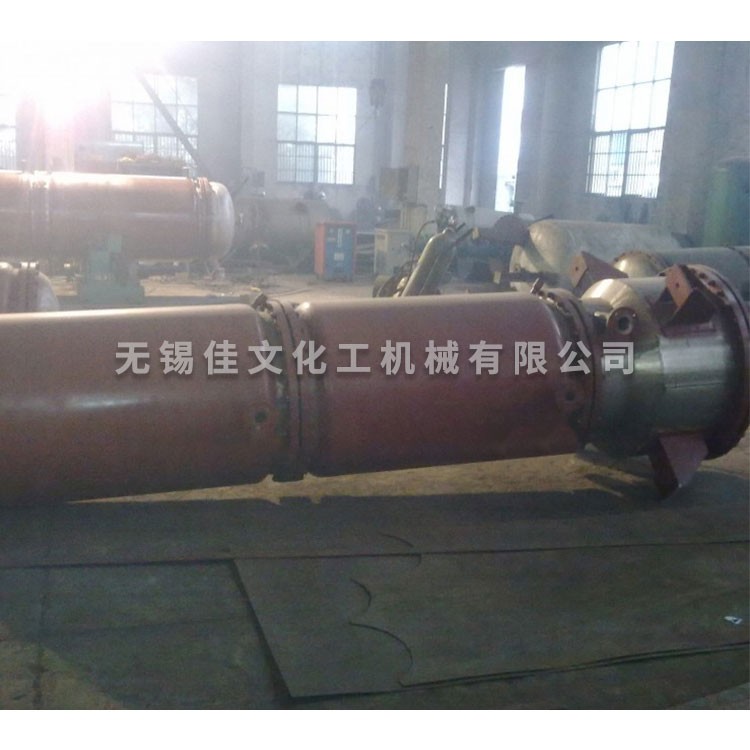 Screw Evaporator
Product Details

Manufacturing, processing, and sales of chemical production equipment, metal structural components, and mechanical parts; metal processing; sales of pressure vessels.


价 格Negotiable
最小起订1 Piece库存100 Piece
 Business Card
Negotiable

Negotiable
Negotiable

Negotiable
Product Overview
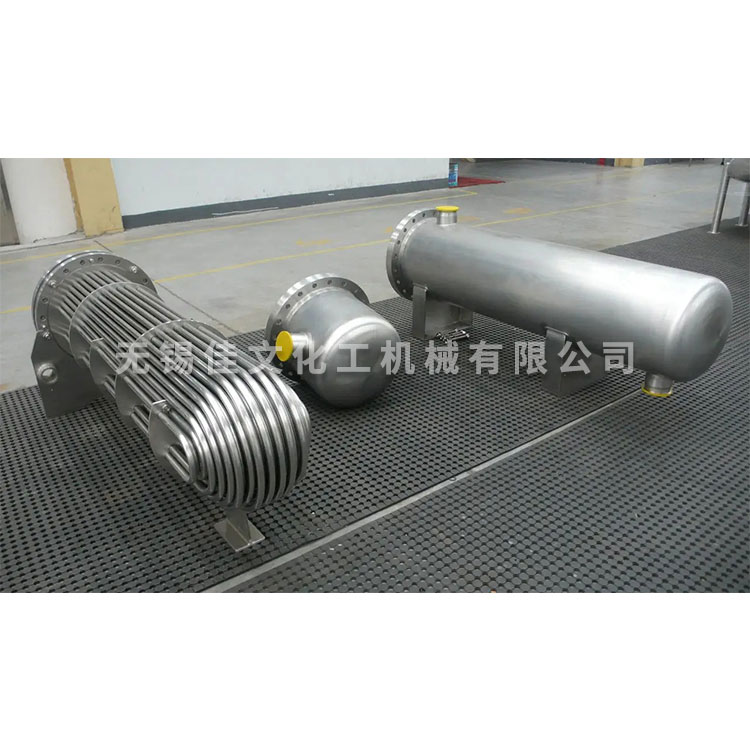
A spiral plate heat exchanger is a heat exchange equipment suitable for heat transfer between steam-gas, steam-liquid, and liquid-liquid. It is applicable in industries such as chemicals, petrochemicals, solvents, food, light industry, textiles, metallurgy, rolling, and coking. It can be categorized into non-detachable (Type I) spiral plate heat exchangers and detachable (Type II, Type III) spiral plate heat exchangers based on structural form.
Spiral Plate Heat ExchangerSplit into removable and non-removable spiral plate heat exchangers.
The structure of the non-separable helical plate heat exchanger is relatively simple, with both ends of the helical channels fully welded.
The removable spiral plate heat exchanger is identical to the non-removable type in all aspects except for the sealing structure at the ends of the spiral channels. To achieve mechanical cleaning, the removable spiral channels have one end open, sealed with a flat cover and gasket, to prevent fluid from leaking into the atmosphere or from short-circuiting within the same channel.
Features of Spiral Plate Heat Exchangers:
① Excellent heat transfer efficiency. The bent helical channels and fixed-distance columns enhance the turbulent flow state, resulting in lower fluid resistance within the channel. This allows for increased design flow rates, which in turn helps to improve the heat transfer coefficient. For water-water heat exchange, the heat transfer coefficient can reach 1.8 to 3.5 kW/(m²·°C).
② Self-cleaning feature. When fluid flows through the channel where impurities accumulate within a single passage, the flow rate increases relatively, making it easy to flush out the impurities.
③ The non-separable structure offers good sealing performance, suitable for heat exchange of highly toxic, flammable, explosive, or valuable fluids. ④ Fluids in adjacent channels flow in a pure countercurrent manner, achieving a large logarithmic mean temperature difference, which is conducive to heat transfer at small temperature differences and is suitable for recovering low-temperature thermal energy.
⑤ The heat transfer area within the compact unit equipment can reach 150.
⑥ Due to the inherent elastic free expansion of the helical channel, the temperature difference stress is minimal.
⑦ Low cost. The volume of a helical baffle heat exchanger is one-third of a traditional arch baffle heat exchanger for the same heat exchange area, reducing the material cost.
Spiral Plate Heat ExchangerThe major drawback is the difficulty in maintenance. If the inner spiral plate breaks, the entire equipment will be rendered unusable.

Phone Consultation