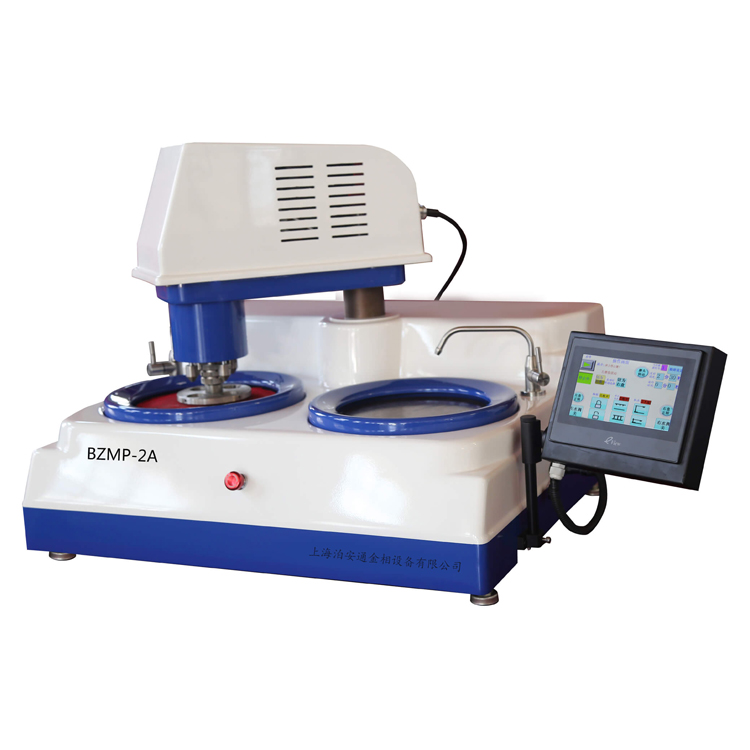
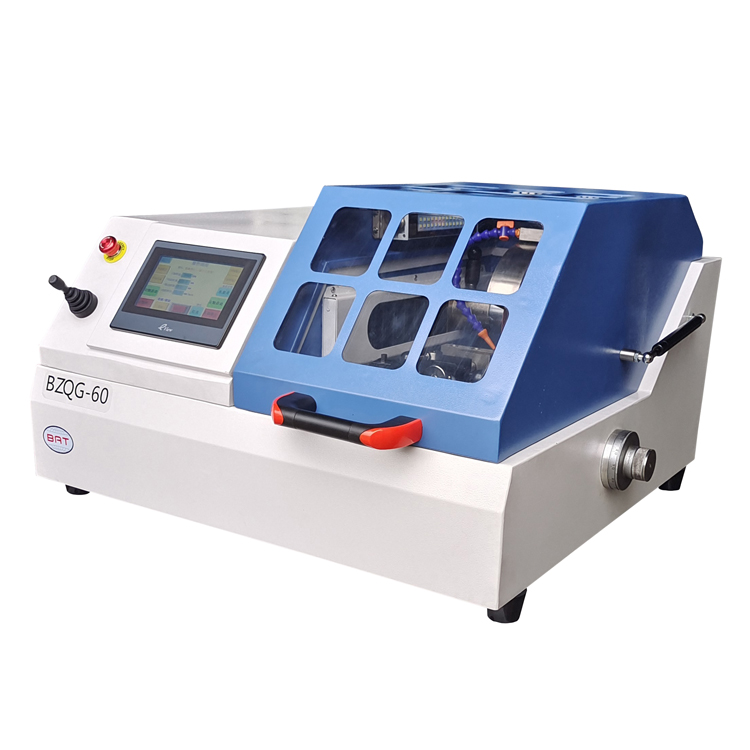
Metallographic grinding and polishing machines, metallogr...

"GOLD" originally referred exclusively to metallic materials. However, with the development of materials science and the emergence of new materials, it has also come to signify the object of study. The character "xiàng" is crucial; its form, with a left-right structure composed of "mù" (wood) and "mù" (eye), is an implied character, which can be vividly interpreted as observing trees with the eyes. This is the ancient description of the character. Through meticulous observation and profound thought, people discovered that a tree is composed of roots, trunk, branches, and leaves, but different species vary greatly in shape, color, size, and distribution. The fruits and materials of different tree species are also quite different. A classical Chinese text in junior high school textbooks, "Jiufang Gao's Observation of Horses," tells the story of Jiufang Gao selecting a thousand-mile horse by observing its visible external forms such as shape and skeleton from a foal. Here, "xiàng" is not just observation but also implies making judgments and analyses based on experience, as well as predicting future developments.
Microscopy, or the study of microstructure, is closely related to the two stories previously mentioned. Just as observing the shape of a tree can predict the type of fruit it will bear or whether it will grow into hard or soft wood, observing a young foal can foresee which horse will become a thoroughbred. Simply put, microscopy is the process of examining metallic materials to discern and predict their properties, allowing us to pre-determine which materials are suitable for crafting sharp blades or supple springs. By considering the tasks and working environment of machine parts, we can rationally select materials with different properties (including strength, hardness, plasticity, toughness, high-temperature resistance, corrosion resistance, etc.) to effectively enhance the reliability and lifespan of machine parts.
To observe metallic materials, mere visual inspection is insufficient; professional microscopes are essential. Currently, the primary microscopes used in metallographic testing are optical microscopes, electron microscopes, and stereoscopic microscopes (with magnification less than 50x). Therefore, metallography can be fundamentally defined as a branch of materials science that studies and characterizes the microstructure of materials with the aid of microscopes.
We've learned from the previous statement that metallographic analysis involves observing metal under a metallographic microscope. However, the natural surface of metal is rough, making it difficult to see its internal structure directly, except in very special cases like fracture observations. Generally, the object under observation needs to be surface-processed to clearly see its internal structure under the microscope. This process of preparing the object for observation is known as metallographic specimen preparation.
Metallographic sample preparation typically involves processes such as sampling, mounting, grinding, polishing, and etching, requiring specific technical skills to produce qualified samples that meet the requirements for microscopic observation and accurately reflect the true shape of the parts. In terms of sampling, it is essential to start from the inspection focus, select critical areas of the part for sampling, and use appropriate methods. Special attention should be paid to controlling factors such as temperature and sample size to maintain the original state of the sample and facilitate subsequent processing. For very small or irregularly shaped samples, mounting is necessary to enhance the preparation quality and ensure the sample is observed in the correct direction. Grinding uses sandpapers of different grits to minimize the deformation layer left during sampling to the lowest extent, even zero, and to make the sample surface flat, laying a good foundation for polishing. Polishing removes the scratches left by grinding, mirrors the selected surface, and improves the reflectivity of the sample surface, making the polished surface smooth, shiny, and clean. Etching utilizes the corrosiveness of chemicals to clearly display the internal structure of the sample under a microscope. The entire metallographic sample preparation process requires a meticulous work attitude and proficient technical skills.

Company Name
Shanghai Boantong Metallographic Equipment Co., Ltd.

Service Hotline
13701774835
Company Phone
13701774835

Company Address
5025 Hangtang Highway, Fengxian District, Shanghai
b2b.china9.net © Zhongshang 114 Hebei Network Technology Co., Ltd.Address: Room 6009, Oriental New World Center, No.118 East Zhongshan Road, Qiaoxi District, Shijiazhuang City, Hebei ProvincePlatform Service Hotline: 4006299930