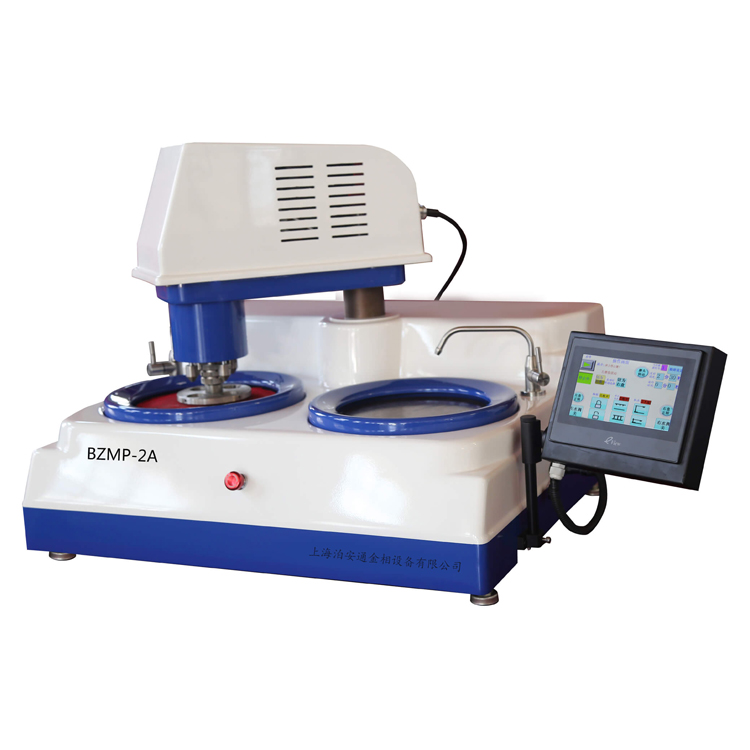
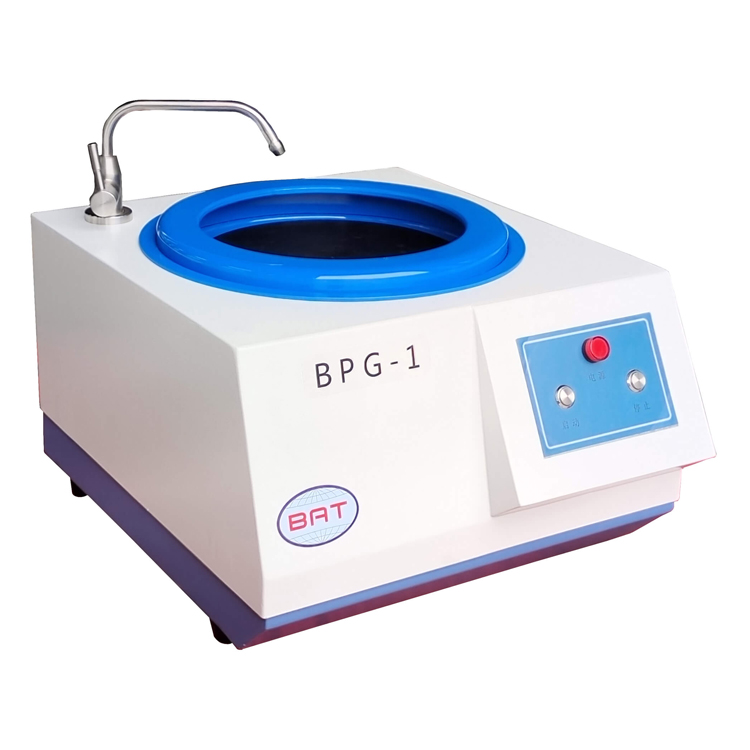
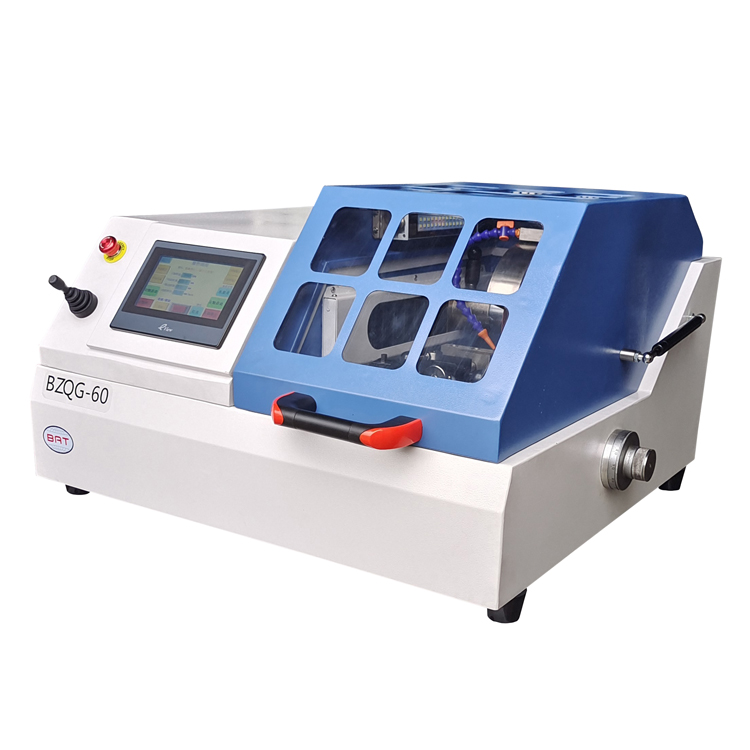
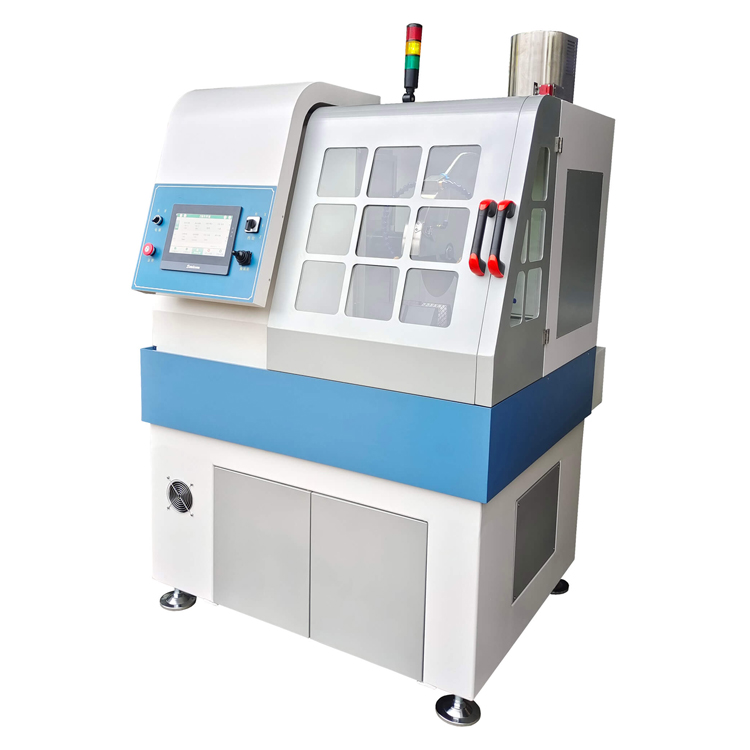
Metallographic grinding and polishing machines, metallogr...

Metallographic analysis is a crucial method for studying the internal microstructure of materials, commonly used for failure analysis (FA), quality control (QC), and research and development (RD). The purpose of metallographic specimen preparation is to obtain the true internal microstructure of the material, which requires completing through various metallographic specimen preparation techniques.
Generally, methods for preparing metallographic specimens include: mechanical methods (traditional mechanical preparation – grinding and polishing), electrochemical methods (electrochemical polishing and etching), chemical methods (chemical etching), and chemical-mechanical methods (simultaneous removal of material through chemical and mechanical actions).
The results of metallographic specimen preparation must meet the following requirements:
The samples must be representative.
All structural elements must be retained.
The sample surface must be free of scratches and deformation.
The sample surface should not have any foreign substances.
5. The sample surface must be flat and mirror-like.
For metallographic specimens, traditional mechanical preparation is the primary method. The general steps for mechanical preparation of metallographic specimens typically include: cutting, mounting, grinding, polishing, etching, and microscopic observation. The theoretical principles for sample preparation at each step are not elaborated upon here. Instead, the following lists common difficulties in sample preparation and their solutions for reference.
Microstructure sampling typically involves the use of wet abrasive wheel cutting (microtome) method. The sampling location is determined based on the purpose of the microstructure examination (whether it's for routine microstructure sampling or failure analysis, and whether it's longitudinal or transverse sampling). The general principle of microstructure sampling is to avoid overheating the sample during the process, as this can lead to severe thermal deformation, causing inconvenience for subsequent sample preparation. Common issues encountered during cutting include: 1. Abrasive wheel cracking during cutting; 2. Rough edges on the cut samples; 3. Burn marks on the surface of the cut workpiece; 4. Uneven cutting surfaces; 5. Significant wear on the cutting wheel; 6. Coating delamination when cutting coated samples.
To facilitate mechanical polishing, metallographic specimens are mounted into standard sizes. Different mounting strategies are often chosen based on various application requirements, such as whether the mounting material needs to be conductive, if the specimen edges require edge protection, if the specimens need to be mounted in batches, and whether the mounting resin needs to fill the internal pores of the specimen well, etc.: Do you choose cold mounting or hot mounting? Which type of cold or hot mounting resin should you choose? Common issues during the mounting process include: 1. Large air bubbles in the cold mounting block; 2. Gaps at the interface between the specimen and the resin; 3. Radiating cracks on the surface of the mounting block; 4. Adhesion of the mounting resin to the mold.
To achieve the true internal structure of materials, it is necessary to accomplish successive mechanical grinding and polishing. The challenge in polishing lies in the presence of numerous false images, which can interfere with our judgment of the actual tissue. Common issues encountered during the polishing process include: 1. Scratches; 2. Coating; 3. Deformation; 4. Rounded Edges; 5. Embossing; 6. Peeling; 7. Abrasive Embedding; 8. Tailing; 9. Cracking; 10. False Porosity.
Etching enhances the contrast of the polished sample surface, revealing the micro or macro structure (micrograph) of the material, such as grain boundaries or phase morphology, which aids in our metallographic analysis. Key points for etching include: 1. The sample surface must be as smooth as possible with minimal deformation or scratches before etching; 2. For electrolytic sample preparation, electrolytic polishing should be followed by electrolytic etching; 3. Select a suitable chemical or electrolytic etchant for the current material.
Chip Unsealing Laboratory Introduction: Equipped to conduct testing in accordance with international, domestic, and industry standards, the lab offers comprehensive testing services ranging from the fundamental chip level to actual products, covering both physical and logical aspects. It provides a range of security testing services including chip pre-treatment, side-channel attacks, optical attacks, invasive attacks, environmental, voltage spike attacks, electromagnetic injection, radiation injection, physical security, logical security, functionality, compatibility, and multi-point laser injection. Additionally, the lab can perform failure analysis testing services to simulate and reproduce the failure phenomena of intelligent products, identifying the causes of failure. This includes testing with probe stations, reactive ion etching (RIE), micro-leakage detection systems (EMMI), X-ray inspection, and defect cutting observation systems (FIB systems). The lab ensures the evaluation and analysis of intelligent product quality, providing quality assurance for chips, embedded software, and applications in intelligent equipment products.

Company Name
Shanghai Boantong Metallographic Equipment Co., Ltd.

Service Hotline
13701774835
Company Phone
13701774835

Company Address
5025 Hangtang Highway, Fengxian District, Shanghai
b2b.china9.net © Zhongshang 114 Hebei Network Technology Co., Ltd.Address: Room 6009, Oriental New World Center, No.118 East Zhongshan Road, Qiaoxi District, Shijiazhuang City, Hebei ProvincePlatform Service Hotline: 4006299930