

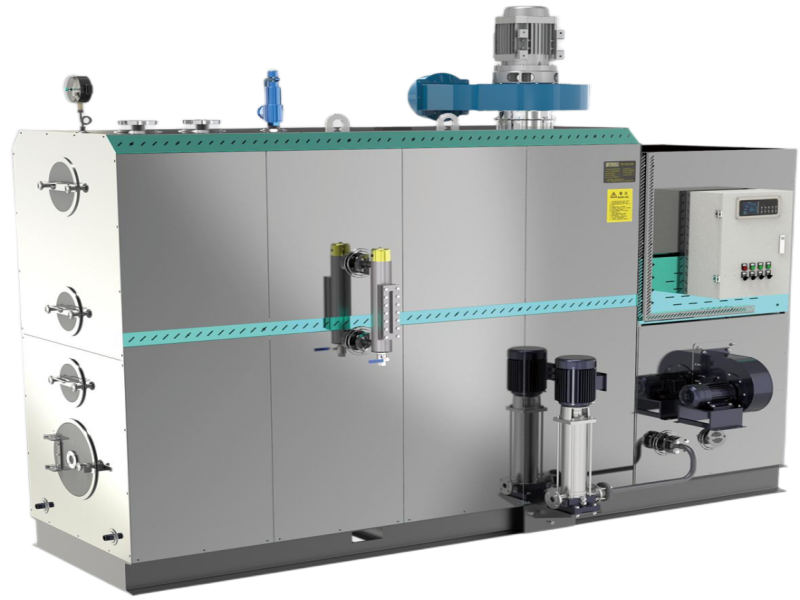

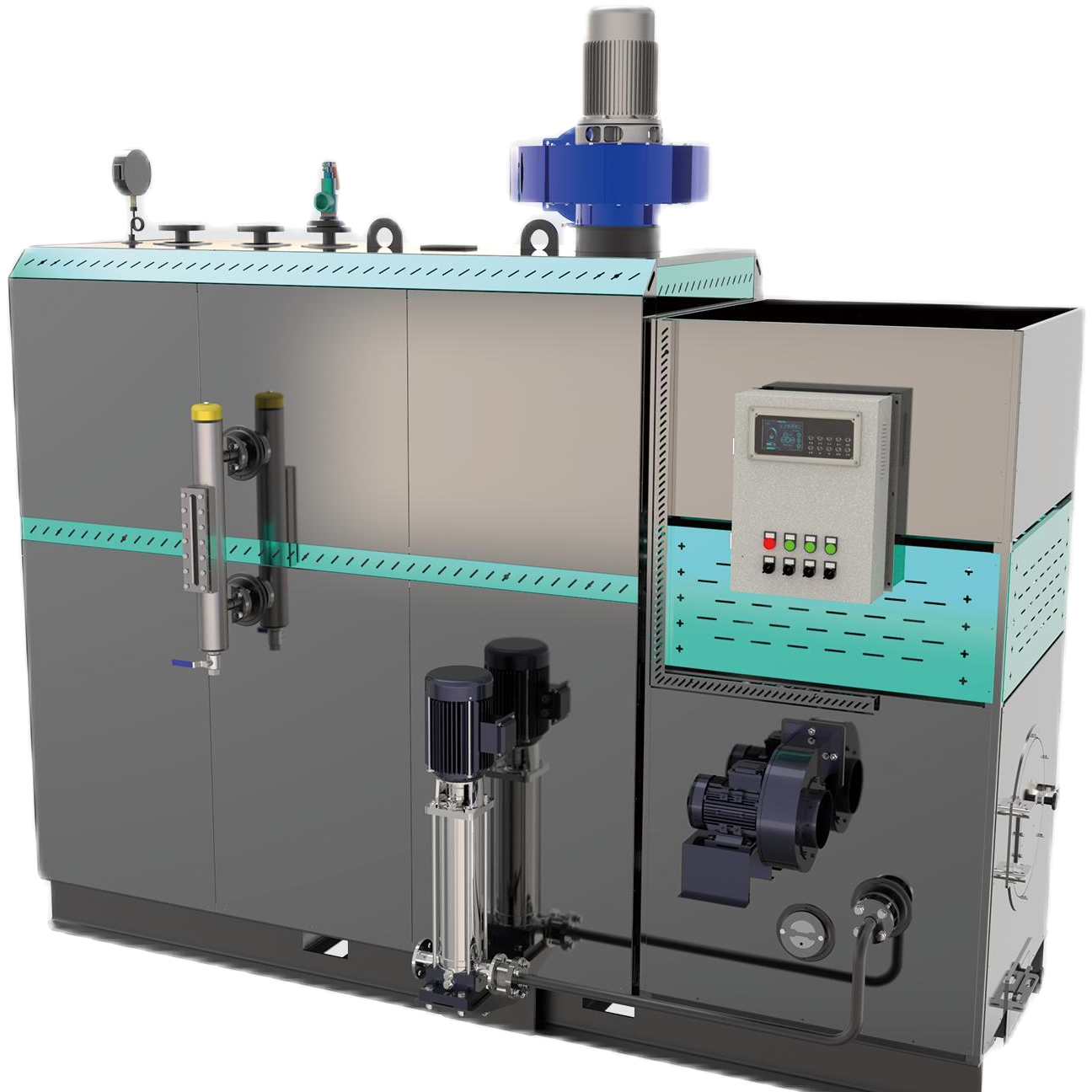











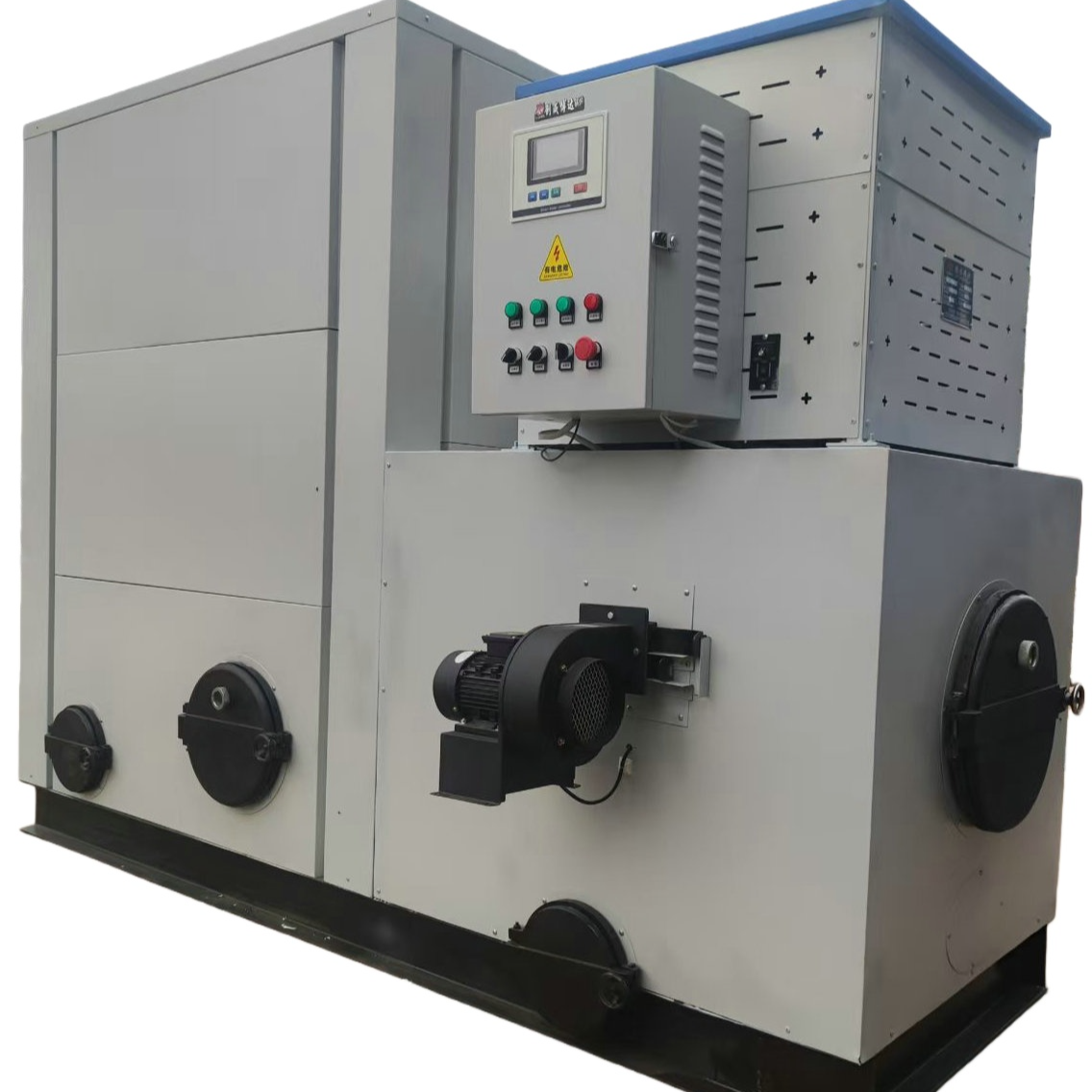
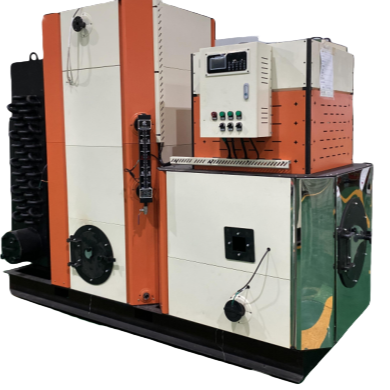
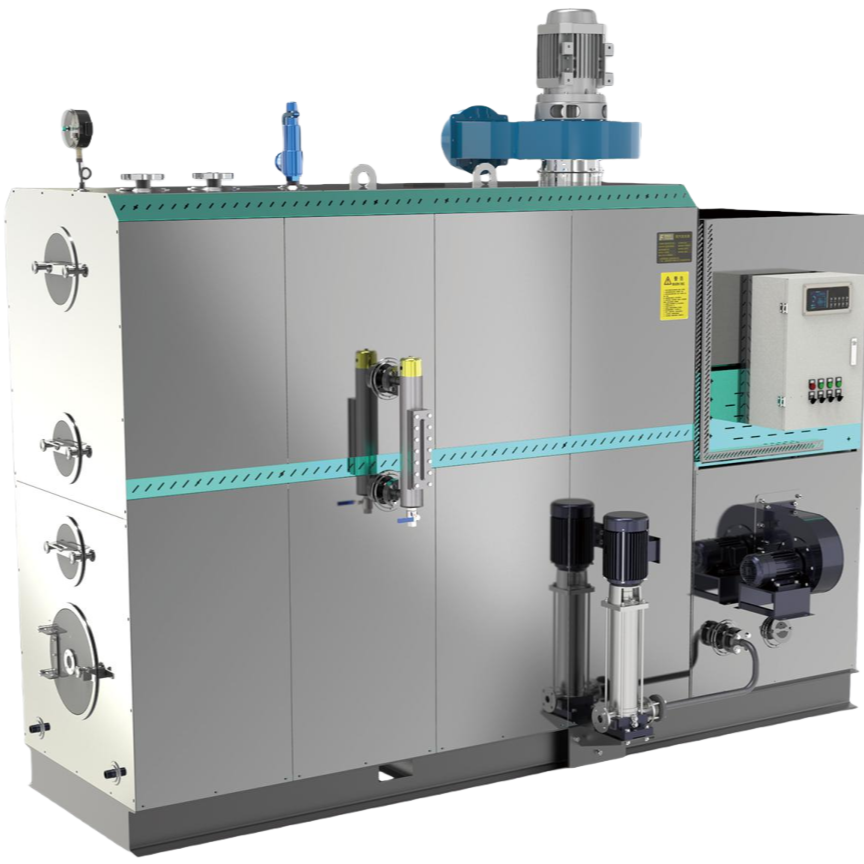
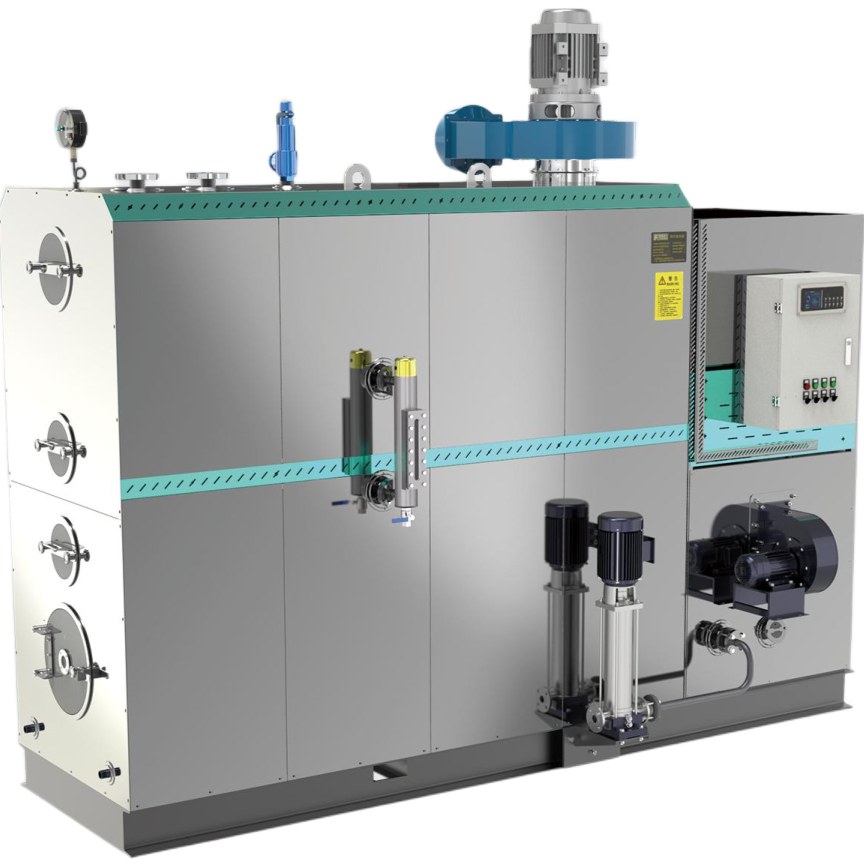
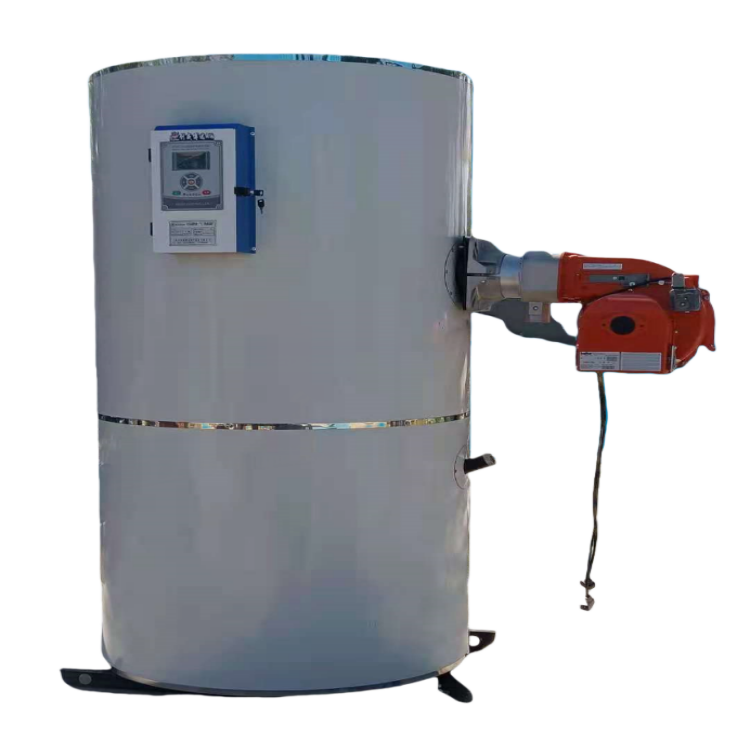
I. Brief Introduction to Biomass Boiler Technical Performance
1. Fully automatic operation with variable frequency control, automatic ignition, and flame retention feature; utilizes carbon-gas blend combustion and fully premixed gas-phase separated biomass particle fuel combustion technology, integrated with fluid dynamics, for automatic combustion. Emissions are smoke and dust-free, ensuring energy-saving and environmental protection.
2. Full-laying three-dimensional structure design, incorporating traditional heat transfer principles, ensures energy-efficient and power-saving operation, reducing energy consumption. The furnace body requires no ash cleaning when not in use and is maintenance-free; with an extra-large combustion chamber, a large high-temperature heat exchange area, and dual-purpose for wood and biomass pellets, it saves operation costs; easy to maintain with no blind spots.
3. Utilizing centrifugal rotation combustion technology, combined with chemical reaction kinetics, it enhances radiation heat exchange time, extends the radiation distance, and improves the efficiency of thermal energy exchange, achieving constant temperature and energy-saving.
4. Fully intelligent automatic operation with IoT remote variable frequency control technology, automatic ignition, convenient and labor-saving, easy to use. Features include variable frequency control, automatic ignition, and automatic flame retention function.
5. Four-pass design, utilizing condensate waste heat, with low chimney exhaust temperatures; produces high-temperature hot water, offering excellent heating quality, and saves energy by approximately 30%.
6. Integrated all-in-one quick assembly structure design, ergonomically designed. Easy installation, easy maintenance, and simple operation.
7. Automatic scale removal at high temperatures; the waste heat recovery unit reaches a boiling state around 85℃. This intercepts scale within the waste heat recovery period, allowing clean, scale-free hot water to enter the hot water boiler, achieving rapid hot water production and fuel savings.
8. Dual dust removal design, with the induced fan installed after waste heat recovery and dust removal, ensuring the fan is unaffected by high temperatures and dust, thus preventing resonance. Further, secondary dust removal is applied to ensure smoke and dust-free emissions, complying with environmental protection standards.
9. 45-degree inclined material discharge ensures no tempering, with high-temperature carbon burning gasification. The combustion temperature in the furnace can reach 1200°C, with segmented combustion.
10. Exceptional details, quality showcased, multi-layer protection, anti-dry burning, anti-water shortage, ensuring no accidents occur.
11. Anti-Dry-Run Protection: In the event of water shortage in the hot water boiler, the controller automatically shuts off the heating unit and triggers a water shortage alarm to prevent damage from dry burning.
12. Water Level Protection: Equipped with a water level sensor for real-time detection, the hot water boiler water level is automatically controlled to ensure precise water supply. High and low water level alarm with interlock protection, one in use and one in reserve, for convenient and quick maintenance.
13. Over-temperature Protection: Prevents dry burning in hot water boilers, initiates emergency response, promptly triggers a cascade control, and stops operation.
14. Furnace Explosion Prevention: Designed with the combustion characteristics of biomass pellet hot water boilers in mind, the furnace incorporates explosion-proof venting to ensure stable operation of the hot water boiler.
15. Utilizing high-temperature-resistant wire: high insulation grade, durable and long-lasting.
16. Scientifically designed with exquisite appearance, the square box biomass hot water boiler shell is coated with electrostatic powder painting for durability and aesthetic appeal. The square shell is formed through CNC cutting and bending, ensuring precise craftsmanship. The shell surface is treated with high-temperature powder painting, making it long-lasting and visually appealing.
17. This equipment features a compact structure and takes up minimal space. The entire unit is integrated and factory-assembled, with each unit and all accessories undergoing machine testing and debugging before shipment. They all pass rigorous inspections to ensure customer satisfaction and peace of mind.
II. Introduction to Carbon Gas Composite Combustion Technology
Our company utilizes advanced design concepts and biomass pellet combustion technology, developing a constant-temperature combustion method specifically tailored to the characteristics of biomass pellet fuel. It is currently one of the more reasonable and stable biomass pellet combustion methods in China.
For different biomass characteristics, this technology applies a分级 combustion method to biomass pellet boilers by integrating fluid dynamics with the principles of mass conservation, momentum conservation, and energy conservation laws. It fundamentally revolutionizes traditional combustion methods, dividing the process into ignition, flame, with four types of flames: premixed flame, laminar flame, turbulent flame, and diffusion flame. It undergoes pyrolysis, carbonization, carbon combustion, and gasification, manifesting as flames.
Biomass pellet fuel has an initial energy, which is produced at around 325-500 degrees Celsius and ignites rapidly when the concentration reaches a certain equivalence. At this point, most homogenous gases, hydrogen, ethylene, and other combustible gases undergo chain-branching combustion reactions. Fluid dynamics (scientific air mixing) plays a key role by creating the concentration of active intermediates. The staged combustion technology first involves a rapid exothermic and luminescent oxidation reaction of biomass pellets with oxygen or air, through intelligent feeding.
Biomass boilers are designed in a shape for reaction vessels, ensuring stability in mass and heat transfer. A biomass boiler that improves combustion through high-temperature air.
Fuel is fed from the bottom, and it burns from top to bottom, sequentially passing through: 1. the discharge layer, 2. the pyrolysis layer, 3. the carbonization layer, 4. the carbon combustion layer, and 5. the gas combustion layer. The biomass pellet fuel is first carbonized at high temperatures and then gasified for combustion, rather than being directly added to a burning furnace.
Distillation zone: The biomass pellet raw material layer is continuously pushed forward by a screw feeder through a specially designed lower feeding device, with the material at the bottom being constantly lifted up. As there is no air supply in this section, the upper combustion temperature radiates down, causing the lower part to undergo anaerobic distillation. At this point, biomass pyrolysis produces a premixed flame, and combustible gases and air or oxygen decompose into ethylene and carbon dioxide according to the chemical equivalent in an anaerobic or oxygen-free state. The chemical reaction is confined to a very narrow flame front, forming a flame (also known as a power flame). These gases further decompose to produce liquid aromatic hydrocarbons, tar, and solids.
Carbonized layer: Flame formed during the combustion of a combustible mixture that is in a laminar flow, stationary, or in a laminar motion, with increasing temperature. The liquid produced is continuously decomposed and vaporized, causing the flame front to be torn apart and, during the volatilization process, it is converted into hydrocarbon gas through dry distillation. The carbonized layer does not include the gases produced by combustion.
Carbon combustion layer: A turbulent flame formed by the combustion of unpremixed combustible materials and oxygen or air, characterized by intense luminous and heat-releasing reactions at the interface or space, producing glowing, hot flue gases through the microproperties of biomass particles. Steam produced during biomass decomposition is decomposed into oxygen at high temperatures.
Gas combustion layer: Due to the stratified nature of layer combustion technology in air distribution, it produces a diffused flame. As fuel combines with air and oxygen inside the furnace, carbon oxides are formed, which decompose into low molecular compounds in the high-temperature environment, producing free carbon particles. When these particles combine with oxygen during combustion, they burn intensely, resulting in a bright, white flame. This flame can raise the furnace temperature to 1200°C, with peak temperatures reaching up to 1400°C; small boilers can also reach temperatures between 950°C and 1100°C.
Three: Advanced performance, high degree of automation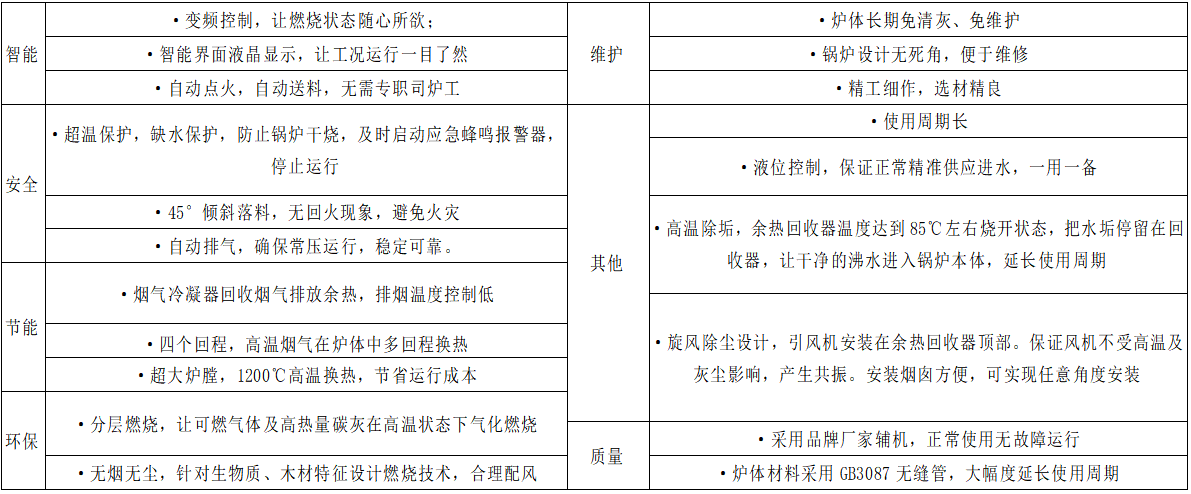 IV. Comparison of Energy Consumption Costs for Various Fuels: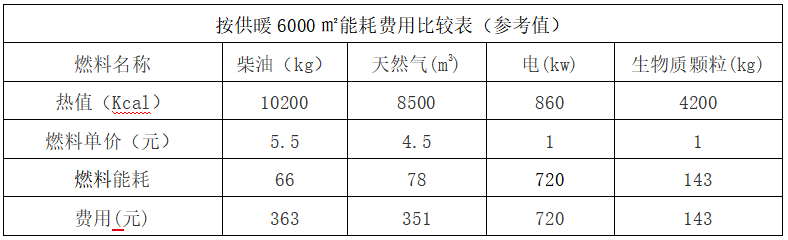
I. Technical Specifications of Fully Automatic Biomass Pellet Atmospheric Pressure Hot Water Boiler (Biomass-Specific)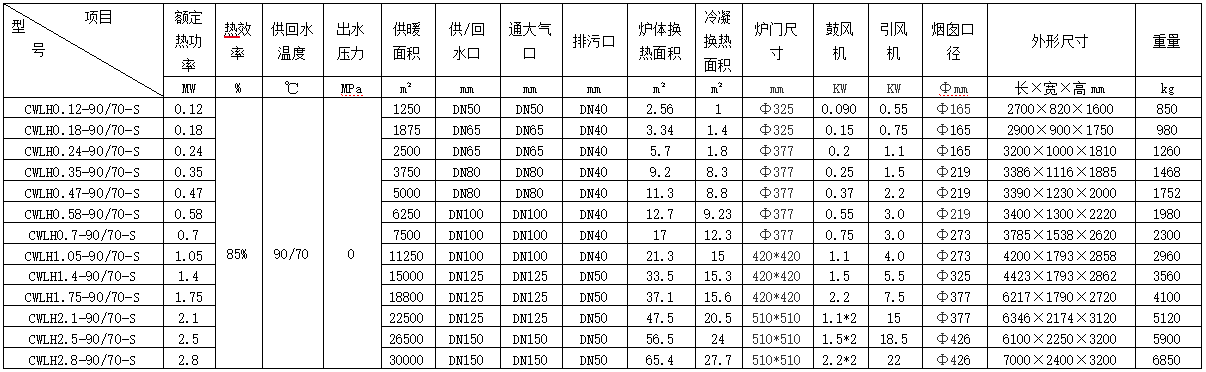 II. Technical Parameters of Full-Automatic Biomass Pellet Atmospheric Pressure Hot Water Boiler (Tri-use: Biomass/Coal/Wood)
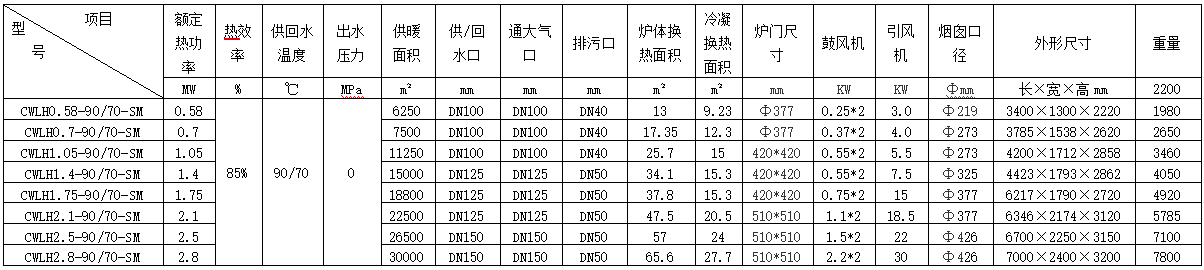 1. Calorific value is calculated according to the following standard: 4200 kcal/kg
2. Fuel consumption figures are based on full load operation of the boiler. Actual consumption may vary depending on operating conditions.
3. Retain the right to redefine or alter product information without prior notice (including appearance, dimensions, control methods, internal structure, etc.)




















