






(I) Main Functions:
Unidirectional Twist: The specimen is uniformly rotated around its own axis in one direction to the specified number of turns or until the specimen breaks.
Bi-directional twist: The specimen is rotated uniformly in one direction around its own axis to a specified number of turns, then rotated in the opposite direction for the same number of turns or until the specimen breaks.
(II) Main Applications:
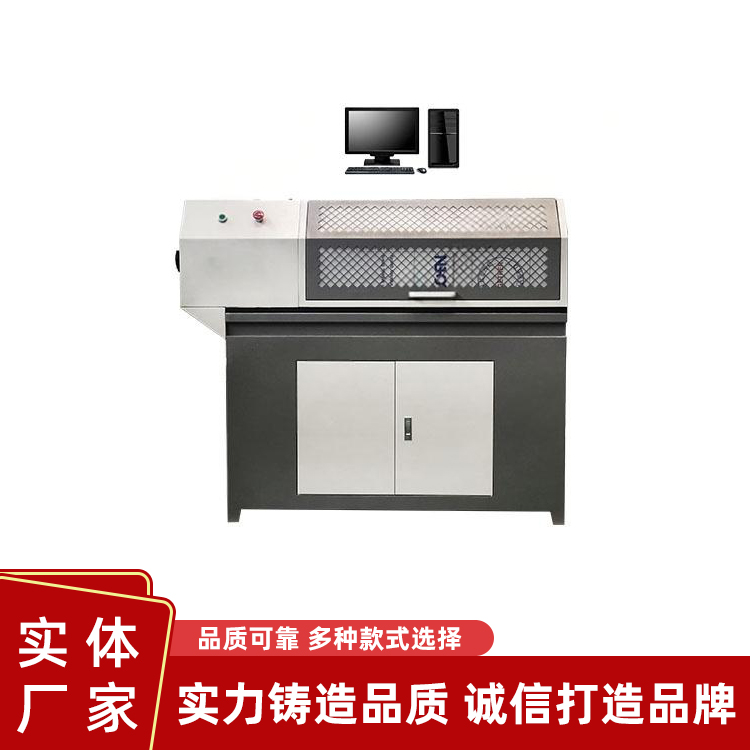
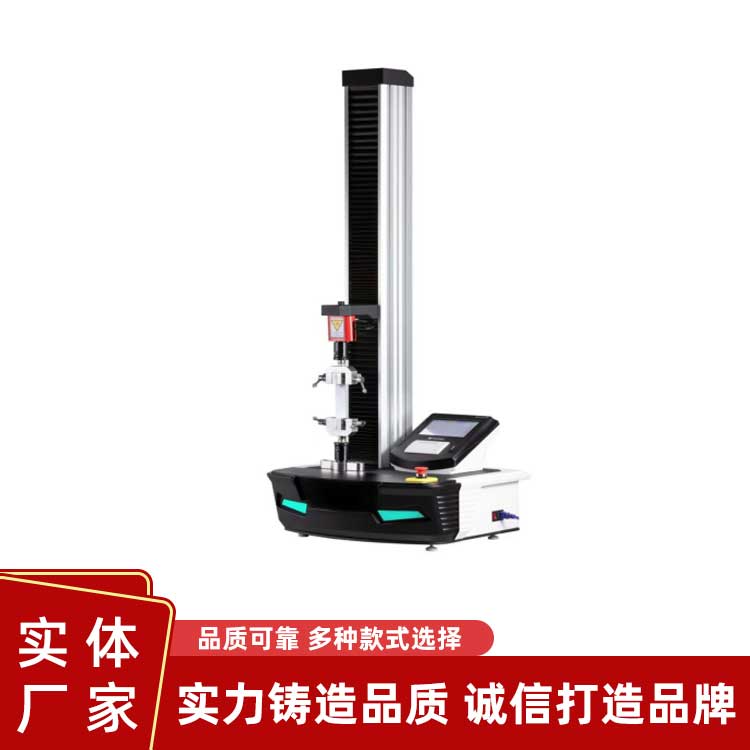
The microcomputer-controlled NZW-1000 torsion testing machine is suitable for determining the ability of metal wires with diameters (or characteristic sizes) of 1-10mm to withstand plastic deformation in unidirectional or bidirectional twisting, and for displaying defects on the surface and inside of the wire.
III) Applicable Standards:
The Microcomputer-controlled Torsion Tester is applicable to the People's Republic of China standard GB/T 239-1999 "Testing Methods for Torsion of Metal Wires," as well as the international standards ISO 7800:1984 "Testing Methods for Unidirectional Torsion of Metal Wires" and ISO 9649:1990 "Testing Methods for Bidirectional Torsion of Metal Wires."
(4) Applicable Subjects:
Steel metal wire materials: steel wire, steel bar, rebars, etc.
Copper metal wire materials: copper wire, copper rods, copper alloys, etc.
Aluminum metal wire materials: aluminum wire, aluminum rods, aluminum alloys, etc.
Other metal wires: rods, fiberglass, ultra-fine, alloy steel, etc.
V) Safety Protection:
Equipped with overcurrent and overvoltage protection features.
VI. Main Parameters:
1. Holds metal wire diameters: 1mm - 10mm
2. Distance between two headers: 550mm
3. Maximum Counting Capacity: 9,999.9
6. Speed Error: <±5%
7. Minimum Read Value: 0.1 revolution
8. Clamp Hardness (HRC): 55-65
9. Guideway Parallelism: <0.2
10. Clamping face coaxiality: < φ0.4
11. Approx. Test Bench Weight: 220KG
12. Power Supply: 220V 50Hz
Seven) MCU Controller:
This unit is equipped with a microcomputer controller, featuring a circuit that has been specially optimized for the system's operational characteristics, offering strong anti-interference performance and stable, reliable operation. The display section utilizes a large-area LCD screen with full Chinese characters for prompts; the control program is designed according to human-centric principles, ensuring easy operation, clear display, and accurate results.
This controller responds to user-set parameters and operational commands, controlling the inverter's operation, thereby controlling the motor's operation to achieve the required testing functions.
1. The output shaft can be controlled by the controller to run at a specified speed.
2. The output shaft can be controlled to rotate forward or reverse, enabling loading of the test piece.
3. Records the number of twists a material can withstand before breaking, with an accuracy of 1 twist.
4. The number of twists can be set, with options for both forward and reverse.