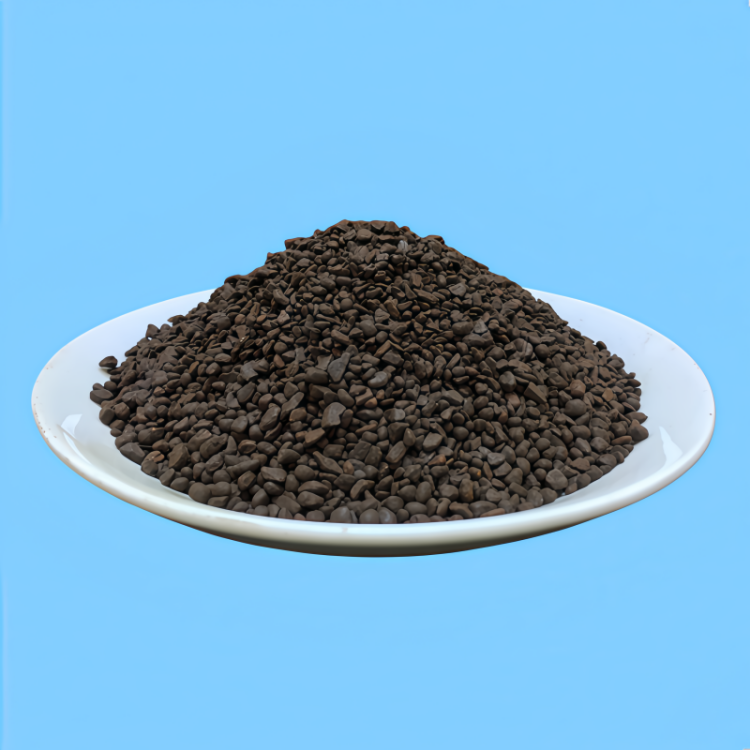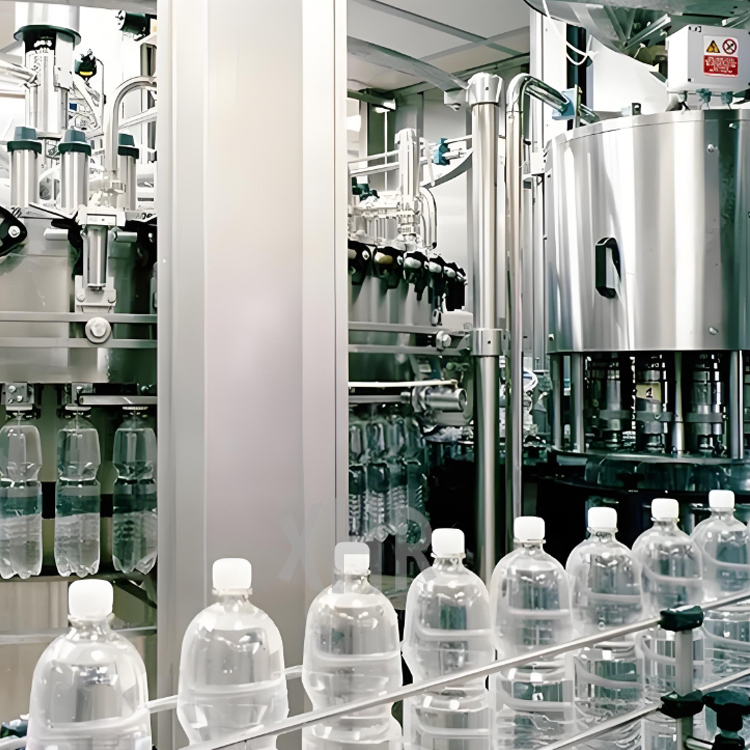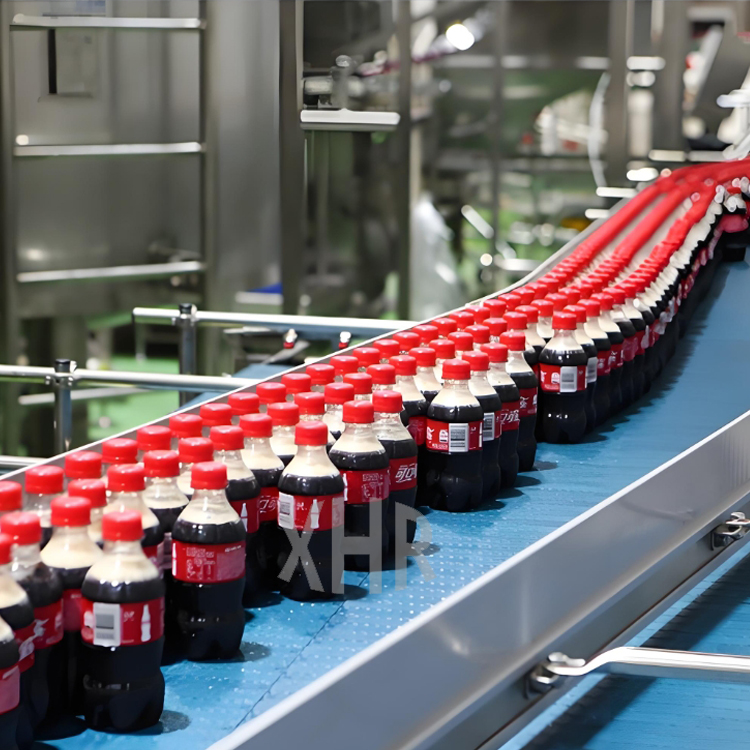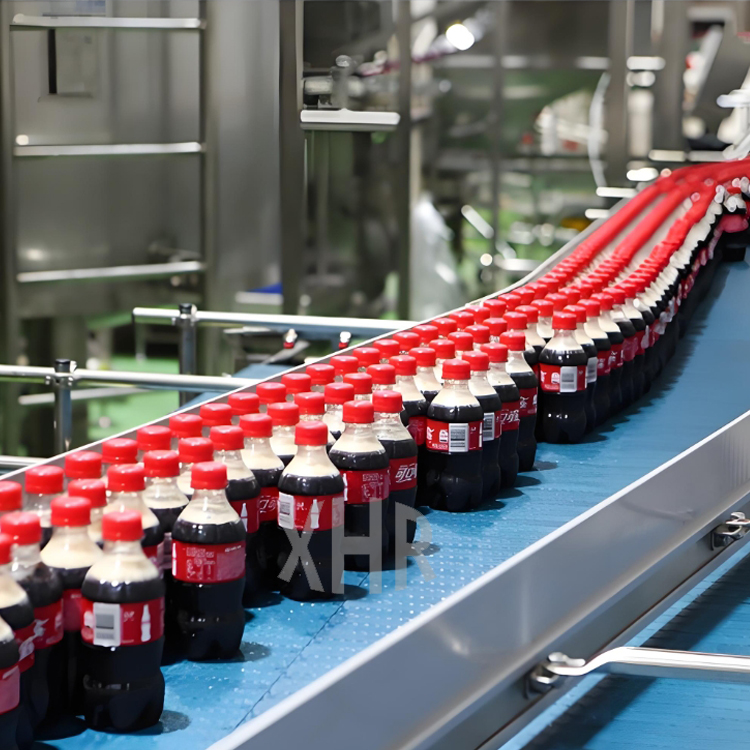







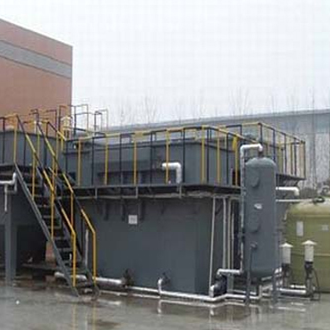
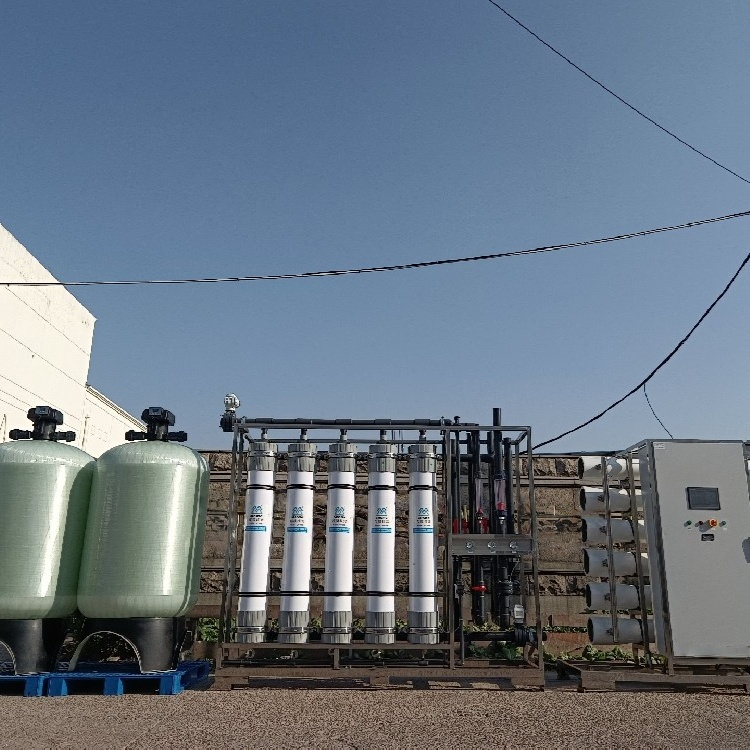
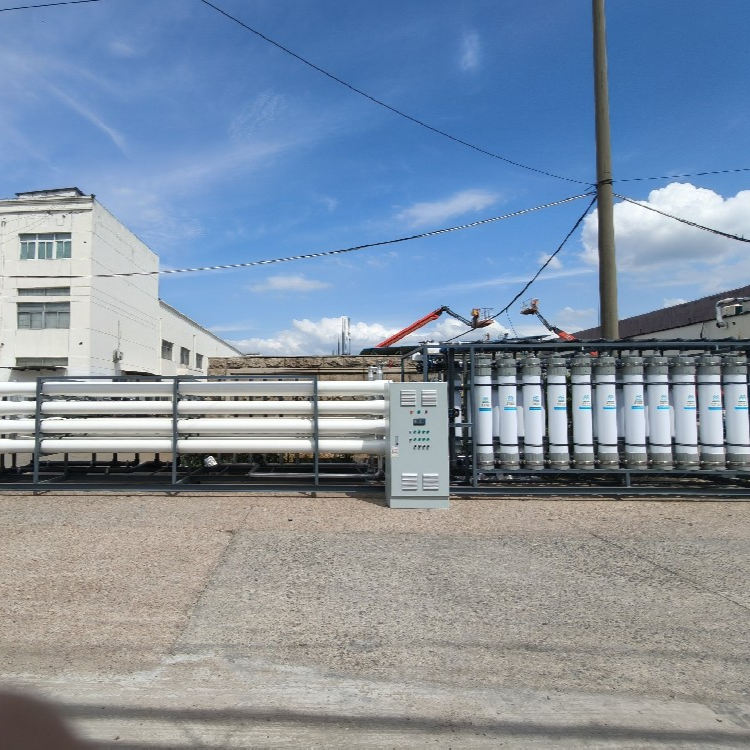
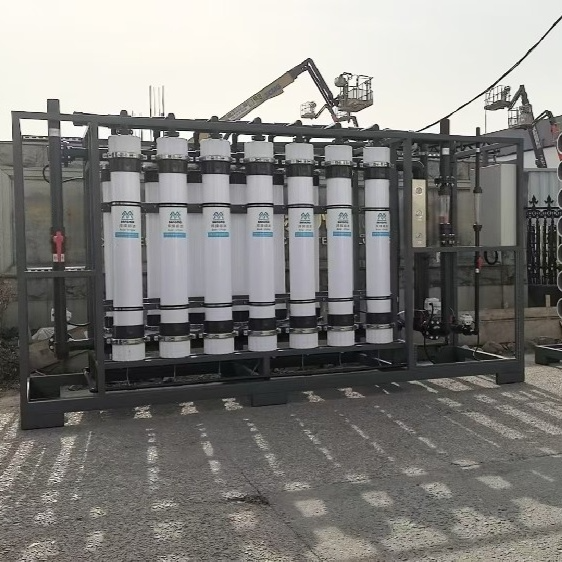
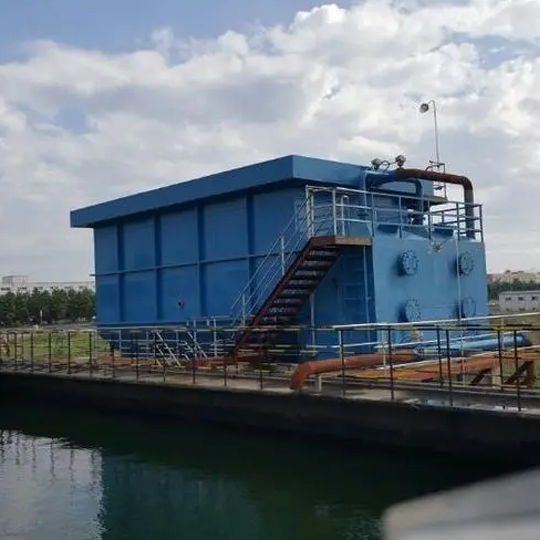
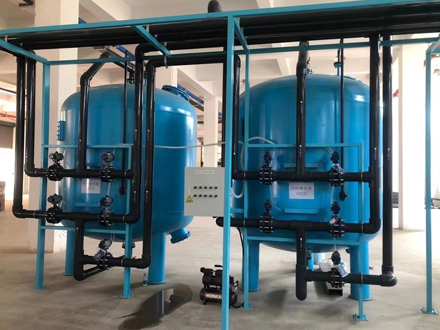
Main Applications: Boiler water, cooling circulating water, textile dyeing and printing water, chemical production water, cleaning water, mold temperature machine配套 water, refrigeration machine配套 water, plate heat exchanger配套 water, coating industry, aluminum oxidation, cleaning machine配套 water, semiconductor industry, solar photovoltaic industry (single crystal silicon, polycrystalline silicon, solar cells, alumina crucible, photovoltaic glass), magnetic material water, fine chemical production water, chemical experiments, plastic production water, coating water, high-purity ink water.

※ Pure Eco-Friendly Brand 『Design Advantages』:
1. Personalized one-on-one service, complimentary on-site site survey, considering placement area and access space, and free original water quality testing.
2. Understand the customer's full-day water demand, peak water usage, water quality requirements, and the customer's production process and industry characteristics.
3. Professional team collaboration with design, coupled with on-site inspections by dedicated service personnel, and one-stop water treatment solution services.
4. Intelligent design with precise control and high automation. Units can achieve automatic forward/backwashing/operation, interlock protection, alarm indication, 4-20mA data openness, and can be remotely transmitted to the DCS control system, truly realizing unattended operation.
5. Segmentally inspect according to process requirements, capable of measuring conductivity, resistivity, pH, ORP, temperature, flow rate, velocity, and pressure, ensuring that water from each process stage meets quality standards and does not contaminate the finished product water downstream, emphasizing process control.
6. Design products that balance the principles of comprehensive investment and operational costs for customer suitability.
※Purely Eco-Friendly Brand 『Production Advantages』:
1. Core components are all imported, and we have established long-term cooperative relationships with numerous international brands such as the U.S. Dow, Hydronix, GE, Siemens, Rhone-Poulenc, Grundfos of Denmark, Rosemount, Nippon Paint of Japan, and Schneider, ensuring reliable product quality.
2. Suppliers conduct product assessments, eliminating substandard suppliers with poor quality and service, and selecting the best to enter the qualified supplier system.
3. Strictly adhere to the quality management system; quality is paramount. Conduct incoming material appearance and performance inspections, in-process inspections, and final product quality checks.
4. Production staff produce according to assigned numbers, with shift arrangements and group assignments. Accountability is established, along with performance assessment and strong traceability.
5. Pre-shipment trial run inspection and electrical point operation test to ensure delivery of qualified products to the customer.
※MidPure Eco-Friendly Brand 'After-Sales Advantage':
1. Professional installation and after-sales team offering one-on-one service, enhancing the timeliness of post-installation after-sales support and boosting customer satisfaction.
2. Establish a service after installation mechanism, conduct performance evaluations, set up a customer service department, a complaint window, and promptly address customer needs.
3. Full guidance and training throughout the installation and debugging process, including theoretical training, hands-on machine operation training, and general troubleshooting training.
4. Establish customer electronic profiles, conduct monthly phone follow-ups, and promptly provide methods and suggestions to reduce operational costs of equipment.
5. Multiple channels for after-sales feedback, nationwide after-sales maintenance services, quick response, fast processing, 24/7 service.
6. We solemnly promise: two-year free warranty for the entire unit, lifetime free technical support.
For more product details, please call our 24-hour hotline: 18550863818; or the national hotline: 0512-69390898.
We will provide you with detailed plans, drawings, and competitive quotes for your reference and selection!
※ Call for consultation, enjoy 10% off! Welcome to call!
I. Introduction to Ion Exchange Process:
(1) Sodium Ion Softener:
The principle of the water softener is to use the ion exchange action of the resin to replace and remove hardness components in water, such as Ca2+ and Mg2+ ions. The raw water flows from top to bottom through the sodium ion exchange agent inside the softener, becoming water with very low levels of calcium, magnesium, and salts (i.e., softened water). The residual hardness of the water after sodium ion softening typically does not exceed 0.03 mmol/L.
To prevent scaling of the concentrate side of the reverse osmosis membrane (especially the last group of membrane elements in the reverse osmosis pressure vessel) with carbonates, sulfates, and other forms of chemical deposits, which can affect the performance of the membrane elements, it is necessary to soften the incoming water prior to reverse osmosis treatment. This extends the lifespan of the RO membrane.
As time progresses, the resin within the softener reaches its exchange capacity, at which point the resin needs to be regenerated. Salt absorption regeneration is performed by adding NaCl, and the regeneration cycle should be determined based on the quality of the raw water and usage conditions of the customer. Generally, a reference cycle of 7-15 days is provided, which is calculated based on the raw water hardness index, the hardness of the produced water, and the water output.
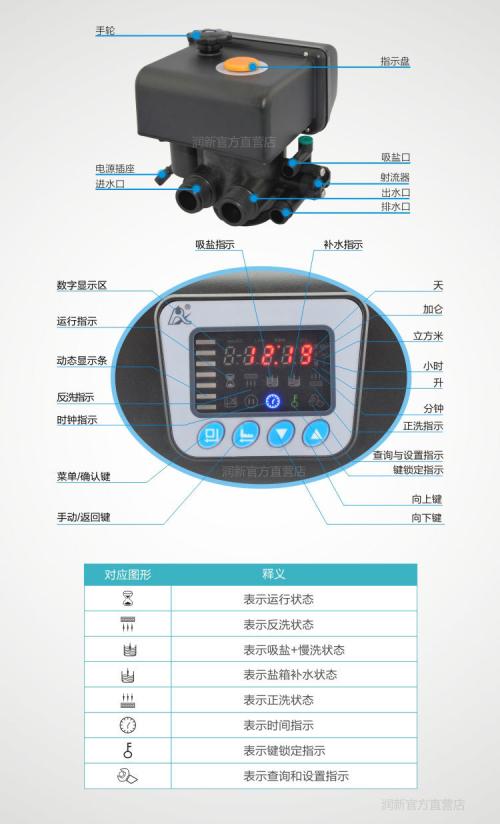
A. Schematic diagram of fully automatic softener valve head:
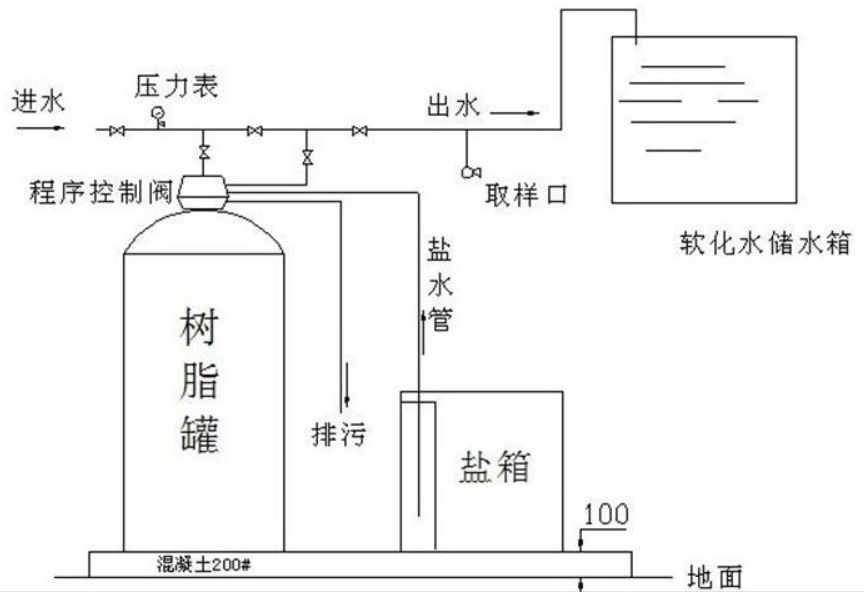
B. Single Valve, Single Tank Diagram
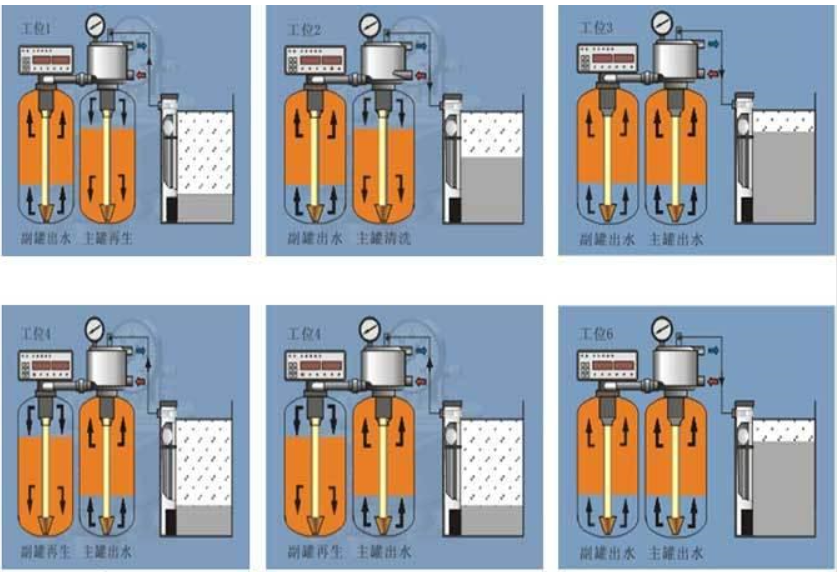
C. Single Valve, Double Tank Schematic Diagram:
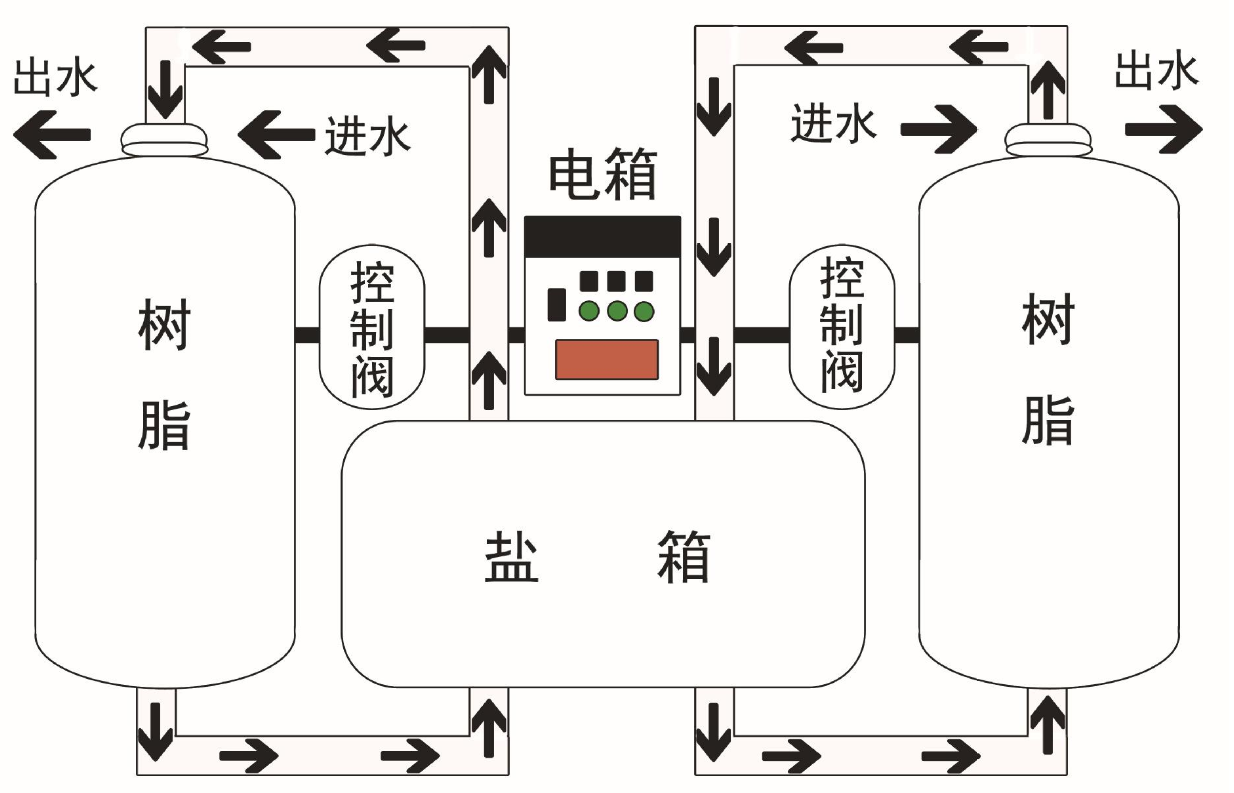
D. Double Valve, Double Tank Schematic Diagram
3. Mixed-bed Ion Exchange
Introduction to Principle
The water processed through the reverse osmosis unit still does not meet the purity requirements for process water. Therefore, a mixed ion exchange unit has been added after the reverse osmosis unit to further improve the water quality of the system's output.
Mixed床, commonly referred to as mixed ion exchange unit, is a chemical desalination device that places both cation and anion exchange resins within the same exchange vessel and ensures they are mixed uniformly during operation. The cation and anion exchange resins within the mixed bed are in a state of uniform mixing, contacting and arranging with each other, so each pair of adjacent cation and anion resins can be considered as a single-stage double-bed. The entire mixed bed is composed of many such double-beds stacked continuously, with an estimated number of stages ranging from 1000 to 2000. In the mixed bed, the H+ ions exchanged by the cation resin and the OH- ions exchanged by the anion resin are immediately neutralized, eliminating interference from counter-ions. Therefore, the ion exchange reaction proceeds thoroughly, resulting in very high purity of the effluent. It has the following characteristics:
1. High purity of effluent; 2. Stable effluent quality; 3. Clear exchange endpoint; 4. Discontinuous operation has minimal impact on effluent quality.
(2) Accessories Introduction
1. Mixed ion exchange units take the effluent from the reverse osmosis system as their feed water. They are filled with uniform-grade 001×7MB strong acid cation exchange resin and 201×7MB strong base anion exchange resin. Each unit is equipped with a resistivity meter to control the resin regeneration cycle based on the effluent resistivity parameter value. Operation of a mixed ion exchange unit stops and regeneration is initiated when the effluent resistivity value falls below the set value.
2. Polished Mixed Bed System
Polished mixed bed is generally used at the end of ultra-pure water treatment systems, based on the principle of resin ion exchange. The container is filled with non-regeneration polishing mixed bed resin, with all ions in H and OH forms. As a terminal desalination unit, it can elevate the resistivity of the feedwater from the previous stage to the user's required level and also has certain control capabilities over TOC and SiO2.
Polishing mixed bed ion exchange requires specific feedwater quality; the feedwater must be the product water from a cation, anion, or mixed bed ion exchange system, or from a continuous EDI (Electrodeionization) salt removal system. Only under feedwater conditions that meet its requirements can the polishing mixed bed ion exchange operate stably and long-term.
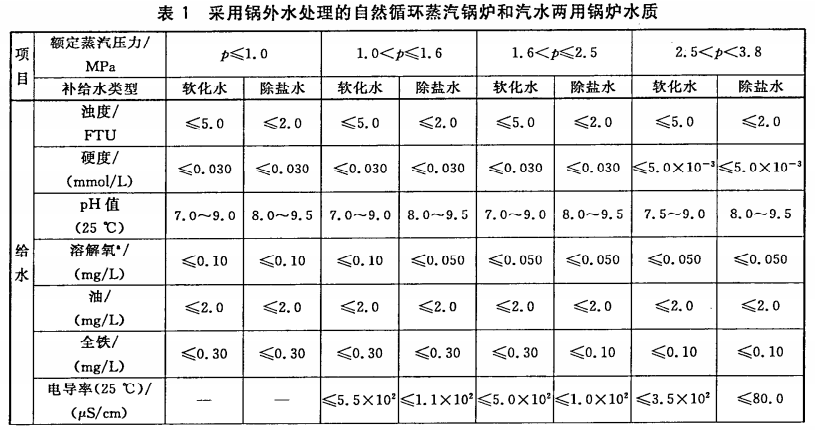
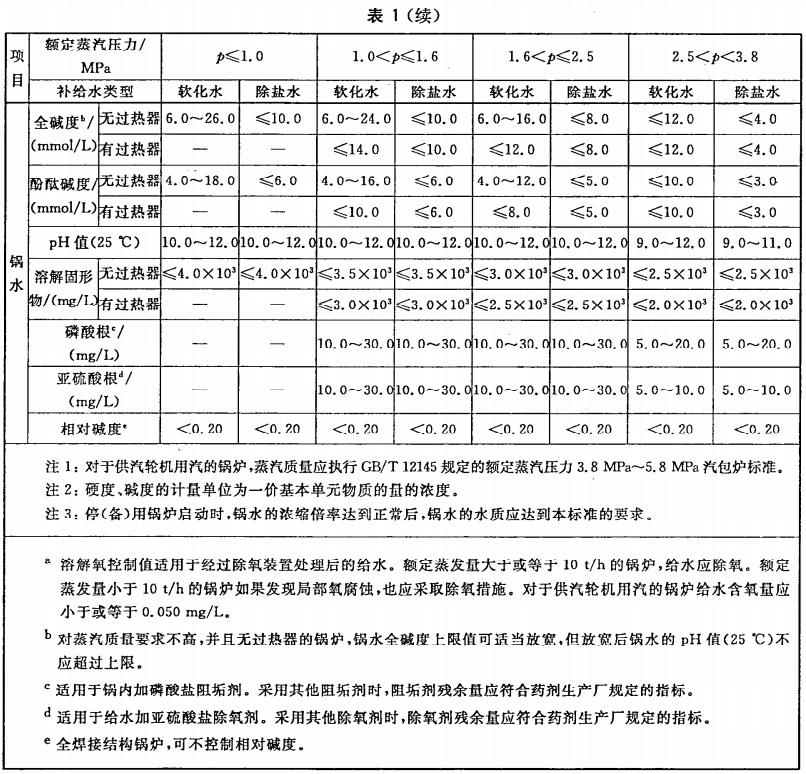
II. Industrial Boiler Water Quality Standards:
Section 3: Selected Classic Customer Cases:
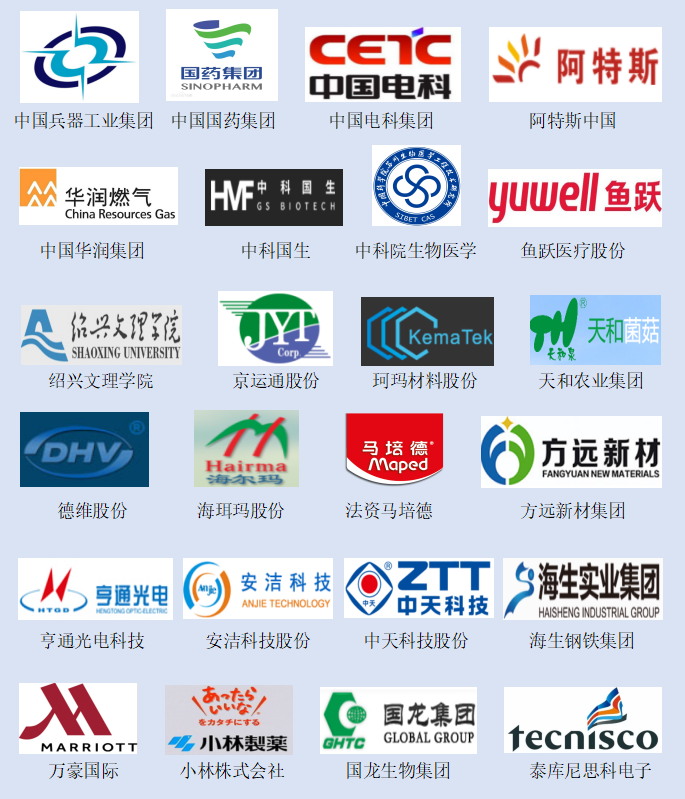
Section 4: National Warranty and Service Network
1. Professional installation and after-sales team offering one-on-one service, enhancing the timeliness of post-installation after-sales support and boosting customer satisfaction.
2. Establish a post-installation after-sales service mechanism, conduct performance evaluations, set up a customer service department, a complaint hotline, and promptly address customer needs.
3. Full guidance and training throughout the installation and debugging process, including theoretical training, hands-on machine operation training, and general troubleshooting training.
4. Establish customer electronic files, conduct monthly phone follow-ups, and promptly provide methods and suggestions for reducing equipment operation costs.
5. Multi-channel after-sales feedback, providing nationwide maintenance and service support, quick response, quick processing, 24/7 service.
6. We solemnly promise: two-year free warranty for the entire unit, lifetime free technical support.
For more product details, please call our 24-hour hotline: 18550863818; service hotline: 0512-69390898.
We will provide you with detailed plans, drawings, and competitive quotes for your reference and selection!
Call for consultation, enjoy 10% off! Welcome to call!