







Air Drying Noisemaker
Application
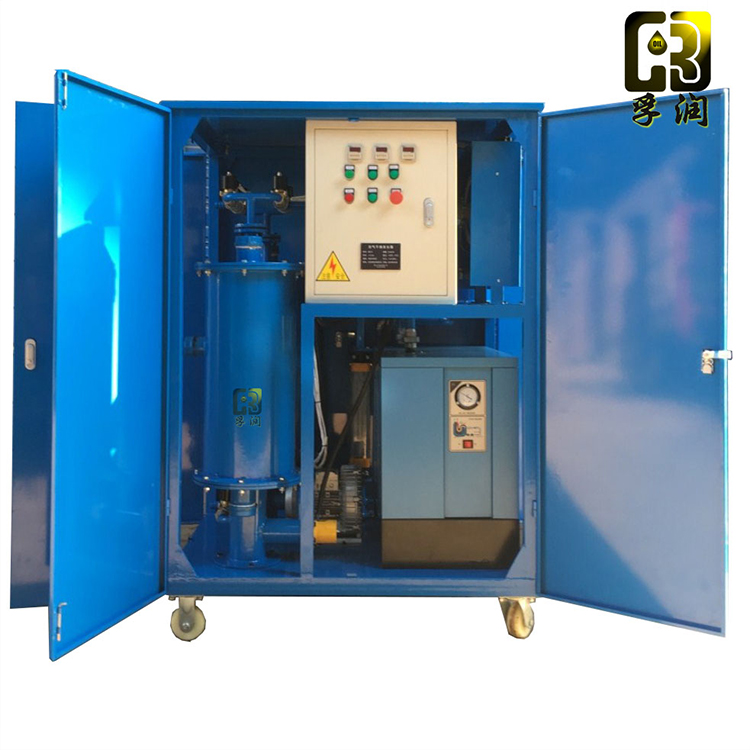
Dry air generators are suitable for power system transformers, reactors, and other large-scale power equipment, providing the necessary dry air during maintenance. They can replace the traditional transformer thermal oil circulation drying method. They are also applicable for air drying and recirculation drying in storage, packaging, and electronics industries. Moreover, they are particularly suitable for drying hydrogen in the cooling system of power generation units and for drying SF6 gas in SF6 equipment. The GZ dry air generator for power equipment maintenance is not affected by external climatic conditions. Especially for overnight operations, simply seal all flanges, fill with dry air at 0.02-0.03 Mpa, and there is no need to oil the transformers or reactors, preventing moisture. This reduces the daily workload of oil extraction and refueling, achieving the effect of shortening maintenance periods and improving maintenance quality. During oil filtering, the equipment housing and oil can be aerated and dried. In rainy or humid conditions, it ensures improved oil insulation and reduced moisture. When not in use, it can serve as an on-site indoor air conditioning unit.
Principle
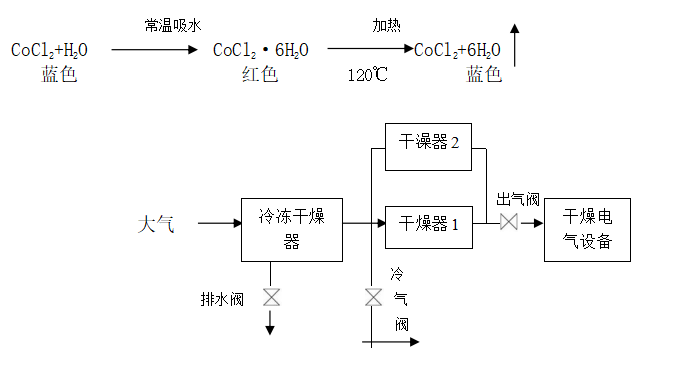
After entering the refrigeration unit below zero degrees, most of the water vapor condenses into ice water, and the air undergoes the first drying process. It then enters a dry air filter, passing through desiccant gel to undergo a second drying phase, absorbing the remaining water vapor. The filtered air is then supplied to the equipment requiring dried gas. When the desiccant gel becomes saturated with water, the CoCl2 in the gel changes from blue to red, indicating that the gel has reached its saturation point and needs to be replaced with dry blue gel to maintain the dryness of the outgoing air.
Performance and Features
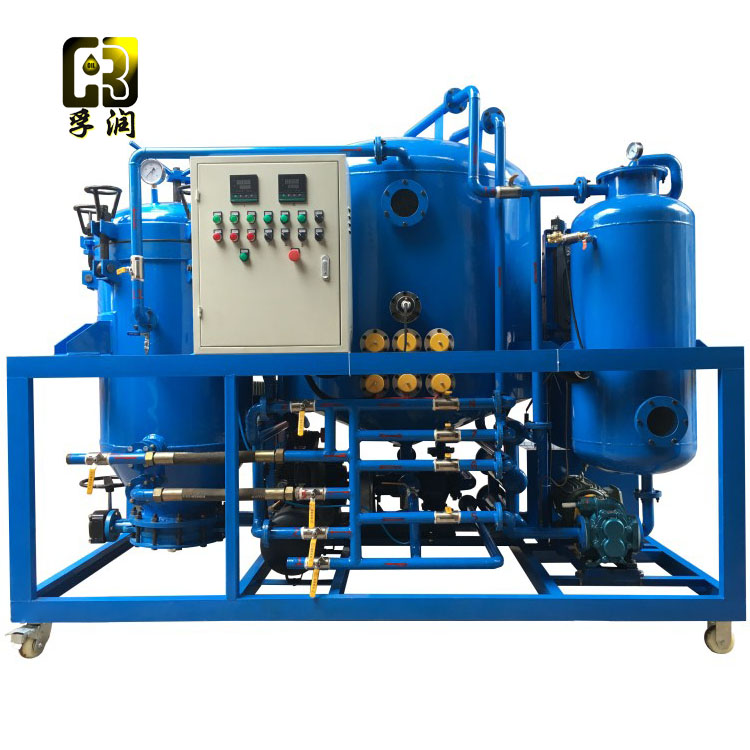
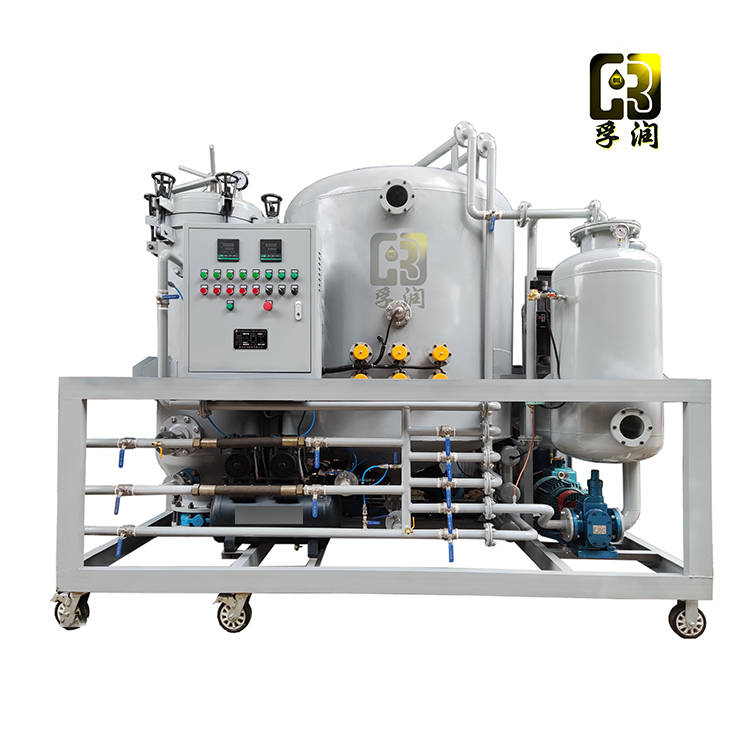
This low dew point, portable, air-cooled high purity gas generator consists of four parts: a gas source system, a freeze-dry system, an adsorption dry system, and an electrical control system.
Air Source System Composition: Consists of an air-dust filter, oil-free air compressor unit, air cooler (air-cooled), air-water separator, and filter assembly, delivering clean, oil-free gas.
Composition of Freeze-Drying System: This unit primarily employs an imported fully enclosed high-temperature refrigeration unit, which is stable and reliable, allowing for greater refrigeration capacity. The system configuration includes an imported fully enclosed refrigeration unit, air heat exchanger, evaporator, gas-water separator, and fine filter; the refrigeration process uses refrigerant R 22, which is first compressed by the fully enclosed high-temperature refrigeration compressor, cooled by the cooler, dried by the desiccant, controlled by the solenoid valve, expanded by the expansion valve, and finally returned to the refrigeration compressor through the evaporator, achieving a low-temperature environment of 0-5 ℃ inside the evaporator.
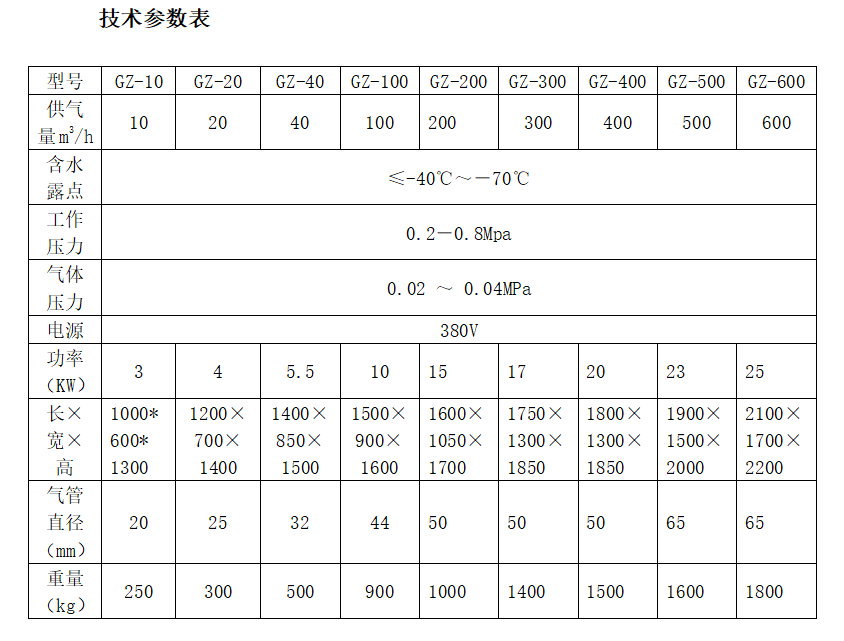
Note: The physical dimensions and weight of the equipment are based on the actual technical specifications.
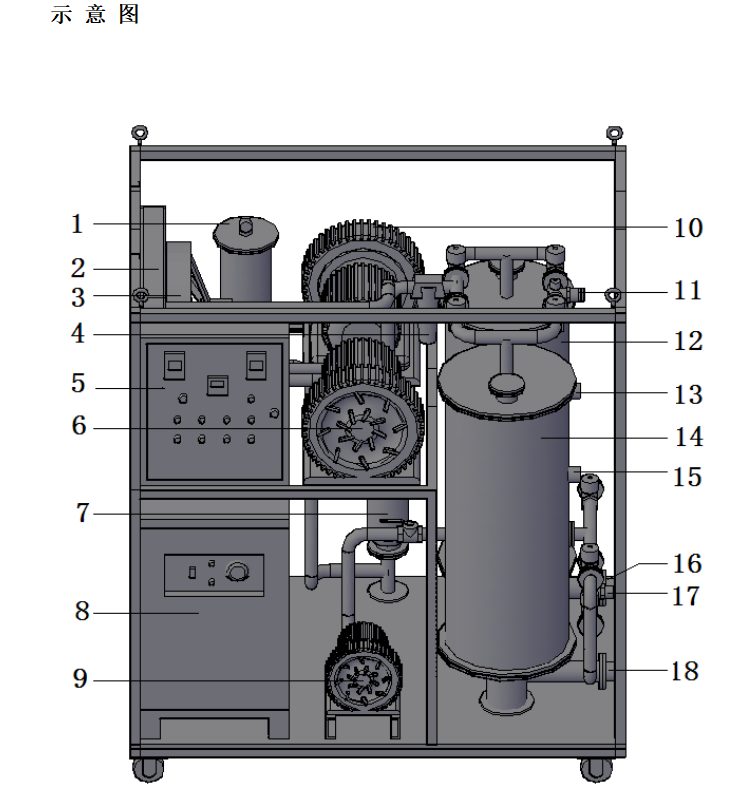
1. Air Filter 2. Radiator 3. Cooling Fan 4. Precision Air Filter 5. Electrical Control Box 6. 9. 10. Vortex Blower 7. Rotameter 8. Refrigerated Air Dryer 11. Exhaust Port 12. Dry Tank 2 13. Observation Hole 14. Dry Tank 1 15. Observation Hole 16. Heater 2 17. Exhaust Port 18. Heater
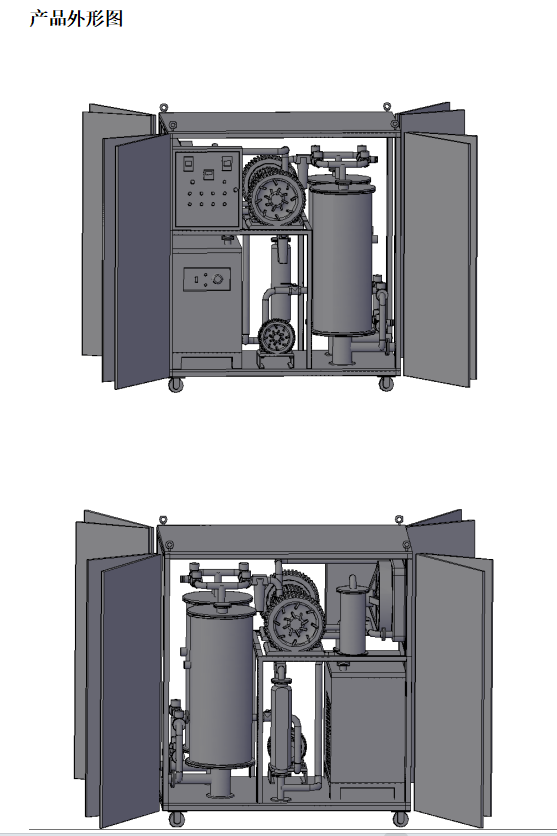
System Process Flow
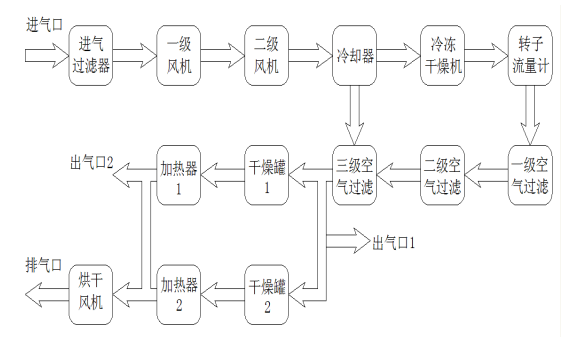
The raw air, after being filtered through an air filter (three-stage filtration) to remove most oil, water, and dust, enters a cold-dryer. It then passes through a precision filter and into an oil-removing adsorber filled with granular material, reducing residual oil content to ≤0.01ppm. The air then flows through a buffer storage tank before entering a pressure swing adsorption system with two adsorbent-filled vessels, known as a dry air generator unit. The clean compressed air enters the bottom of the adsorption tower, where it is diffused by an air diffuser and evenly distributed. It undergoes gas-liquid adsorption separation and exits as dry air from the outlet, flowing into an air buffer tank. This gas production process takes approximately 1 minute, followed by equalization and pressure reduction (to atmospheric pressure) to remove adsorbed impurities (mainly moisture), completing the adsorbent regeneration. The two adsorption towers operate in an alternating cycle, continuously feeding raw air and producing dry air. The air output pressure is 0.1Mpa, with an oxygen dew point of about -45°C.