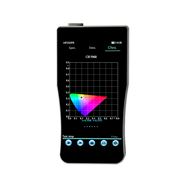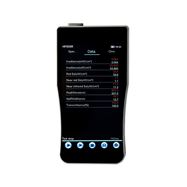

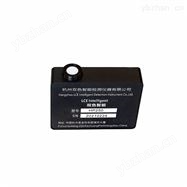








HP-250 Series Fiber Spectrometers, featuring a high-speed STM320 processor with FreeRTOS system and a high-precision linear CCD optical sensor with 3648 pixel resolution, are developed based on the principle of long-focus cross asymmetric CT spectroscopic system. They are designed for their lightweight, stable performance, high accuracy, cost-effectiveness, and portability, and come with PC software. They challenge the traditional concepts of large, complex, and expensive high-precision spectrometers. They can sample and measure various spectral data energies, and with the PC software, they can efficiently analyze and process test data, offering superior measurement linearity and accuracy. They are widely used in universities, laboratories, homes, shopping malls, schools, factories, greenhouses, outdoor, and on-site lighting measurement fields. They are also used in the research and development of light source products and production line quality control. They have also received positive feedback in the eyewear and jewelry industries. They can perform energy analysis on the transmittance, absorbance, and reflectance of objects and liquids. They are widely applicable in the fields of petrochemical and basic organic chemical industries, polymer chemistry, pharmaceuticals and clinical applications, biochemical industries, environmental sciences, textile industries, and food industries.
Partial Industry Applications:
1. LED Testing and Sorting 2. Printer Color Management 3. Neonatal Jaundice Detection 4. Water Quality Analysis
5. Crop Quality Analysis 6. Oil Product Testing 7. Coated Glass Inspection 8. Biochemical Analysis


Environmental Testing, Air Pollution, Automotive Emissions Testing 200-400nm

I. Basic Optical Test Parameters
1. Relevant color temperature Tc(K), Blackbody Deviation Duv
2. Illuminance E(lx), Luminous Emission E(Fc), Radiant Emission Ee(W/m2)
3. Color coordinates (x, y), (u, v), (u', v')
4. Relative Spectral Power Distribution P(λ)
5. Color Rendering Index (Ra, Ri i=1-15)
6. Color Deviation SDCM (McAdam Ellipse, Rectangular Box, and CIE u'v' Circle)
7. Wavelength of Maximum, Peak Wavelength, Central Wavelength, Centroid Wavelength, FWHM
8. Light-to-dark visual contrast ratio S/P
9. Color purity, red ratio, green ratio, blue ratio, CIE1931 trichromatic stimulation values X, Y, Z
10. Realism Rf, Color Gamut Index Rg
11. More functional parameters are customizable.
Spectral Wavelength Measurement
1. Basic models: 380-780 nm
2. Plant version: 350-800nm.
3. Flagship Version: 350-950nm
4. UV version: 200-400nm.
UVA 315-400nm
UVB 280-315nm
UVC 200-280nm
Wavelength accuracy ±0.3 nm
Test Range: 0.1-200,000 uW/cm²
Irradiance accuracy: ±3%
5. Infrared version: 380-1050nm. (Special customization)
6. Blue Light Version: 380-780 nm
7. Flicker version: 380-780 nm
Test Content
1. Basic model test items include commonly used parameters within the visible light range.
2. Blue-ray Edition, featuring additional:
Retinal Blue Light Hazard Weighted Irradiance (mW/m²)
◆ Allowable Exposure Time (S)
◆ 3 hazard parameters;
3. Flash version adds to the standard parameters:
◆Luminaire Flicker, Flicker Index, Light Intensity Variation Curve, Flicker, Flicker Rate (Flicker Index)
Measurement of parameters such as Percent Flicker.
Smart Light Source Flicker Quantity Test
◆ Real-time observation of flicker frequency domain waveform
◆Also includes various tests such as spectral charts
Meets various international and domestic standards
◆ Light Source Fast Luminous Intensity Change Curve
◆ Flash Index, Flash Percentage, Flash Depth
4. Botanical version includes additional standard parameters:
Plant Lighting Source Parameters (Eb, Ey, Er, Erb Ratio, PAR, PPFD, YPFD, Ep)
5. The flagship version adds to the standard parameters:
TM-30 Colorimetric Parameters (Rendering Fidelity Rf, Gamut Index Rg)
◆ Plant Light Source Specifications
Flicker function
◆ Blue-ray Function
6. V UV version adds to the standard parameters:
Ultraviolet Hazard Irradiance (mW/m²)
◆UVA Irradiance (mW/m²)
◆UVB Irradiance (mW/m²)
◆UVC Irradiance (mW/m²)
III. Product Features
1. Multiple optical inputs directly into the slit or through optical fibers
2. Wavelength Range: Optional from 200 to 1050 nm
3. Spectral Resolution: 0.2 nm
4. Fiber Optic Coupler: SMA 905
5. Scattered Light: <0.1%
6. High-speed data collection, scoring time: millisecond-level
7. Focal Length: 72.5mm; Symmetrical Non-Crossed H-T Optical Path
8. Imported sparkling grating, CCD UV wavelength new type anti-ultraviolet coating
9. Install longpass or linear variable filters, set software wavelength range
10 Communication Methods: USB Communication, 485 Communication Protocol, 232 Communication Protocol
11. Dimensions: 80mm x 60mm x 20mm (Main Control Board External)
IV. Communication Protocols (Example)