




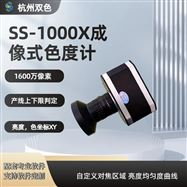
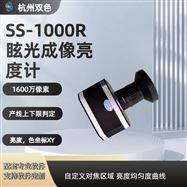







M ultispectral Imaging Analysis System - Brief Product Description and Technical Specifications of Imaging Luminance Meters
Multispectral Imaging (MSI) is a technique that simultaneously captures the reflective or reflective information of objects across multiple discrete spectral bands (wavelength ranges). It exceeds the limitations of visible light (red, green, blue) seen by the human eye, extending to a broader spectral range (such as near-infrared, short-wave infrared, etc.), thereby revealing the "spectral characteristics" of objects at specific wavelengths.
Key Test Parameters:
1. 3D Spatial Spectral Distribution
2. Radiance mW/(cm²·sr·µm)
3. Spectral Index NDVI
4. Original DN Reflectance
5. Specific spectral characteristics
Multispectral Imaging Analysis System, Imaging Brightness MeterThe new full-color detection algorithm with multispectral mode, utilizing high-speed monochrome cameras with 8-band light sources or 12 color filters, achieves significantly enhanced color differentiation capabilities compared to traditional RGB color cameras. It can easily distinguish even subtle color variations.
1. Wavelength Bands: 12 wavelength bands or 8 x 8 band light sources
2. Imaging: High-resolution, global, large target area, low noise
3. Spectral Data - Each pixel contains spectral data, forming a "data cube" that includes spatial and spectral information. This cube has two spatial dimensions (X, Y) and one spectral dimension.
4. Customizable Wavelengths: Wavelength positions and widths can be selected and optimized according to specific application requirements (e.g., wavelengths specifically designed for vegetation health, mineral identification, or moisture detection).
5. Information Enhancement: By combining information from multiple bands, features and differences invisible to the human eye or monochrome/trichromatic cameras can be highlighted.
6. Quantitative Analysis: Provides radiation values for each pixel across different wavelengths, which can be used to calculate various spectral indices and conduct quantitative analysis.
Section II: Application Fields
1. Agricultural crops (NDVI and other vegetation indices), environmental monitoring, geological exploration, land use, agriculture and food
Agricultural Product Quality Testing (Maturity, Sugar Content, Acidity, Internal Defects, Rot)
Early Pest and Disease Diagnosis
Crop Nutritional Status Monitoring (e.g., Nitrogen Content)
Food component analysis, adulteration detection, foreign matter identification
Seed Vigor Evaluation
2. Biological ecology and environmental science, biodiversity surveys (specific plant species identification), ecosystem function research (such as photosynthesis efficiency), and pollutant diffusion monitoring.
Water Quality Parameters (Chlorophyll, Turbidity) Rapid Test
Soil Organic Matter Analysis
1. Life Sciences: Dermatological analysis, wound assessment, tumor boundary identification (for surgical guidance), ophthalmic imaging (retinal vessels, pigmentation). Microscopy: Multispectral labeling and imaging of cells and tissues to enhance diagnostic specificity and quantitative analysis capabilities. Fluorescence Imaging: Differentiation of various fluorescent labels.
Skin Disease Diagnosis (such as melanoma detection)
Oxygen Saturation Monitoring Organization
Vascular imaging
Wound Assessment
Drug tablet composition analysis, coating uniformity testing
2. Industrial Inspection: Product Sorting (recycled materials, agricultural products). Surface Defect Detection (e.g., printing, textiles, semiconductors). Composition Analysis.
Surface Defect Inspection (Scratches, Stains, Color Variations)
Material Classification and Sorting (Plastics, Minerals)
Print Quality Inspection (Registration, Color Consistency)
Semiconductor/PCB Inspection
Integrity Testing for Pharmaceutical Packaging
5. Process Monitoring: Unveiling Underlying Sketches in Artworks, Identifying Pigment Types and Aging Stains, Detecting Restoration Marks, Enhancing the Readability of Faded Text or Patterns.
6. Security: Recognition. Target detection and identification. Environmental reconnaissance.
Key Points for Technical Selection
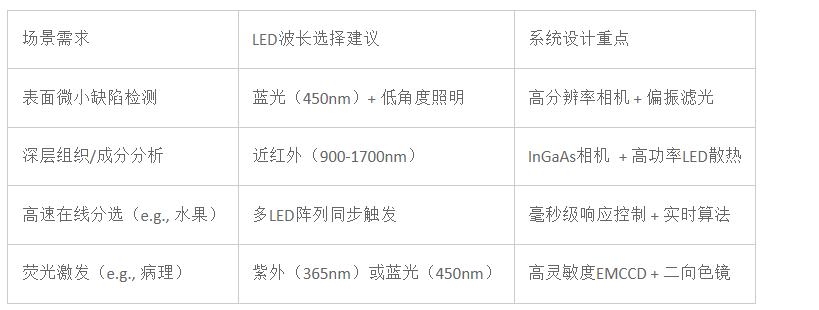
Advantages Summary: Compared to traditional wide-spectrum light sources (halogen lamps, xenon lamps), LED The multispectral system precisely matches the absorption peaks of target objects through wavelength, significantly enhancing the signal-to-noise ratio; its nanosecond switching speed supports dynamic scenarios; the modular design allows for customization of wavelengths.