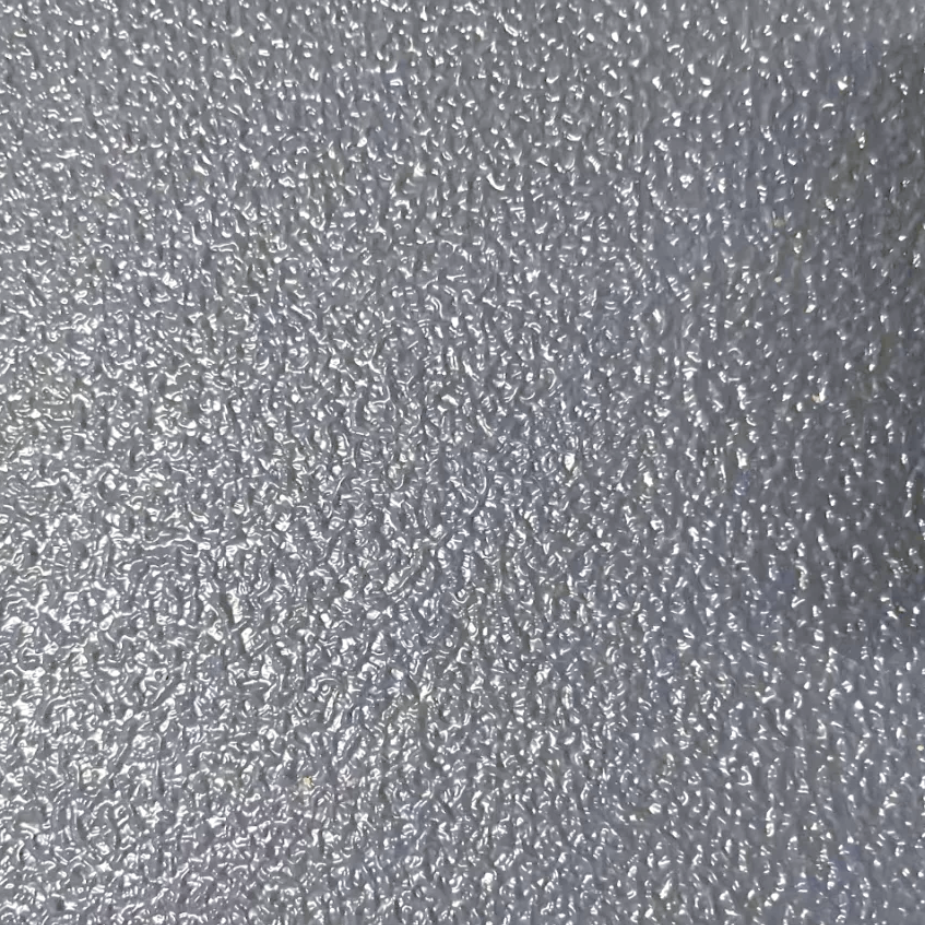







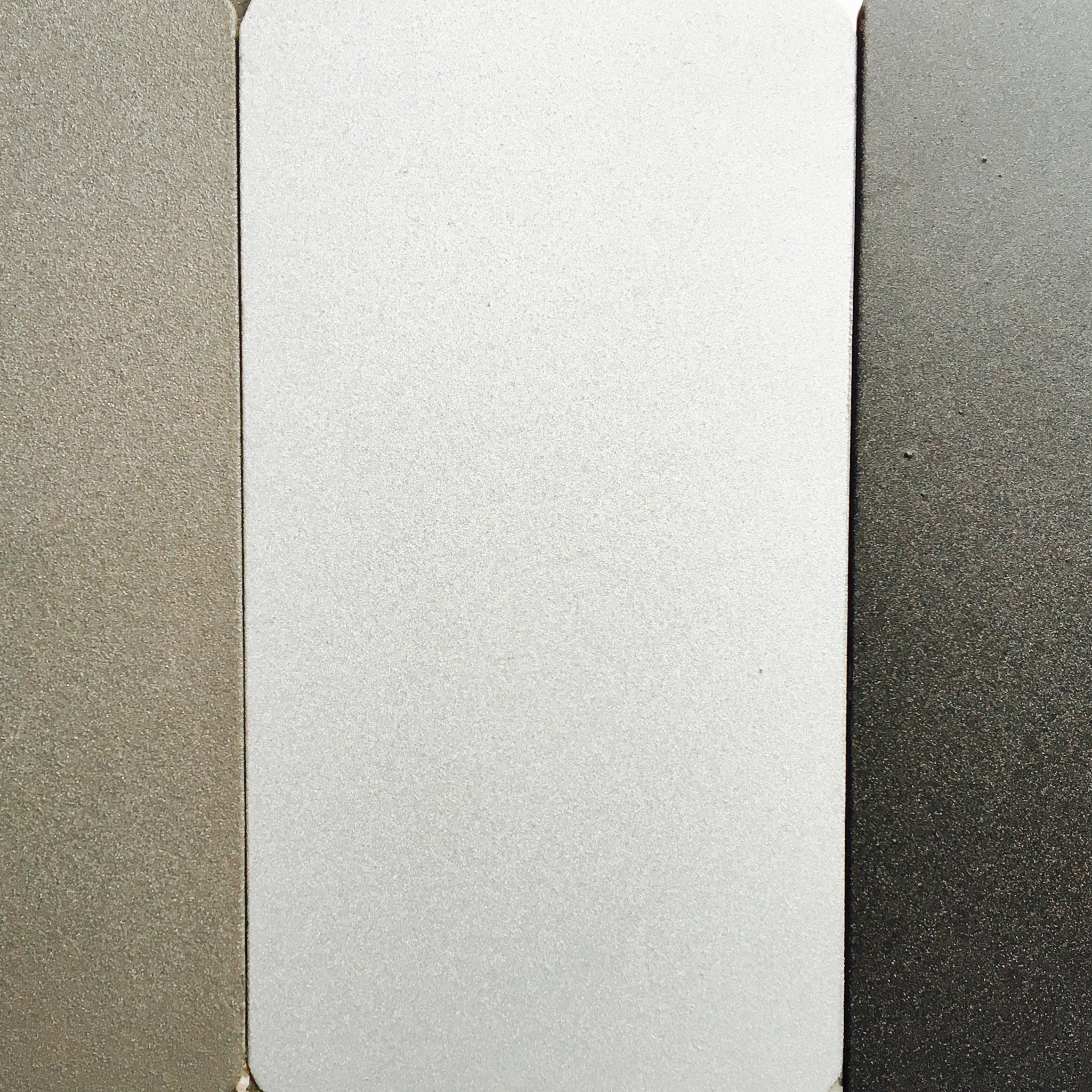
Epoxy zinc-rich primer
Composition The epoxy zinc-rich primer A component consists of epoxy resin, zinc powder, rust-inhibiting pigments, additives, solvents, etc., while the B component is the hardener.
Performance
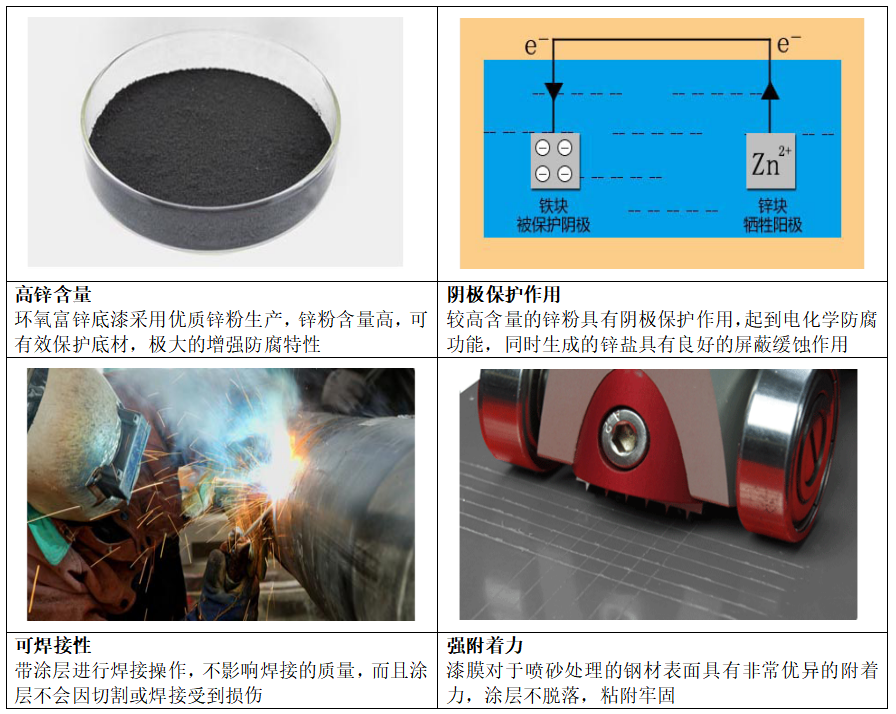
Epoxy zinc-rich primer is manufactured with high-quality zinc powder, offering high zinc content for effective base material protection and significantly enhancing corrosion resistance. The higher zinc content provides cathodic protection with electrochemical corrosion prevention capabilities, while the generated zinc salts offer excellent shielding and corrosion inhibition. This primer can be coated for welding operations without affecting welding quality, and the coating is not damaged by cutting or welding. As a heavy-duty corrosion-resistant primer, it boasts excellent adhesion to rough surface substrates and forms a compatible coating system with various intermediate and topcoats.
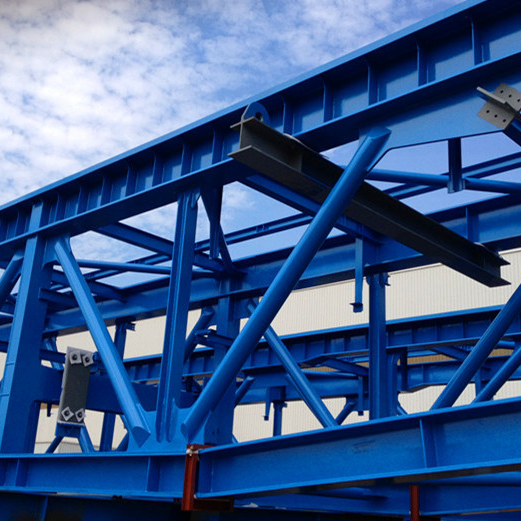
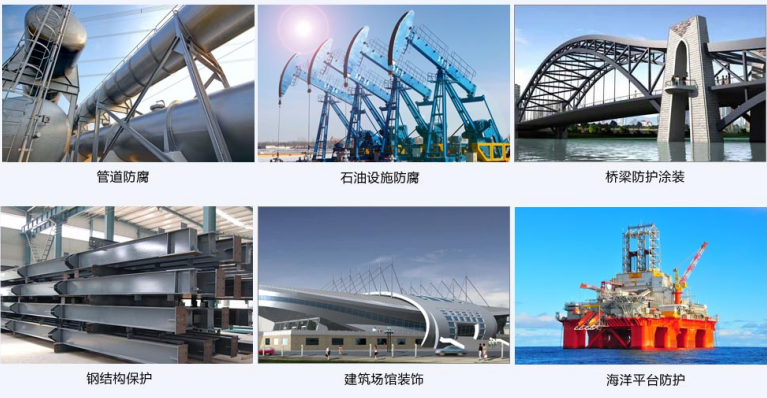
Usage Epoxy zinc-rich primer is suitable for anti-corrosion and rust prevention for steel structures in atmospheric conditions, especially in severe corrosive environments or for long-term weather resistance requirements. Examples include primer for steel bridge structures, exterior anti-corrosion primer for storage tanks and containers, anti-rust paint for steel structures, hull bottom paint, and anti-corrosion primer for port facilities.
Product Specifications
Mixed Ratio: Component A to Component B = 10:1
Technical Specifications
Complementary System
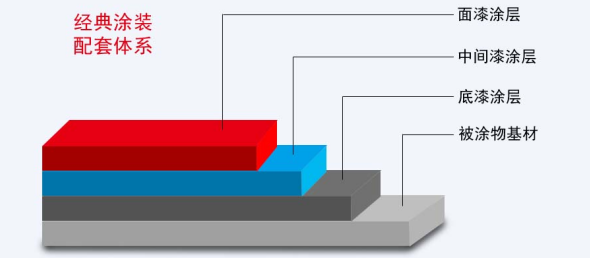
Epoxy zinc-rich primers are used in a wide range of applications including steel structures, buildings, bridge steelwork, port facilities, construction machinery, petrochemical storage tanks, pipeline corrosion protection, etc. They are primarily matched with epoxy iron oxide intermediate coatings and corrosion-resistant topcoats.
1. Corrosion Protection for Steel Structures: Epoxy Zinc-rich Primer + Epoxy Iron Oxide Intermediate Coat + Polyurethane Topcoat
· 2. Bridge Steel Structure Protection: Epoxy Zinc-rich Primer + Epoxy Iron Oxide Intermediate Coat + Fluorocarbon Topcoat
· 3. Building Venue Decoration: Epoxy Zinc-rich Primer + Epoxy Iron Oxide Intermediate Coat + Metal Fluorocarbon Paint
Construction Method
1. Material Treatment
The coated metal surface must be thoroughly cleaned of oil, oxidation scale, rust, and old coatings. Shot blasting or sandblasting methods can be used to achieve Swedish rust removal standard Sa2.5, with a roughness of 30-70μm. Alternatively, manual rust removal can be employed to meet the Swedish rust removal standard St3, with a roughness of 30-70μm.
2. Mixed
Priced by weight ratio (as indicated on the product packaging)
Mix continuously while slowly adding the hardener to ensure thorough and even mixing.
After the mixed paint has aged (23±2℃) for 30 minutes, filter it through a 60-80 mesh screen and pour it into another container for later use.
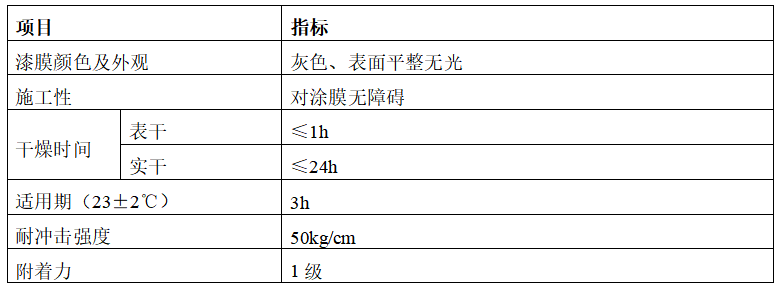
Mixed paint has a shelf life of 3 hours, please schedule application based on the progress of the job.
3. Construction Conditions
The painting operation should be carried out as soon as possible after the base material treatment, generally not exceeding 6 hours. The surface temperature of the base material and the ambient temperature should generally not be lower than 10°C, and the surface temperature should be at least 5°C higher than the dew point, with relative humidity of the air not exceeding 75%.
4. Coating Methods
This paint can be applied using brush coating, airless spraying, and air-assisted spraying methods.
5. Dilute
In most cases, paints require a compatible thinner to adjust viscosity and clean tools.
6. Coating Interval
One-component paint can be coated after drying. For two-component paint, it is recommended to follow the suggested coating interval time below: