










Superior domestic mixers, crushers, granulators, conveyors, vibratory screens, dryers, and EPC powder drying engineering manufacturers
Operating Principle:
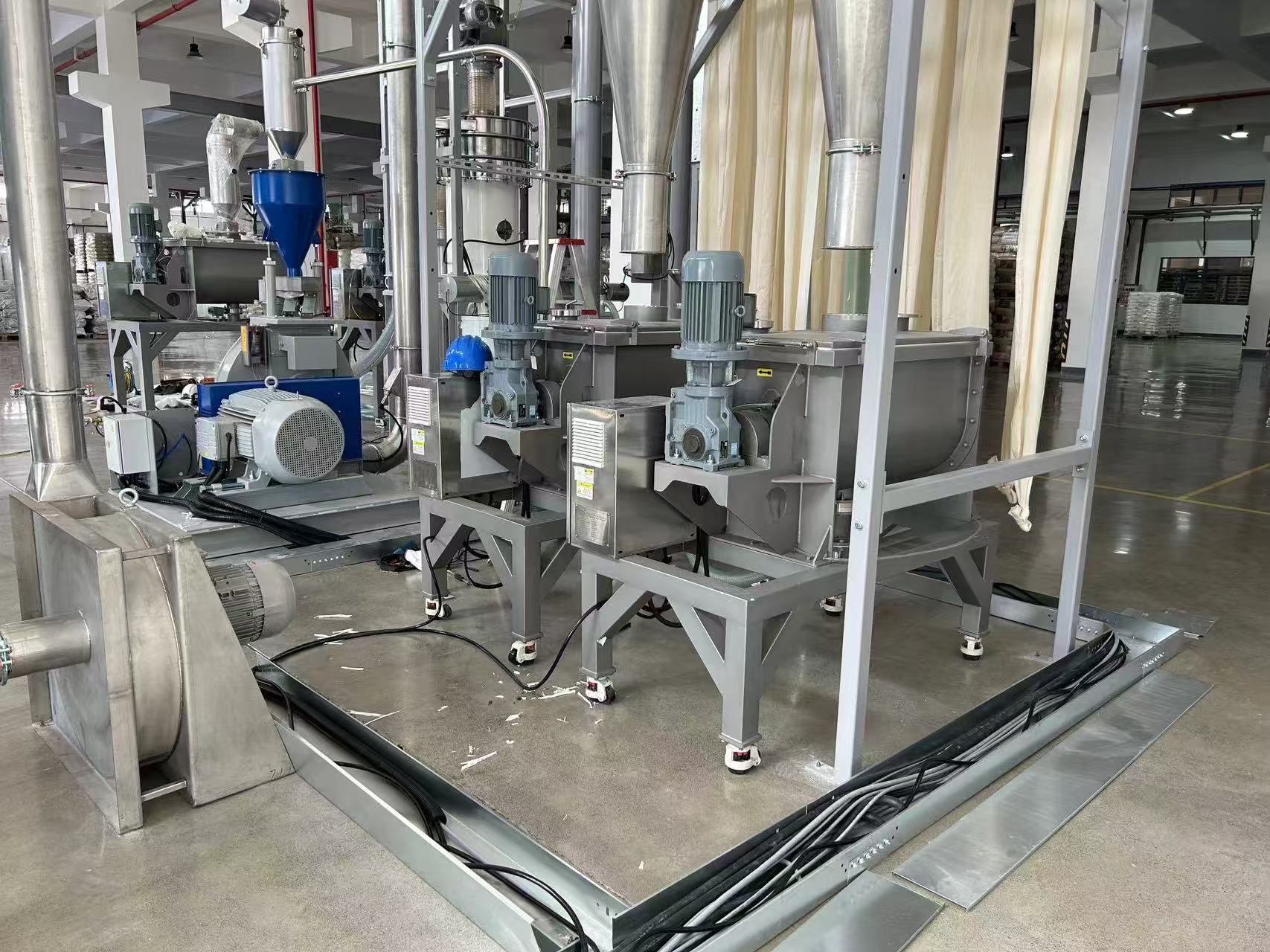
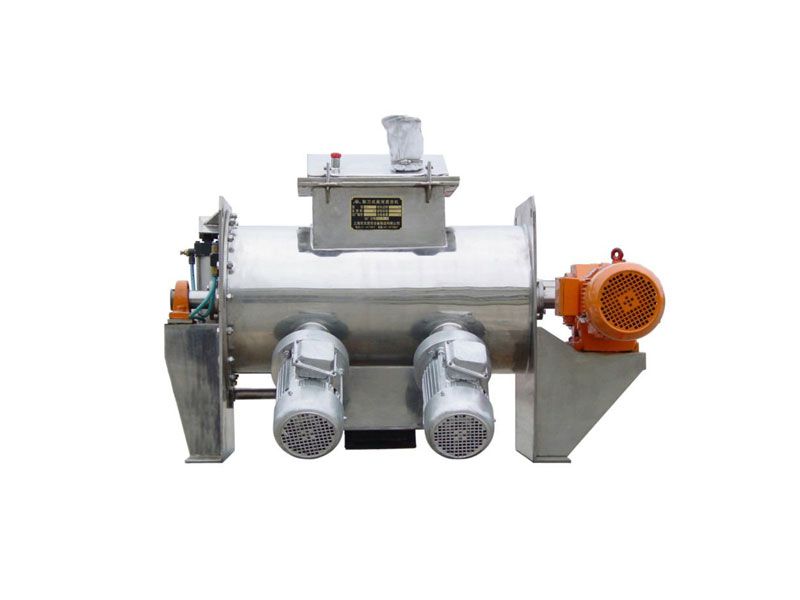
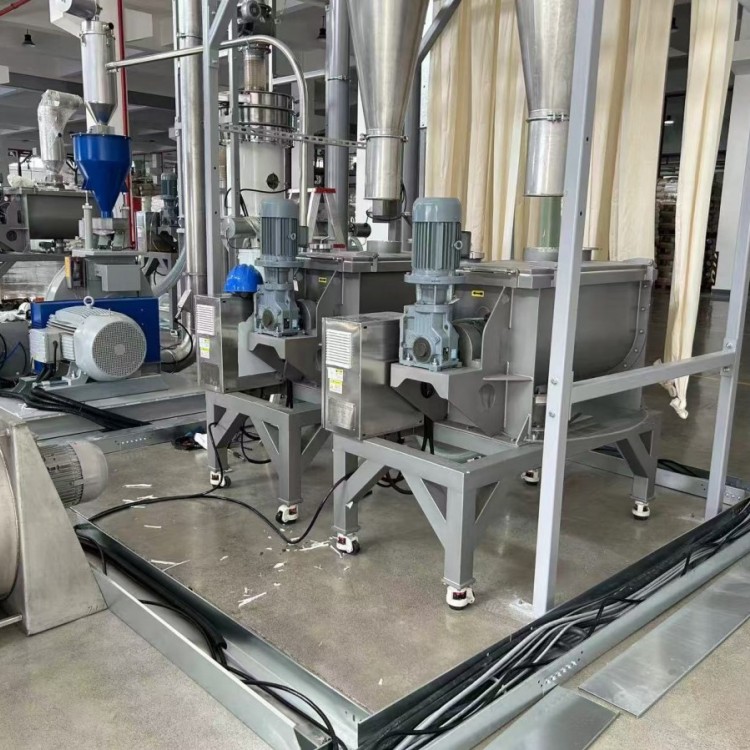
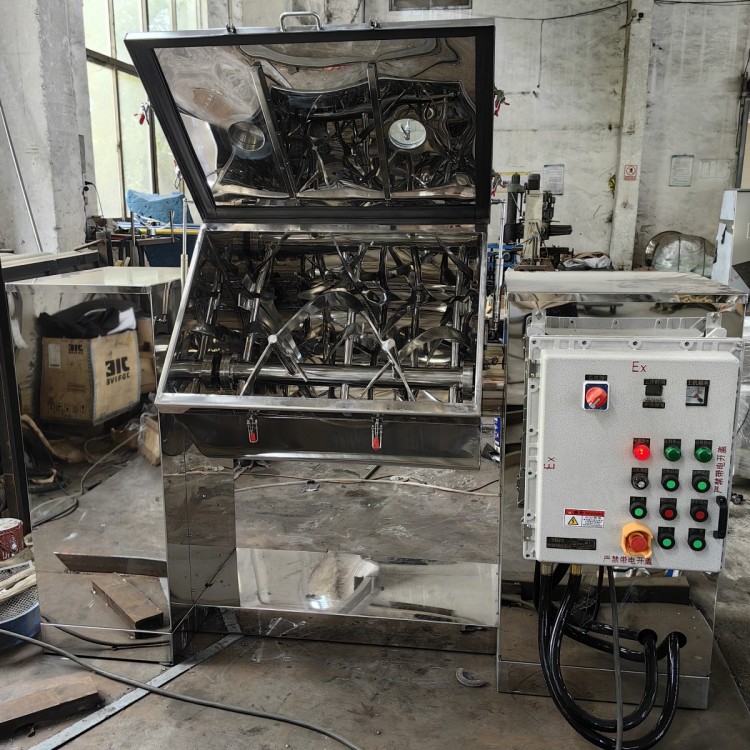
The plow blade mixer is a single-shaft forced mixing device, equipped with multiple plow blade mixers mounted on the main shaft in an offset, continuous arrangement. This design eliminates mixing dead spots, and during operation, it generates a continuous vortex centrifugal force. The offset plow blades continuously stir, causing the vortex centrifugal material flow to constantly overlap and disperse, leading to material boiling and forming a convectional circulation, resulting in rapid stirring of the material.
Agglomerative materials such as fibers, damply agglomerated powders, or liquid-agglomerated powders are broken down and separated by the turbulent flow action formed through the high-speed cutting blades installed in the furrow blade mixer, as the blades stir the material.
The high-speed flying knife is installed at a 45-degree angle downward on the side of the plow blade mixing cylinder. The knife head extends into the cylinder. During mixing, the material is driven by the plow blade into the effective cutting range of the flying knife, where it is sheared at high speed.
Selection Method:
1. Determine the volume of materials for each batch, ranging from 0.1 to 20 cubic meters, and select the appropriate equipment.
2. Select equipment material: materials are divided into: parts in contact with materials and parts not in contact with materials; other equipment components maintain the original material.
Material selection is based on factors such as material properties, operating conditions, and hygiene levels. Common options include carbon steel, 304/316L/321 stainless steel.
Once material is selected, surface treatment requirements are determined according to specifications.
3. Determine the driving capacity based on the material's specific gravity, fluidity, and other properties, as well as the startup standards.
Startup Standards: Full Load Startup, No Load Startup.
4. According to actual process conditions, add auxiliary component functions, such as liquid spraying, heating/cooling, etc.
5. Specify the opening requirements for design equipment, such as feed openings, cleaning ports, exhaust holes, etc.
6. Select the material discharge mode and drive method, which includes manual, pneumatic, and electric.
Important Notice: Equipment selection is a crucial step. Please provide as much detail as possible about the materials and process arrangements, so that our professional staff can offer you high-quality technical services.
Case Study Presentation
24/7 Customer Service Hotline: 139-1501-6913
View Details →
Case Study Showcase
24/7 Customer Service Hotline: 139-1501-69