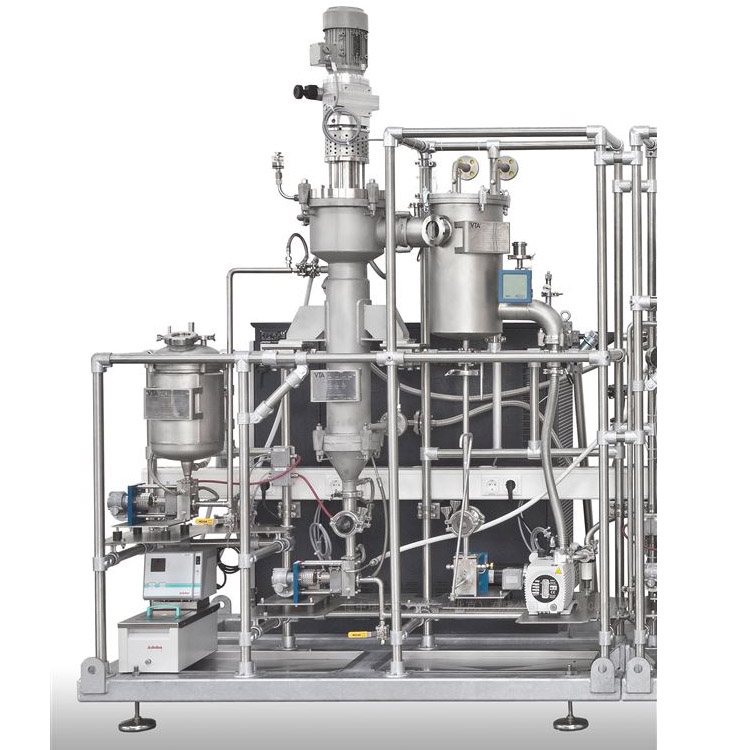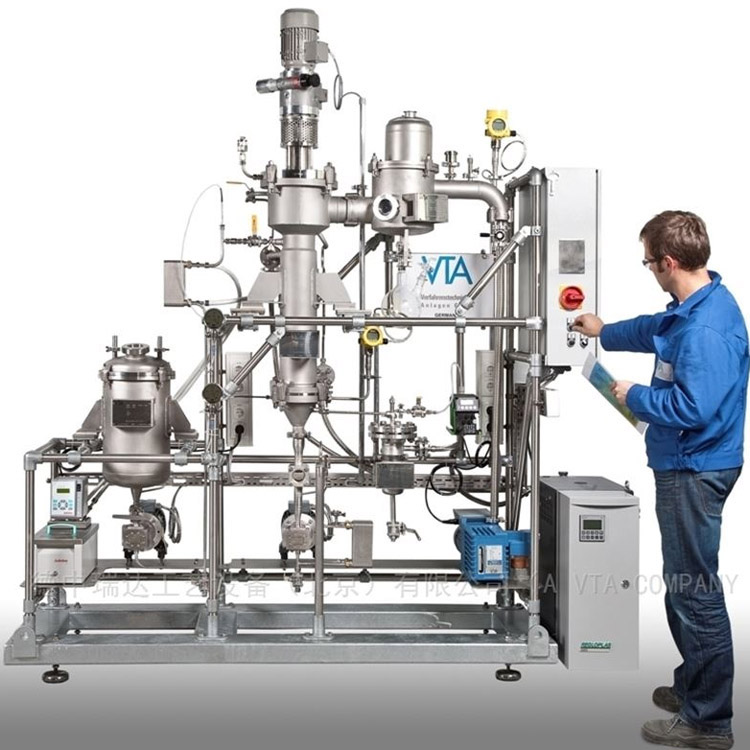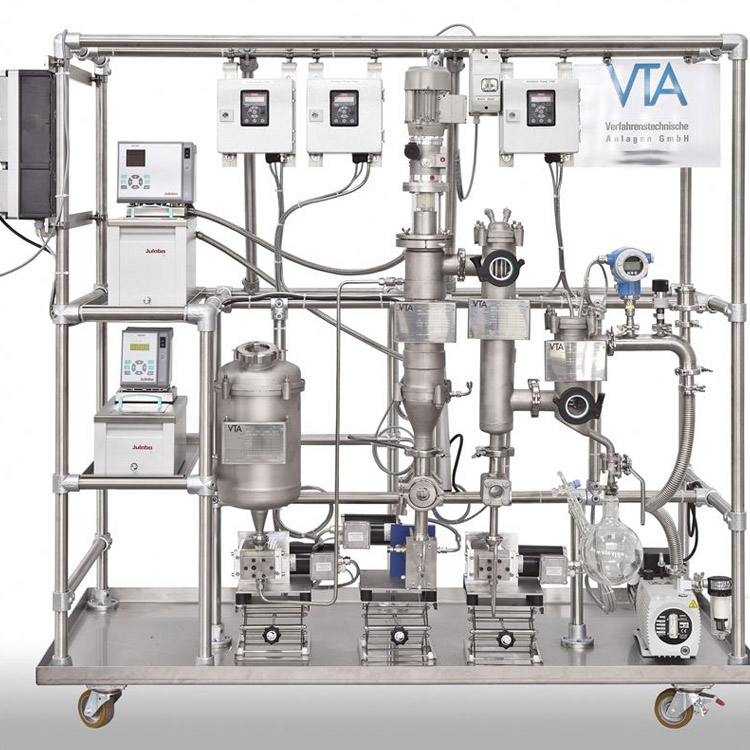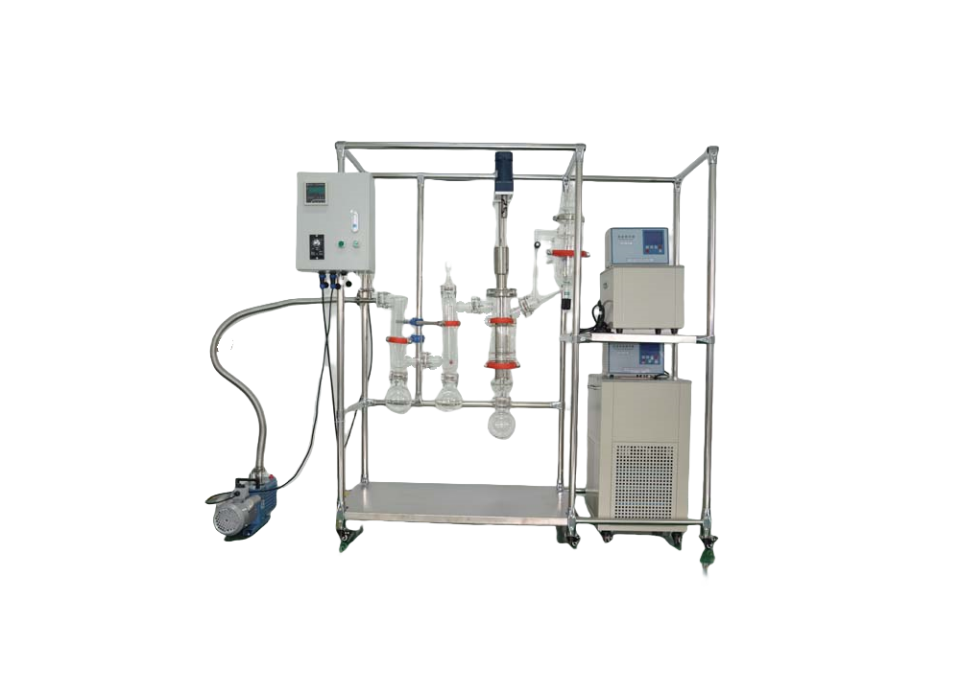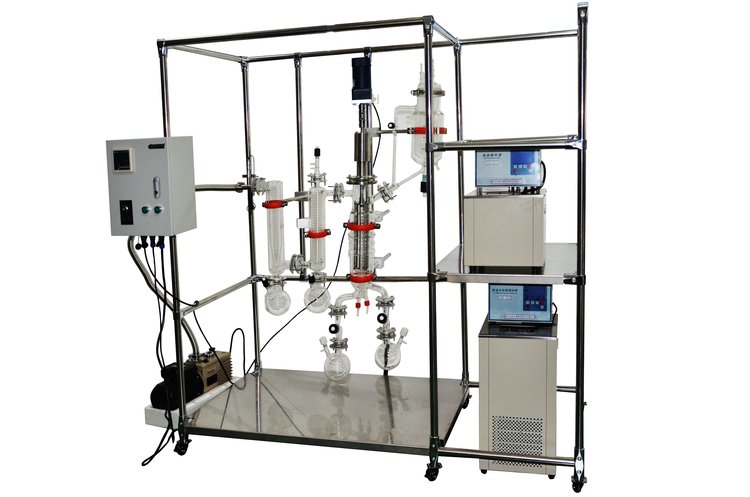

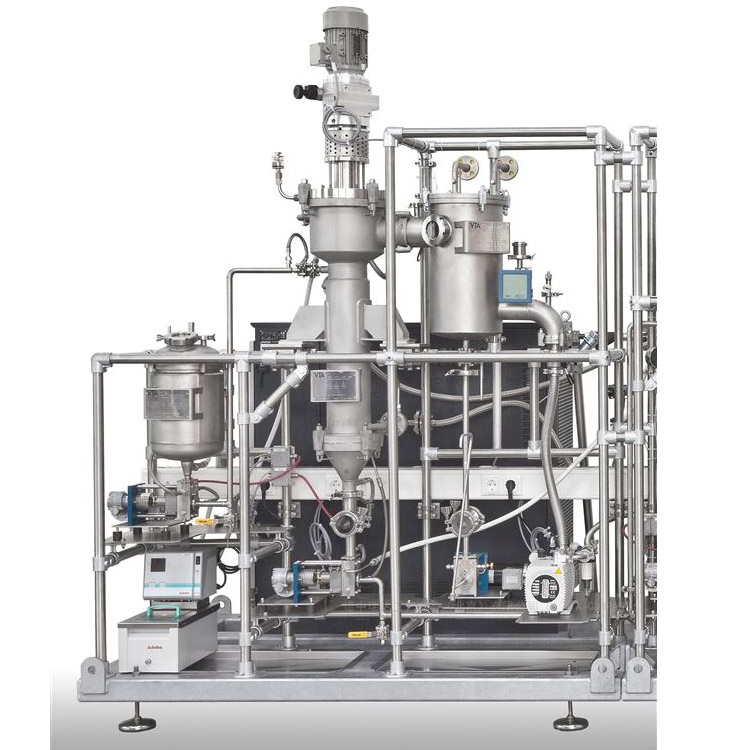


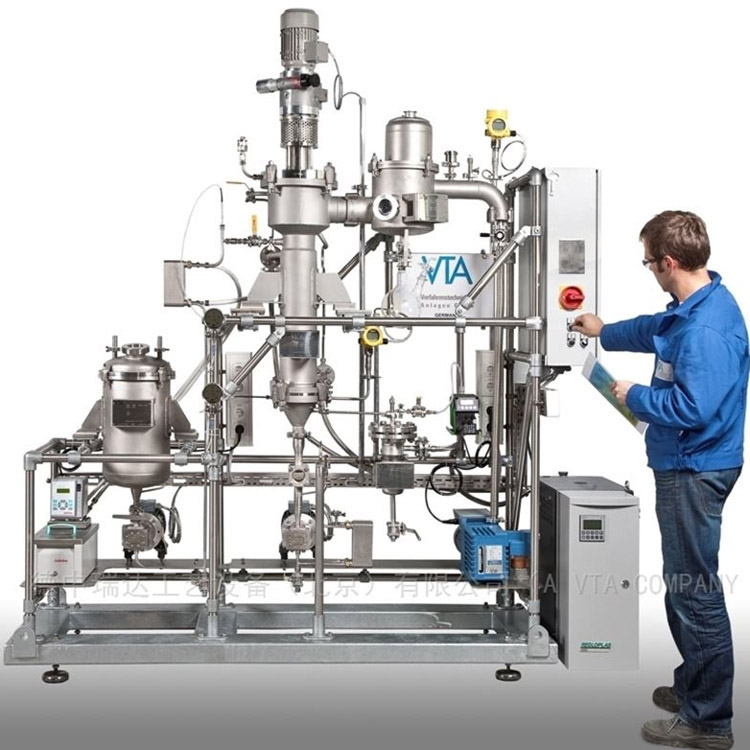
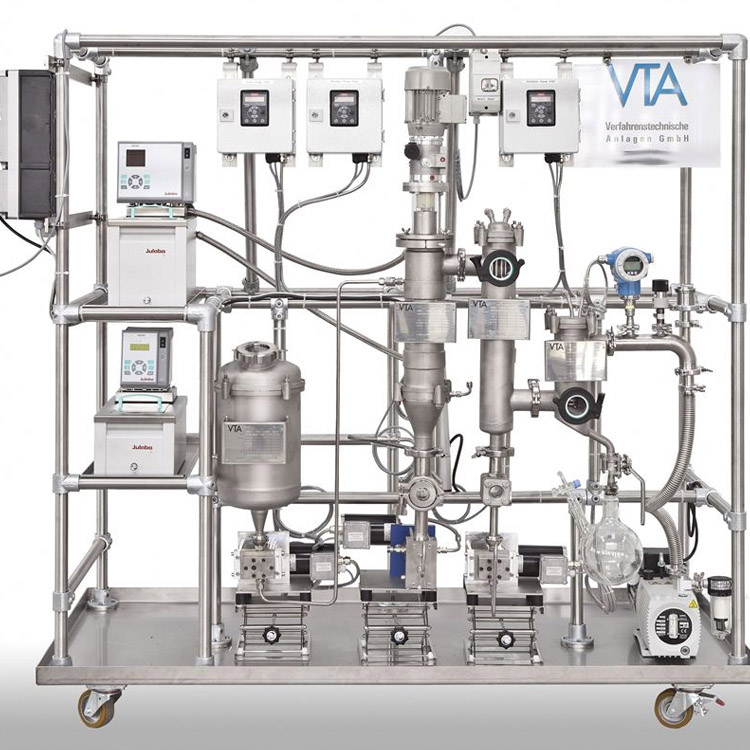


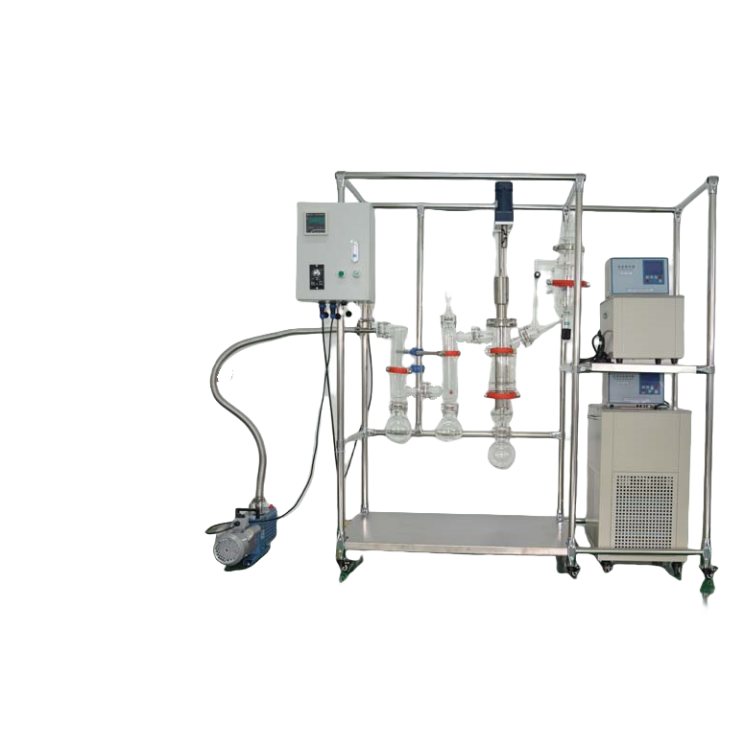
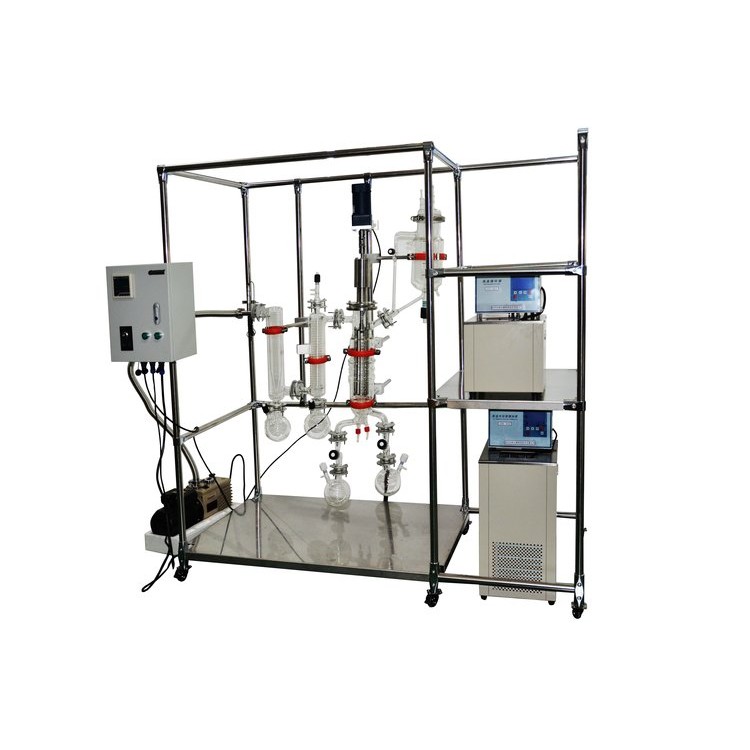





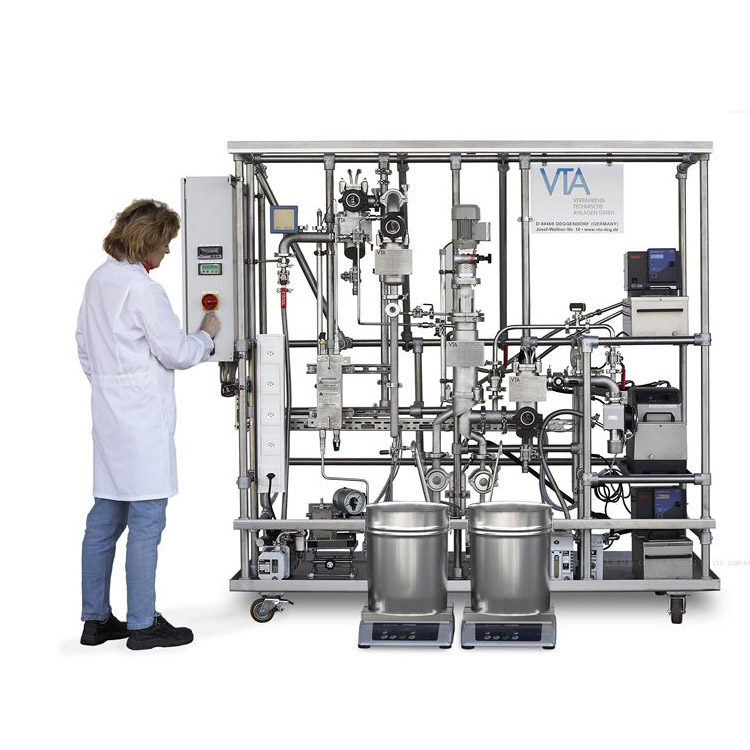
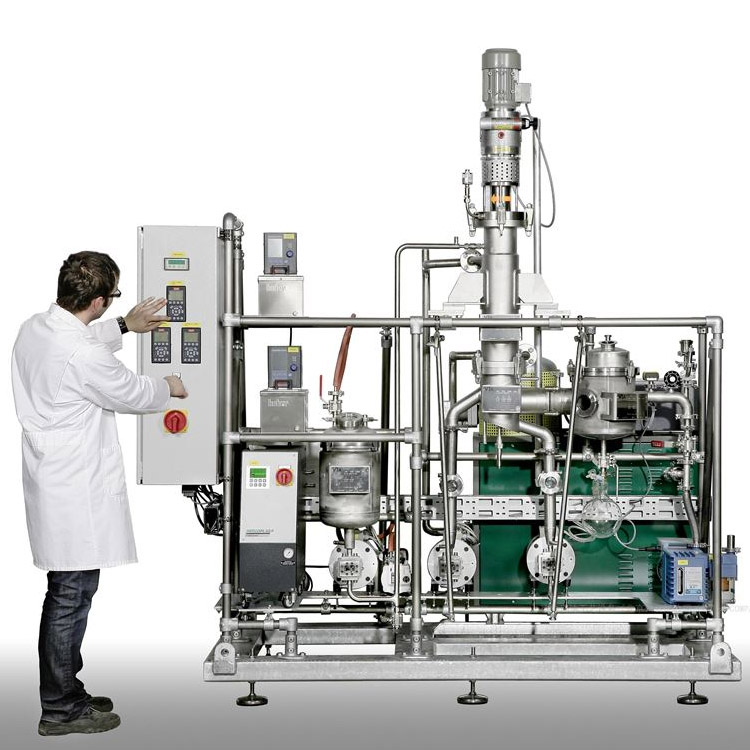
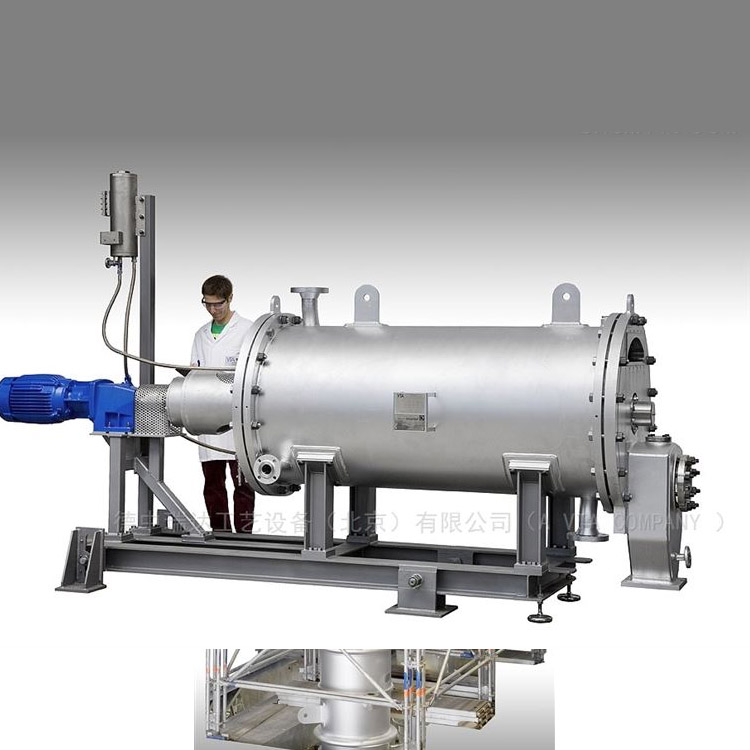
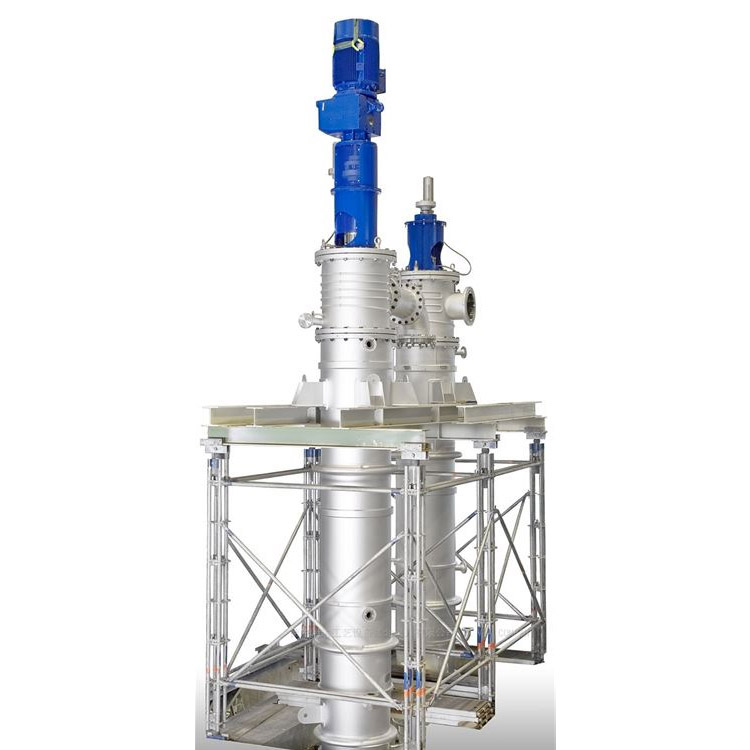
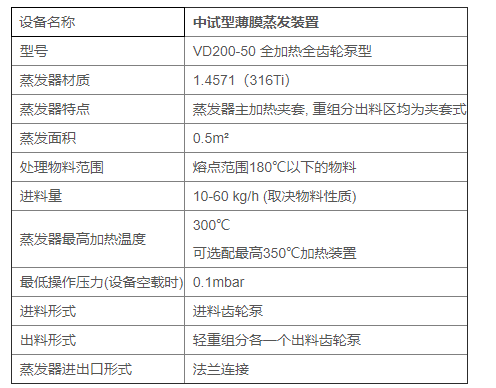
VD200-50 pilot-scale film evaporator requires an area of approximately 3 meters in length, 2 meters in width, and 3.5 meters in height, with space reserved for hoisting at the rotor top. The unit is supplied as a turnkey skid-mounted package, ready for operation upon connection to utilities at the customer's site, significantly reducing installation and commissioning time on-site.
The Film Evaporation Unit mainly consists of the following basic components:

Based on the product's characteristics and usage frequency, the device can meet the actual needs of different users. In addition to the basic configuration, the following options are available:
To accommodate high melting point and high viscosity materials, jacketed insulation can be chosen for the feed, light phase, or heavy phase product pipelines.
- Material for parts in contact with materials is made of stainless steel, special materials, or alloys.
- Combined with other evaporation sections
- Selectable PLC with HMI visual operating system
Continuous operation
Compared to short-path distillation, membrane evaporation equipment has its relevant application fields, such as:
- The raw material contains a high proportion of light components that need to be removed; using a thin-film evaporator would be more efficient.
No high vacuum level is required; typically, separation can be achieved below 1 mbar.
- Due to the need for process scaling, film evaporators prevent the splashing of light components more effectively than short-path evaporators.
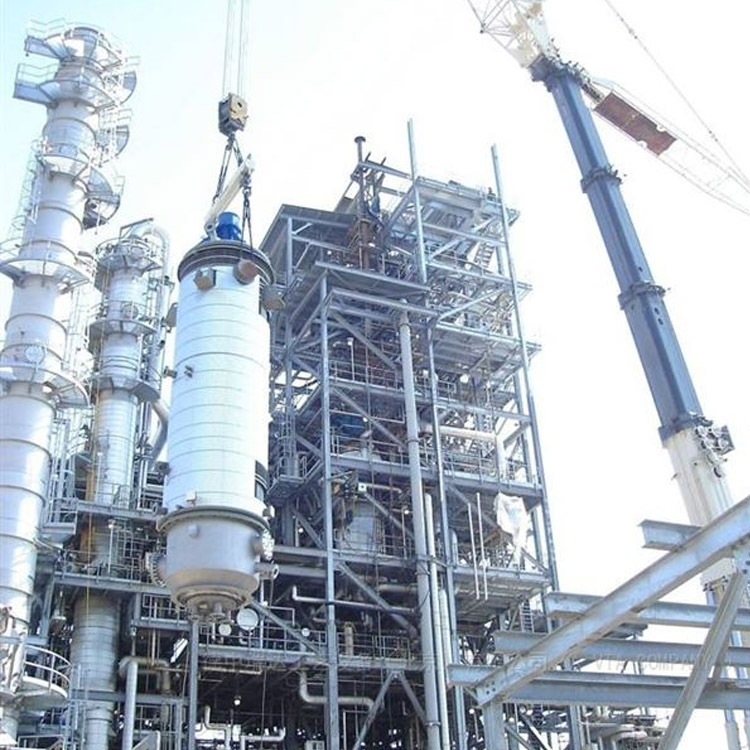
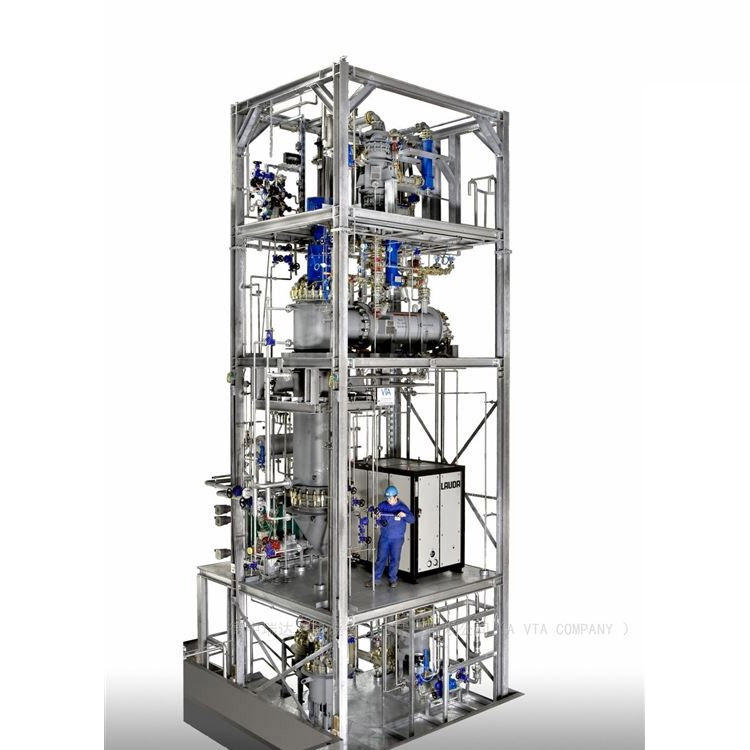
The thin-film evaporator can serve as a reboiler for a distillation column, offering excellent scalability. Modified, it can become a distillation unit where the thin-film evaporator acts as the reboiler, suitable for separating components with closely spaced boiling points.
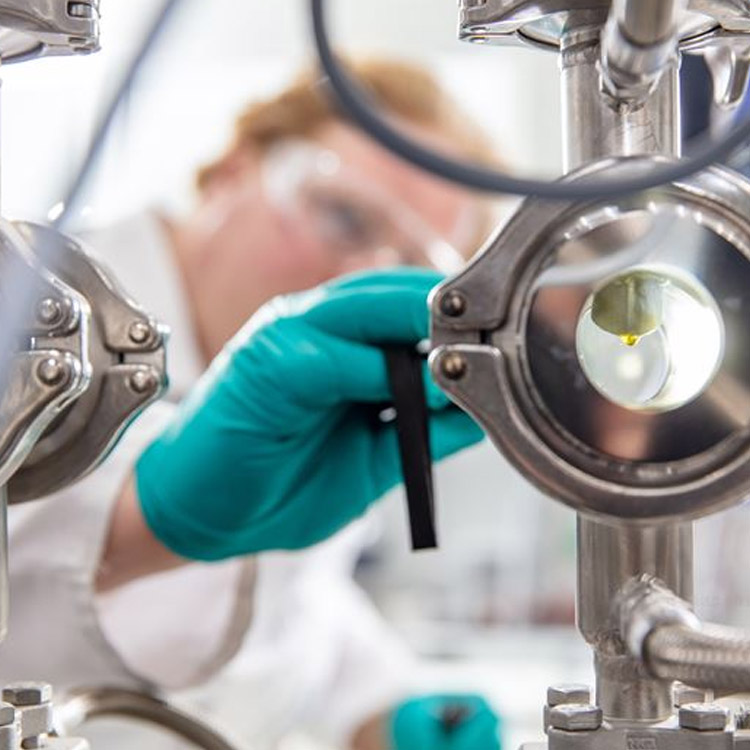
All light and heavy fractions are equipped with gear pumps, allowing simultaneous sampling at the pump outlet. After weighing, the feed quantity data and key data like the distillation ratio of the light fraction can be obtained to guide the experiment process at any time. Since the feed is continuous, the discharge of both light and heavy fractions is also continuous. Sampling and discharge under vacuum are unrestricted, enabling continuous distillation whether the light fraction or the heavy fraction is the product.
The system can be upgraded to an automatic control production unit with the installation of instruments like flow meters, vacuum self-control valves, along with a PLC and a visual operation interface.