






Occupancy of production site is minimal.
Full digital control, high production accuracy, excellent product quality, and low scrap rate.
Optimized structure eliminates the need for fasteners, resulting in low production costs.
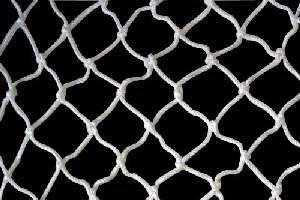
Unit weight cost of wire is lower than that of wire rope; construction using circular nets; the production value added of circular net manufacturing exceeds that of wire rope net production.
Comprehensive production costs, the circular mesh and wire rope mesh per unit area are basically equivalent.
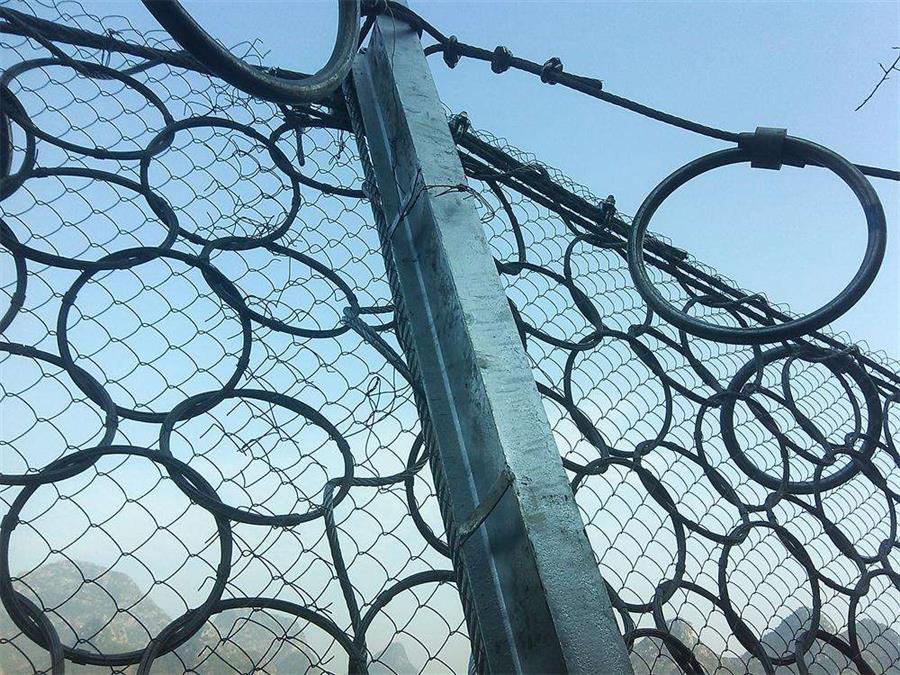
The latest generation of circular net machines boasts mechanical performance and functionality at international standards, significantly propelling the advancement of domestic circular net manufacturing processes and substantially reducing production costs. At the same time, it enables the protective levels of domestically produced circular nets to rapidly join the ranks of advanced Western developed countries, bridging the decades-long gap with foreign products.
The application of the new-generation annular mesh machine signifies that the domestic slope protection mesh manufacturing industry has stepped onto an entirely new level. Without increasing material costs, it can address the major隐患 of insufficient levels in the past for flexible mesh protection. The trend of the new annular mesh fully replacing wire rope mesh is imminent!

When the slope rock strata is broken and loose, the anchor rod can be extended. The anchor rod must be a配套 product for flexible protective netting, and it is strictly prohibited to use general rebars to make anchor rods independently.
When rock drilling equipment is limited, the two strands of steel rope forming each anchor rod can be separately anchored into two anchor holes with a diameter not less than φ35mm; this creates a V-shaped anchor rod, with an angle between the two strands of 15~30° to achieve the same anchoring effect.
Grout and insert anchor rods (the exposed ring of the anchor rod cannot be higher than the ground surface, and the grouting of the ring section is not allowed to ensure the tensile rope is as close to the ground surface as possible after tensioning), use M35 cement mortar for anchor rod grouting; in a chemical erosion environment, select M35 cement mortar or cement slurry based on the environmental action level, and add a certain proportion of fly ash by weight. Ensure the borehole is fully grouted, and cure the grouting mass for at least 3 days before proceeding to the next process.
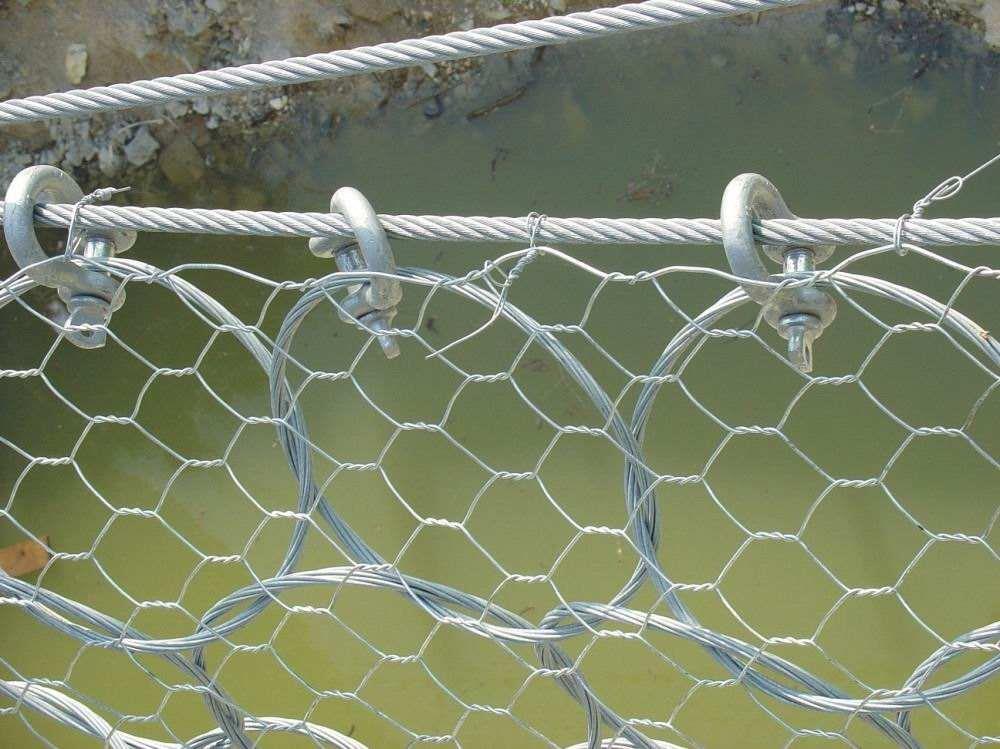
4.1.4 Installation of diagonal support ropes: The transverse support ropes are made of φ16 steel wire ropes, while the longitudinal support ropes are φ12 steel wire ropes. The quoted price includes circular mesh, forming a tensioned rope grid with each diagonal intersection being 4.5m x 4.5m. After tensioning, each end is secured with 2 to 4 rope clamps (two for ropes less than 15m long, four for over 30m, with circular mesh installation, and three in between) connected to the exposed collar of anchor rods.
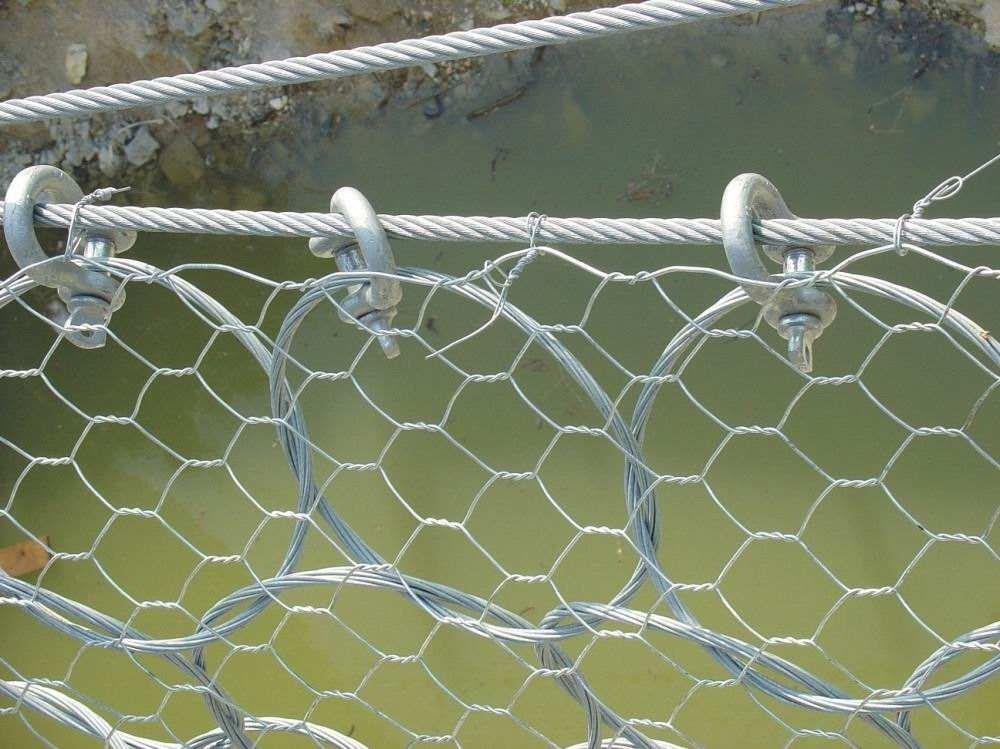
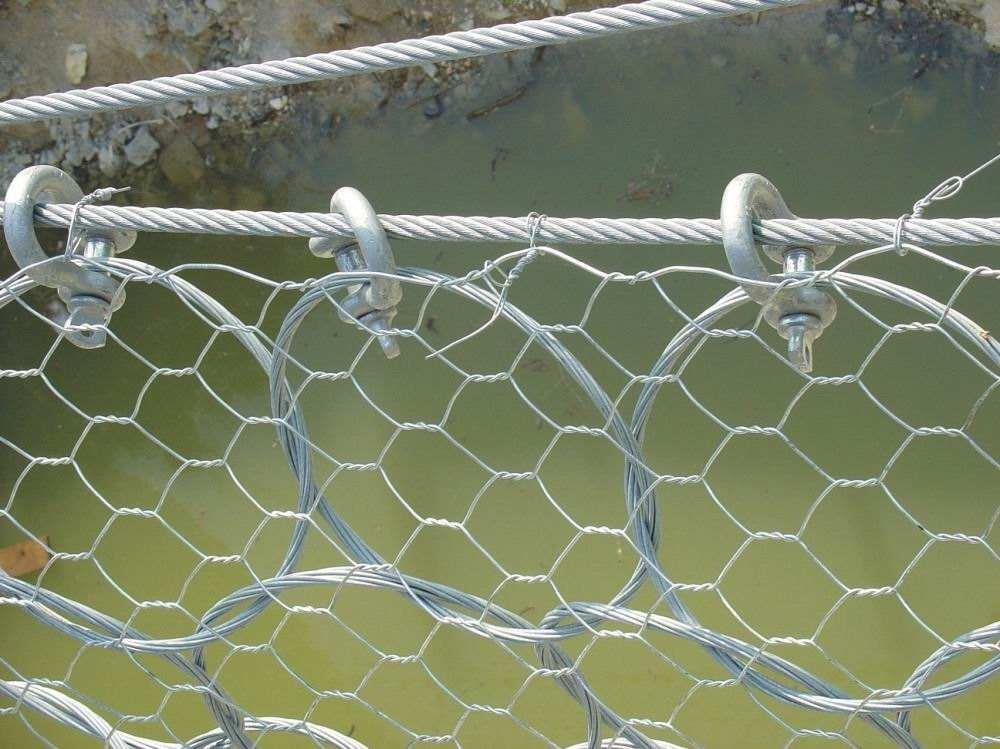
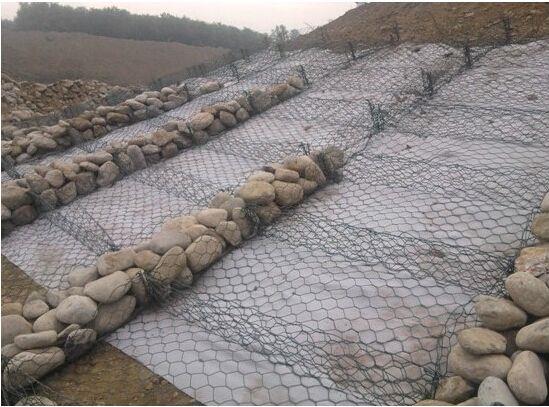
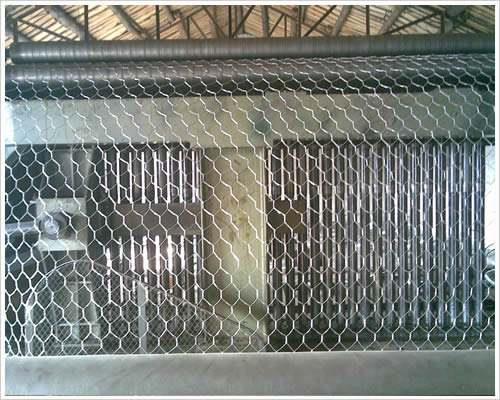
4.1.5 Double Twisted Hexagonal Mesh Laying: Utilizing φ2.0/50*60 double twisted hexagonal mesh; mechanically woven from 2mm diameter steel wire, forming a double twisted structure with a mesh size of 50mm*60mm grid mesh. Corrosion protection is achieved through hot-dipped galvanizing + 5% aluminum + mixed rare earth alloy. The steel wire should be free of mechanical damage and rust.
Once the tensile cables are stabilized, lay a double twisted hexagonal mesh and a circular mesh from top to bottom, ensuring an overlap width of at least 5cm. Sew the double twisted hexagonal meshes together and tie them to the tensile cables using φ1.5mm wires at 1m intervals (if on-site construction conditions permit, this step can be done before the previous one, placing the double twisted hexagonal mesh below the tensile cables), to prevent the collapse of small rock blocks.