








1. Baosteel Color Coated Steel Plate Rolled into Shape
Roll-forming is the most commonly used method for producing building roof and wall panels from Baosteel's color-coated steel sheets. The roll-forming machine shapes the steel coils into the desired forms by a series of different-shaped rollers mounted on the frame. The production of Baosteel's color-coated steel sheets varies depending on the strength and elongation of the steel, the characteristics of the paint, the model of the press machine, and its maintenance condition.
Available in various shapes. To enhance the field performance of Baosteel's color coated steel plates, particularly in the area of steel plate deformation, the following usage guidelines should be adhered to:
1. Utilizes a large bend radius design. A large bend radius design meets the deep shape requirements of architectural design.
2 The roller design accommodates deformation of the steel plate from the center to the edges.
3 The roller press design coordinates with the steel plate strength, for example: for high-strength steel plates, the same shape deformation may require more passes.
Complex shapes should be made from low-strength steel plates to allow for greater design margin.
Maintain roller press equipment to ensure it has the required level and vertical alignment, as well as sufficient gap between the upper and lower rotating rollers. Prevent coating abrasion and avoid damaging the topcoat when cleaning the rollers.
6 Utilize a flexible undercoat and topcoat system to enhance the performance of steel plates during bending.
Section II: Other Processing and Shaping Methods for Baosteel Color Coated Sheets
Although roller forming is the most commonly used forming method for Baosteel color coated steel sheet, for applications such as roof and wall panels, it may be necessary to use edge pressing or other accessories. In some cases, it may also be necessary to use the largest possible bend radius to enhance the performance of the bending section. It is also crucial to avoid scratching or damaging the coating surface during the edge pressing process. At this time,
To avoid this, you can apply a layer of polyester or hard plastic on the molding. Maintain an appropriate mold gap during the pressing process. Embossing is a method of forming Baosteel color coated steel sheets. The embossing process must ensure that the coating and plating are not damaged. To ensure the durability of Baosteel color coated steel sheets is not affected, the embossing must also have sufficient low sharpness and depth.
Stamping, grooving, and punching are other forming methods for Baosteel's color coated steel plates. For these methods, many influencing factors previously discussed, such as mold clearance and paint flexibility, are equally significant. For instance, the stamping method is used to produce corrugated roof tiles for rural use.
Section 3: Baosteel Color Coated Sheet Processing and Transportation
On-site construction must be handled with care and the following awareness to ensure the excellent performance of Baosteel Color Coated Steel Sheets. Handling scratches typically manifest as scrape marks or paint particles adhering to the surface of Baosteel Color Coated Steel Sheets, with the root cause being poor handling operations, insufficient paint curing, and irregularities on the steel sheet surface. Paint curing degree, hardness, and lubricity
Sexual impact can cause scratch defects. Good roller lubrication and appropriate backside paint can help reduce scratch defects. Sometimes, a transparent, removable film can be applied to the steel plate surface to avoid handling scratches. Crane operations within the bundling factory may also cause scratches; to avoid scratches caused by bending, the crane equipment for long bundles should
Should support most of the bundle's length. The bundle must be securely fastened both vertically and horizontally. When transported by vehicle, it is crucial to avoid direct contact between the bundle and other objects such as structural components. When handling with forklifts, care must be taken during loading and unloading to prevent excessive bending of the bundle or scratching of the steel plates.
How to install Baosteel Color Coated Steel Sheet - Precautions?
Now, some steel structure companies are small construction teams that lack systematic training before installing Baosteel color steel panels, which often results in surface damage during installation. This greatly reduces the service life of Baosteel color steel panels. It is therefore especially important to be cautious. Additionally, the installation process may not be standardized.
Discrepancies in color variation have been observed in certain batches of Baosteel colored steel plates, which is something that should be noted. Next, we'll introduce how to install Baosteel colored steel plates! Shanghai Chuanli Metal
Bao钢 Color Coated Steel Sheet Installation
No metallic shavings, drillings, cuttings, or other metal objects such as rivets and fasteners are permitted to remain on the surface of Baosteel's coated steel plates, as these metal residues can lead to rust spots upon erosion. Upon discovery, these residues must be swept off the roof immediately, or at least cleaned up by the end of each day's work. Avoid walking on them.
To avoid damaging the paint film. In situations with strict requirements, inspections must be conducted within 2 weeks of building installation to remove any residual substances that may rust. Cleaning the residue at this time will help maintain the roof's appearance for a long time.
剥离膜
Peelable Film
Some Baosteel color coated steel sheets are coated with a special transparent organic film on their surface. This organic film protects the coated layer from scratches and abrasions during storage and transportation, but it must be removed immediately after installation is completed. Sunlight exposure enhances the adhesion between the organic film and the surface of the color coated steel, therefore, when placing Baosteel color coated steel sheets on-site, it is necessary to
Cover to avoid direct sunlight.
Section 3: Cutting
It is advisable to use trimmed edges as much as possible and avoid cutting on-site. If cutting is necessary, tools such as straight shears, curved shears, sawing machines, and manual shears can be used. All cutting work on-site must not damage the steel plate coating or plating and maintain good trimmed edges. The cutting blades must be kept sharp to minimize...
Burrs, during cutting, first ensure the steel plate surface is facing up to keep the burrs on the back of the steel plate. Cutting or processing is not allowed on other Baosteel color coated steel plate surfaces. If power cutting or drilling is necessary, apply tape or rags around the drilling area and near the cuts to prevent heat slag from damaging the coating. Sanding should be avoided.
Cutting with tools like circular saws, steel saws, or flame cutting can damage the coating and plating of steel plates.
Section 4: Auxiliary Materials Matching
Copper, lead, graphite, and unprotected steel plates should not be used in direct contact with Baosteel's color coated steel sheets. Efforts should be made to prevent copper plate debris from contacting the steel sheets. Baosteel's color coated steel sheets should also not be used in direct contact with wet or weathered wood, or wet cement. The reasons are as follows: the moisture content in the wood, and the corrosive chemicals used in weathering treatment.
Reducing the lifespan of color steel plates, chemical-treated wood residues can cause corrosion, and high moisture content in cement can react with steel plate coatings.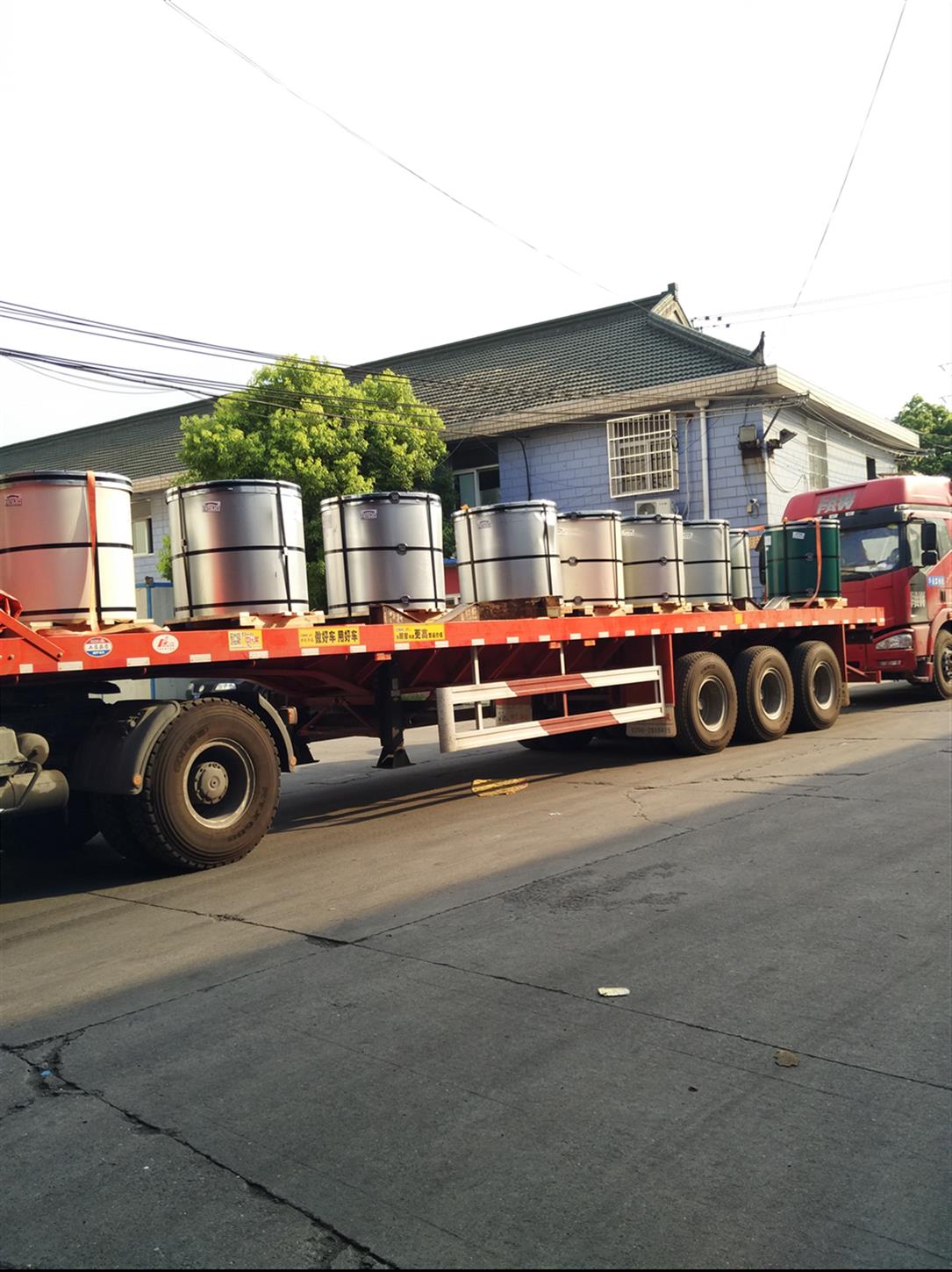
Here, using Baosteel as an example, let's introduce domestic steel grades. What does TDC51D+Z/AZ mean in Baosteel's standards? "T" is the first letter of "coated," meaning coated sheet. "D" still stands for coated sheet. The "51D" represents the steel grade application, as it does in European standards. The applications of 52D, 53D, and 54D are self-explanatory, similar to European standards. The grade of color coated steel coil is usually prefixed with an English "T" before galvanized or aluminum-zinc coated. As previously mentioned, Baosteel's color coated steel coil is TDC51D+Z/AZ. Angang's color coated coil is TDX51D+Z/AZ. Ma'gang's color coated coil is TSGCC+Z/AZ.
Abstract: Classification of Baosteel Color Coated Sheet Coatings
Baosteel Color Coated Sheet Paint Varieties
Currently available coatings for colored steel coils include polyester coating (PE), fluorocarbon coating (PVDF), silicone-modified coating (SMP), high weather-resistant coating (HDP), acrylic acid coating, polyurethane coating (PU), and plastic solvent coating (PVC).
1. Baosteel Color Coated Steel Sheet - Polyester (PE, Polyester)
PE coatings offer excellent adhesion to materials, Baosteel's color coated steel sheets are easy to process and shape, are cost-effective, and offer a wide range of colors and finishes. Under direct exposure in general environments, their anti-corrosion lifespan can last up to 7-8 years. However, in industrial settings or heavily polluted areas, their service life is relatively reduced. Despite this, the polyester coating's resistance to UV light and the film's resistance to chalking are not ideal. Therefore, the use of PE coatings is still subject to certain limitations, typically in areas with minimal air pollution or for products requiring multiple shaping processes.
2, Baosteel Color Coated Sheet with Silicone Modified Polyester (SMP)
Due to the active -OH/-COOH in polyester, it readily reacts with other high polymers. To improve the UV resistance and anti-fading properties of PE, a silicone resin with superior color retention and heat resistance is used for modification, with a modification ratio of 5% to 50%. SMP provides steel plates with enhanced durability, with a corrosion protection lifespan of up to 10-12 years. However, the price is higher than that of PE. Since the adhesion and processability of silicone resin to materials are not ideal, SMP Baogang color coated steel plates are not suitable for applications requiring multiple forming processes. They are mostly used for building roofs and exterior walls.
3. Baosteel Color Coated Steel Sheet - High-Durable Polyester (HDP, High Durable Polyster)
For the drawbacks of PE and SMP, UK's HYDRO Company (now acquired by BASF) and Sweden's BECKER developed HDP polyester coatings in early 2000 that achieve 60-80% of the weather resistance of PVDF coatings, surpassing standard silicone-modified polyester coatings. Their outdoor weather resistance is up to 15 years. High-weather polyester resins are synthesized using cyclohexane-containing monomers to balance flexibility, weather resistance, and cost. Non-aromatic polyols and polyacids are used to reduce the resin's absorption of UV light, achieving high weather resistance in the coatings. The addition of UV absorbers and hindered amines light stabilizers (HALS) in the coating formula enhances the film's weather resistance. Baosteel's high-weather polyester coil coatings have been recognized by the market overseas, with a strong cost-performance ratio.
4. Baosteel's PVC Plastic Solvent (PVC Plastisol) for Color Coated Steel Sheets
PVC resin boasts excellent water and chemical resistance, typically applied at high solid content, with a coating thickness ranging from 100 to 300 μm. It can provide a smooth PVC coating or a textured finish with light embossing. As a thermoplastic resin, the coating offers good protection for steel plates due to its high film thickness. However, PVC has relatively poor heat resistance. It was widely used in Europe initially but, due to its lesser environmental friendliness, its usage has decreased over time.
5, Baosteel Color Coated Sheet PVDF
Due to the strong bond energy between the chemical bonds in PVDF, the coating exhibits excellent corrosion resistance and color retention. It is the highest-grade product in the construction industry's use of Baosteel's color coated steel plate coatings. With its large molecular weight and linear structure, it also boasts outstanding mechanical properties, UV resistance, and heat resistance, in addition to its chemical resistance. Under normal environmental conditions, its corrosion resistance can last for up to 20-25 years. In recent years, there has been a surge in the use of fluoro-resins produced by copolymerizing trifluoroethylene and ethylene ester monomers in the construction industry, particularly for exterior walls and metal panels. However, due to the use of easily hydrolyzable ethylene ester monomers and a fluorine content about 30% lower than PVDF, its weather resistance is somewhat inferior to that of PVDF. Baosteel's fluoro-carbon coatings contain at least 70% PVDF (with the remainder being acrylic resin).
What is fluorocarbon coated steel sheet?
Fluorocarbon coated steel sheets refer to steel sheets with a coating made from fluorocarbon resin paint, which is baked at high temperatures to form the finished product.
Fluorocarbon resin coatings are paints primarily composed of fluorocarbon resin as the film-forming material, supplemented by various modified resins, pigments, and fillers, which are processed through dispersion, grinding, and color matching. Fluorocarbon resins are obtained through homopolymerization or copolymerization of fluorinated olefins as the monomer, or by copolymerizing with other monomers based on this, as well as through self-polymerization or copolymerization of monomers with fluorochemical side chains containing C-F chemical bonds, resulting in a molecular structure rich in C-F chemical bonds.
Fluorocarbon resin coatings can be further categorized by the type of resin they contain, including: Polyvinyl fluoride (PVF) coatings, Polyvinylidene fluoride (PVDF) coatings, Polytrifluoroethylene (PCTFE) coatings, Polytetrafluoroethylene (PTFE) coatings, Polyallfluoropropene (FEP) coatings, Ethylene/ tetrafluoroethylene copolymer (ETFE) coatings, Ethylene/trifluoroethylene copolymer (ECTFE) coatings, Tetrafluoroethylene/ perfluoroalkoxy copolymer (PFA) coatings, Fluorinated olefin/ethylene ether copolymer coatings, Fluorinated rubber coatings, and various modified fluororesin coatings.
The Baosteel Fluorocarbon Color Coated Steel Sheet uses PVDF (polyvinylidene fluoride) paint.
2. Properties of Polyvinylidene Fluoride (PVDF) Coating
PVDF resins contain a large number of C-F chemical bonds. Due to the high electronegativity of fluorine, the fluorine atoms carry a significant negative charge, causing repulsion between adjacent fluorine atoms. This results in the fluorinated hydrocarbon chains being distributed in a helical pattern along the zigzag carbon bonds. A single carbon chain in the middle is surrounded by a series of negatively charged fluorine atoms, forming a highly protective barrier. The distribution is symmetrical, and the entire molecule is non-polar, thus exhibiting high chemical stability and inertness. PVDF resins are thermoplastic resins that require high-temperature baking to flow and form a film through thermal melting.
PVDF coatings inherit the excellent properties of PVDF resins, such as durability, resistance to chemicals, and corrosion resistance. PVDF resin coatings have been used in the construction industry for over 40 years. Their excellent outdoor performance is widely recognized as the organic coating with the best protective effects.
3. Baosteel's quality control requirements for fluorocarbon products
Fluorocarbon Resin Type: Polyvinylidene Fluoride (PVDF) resin must be used as the base resin for fluorocarbon coatings.
Coating Certification: Baosteel is an approved PVDF coating supplier with KYNAR 500 and HYLAR 5000 coating certifications. These brands are the names of PVDF coatings produced by certified units of two world-renowned PVDF manufacturers, and they must contain at least 70% PVDF resin (by weight) to be used.
Colorant Selection: To ensure the excellent weather resistance of fluorocarbon coatings, the pigments used in PVDF coatings must be high-temperature sintered metal oxides or metal oxide alloy pigments, i.e., ceramic pigments; weather-resistant rutile-type titanium; acid-resistant metal pigments, and durable mica pearlescent pigments.
Coating Weight: During the production of PVDF coated steel sheets, Baosteel must use hot-dip galvanized sheets with a zinc coating weight of more than 90g/sq.m on one side or hot-dip aluminum-zinc coated sheets with a coating weight of more than 75g/sq.m on one side.
Base Coat Set: Utilizing polyurethane or polyester base coat (epoxy-based base coat is not suitable for PVDF coatings due to its lower weather resistance).
Coating Film Thickness Control: The total film thickness on the top surface of the PVDF coated steel plate must be ≥23 micrometers.
Coating Bake Temperature Control: PVDF coatings must undergo high-temperature baking at a board temperature as high as 249-254 degrees Celsius.
It is the PVDF product, guaranteed with raw materials like resins, pigments, coating formulas, sheets, and the color coated steel line process, that truly qualifies as Baosteel's fluorocarbon coated steel sheet with a 20-year warranty.
Baoshan's fluorocarbon and high durability products offer 20 and 15 years of warranty respectively. These warranties guarantee against color changes, gloss changes, and integrity of the coating on the color coated steel sheets. These changes refer to the early stage alterations during the entire lifespan of the color coated steel sheets, which have not caused substantial damage to the coated sheets.
Coated steel sheets in building components have a whole lifespan that includes:
Loss of coating luster --> Coating discoloration --> Coating flaking --> Coating cracking --> Coating bubbling --> White rust (coating corrosion) --> Red rust (sheet steel corrosion) --> Sheet steel perforation --> Color coated steel plate失效.
When selecting the coating for Baosteel's color coated steel, many factors must be considered, including the type of coating, coating thickness, color, and gloss level. Additionally, the requirements for the primer and back coating of Baosteel's color coated steel may also need to be taken into account.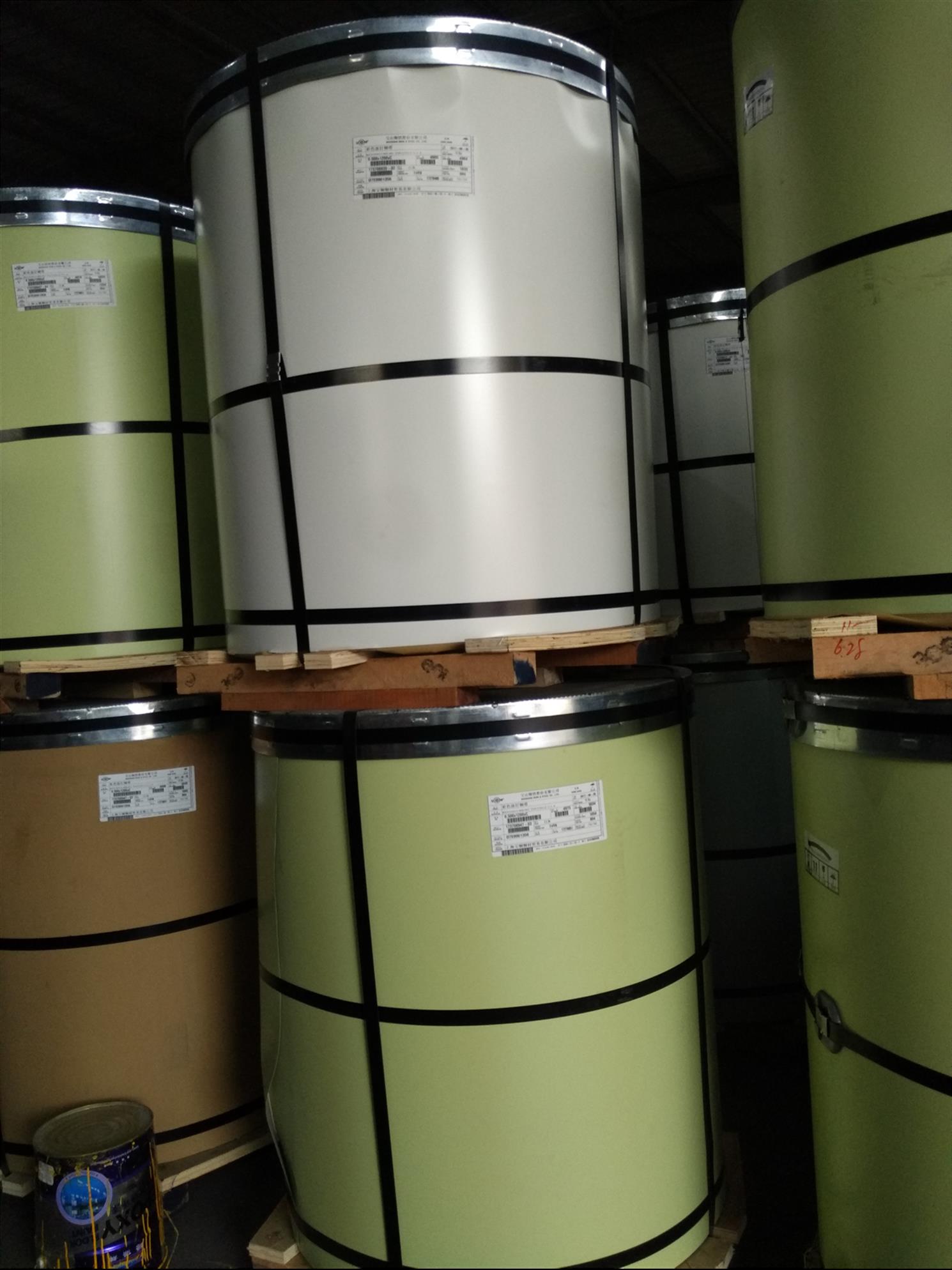
Influencing factors of corrosion environment in different regions
Temperature
High temperatures soften coatings, making it easier for corrosive agents to adhere and penetrate the substrate. At high temperatures, the oxygen content in water increases, and the rate of corrosion accelerates at certain temperatures.
Humidity
The corrosion of the substrate at cutting and processing damage areas is electrochemical corrosion, which is not easily formed at low humidity (i.e., the electrochemical circuit).
Daytime to nighttime temperature variation
Large temperature differences easily lead to condensation, creating conditions for galvanic corrosion on exposed metal. Additionally, significant temperature variations cause frequent cold and hot deformation of the coating, accelerating its aging and loosening, and making it easier for external corrosive agents to渗透 into the substrate.
Sunlight Duration and Intensity
Sunlight is a form of electromagnetic radiation, categorized into gamma rays, X-rays, ultraviolet, visible light, infrared, microwave, and radio waves based on their energy and frequency levels. Waves and radio waves possess low energy and do not interact with matter. Infrared light, also a low-energy spectrum, can only stretch or bend the chemical bonds of matter without breaking them. Visible light endows objects with a rich palette of colors. UV ultraviolet light, a high-frequency ray, possesses greater destructive power than low-energy spectra. As we know, skin freckles and skin cancer are caused by UV radiation from the sun. Similarly, UV can break chemical bonds in matter, causing them to fracture. This depends on the UV wavelength and the strength of the chemical bonds in the material. X-rays have penetrating power, while gamma rays can break chemical bonds in matter, producing free, charged ions, which are deadly to organic matter, fortunately, these rays are rare in sunlight. Therefore, it is clear that sunlight duration and intensity affect the structural stability of coatings, particularly in areas with intense UV radiation.
Rainfall amount and acidity
Heavy rainfall acidity is definitely detrimental to corrosion resistance. However, rainfall has a dual effect; it cleans the steel surface and washes away surface corrosion products for wall panels and steeply sloped roof panels. For low-sloped roof panels and areas with poor drainage, however, excessive rainfall can easily exacerbate corrosion.
Wind direction and velocity
Wind direction and speed have similar effects, often occurring together. It poses a challenge to the material joints, as wind can loosen them and rain can seep into the interior of the building.
Corrosive Sediments
Chloride ions and sulfur dioxide all accelerate corrosion, with these sediments often occurring in coastal areas and regions with severe industrial pollution, such as power plants and smelting factories.
Detailed Description
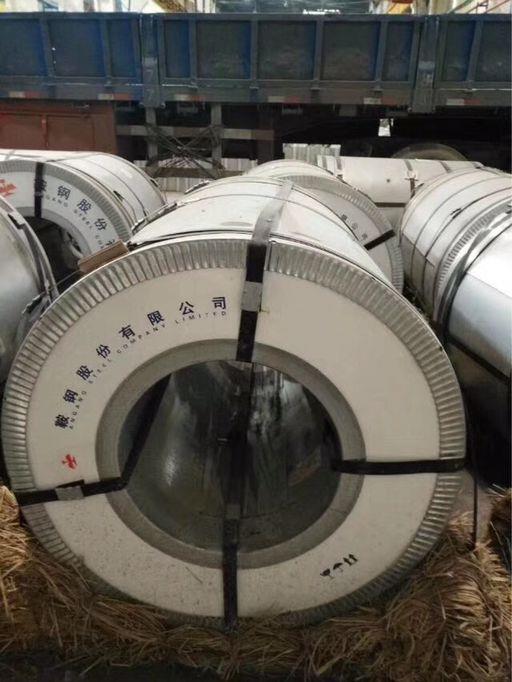
Baosteel's Color Coated Steel Coil (Color Steel Sheet) is the best material in the domestic color coated steel plate industry, with superior performance of Baosteel's color coated plates.
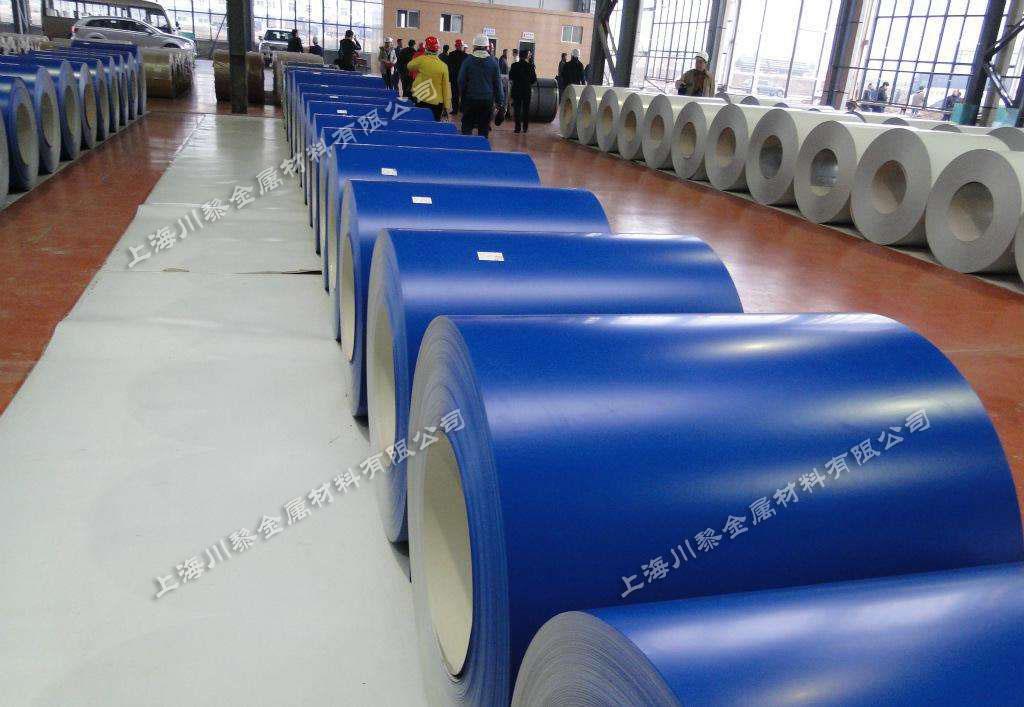
Baosteel Color Coated Steel Sheet Production Process: Baosteel color coated steel sheets are available in various base materials, including cold rolled, hot-dip galvanized, hot-dip aluminum-zinc coated, and electro-galvanized base sheets. The surface coatings are also quite comprehensive.
We offer standard PE polyester coatings, PVDF fluorocarbon coatings, HDP high weather-resistant coatings, SMP silicone-modified coatings, HPC self-cleaning coatings, anti-static coatings, etc. The baking process includes one coat and one bake, two coats and two bakes, and three coats and three bakes.
Baosteel's color coated steel sheets come in a variety of colors, such as orange yellow, cream yellow, deep sky blue, sea blue, crimson, brick red, ivory white, porcelain blue, silver gray, large wall gray, iron gray, sea blue, and white gray, among others.
The surface conditions of color coated steel plates include normal coated plates, embossed plates, and printed plates. Their applications cover a wide range of fields such as construction, household appliances, and transportation. An incomplete statistic indicates that the domestic demand for color coated steel plates by Baosteel in 2004 had already reached 3.2 million tons.
Shanghai Chuanli Metal Materials Co., Ltd. has been the exclusive agent for Baosteel Group Corporation's color coated steel sheets, aluminum-zinc coated products, and more. We offer a rich inventory, competitive prices, and welcome phone inquiries.
Coated color steel processing
Roll forming
Roll-forming is the most common method for producing architectural roof and wall panels from color-coated steel sheets. The roll-forming machine shapes steel coils into the desired forms using a series of rolls of different shapes mounted on the frame. The shapes of the color-coated steel sheets vary depending on the strength and elongation of the steel, the paint characteristics, the model of the press, and its maintenance condition. To enhance the field performance of color-coated steel sheets, especially in the area of steel plate deformation, the following usage guidelines should be followed:
Utilizing a large bend radius design. This design allows for deep architectural shapes as required.
Roller design accommodates deformation of steel plate from the center to the edges.
Roll-forming design coordinates with steel plate strength, for instance: for high-strength steel plates, the same shape deformation may require more passes.
Complex shapes should be made with low-strength steel plates to allow for greater design margin.
Maintain roller press equipment to ensure proper level and vertical alignment, as well as sufficient upper and lower rotation gap for roller fit, to prevent coating abrasion and damage to the surface paint during roller cleaning.
Utilize a flexible undercoat and topcoat system to enhance the performance of steel plates during bending.
Other processing and molding methods
Although roll forming is the most commonly used method for color coated steel sheet forming, it may be necessary to use edge pressing or other accessories for making roof and wall panels. Sometimes, the largest possible bend radius is required to enhance the performance of the bending section. It is also very important to avoid scratching the coating surface during the edge pressing process, which can be prevented by applying polyurethane or hard plastic on the die. Maintaining an appropriate die gap is crucial during the pressing process. Embossing is another method of color coated steel sheet forming, and it must ensure that the coating and plating are not damaged. To ensure the durability of the color coated steel sheet is not affected, the embossing sharpness and depth must be sufficiently low. Stamping, grooving, and punching are other forming methods for color coated steel sheets. For these methods, the factors previously discussed, such as die gap and paint flexibility, are equally important. For example, stamping is used to produce corrugated roof tiles for rural use.
Processing and transportation
On-site construction must be handled with care and the following awareness to ensure the good performance of color coated steel plates. Handling scratches typically manifest as scuffs or paint particles adhering to the surface of the color coated steel plate, with the root cause being poor handling operations, insufficient paint curing, and irregularities on the steel plate surface. The degree of paint curing, hardness, and lubricity affect the scratch defects. Good roller lubrication and appropriate backside paint will help reduce scratch defects. Sometimes, a transparent, removable film can be applied to the steel plate surface to avoid handling scratches. Inside the bundling factory, hoisting operations may also cause scratches; to avoid scratches caused by bending, the hoisting equipment for long bundles should be able to support most of the bundle's length. Bundles must be secured both longitudinally and laterally. When transporting by truck, it is essential to ensure that the bundles do not come into direct contact with other objects such as structural components. When using forklifts for handling, care must be taken during loading and unloading to prevent excessive bending or scratching of the steel plate.
WeChat Official Account

Scan to follow Official Account