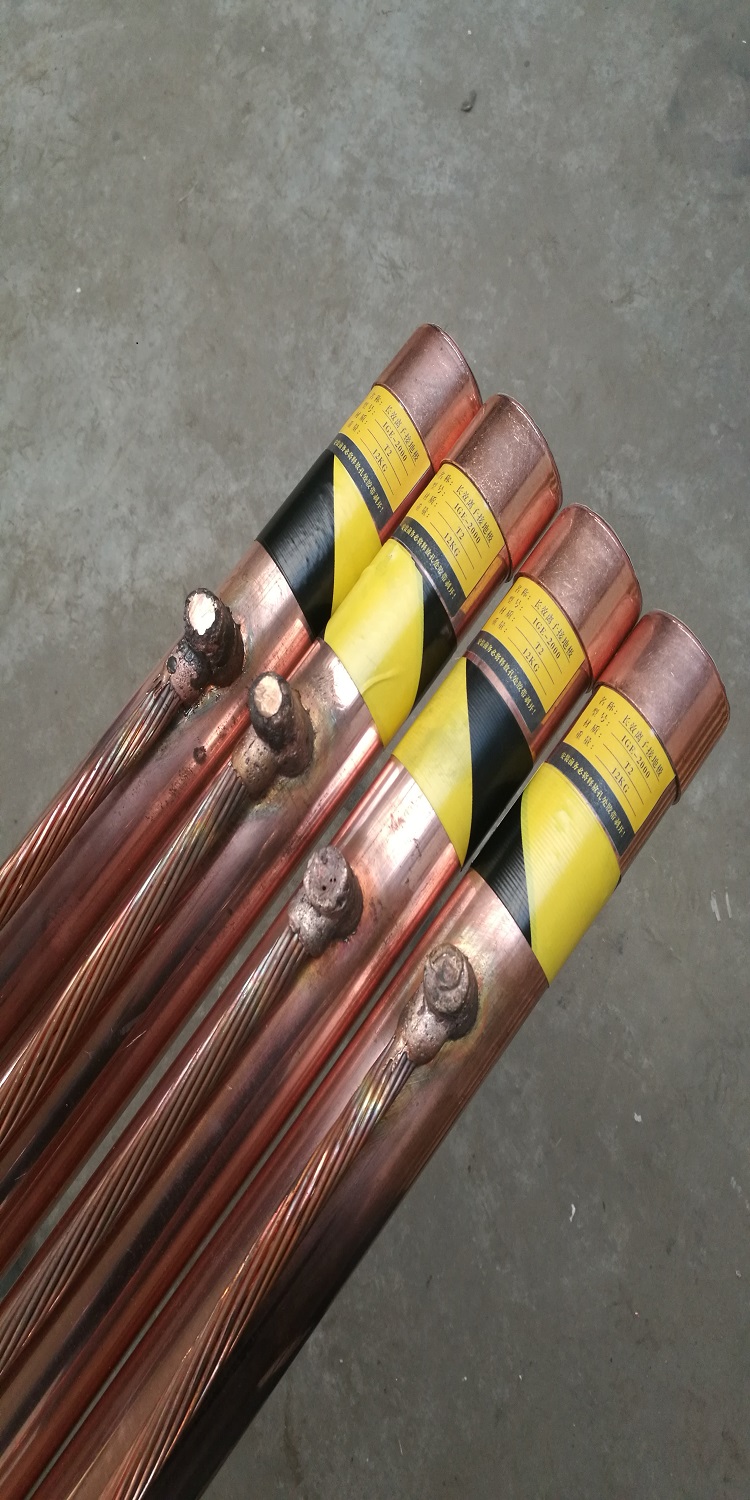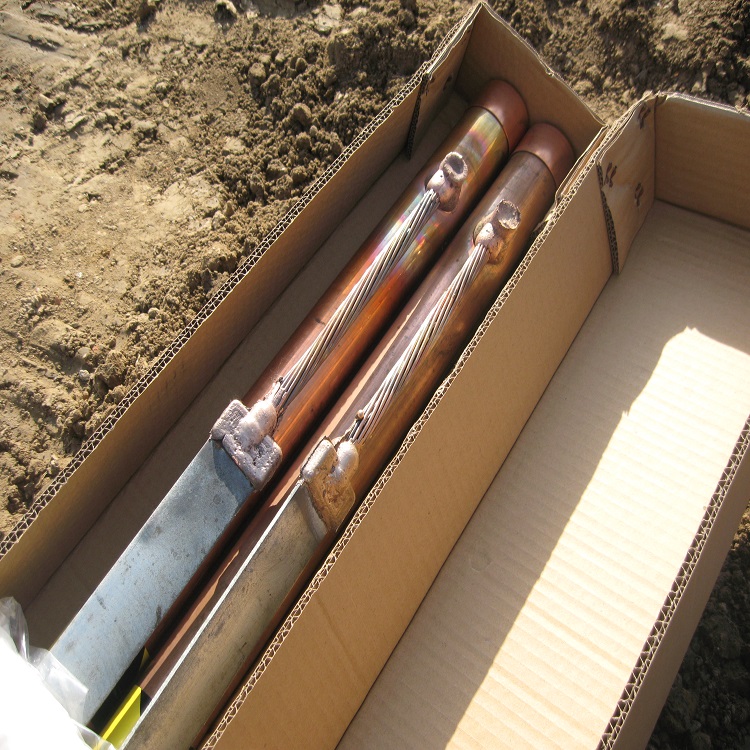













Long-lasting ion grounding rods utilize advanced electrolytic ion grounding technology, suitable for grounding requirements in various soil environments, particularly in conditions with high soil resistivity and poor geological conditions, where they can provide effective grounding protection. Widely used in power generationFacilities with high grounding requirements, such as factories, substation stations, mobile communication base stations, microwave stations, petrochemical plants, airport navigation towers, and electrified railways.
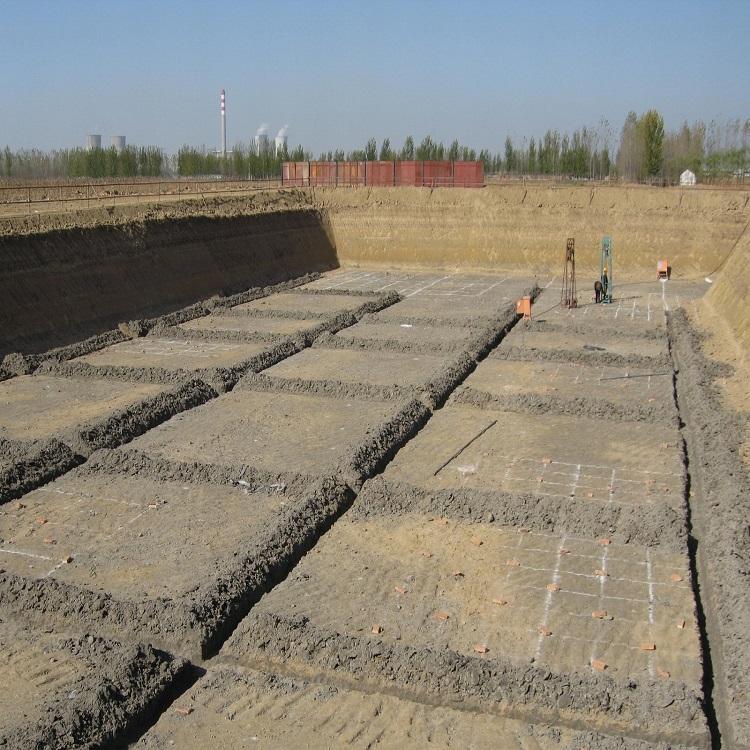
The environment and climate greatly affect grounding systems. In arid climates, the soil tends to be loose and has low conductivity. Traditional grounding methods are more demanding on soil quality, especially in regions with high soil resistivity, where grounding effectiveness is poor. Moreover, the engineering investment is substantial, and over time, the corrosion of grounding bodies accelerates, leading to continuously rising grounding resistance, which fails to meet grounding requirements.
Field tests have proven that the direct cause of excessively high soil resistivity is the lack of auxiliary conductive action from free ions, and long-lasting ion grounding rods can resolve the aforementioned grounding issues.
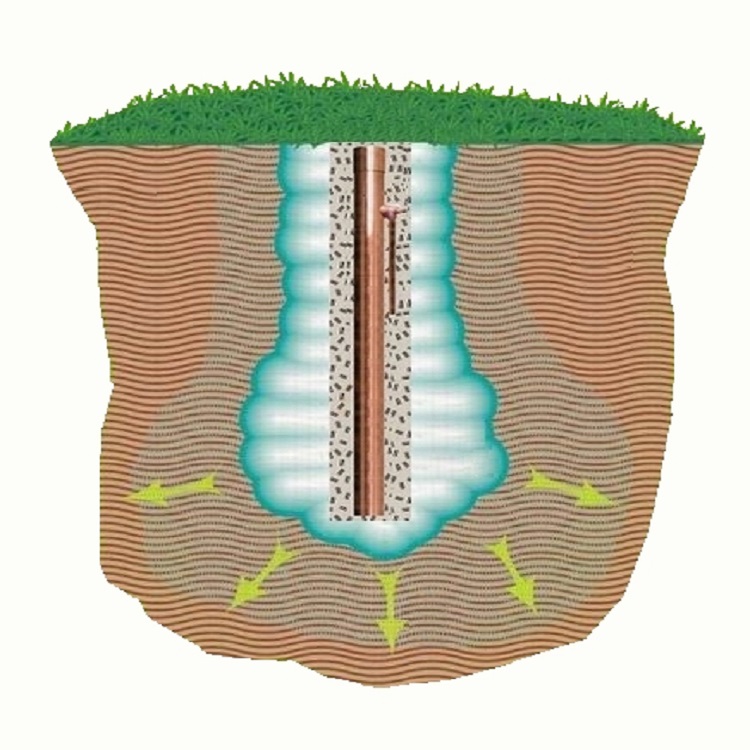
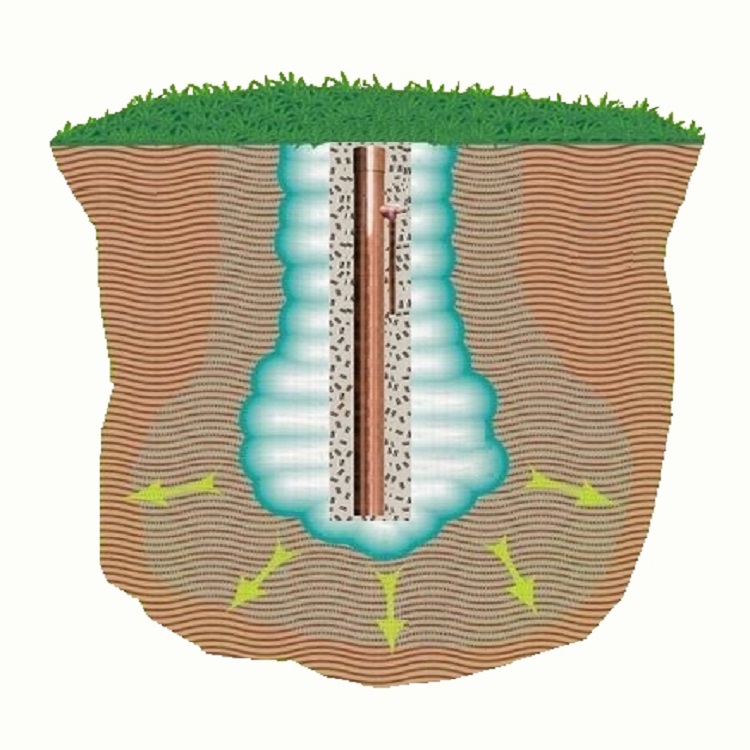
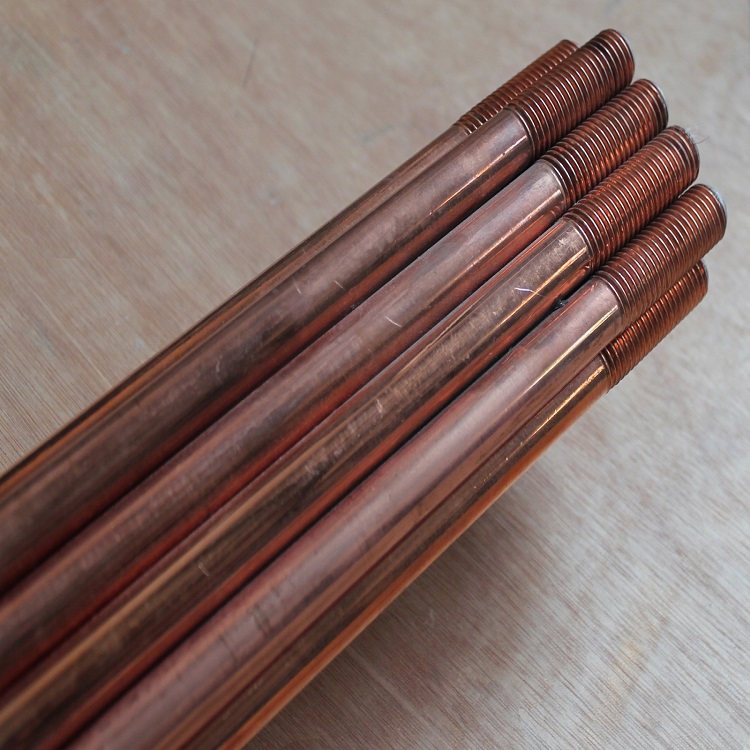
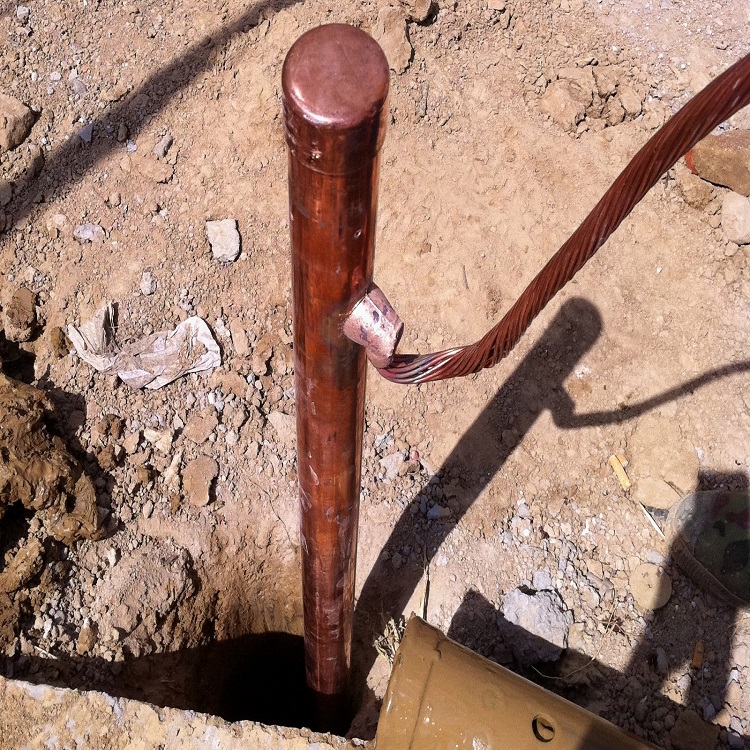
The main body of the long-lasting ion grounding electrode is made of copper alloy and is treated with a special anti-corrosion process to ensure strong conductivity, corrosion resistance, and a long service life. The long-lasting ion grounding electrode is equipped with both internal and external fillers: the internal filler contains a specially formulated electrolyte compound with strong leakage capacity, capable of fully absorbing moisture from air and soil. Through hygroscopic action, it effectively releases active electrolytes into the soil, forming a large-scale conductor and reducing the soil's resistivity, maintaining high conductivity levels in the surrounding soil, allowing fault currents to easily spread; the external filler has good expansibility, water absorption, and ionic permeability, maintaining a certain level of moisture in the surrounding soil regardless of weather or environmental changes, achieving a conductive state. Over time, it gradually expands the conductive range of the surrounding soil, thus maintaining long-term stability of the grounding resistance and ensuring safety protection for the equipment.
Performance Comparison
Traditional grounding is highly sensitive to weather and soil changes, easily leading to an increase in grounding resistance due to conductor corrosion.
Chemical resistivity reducer must be reapplied and regularly maintained to ensure effective operation.
Chemical resistive agents have high corrosiveness, which can reduce the lifespan of metal conductors.
Long-lasting Ion Grounding Rod
Continuous soil improvement maintains a stable grounding effect.
Long-lasting ion grounding rods are available in standard and modular types, facilitating installation in various locations or environments. Their extension sections (each 1.5 meters long) can be infinitely connected.