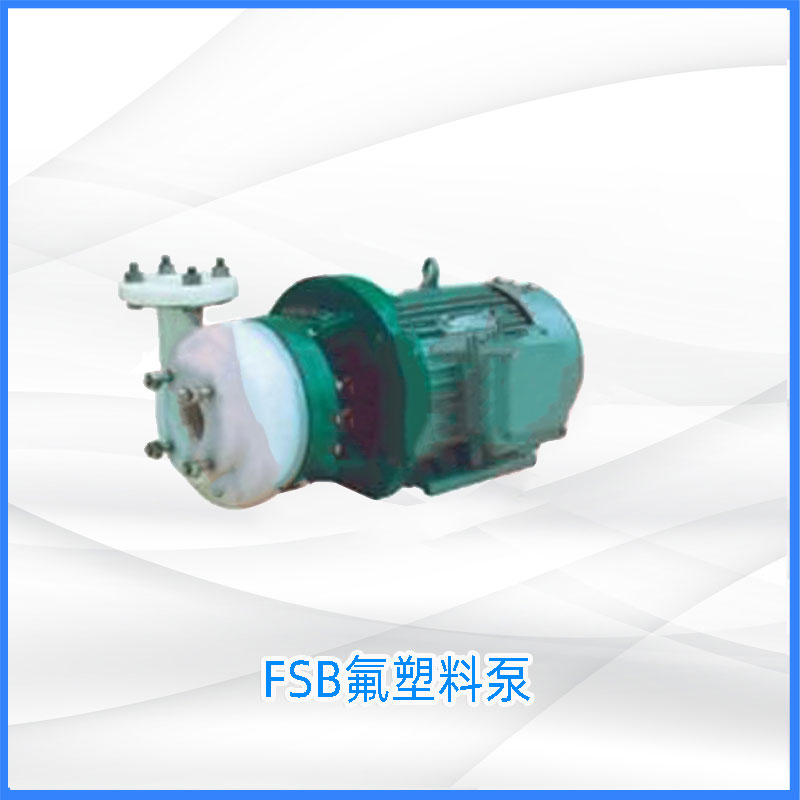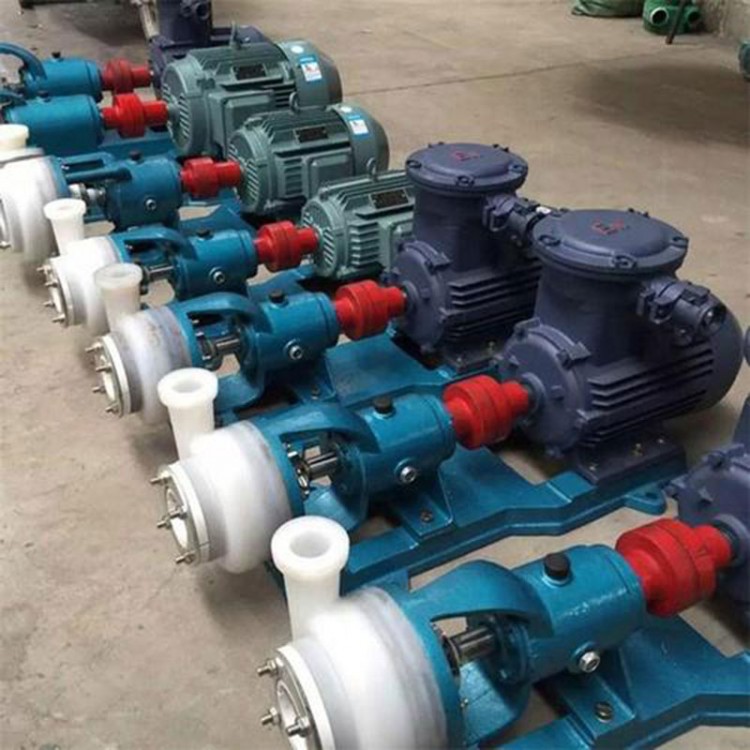


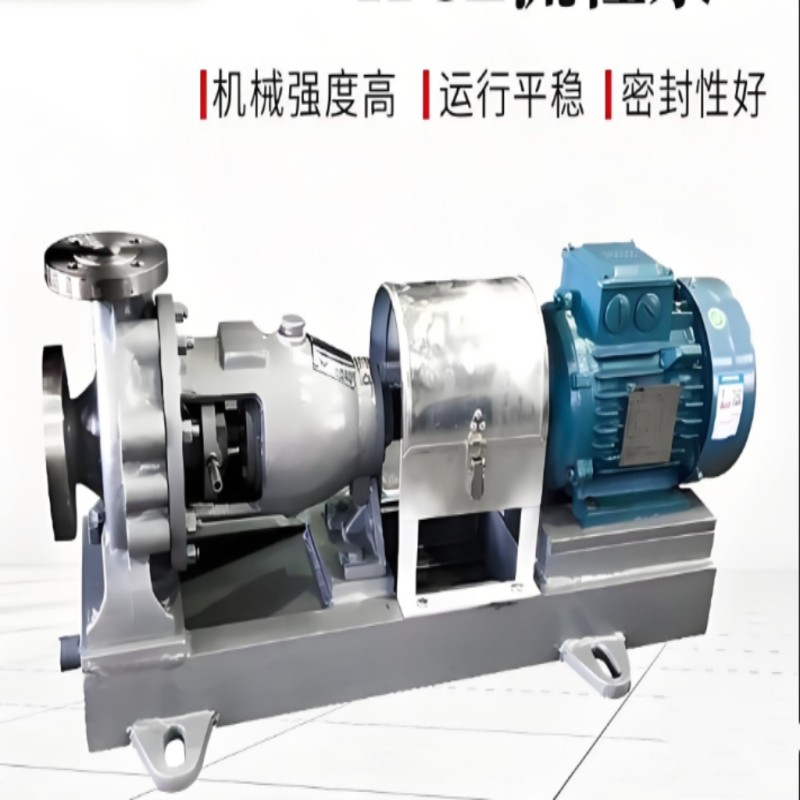
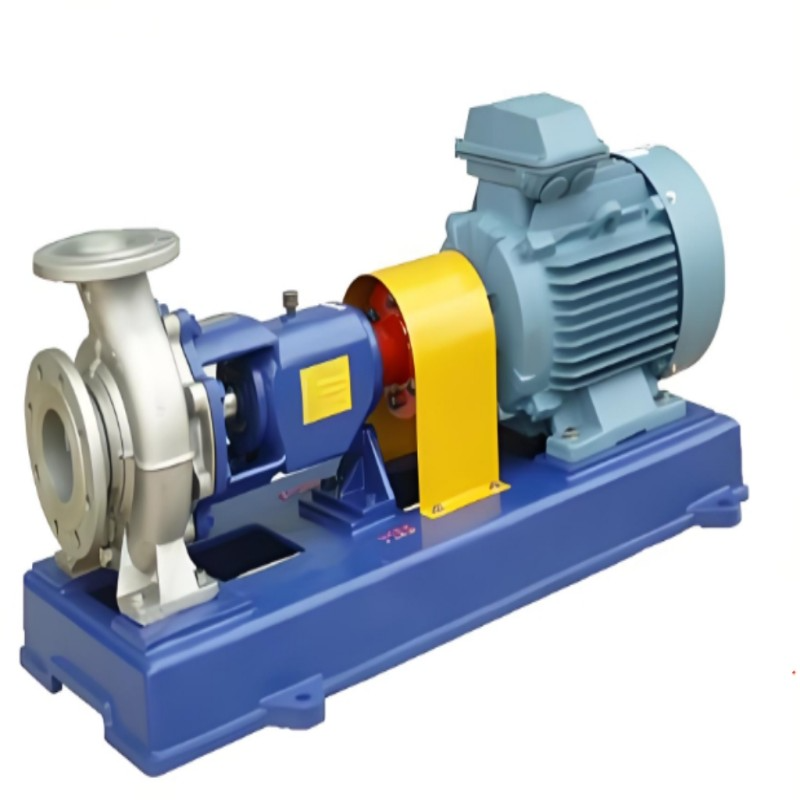

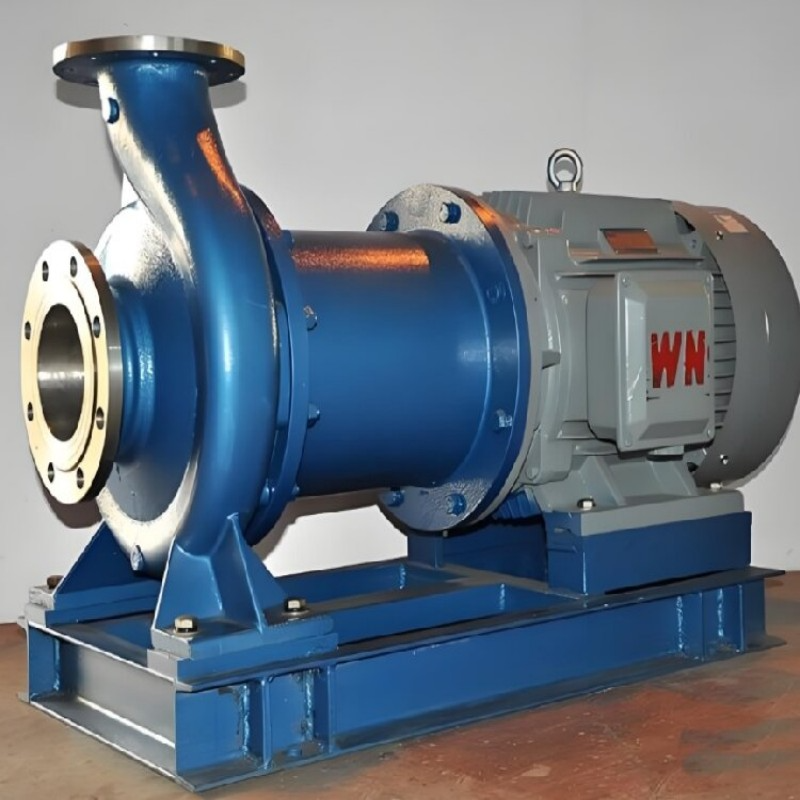








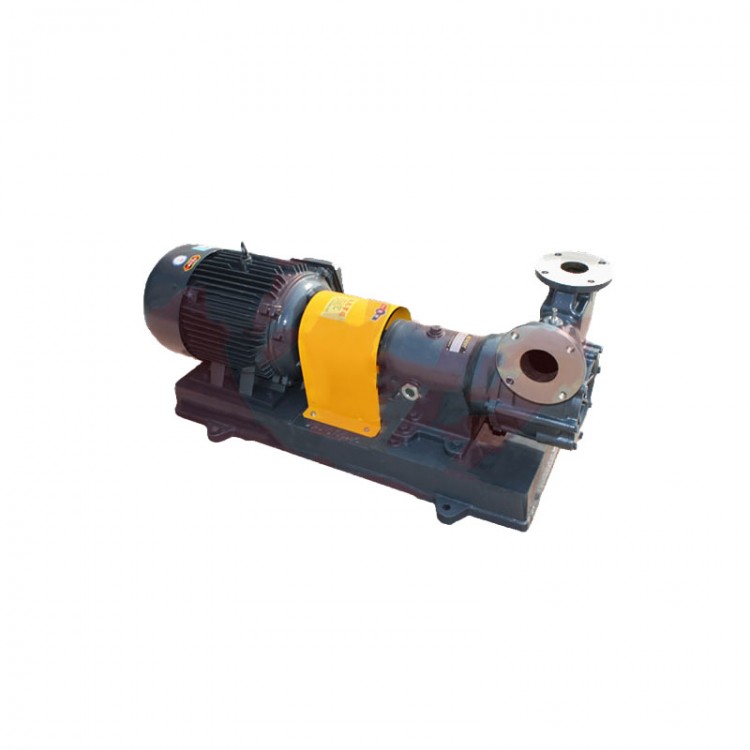


I. Overview of FSB Fluoroplastic Pumps
The FSB type fluoroplastic alloy pump is designed according to international standard dimensions. The pump body is a combination of metal and polytetrafluoroethylene (F46). The pump cover, impeller, and shaft sleeve are all made by encasing metal inserts with fluoroplastic, formed through computer-controlled temperature sintering under pressure. The shaft seal features an externally mounted bellows mechanical seal. The static ring is made of 99% alumina ceramic or silicon nitride, while the dynamic ring is filled with PTFE material, offering excellent corrosion and wear resistance. It is suitable for transporting highly corrosive media of any concentration, including sulfuric acid, hydrochloric acid, acetic acid, nitric acid, aqua regia, strong alkalis, strong oxidizers, organic solvents, and oxidizers, making it one of the most corrosion-resistant materials in the world. It effectively prevents leaks, drips, and spills. The fluoroplastic alloy pump is widely used in industries such as chemicals, acid production, alkali production, smelting, rare earths, pesticides, dyes, papermaking, electroplating, electrolysis, acid pickling, electronic components, and research institutions.
Section II: Model Significance of Fluoroplastic Alloy Centrifugal Pumps
50FSB-30DL
50 represents the diameter of the intake (mm)
FS stands for Fluoroplastic as the material for parts in contact with the medium.
B represents a single-stage, single-suction, cantilever centrifugal pump
30 represents the throw distance (m)
D represents a short bracket connection style
L represents Axle Connected (with Base Plate)