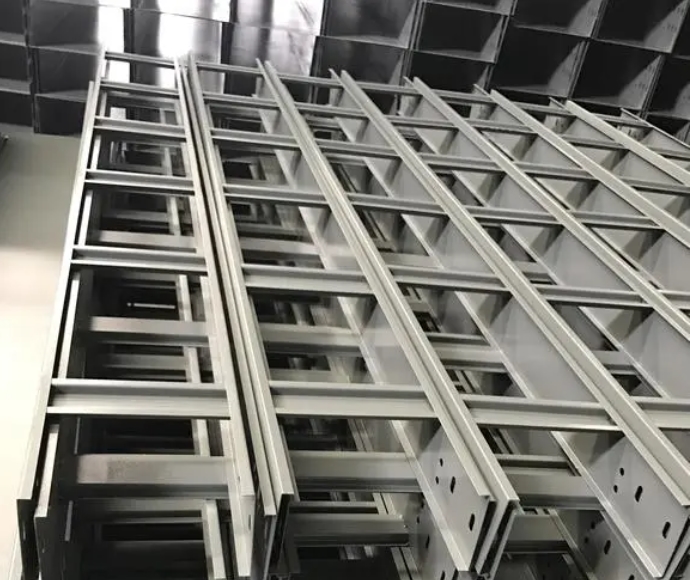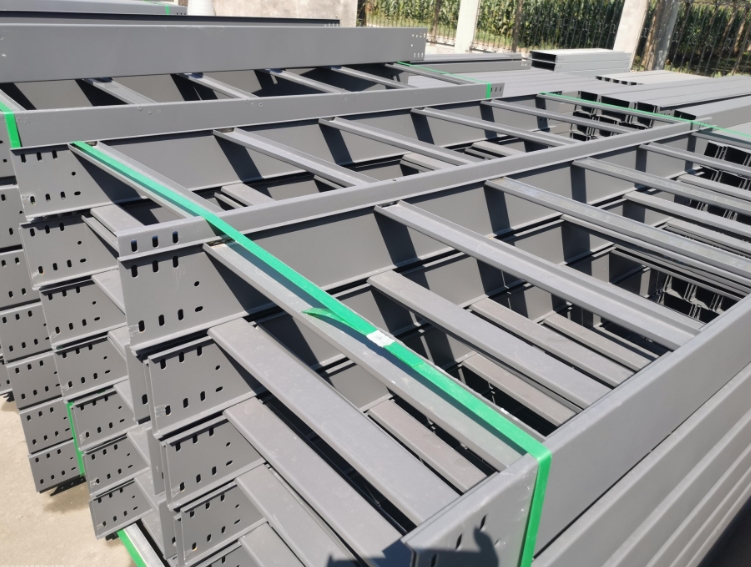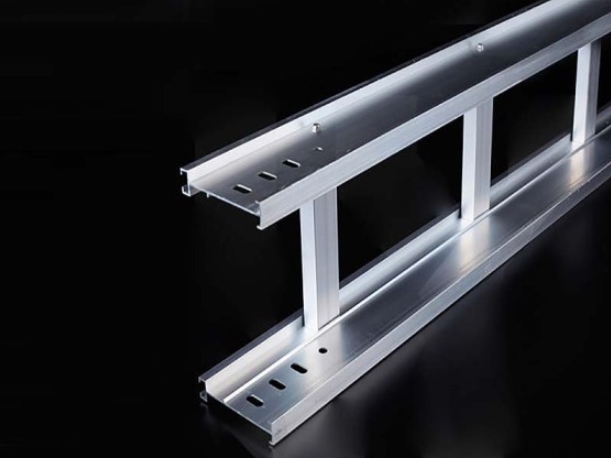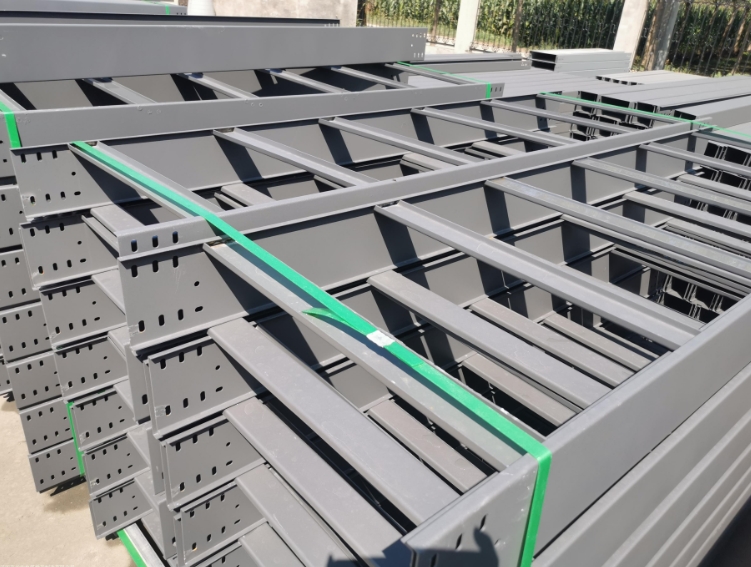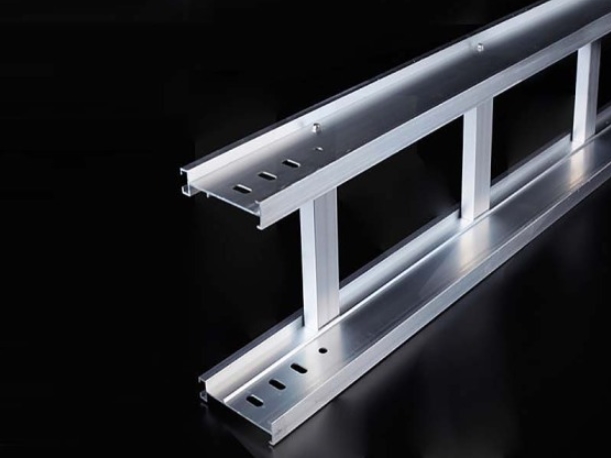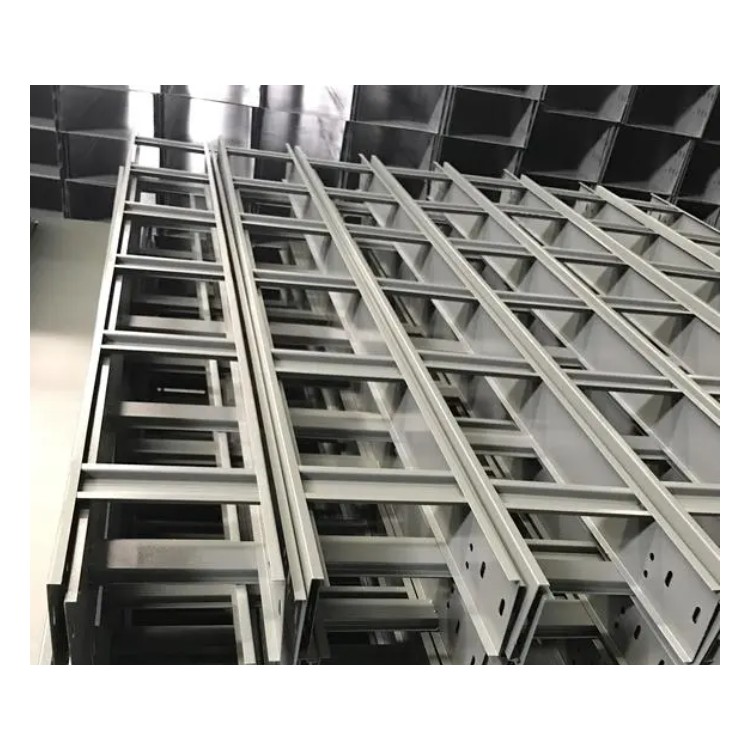

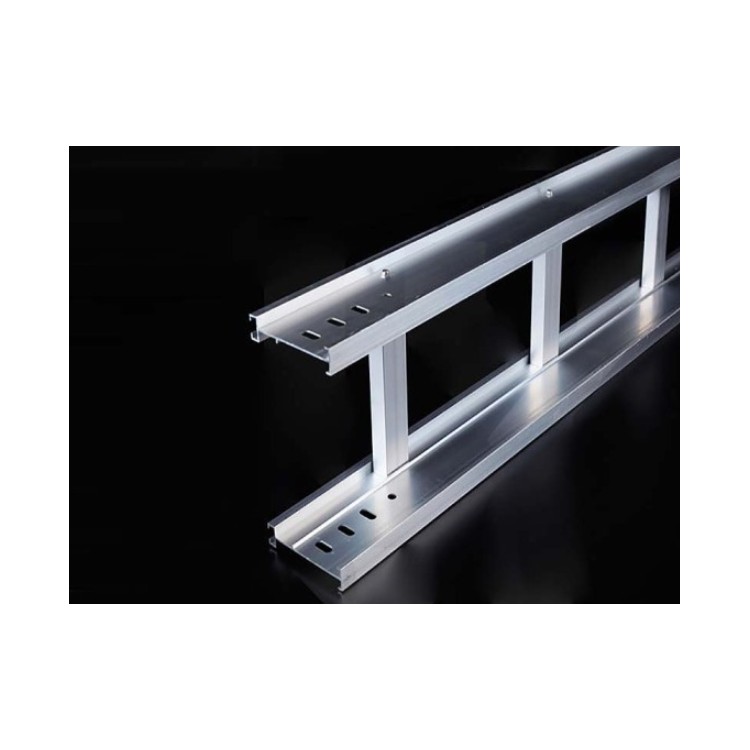









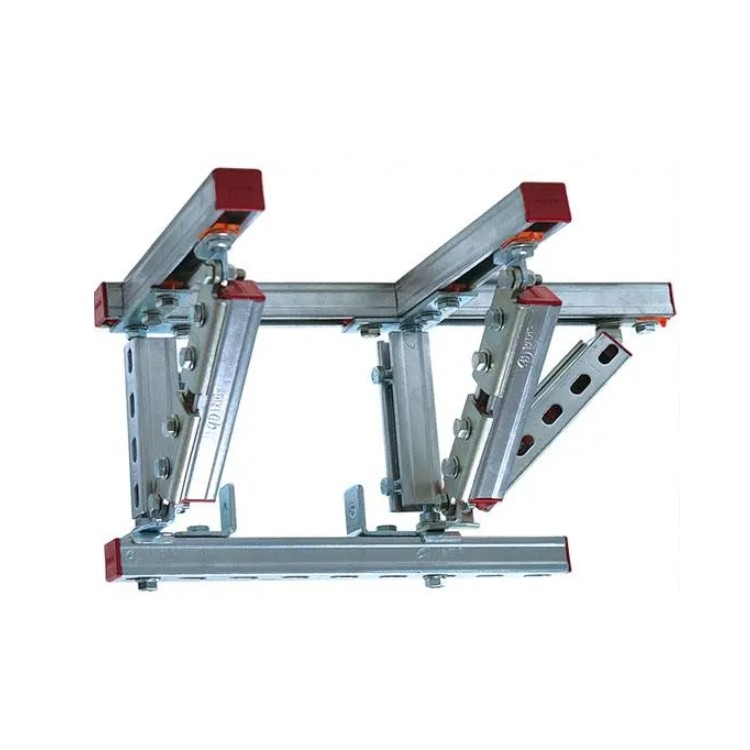
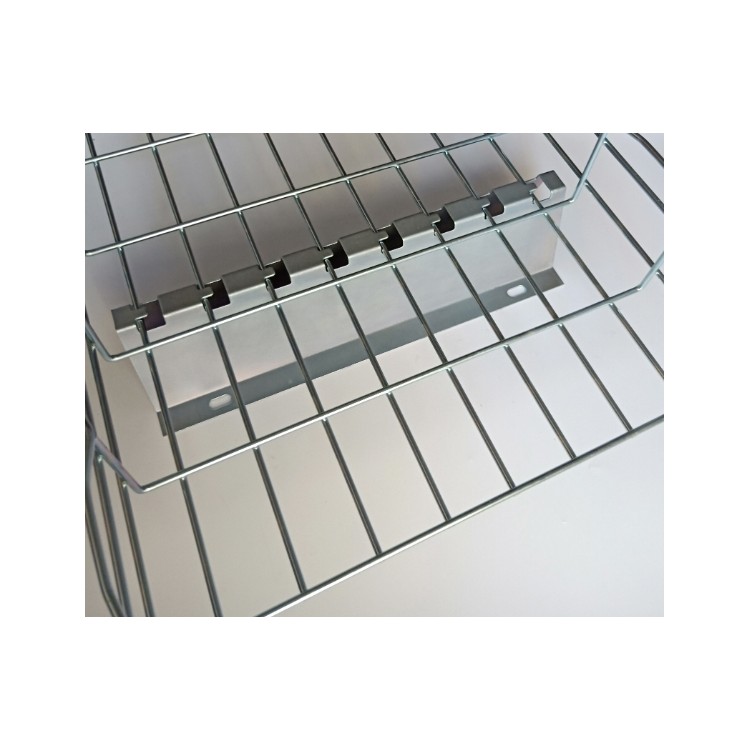
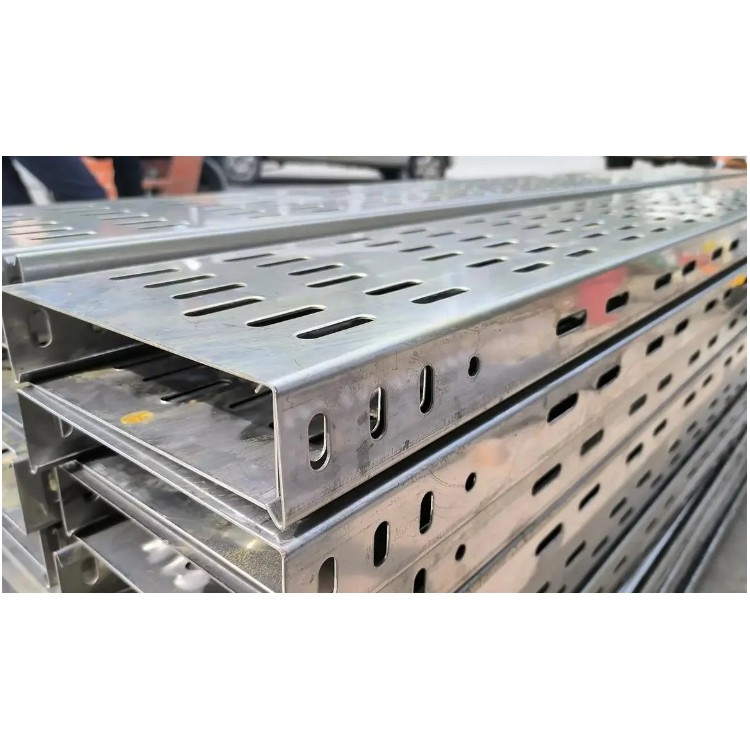
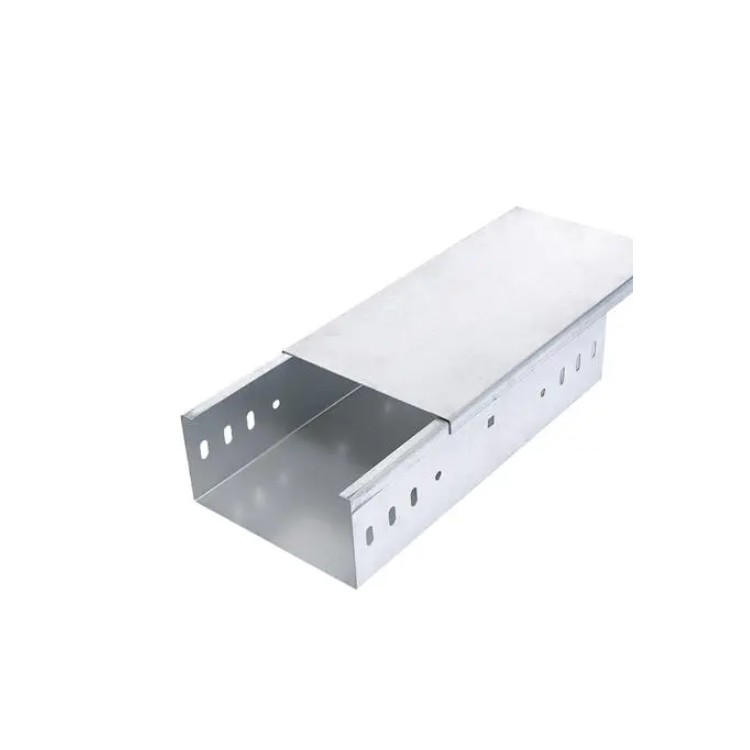
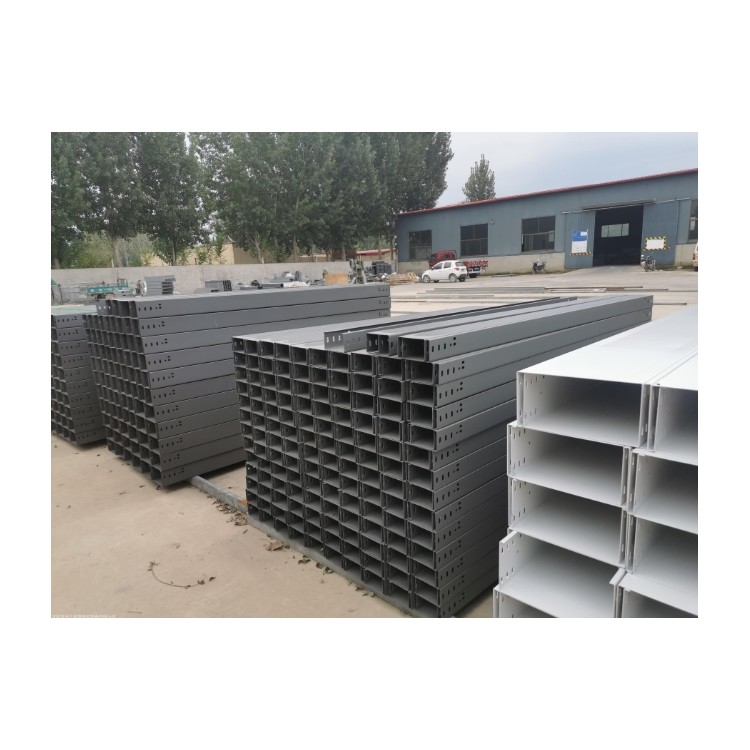
A ladder bridge is a metal bridge commonly used for cable routing, with a trapezoidal cross-section resembling the structure of a ladder. Below is a detailed introduction to the ladder bridge:
I. Structural Features
CompositionStep-ladder bridge channels consist of a series of horizontal beams (steps) and vertical posts. The beams are typically parallel to the ground and connected vertically to the posts at certain intervals, forming a trapezoidal structure.
MaterialBeams and columns are typically made of metal materials (such as steel, aluminum, etc.) to provide strength and durability. These materials also offer excellent corrosion resistance, capable of adapting to various environmental conditions.
II. Application
Ladder trays are commonly used to support and protect various installations, including cables and electrical conduits. They can be found in industrial facilities, commercial buildings, public transportation systems (such as subways, train stations), and outdoor environments.
Ladder racks offer a convenient way to suspend these facilities in the air, keeping them away from the ground, thereby reducing the likelihood of being affected by ground conditions and external environmental factors. This design also facilitates maintenance and management.
III. Advantages
High load-bearing capacityThe ladder bridge supports are designed with a trapezoidal structure, forming a robust support system between the horizontal and vertical beams, capable of bearing heavier cable loads.
Good ventilation and heat dissipation propertiesThe open design of the ladder bridge provides excellent ventilation and heat dissipation, aiding in maintaining the cooling of electrical equipment and preventing overheating.
Easy installation and maintenanceStep-ladder bridge racks feature modular design for easy installation and adjustment. Their open structure facilitates cable installation and maintenance, allowing flexible cable routing as needed.
Wide Application RangeLadder trays are suitable for various types of buildings and applications, including industrial plants and commercial buildings. They can meet the cable wiring needs of different specifications and types.
Aesthetically pleasing and practicalThe ladder bridge架 is aesthetically pleasing and suitable for various architectural settings. It neatly conceals cables within the walls or ceilings of buildings, maintaining the beauty and order of the cable layout.
Corrosion-resistantLadder trays are commonly made from corrosion-resistant materials such as steel, aluminum alloy, or galvanized steel to enhance their lifespan and adapt to various environmental conditions.
VersatileLadder trays can be configured for various wiring needs, such as straight, curved, and branching layouts, to accommodate different cable wiring requirements in various scenarios.
In summary, the ladder bridge is a robust metal bridge with strong load-bearing capacity, excellent ventilation and heat dissipation, easy installation and maintenance, wide application range, aesthetic appeal, and corrosion resistance. It has been widely used in various architectural and industrial settings, providing an effective solution for cable routing and management.