









Standard of Execution:
Meets National Standard: "GB 7494-87 Water Quality – Determination of Anionic Surfactants – Methylene Blue Spectrophotometric Method"
Meets National Standard: "HJ 970-2018 - Determination of Petroleum in Water Quality by Ultraviolet Spectrophotometry"
Meets National Standard: "HJ 503-2009 Water Quality - Determination of Volatile Matter - Spectrophotometric Method Using 4-Aminobenzoic Acid"
Meets National Standard: "GB/T 16488-1996 Water Quality – Determination of Petroleum and Fats/Oils – Infrared Spectrophotometry"
Meets National Standard: "HJ 637-2018 Water Quality Determination of Petroleum and Fats/Oils by Infrared Spectrophotometry"
Meets National Standard: "GB/T 16488-1996 Water Quality – Determination of Petroleum and Animal/Fat Oils – Infrared Spectrophotometry"

Key Features:
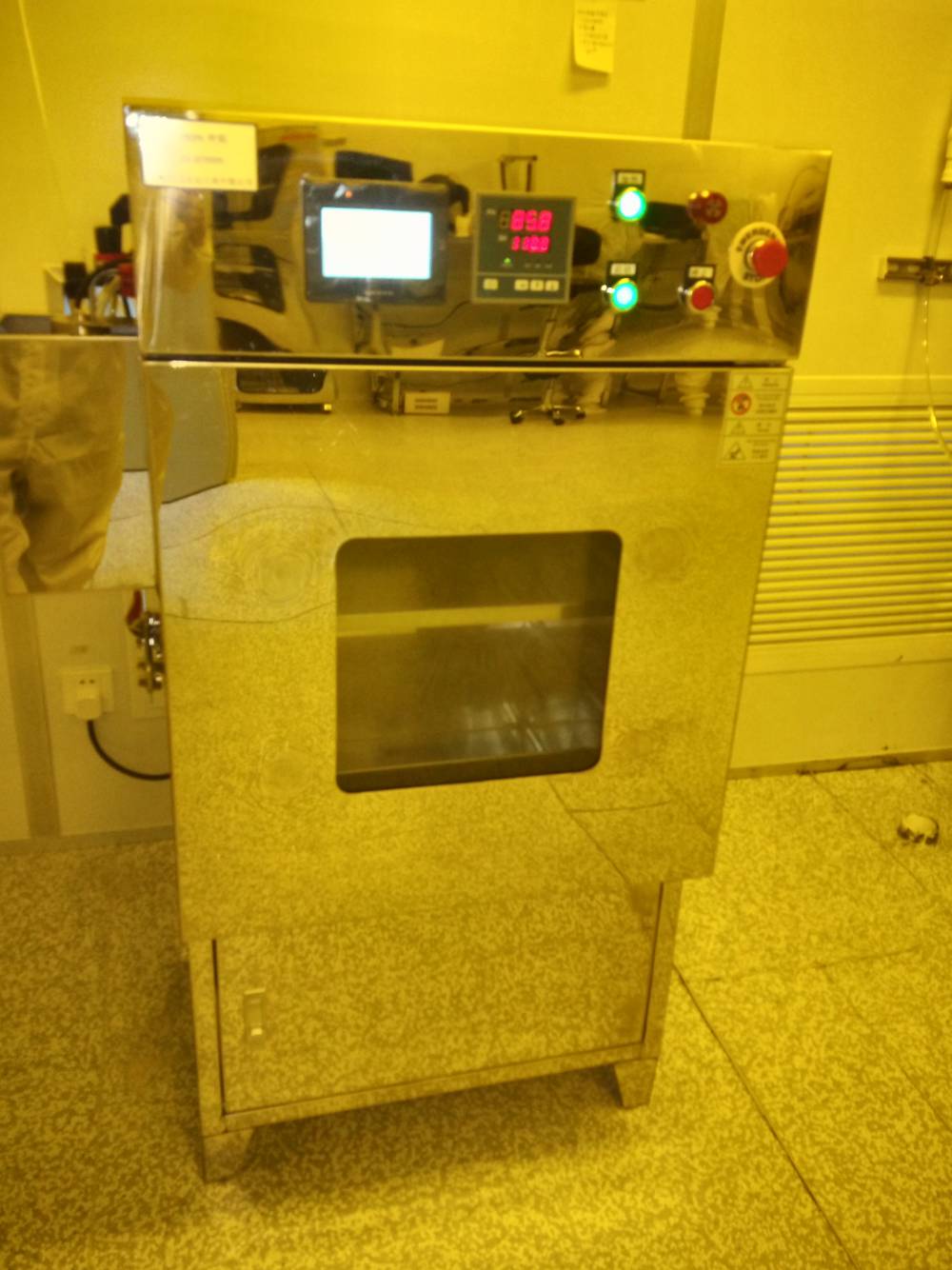
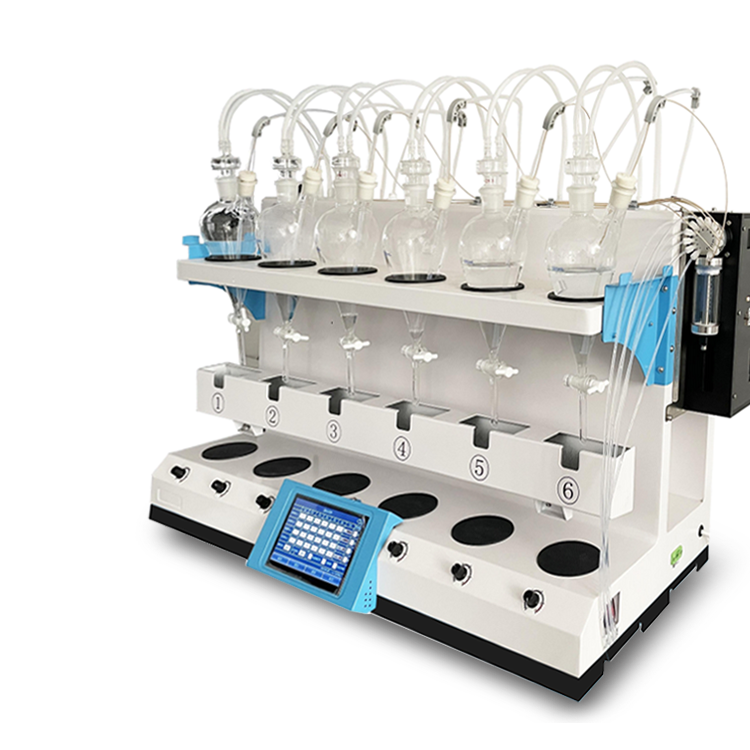
1. 7-inch large LCD touch screen, one-touch operation system, the display is fixed in front of the machine for easy operation by experimenters, and allows for self-setting of various instrument parameters.
2. Supports various specifications of extraction bottles, with a snap-on design for easy and convenient replacement; all gas valves are made of PTFE material.
3. 6-position operating system, capable of independently performing extraction on 6 sets of samples; automatic extraction program operation, automatic settling and stratification, with individual control for each sample.
4. Extraction time, cleaning time, intermittent time, and extraction cycle can all be independently set and adjusted. An alarm function is accompanied by the completion of extraction and cleaning.
5. Automatic waste liquid disposal with a stainless steel telescopic waste liquid tank, featuring an integrated activated carbon filtration and purification system. The waste liquid is filtered and adsorbed by the activated carbon storage tank before being collected and treated centrally, reducing environmental pollution. Suitable for various reagent requirements, it comes with an automatic suction filtration system, eliminating the need for manual waste liquid disposal.
6. Automatic exhaust gas排放, with the exhaust being filtered and adsorbed by the storage tank before being collected and processed centrally.
7. Utilizes a constant-pressure diffused wide-angle cleaning method, covering the entire inner wall of the separatory funnel, with one-touch automatic cleaning for more reliable cleaning results.
8. The unit features electric leakage protection, overvoltage and overcurrent protection devices, and incorporates 6 independent voltage stabilization systems to enhance the consistency of the machine's extraction efficiency.
9. Extraction strength is infinitely adjustable via a knob, and each group can be independently set.
The automatic liquid-liquid extraction instrument is a common pretreatment operation in laboratories at all levels. Manual extraction is labor-intensive, inefficient, and poses a significant risk of inhaling toxic gases. Most common automatic liquid-liquid extraction devices are of reciprocating oscillation, 360-degree flip, stirring, and jet types, each with its own drawbacks. The first two require manual venting, which only saves on the oscillation process. The latter two can cause solvent evaporation and are difficult to clean. This automatic liquid-liquid extraction instrument absorbs the advantages of similar products, avoids the shortcomings, and creatively uses a closed-airflow oscillating internal circulation principle. It can be started with one button, automatically extracts, does not require venting during extraction, automatically cleans up after extraction, and the waste liquid is adsorbed by an activated carbon adsorption tank and automatically discharged. All operational instructions and parameters can be controlled via a liquid crystal touch screen. It boasts high automation, time and labor savings, energy conservation, and environmental protection. It is suitable for various liquid-liquid extraction scenarios in water quality monitoring, such as water oil and volatile substances.
Liquid extraction separation is a crucial unit operation in process industries. Traditional box-type mixing and clarification tanks have poor sealing performance, which makes organic phase volatilization prone to solvent loss and severe fire hazards. The successful application of the new equipment has reduced solvent loss and fire risks during liquid-liquid solvent extraction processes. It has also broken through the bottleneck of continuous production in some special liquid-liquid extraction systems in the chemical pharmaceutical production process, enhancing production capacity. It serves as a demonstration for the application in various liquid-liquid extraction fields such as hydrometallurgy, wastewater treatment, fine chemicals, petrochemicals, and more, and is of significant importance for promoting green and safe production in related enterprises.
The liquid-liquid extraction separation in chemical pharmaceutical processes (such as pesticides) involves complex system properties, such as strong solvency and volatility in the organic phase; strong acidity in the aqueous phase and frequent presence of chloride ions; high concentration of the substance to be extracted; significant changes in physical properties between the two phases before and after extraction; and emulsification sensitivity to pH. Continuous production using traditional box-type mixing clarification tanks is challenging, and the existing production process can only adopt batch operation with pots, resulting in low yield and unstable product quality. Batch operation leads to severe volatility of the organic phase, causing solvent loss while also deteriorating the working environment for workers and posing serious fire hazards.
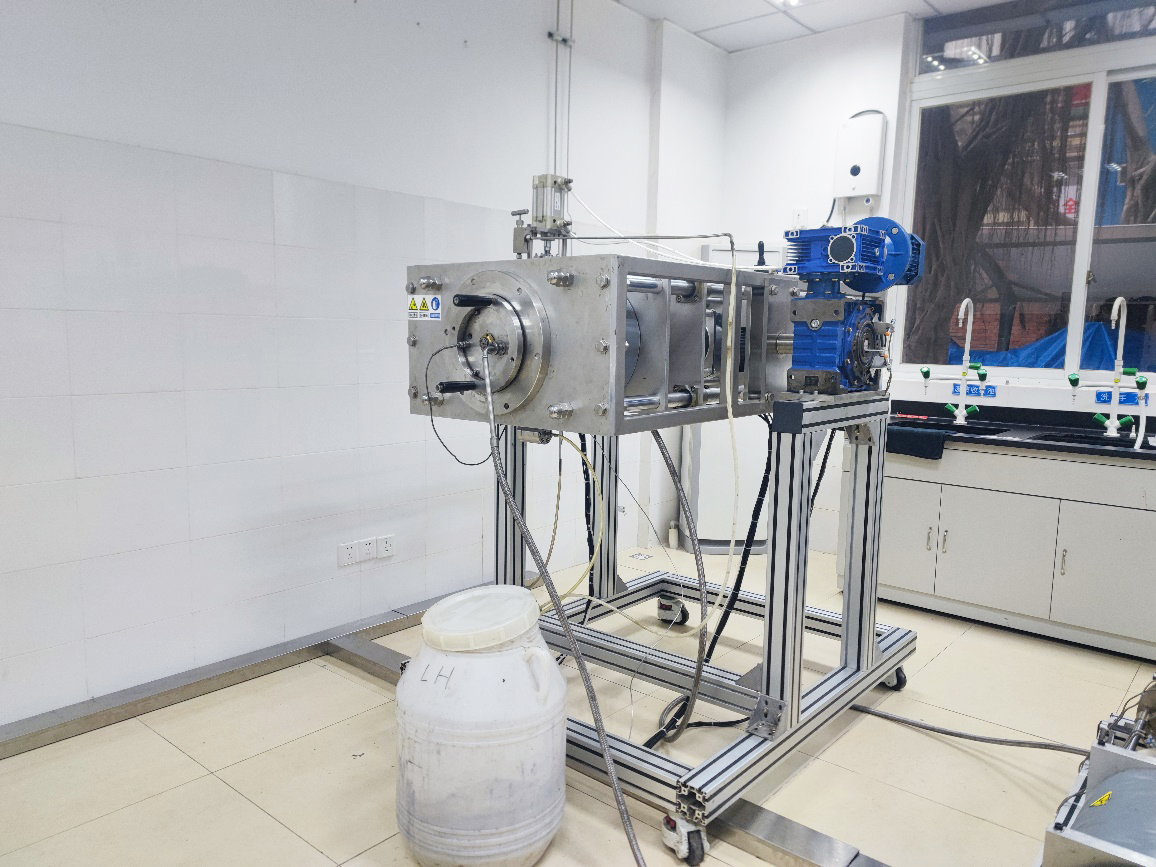
The CHCQ-6 Automatic Liquid-Liquid Extraction Apparatus operates in an all-electric mode, comprising an extraction bottle, a gas-liquid pump, and a control section. It operates by utilizing air pressure to thoroughly mix and collide water samples with extraction agents, achieving complete extraction. It completely replaces manual shaking, reduces the labor intensity for experimenters, avoids direct contact with toxic reagents, and protects the health of the operators. The entire extraction process requires no manual venting, can automatically drain, and self-clean. Additionally, the automatic liquid-liquid extraction system significantly reduces environmental pollution, enhances extraction efficiency, and ensures stable and reliable analysis.
Liquid extraction separation is a crucial unit operation in the process industry. Traditional box-type mixing clarification tanks have poor sealing performance, and the easy volatilization of the organic phase can lead to solvent loss and severe fire hazards. The successful application of the new device has reduced solvent loss and fire risks in the liquid-liquid solvent extraction process, while also breaking through the bottleneck of continuous production for some special liquid-liquid extraction systems in the chemical pharmaceutical production process. It has improved production capacity and serves as a demonstration for the extensive liquid-liquid extraction fields such as hydrometallurgy, wastewater treatment, fine chemicals, petrochemicals, etc. It is of significant importance for enhancing the green and safe production of related enterprises.
The liquid-liquid extraction separation in chemical pharmaceutical processes (such as pesticides) involves complex system properties, including strong solvent and volatility in the organic phase; acidic water phase often containing chloride ions; high concentration of the material to be extracted; significant differences in physical properties between the two phases before and after extraction; and emulsification sensitivity to pH. Continuous production using traditional box-type mixing clarification tanks is challenging, and the existing production process can only adopt batch kettle operations, resulting in low yield and unstable product quality. Batch operations lead to severe organic phase volatilization, causing solvent loss while also deteriorating the working environment for workers and posing significant fire hazards.
The CHCQ-6 Automatic Liquid-Liquid Extraction Instrument operates in an automatic mode, consisting of extraction bottles, a gas-liquid pump, and a control section. It operates by using pressure to thoroughly mix and collide water samples with extraction agents, achieving complete extraction. It completely replaces manual shaking, reduces the labor intensity for experimenters, avoids direct contact with toxic reagents, and protects the health of the operators. The entire extraction process does not require manual venting, can automatically discharge liquid, and automatically clean. Additionally, the automatic liquid-liquid extraction device significantly reduces environmental pollution, improves extraction efficiency, and ensures stable and reliable analysis.