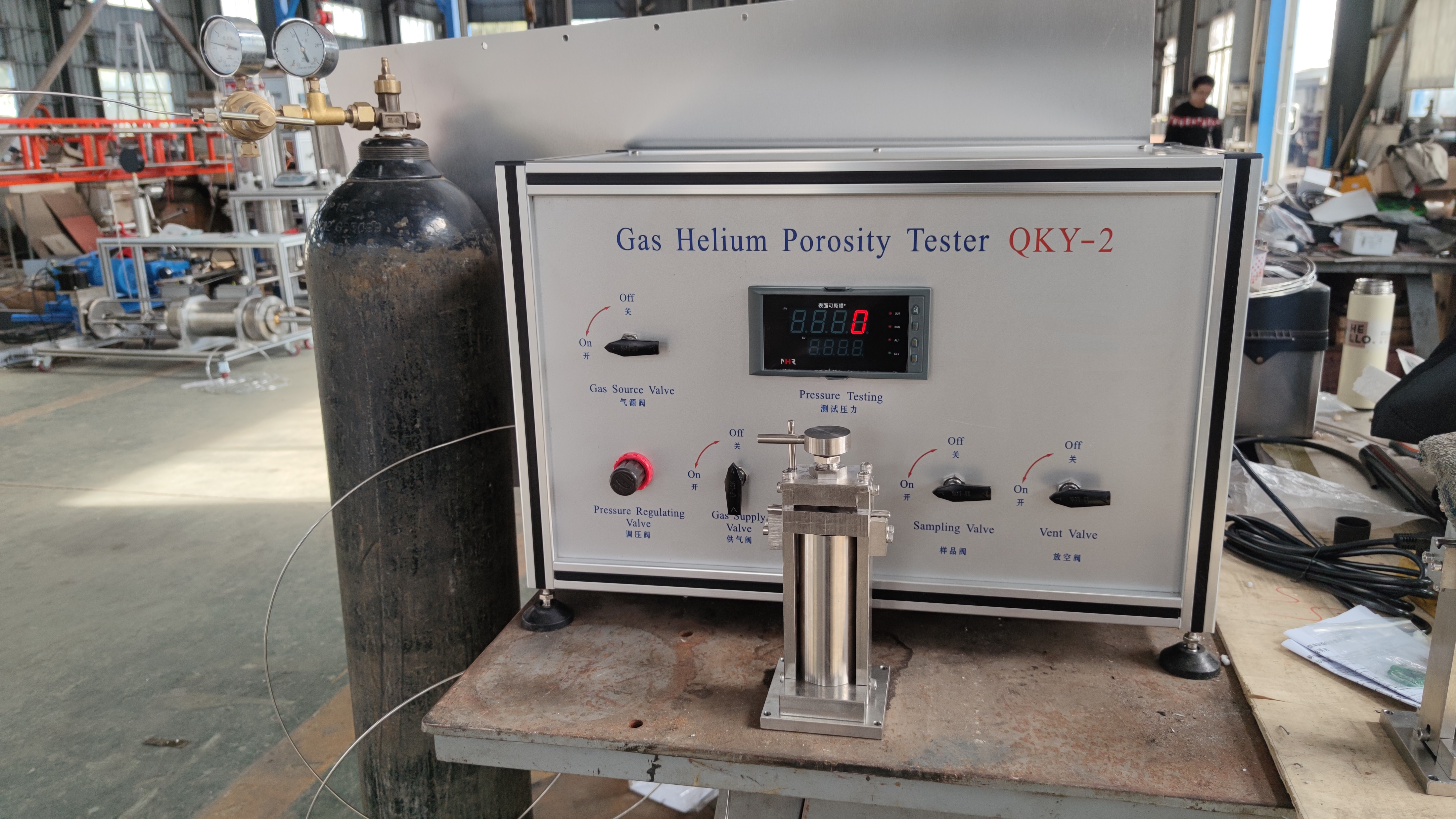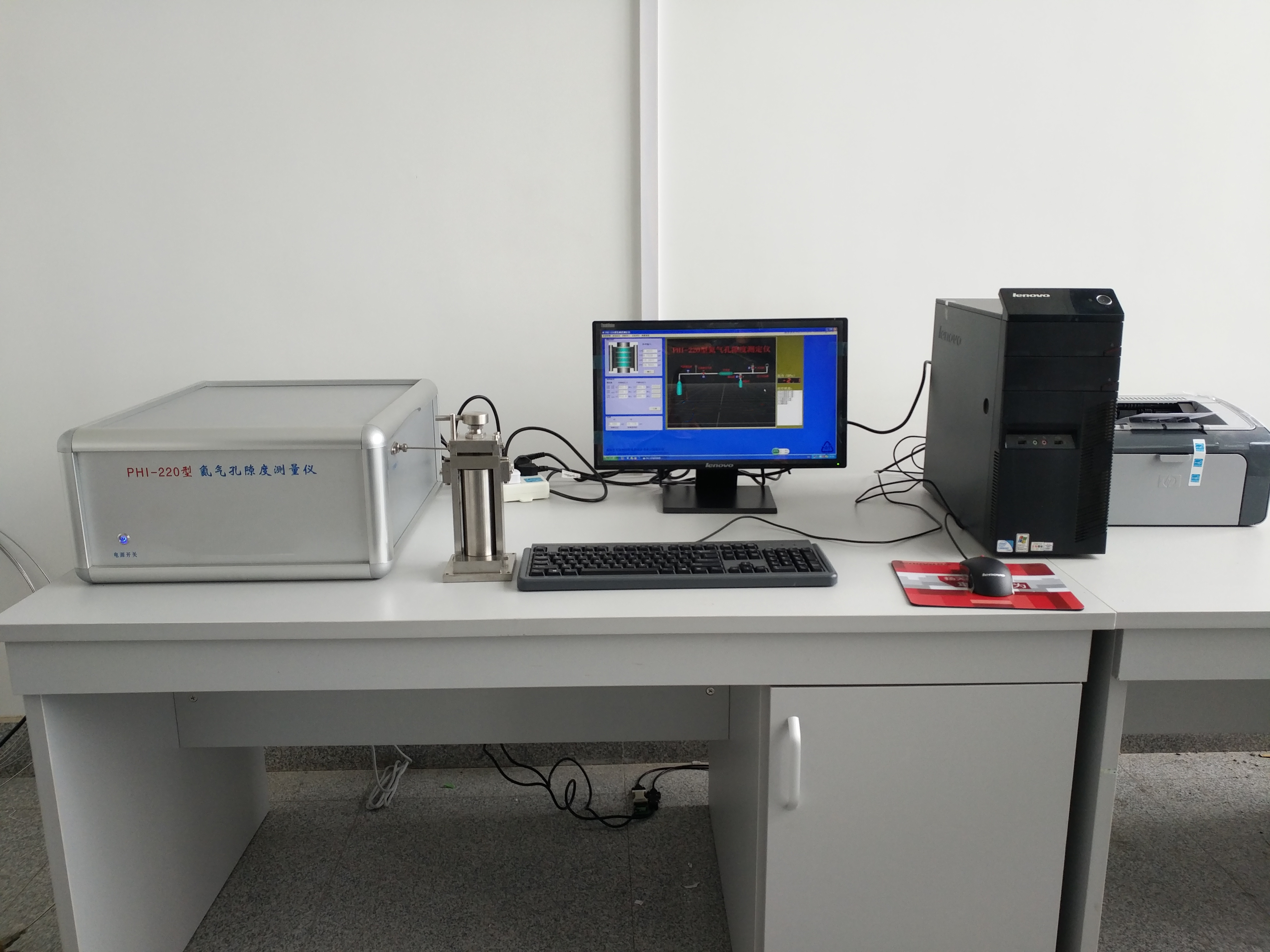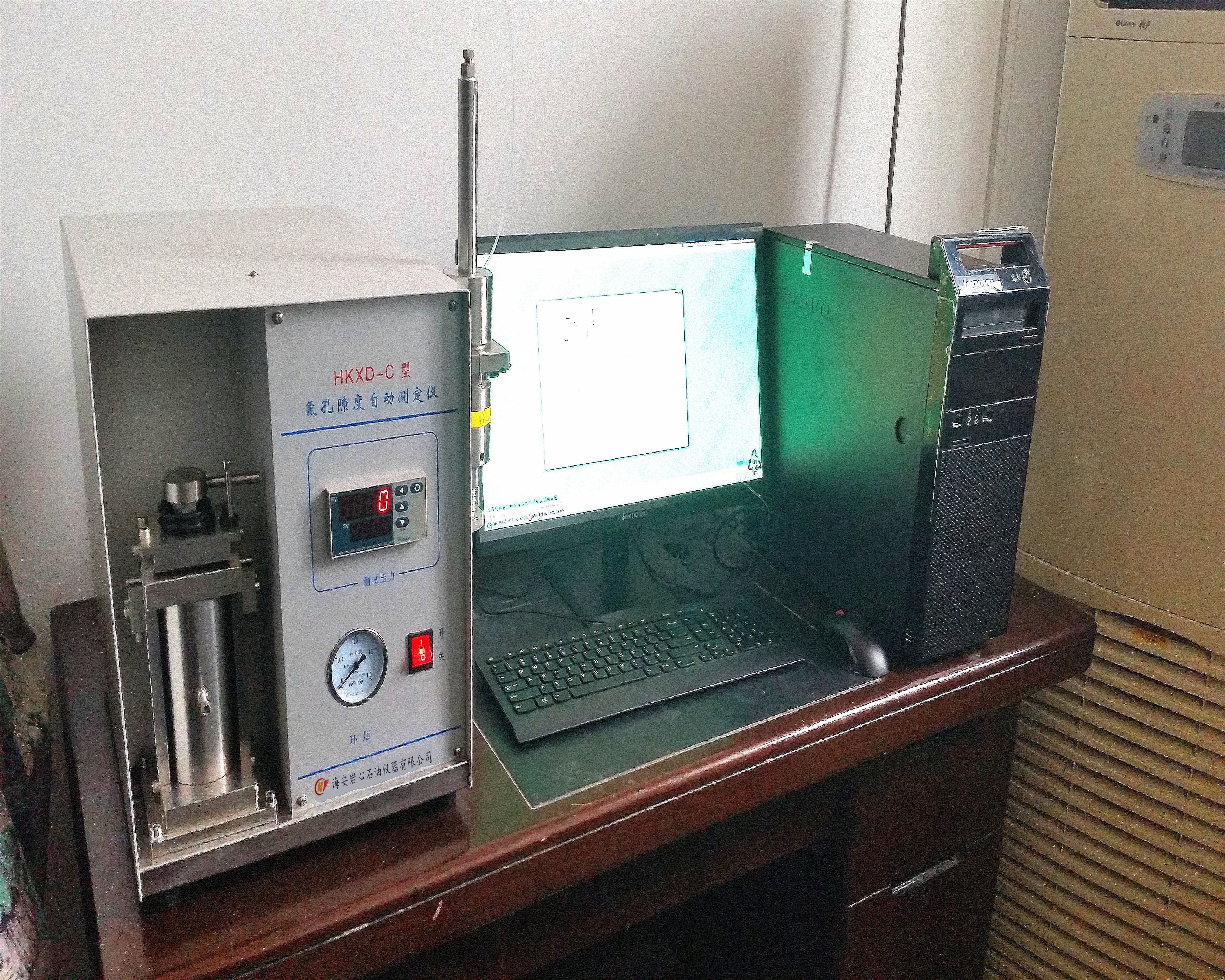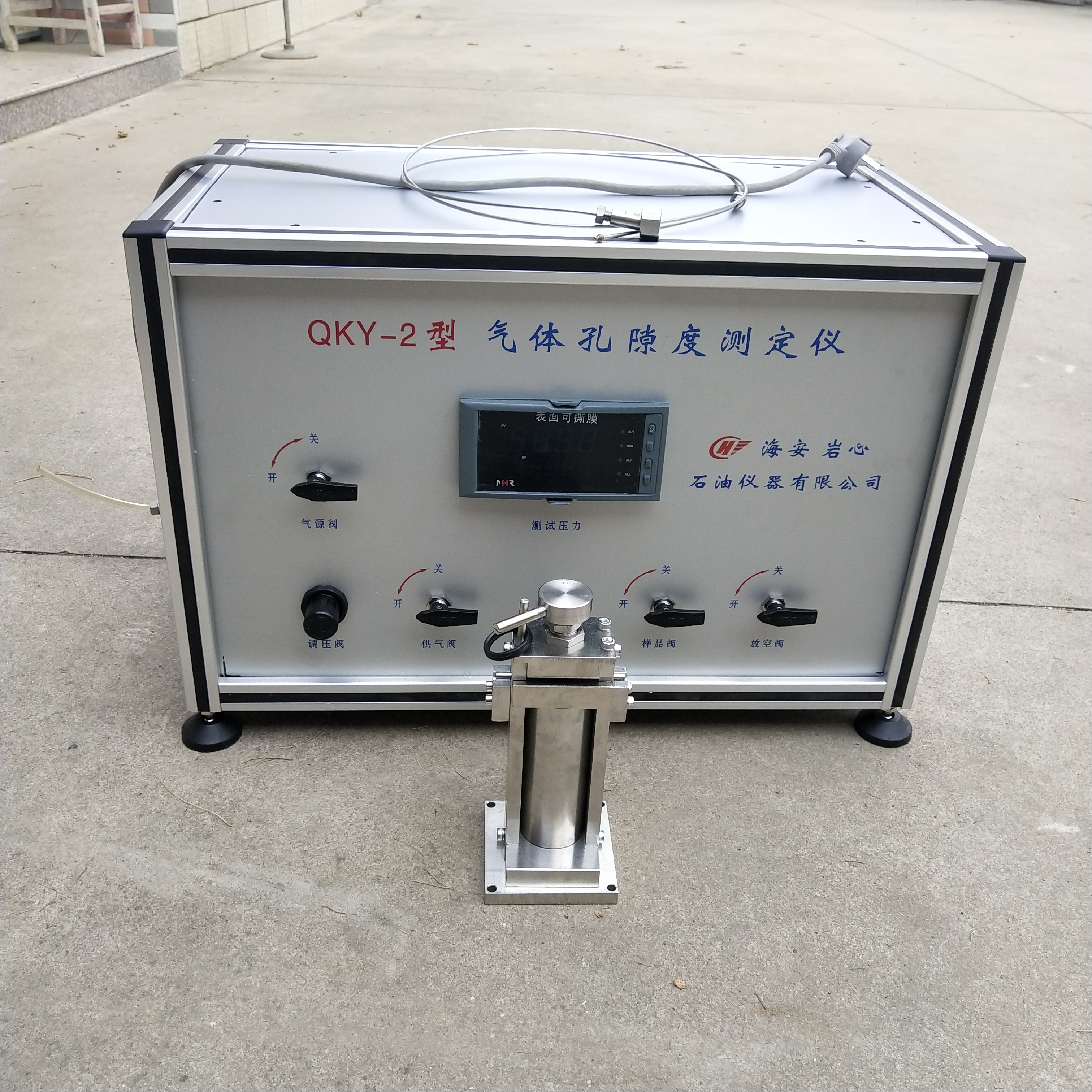

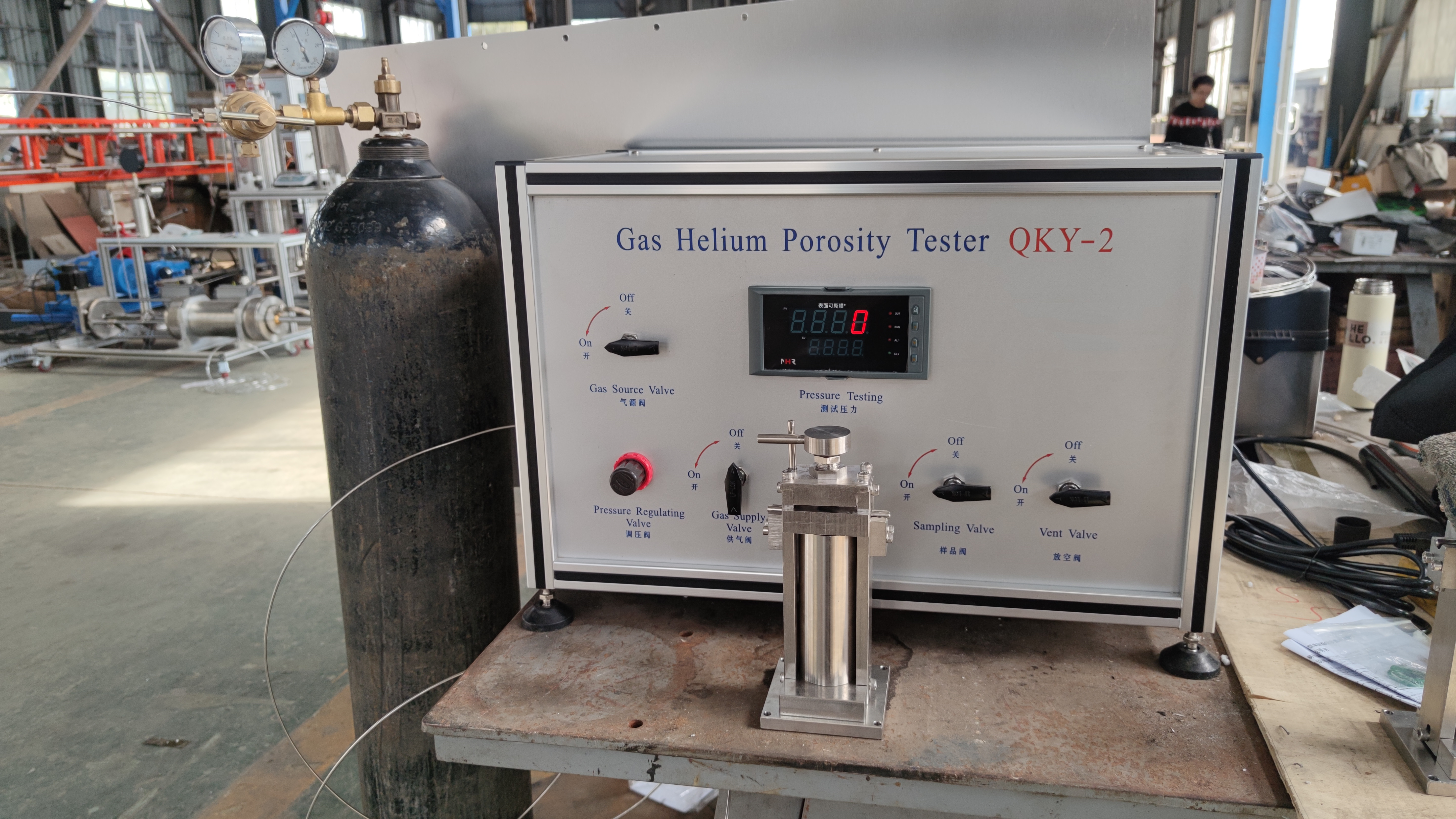
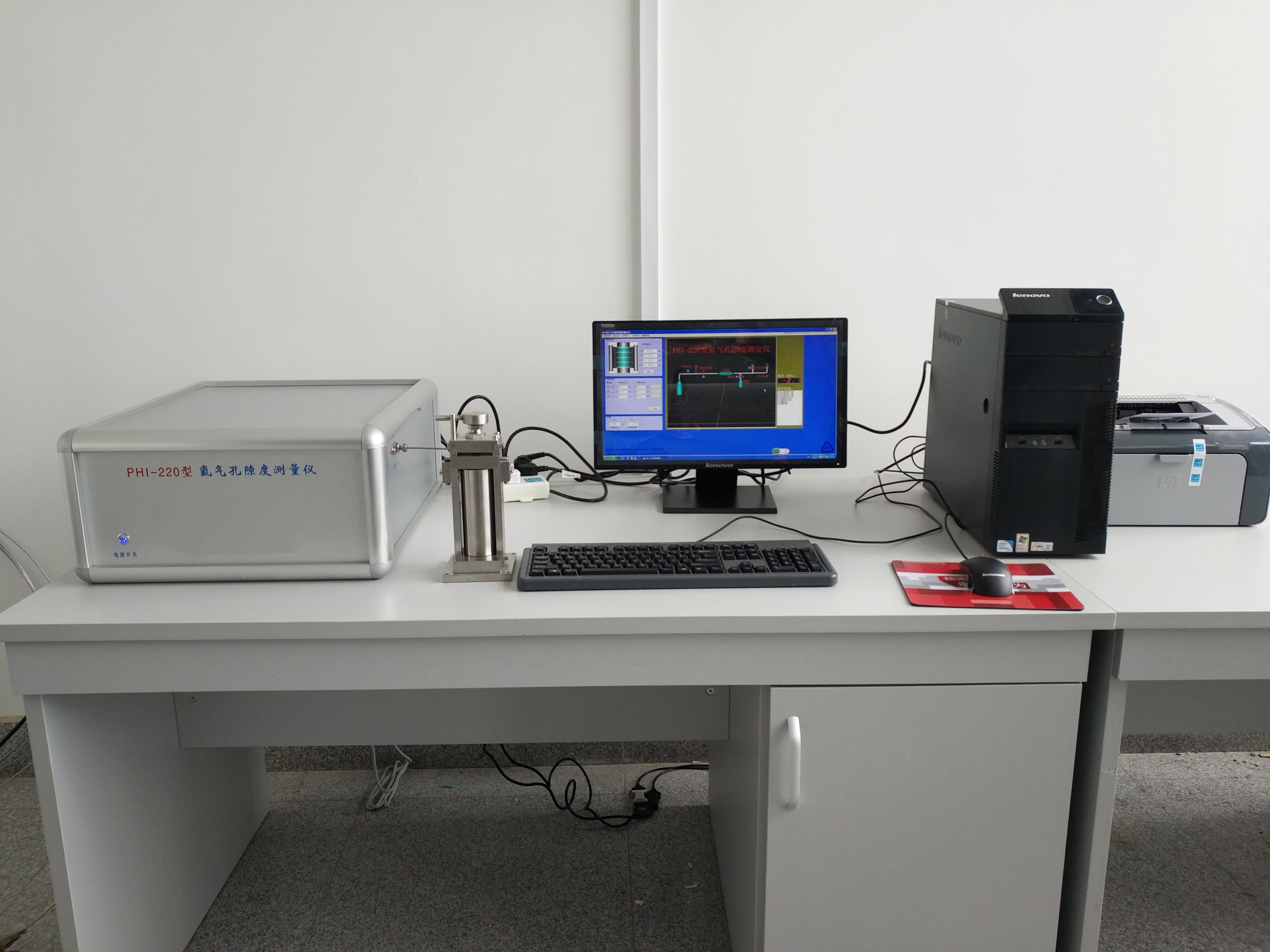









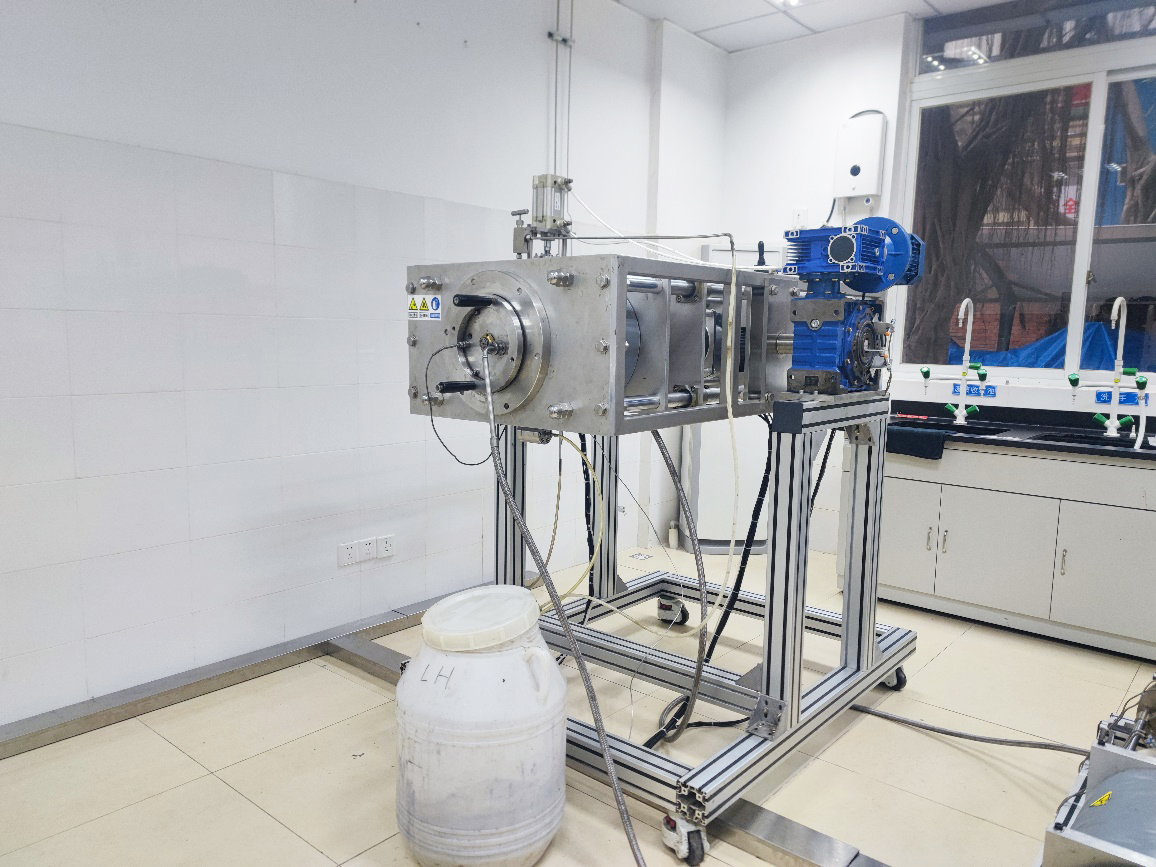
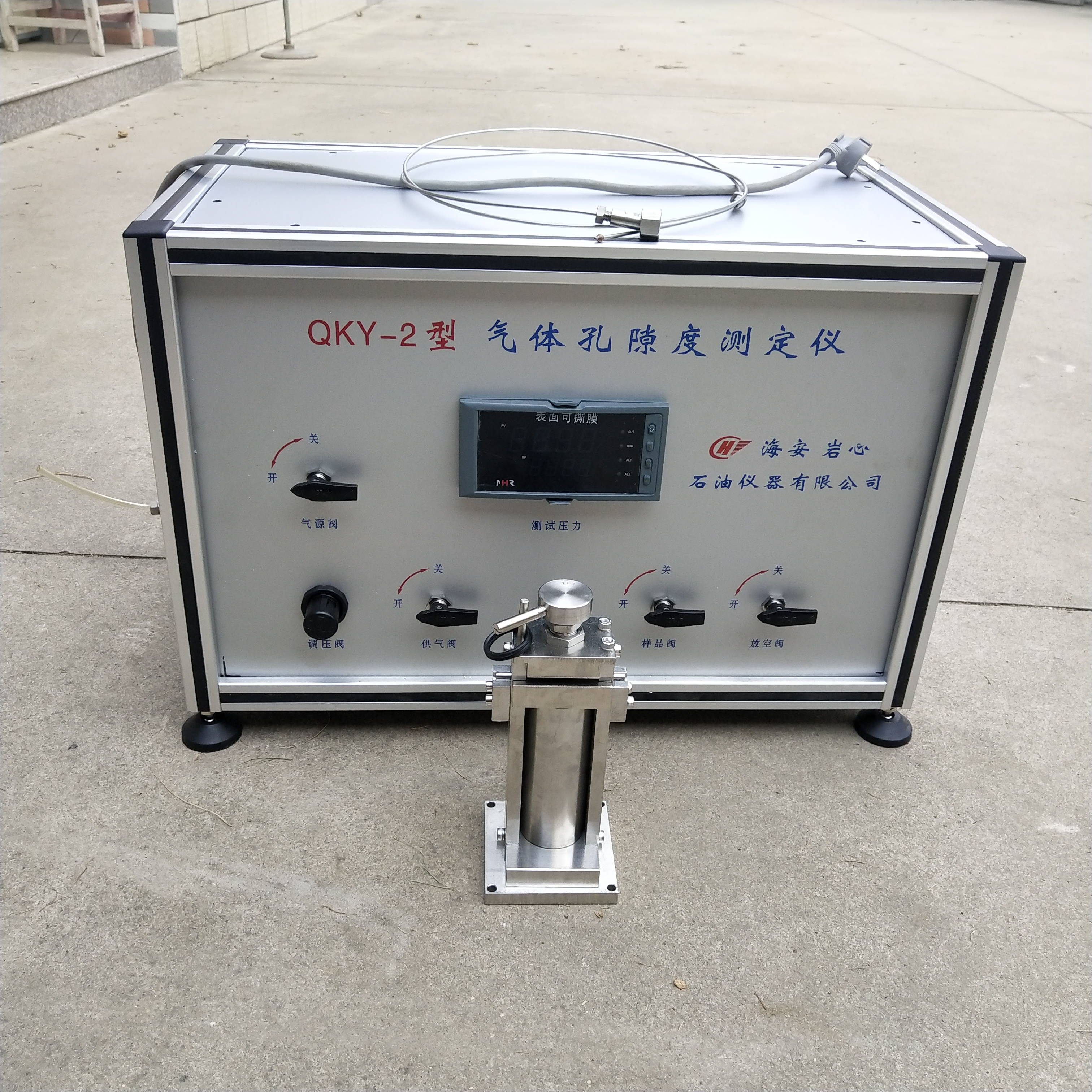
I. Overview Pore volume is one of the important properties of rocks, defined as the ratio of the volume of the pores to the geometric volume of the rock, usually expressed as a percentage. The size of the pore space occupied by oil field hydrocarbons is an essential parameter for both reasonably evaluating oil reservoirs and conducting engineering operations in the reservoir. Our gas porosity meter, designed based on the porosity meter from the U.S. Core Company and with reference to a large amount of data, features a simple structure, easy operation, fast measurement speed, and stable performance, making it an indispensable device for core analysis laboratories. II. Working Principle The gas porosity meter is an instrument for measuring volume, which can be used to determine the skeletal volume and porosity volume of rock samples. Utilizing the principle of gas expansion, specifically Boyle's Law, a known volume of gas is expanded isothermally to an unknown volume at a determined pressure, and the final equilibrium pressure can be measured after expansion. The size of the equilibrium pressure depends on the size of the unknown volume, which can be calculated using Boyle's Law. The instrument can use two gases as displacement media: nitrogen and helium. Nitrogen can be used for general sandstones, while helium can be used for denser limestones and rock samples with smaller pores. The reasons for using helium are: 1. The tiny helium (molecular radius r=0.9A) as a medium can enter the capillary tubes associated with the reservoir rock; 2. The low molecular weight of helium (M=4) has high permeability through the rock; 3. The rock surface has poor adsorption for helium. According to Boyle's Law: The known volume Vk of the gas is expanded isothermally to the unknown chamber volume V at the measured pressurePk, and the final equilibrium pressureP is measured after expansion. This equilibrium pressure depends on the unknown volume, which can be calculated using Boyle's Law. Main Technical Specifications: 1. Measurement Range: 0-60%; 2. Pressure Gauge: Digital, measurement range 0-10MPa, display accuracy: 0.5%F.S; 3. Core Holder A: φ25×25-76mm; 4. Core Holder B: φ38×38-76mm; 5. Measurement Accuracy: ±0.5%; 6. Dimensions: 400*400*400mm; 7. Gas Medium: Dry nitrogen or helium.