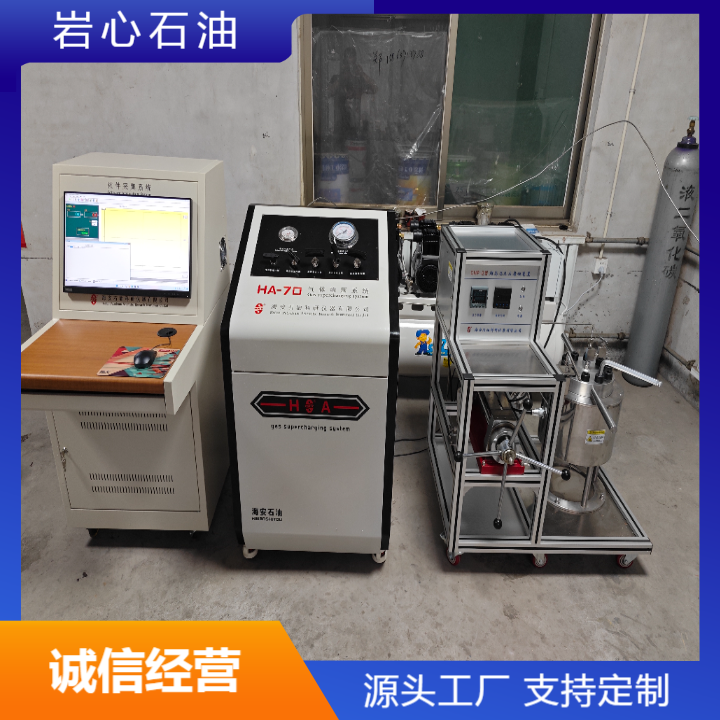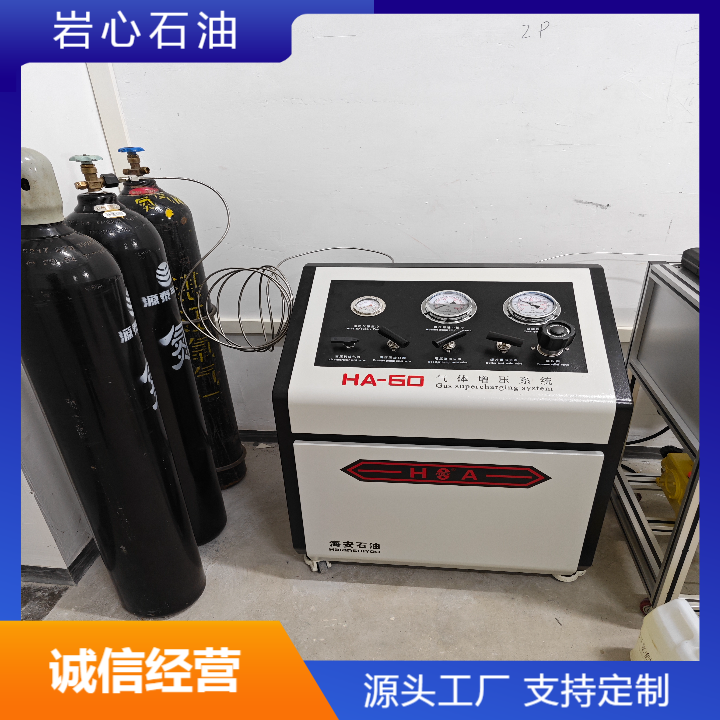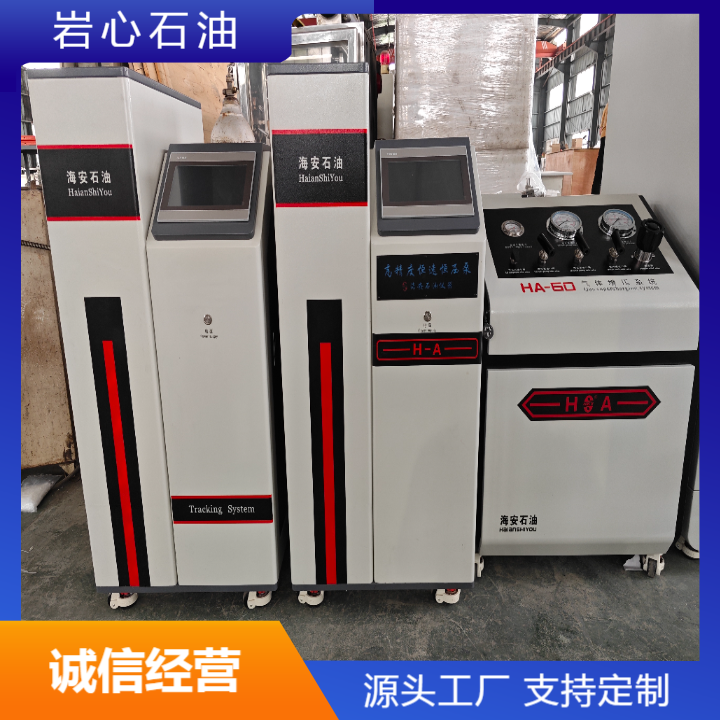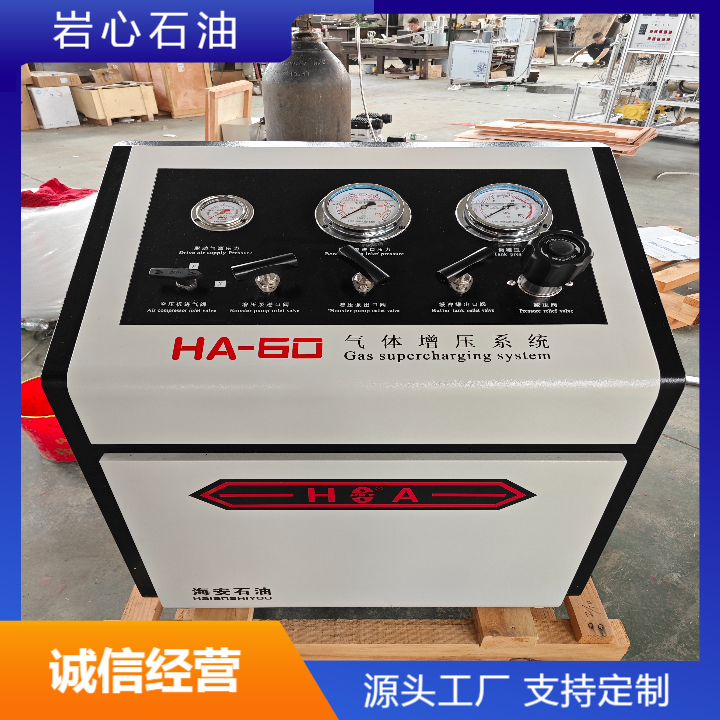

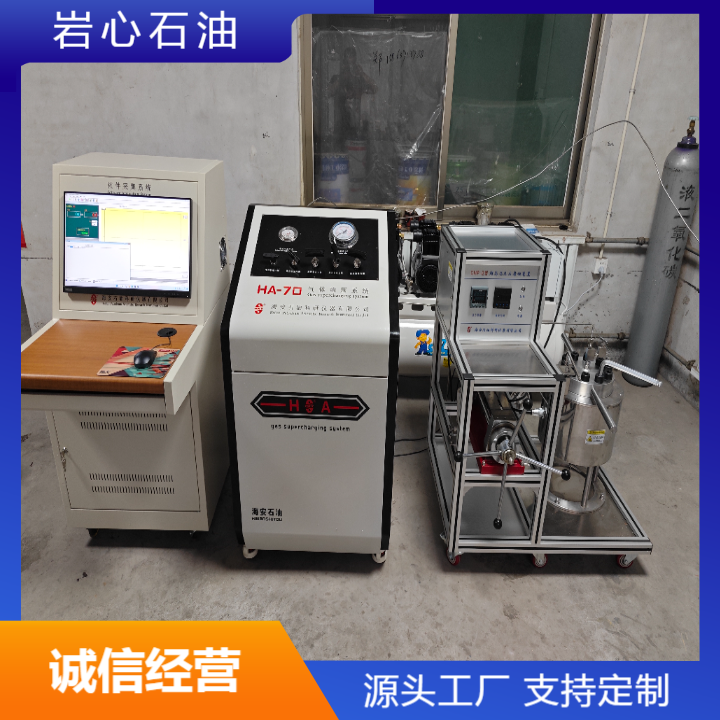
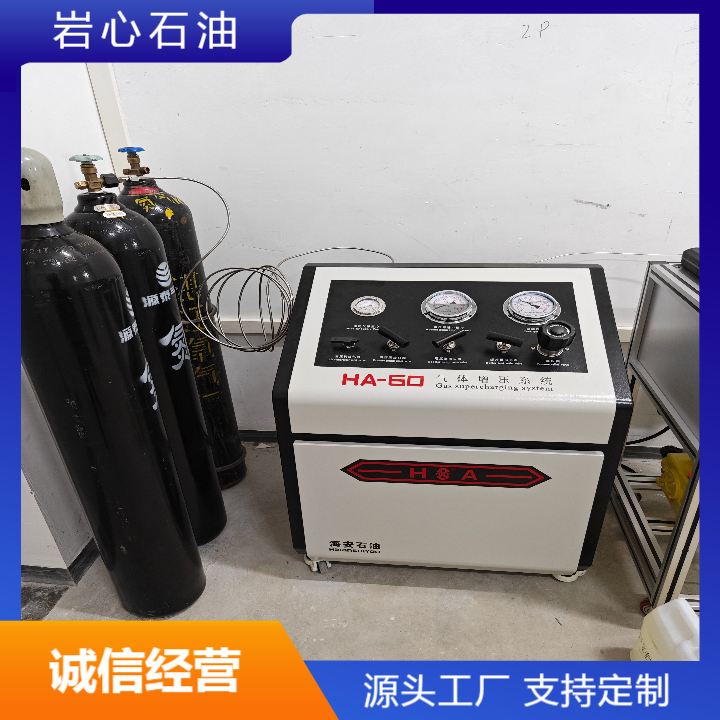








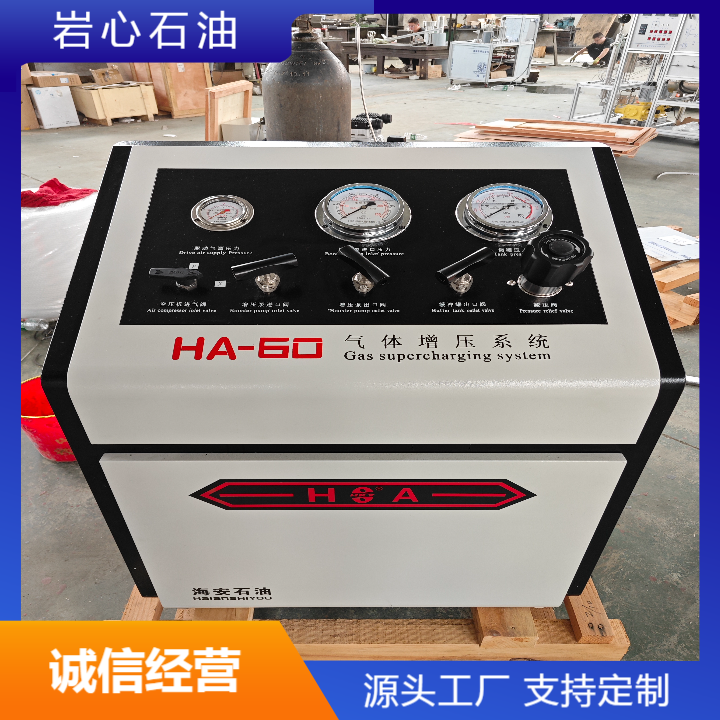
Gas Pressure Boost Pump - HA60 Gas Pressure Boosting System - Manufacturer - Custom-made by Hainan Well Core Petroleum Instrument Co., Ltd. The pneumatic gas pressure boosting system is a reciprocating piston pump that uses low-pressure air to drive a large-area piston to push a small-area piston, thereby achieving higher pressure. The pneumatic gas pressure boosting system is powered by factory air of 0.7MPa or less, does not require electricity, and by selecting different boosting pump ratios, different high-pressure output pressures can be obtained. The pneumatic liquid pressure booster has automatic pressure supplement, automatic pressure boosting, and automatic shutdown functions, and can replace the pressure output of high-pressure compressors. It is widely used in the boosting of high-pressure gases in gas pipelines, refilling of high-pressure gas cylinders, and leak-tightness testing applications that require gas pressure testing for valves and containers, and can be widely used in boosting or refilling applications for various gases such as air, nitrogen, and helium. The main component, the pressure pump, is a reciprocating single-head, double-head, or double-stage gas-driven device. It uses a gas-controlled pilot unbalanced gas distribution valve to ensure continuous operation of the pressure pump. By utilizing the principle of piston area difference, a low-pressure, large-area piston drives a small-area compressed gas piston, converting pre-inflated low-pressure intake air into a high-pressure, low-flow gas output. The output gas pressure of the pressure pump depends on the piston area ratio, the driving gas pressure, and the pre-inflated gas pressure. Pre-inflated gas is introduced into the high-pressure cylinder at a certain pressure, which can reduce the time required for the gas to reach a higher pressure. The double-head pressure pump also provides power for the compression stroke. The pressure pump operates quickly at the beginning, then slows down, and stops when pressure equilibrium is reached. The pressure pump maintains random equilibrium with minimal energy consumption, producing minimal heat and minimal movement of parts. The pump reactivates when pressure equilibrium is lost. The discharged gas first cools the high-pressure section.