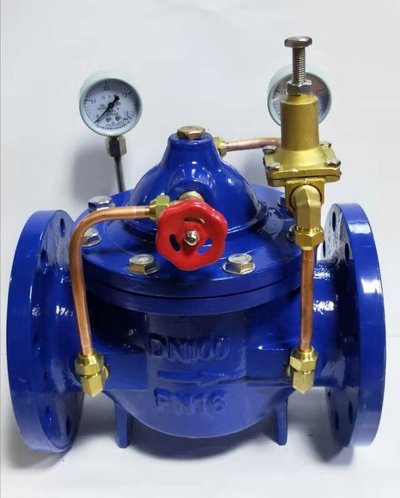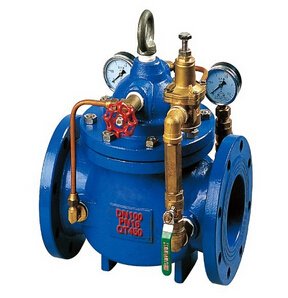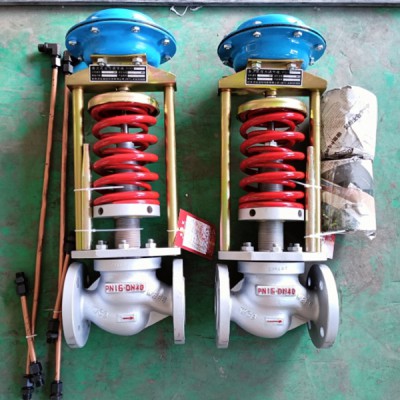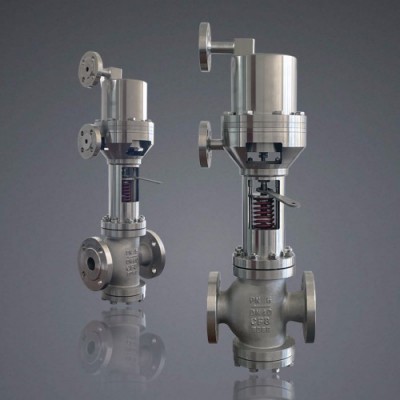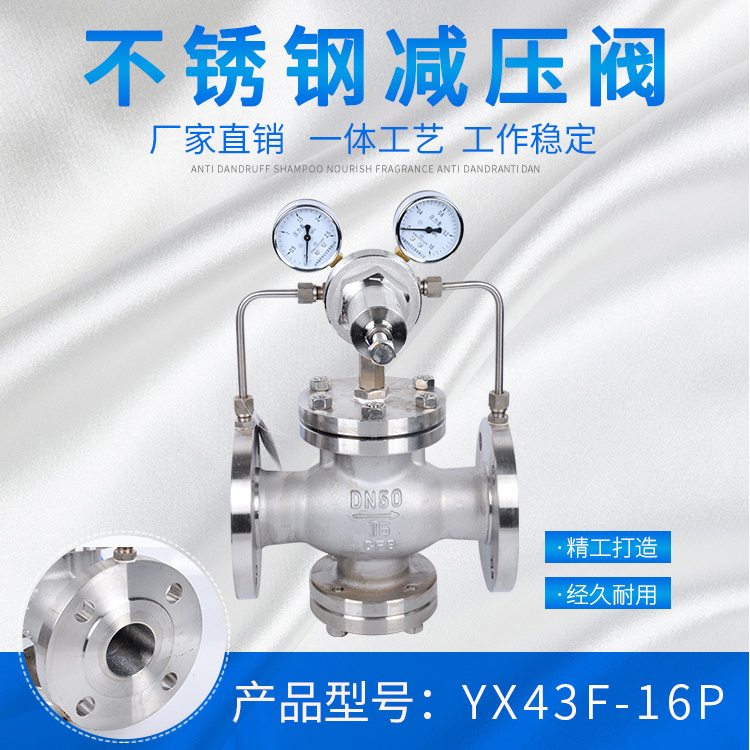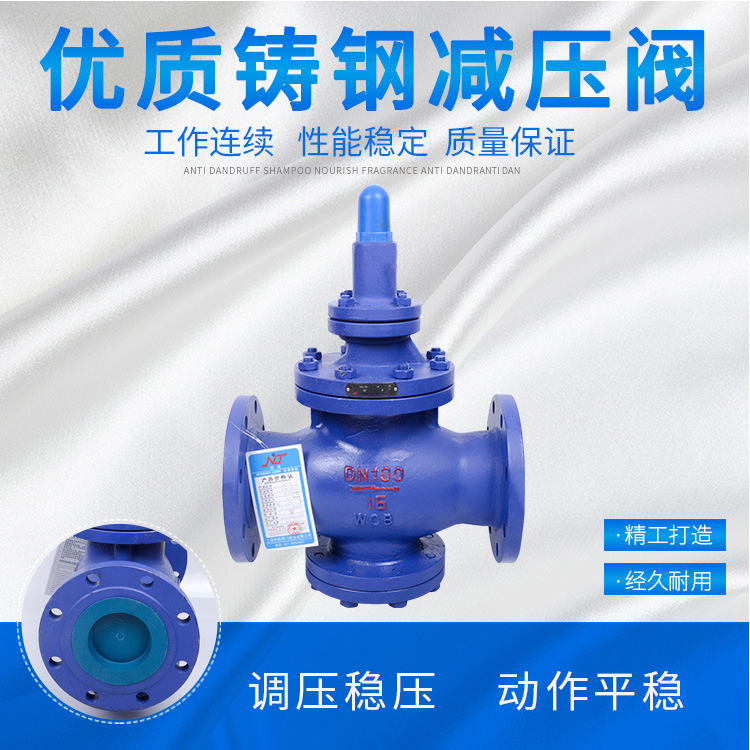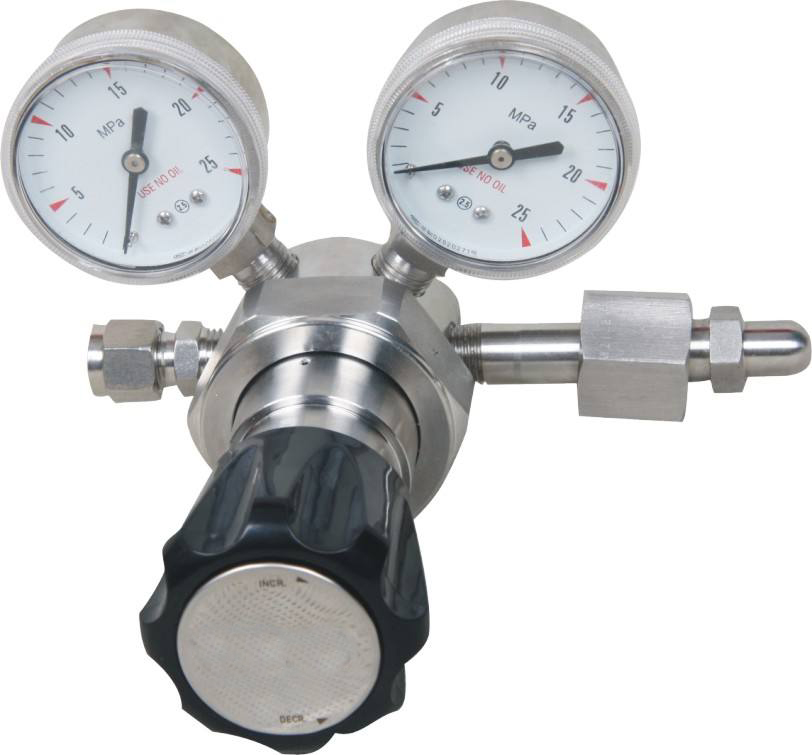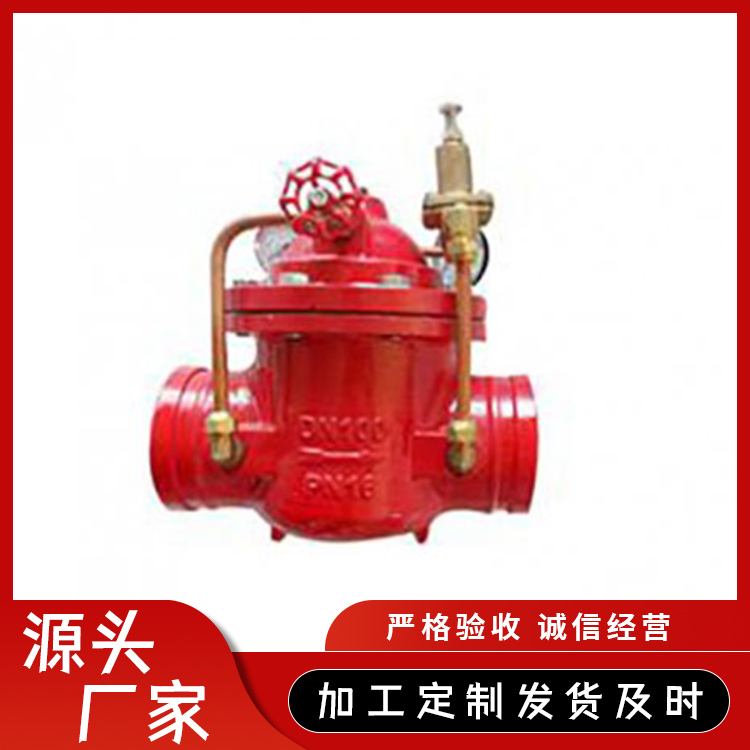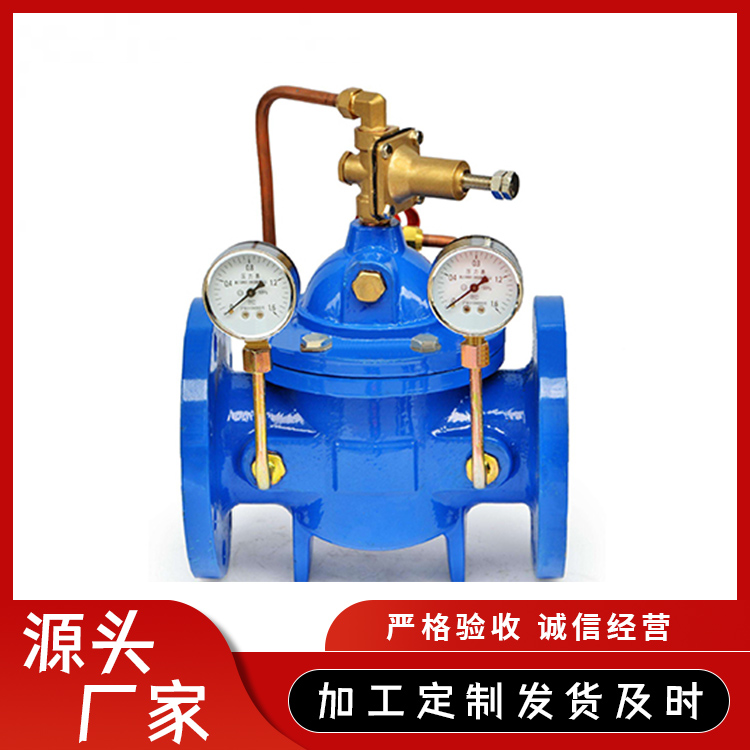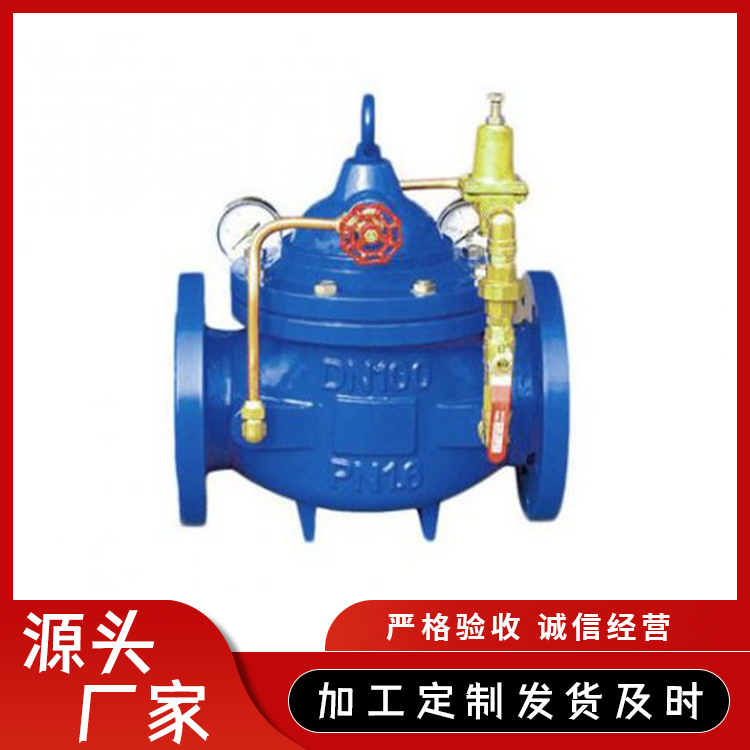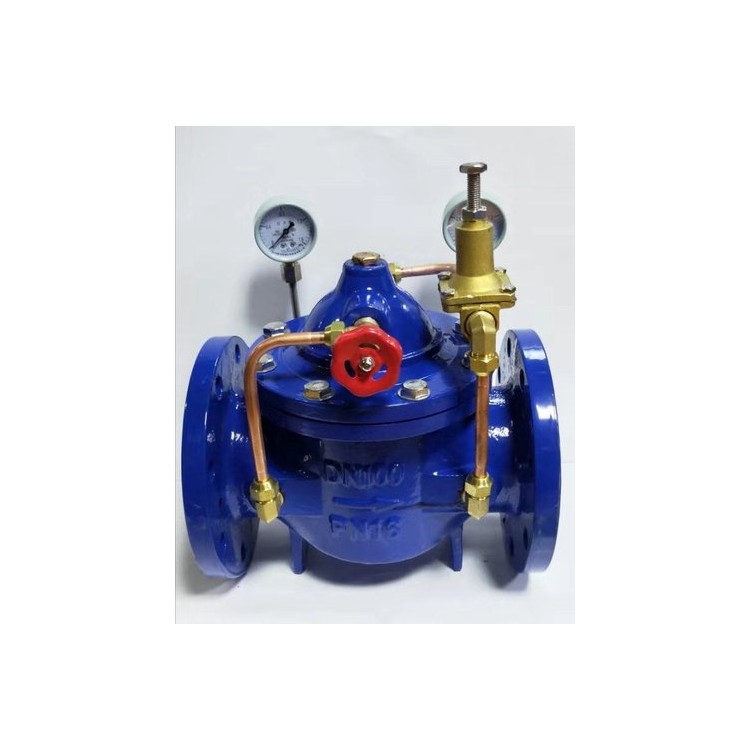
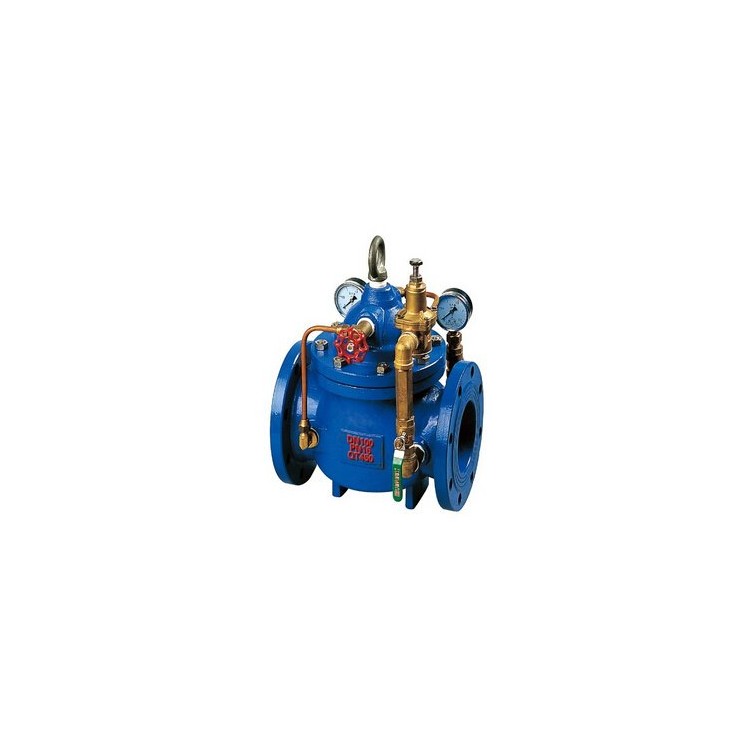


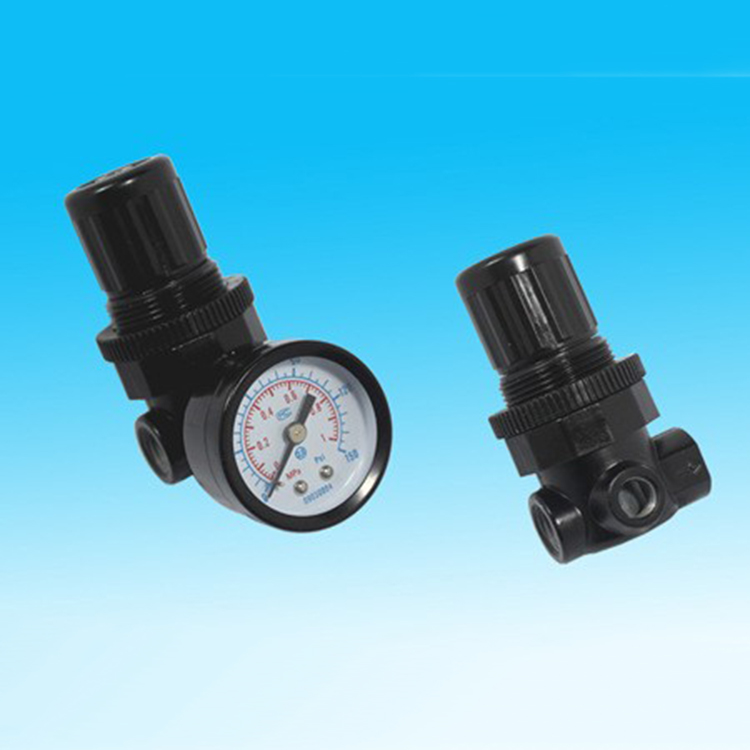
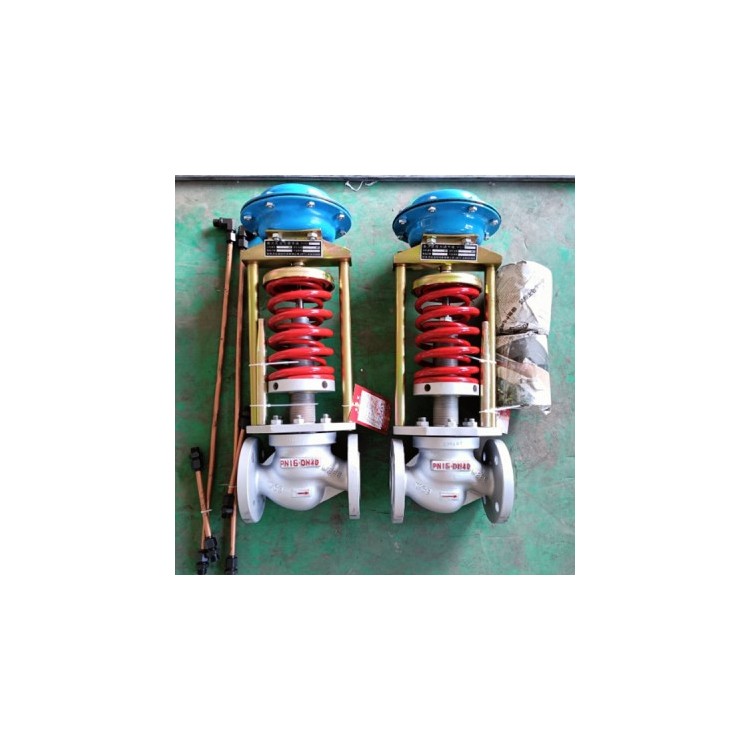
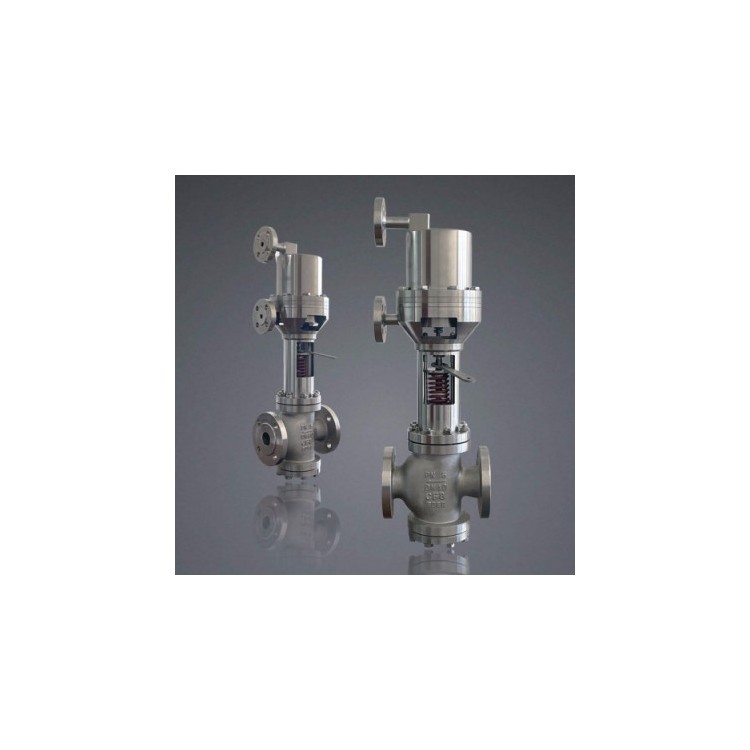
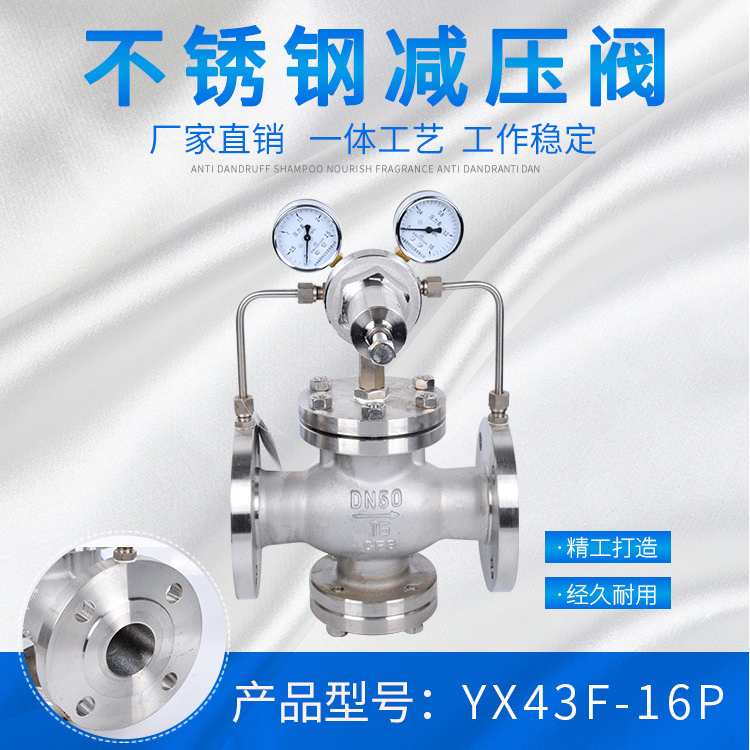







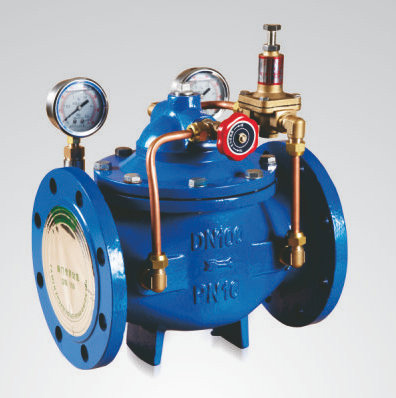
They can be categorized by structural form into diaphragm, spring diaphragm, piston, lever, and bellows types; by the number of valve seats into single seat and double seat types; and by the position of the valve disc into direct acting and reverse acting types.
The operation of the self-relieving valve is controlled by the pressure after the valve. When the pressure sensor detects an increase in the valve pressure indication, the valve opening of the pressure-reducing valve decreases; when it detects a decrease in the pressure after the pressure-reducing valve, the valve opening increases to meet the control requirements.
Lead-type Pressure Reducing Valve – The pressure reduction ratio of this valve must be higher than the system value to a certain extent; it should still be able to respond to either positive or negative control signals even at high or low flow rates. These valves should be selected for the useful control range, i.e., from 20% to 80% of flow rate. They are normally of proportional type or possess proportional characteristics. These types of valves inherently have the flow characteristics and flow range required for proportional control.
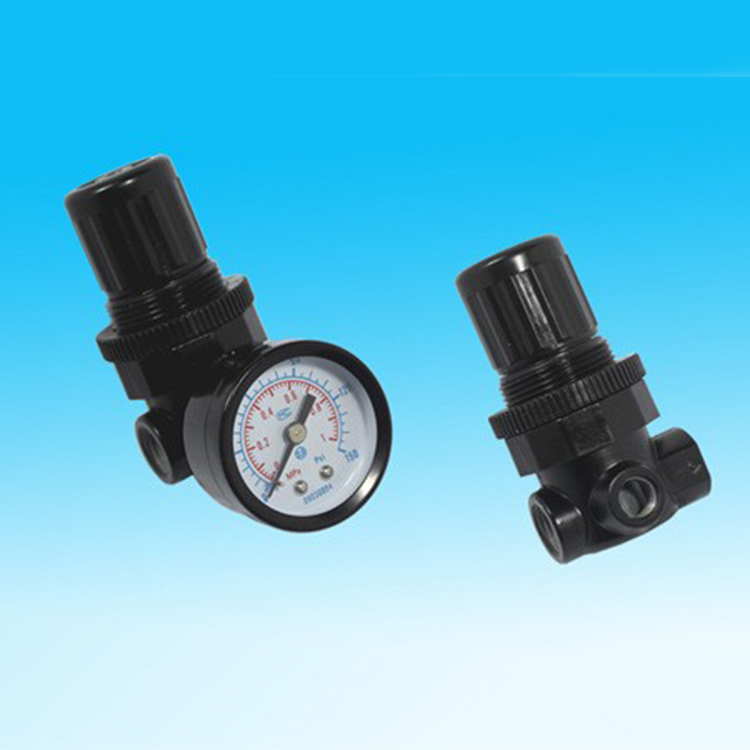
There are many types of pressure reducing valves, commonly including: pilot piston type, diaphragm type, bellows type, proportional type, self-contained type, direct-acting self-contained type, and back pressure regulating valves, etc. They are suitable for different working media.
Different forms have different specific working principles. However, the general principle remains: pressure reducing valves reduce the inlet pressure to a certain required outlet pressure by throttling the opening and closing parts, while maintaining a stable outlet pressure. But generally, pressure reducing valves require an inlet and outlet pressure difference of ≥0.2 Mpa.