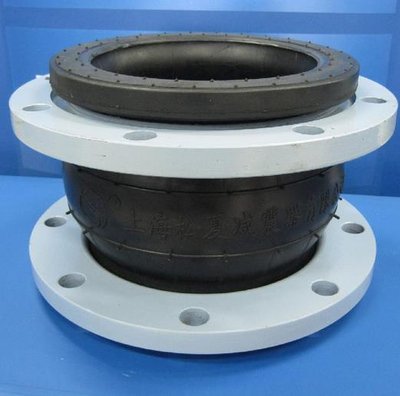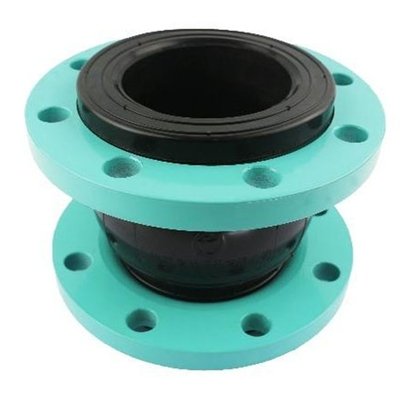







Rubber flexible joints, commonly known as flexible rubber joints or rubber connectors, are rubber products used to provide flexible connections between metal pipes. They are made from materials such as natural rubber, butyl rubber, and styrene-butadiene rubber.
Rubber flexible joints are widely used in water, electricity, chemical, and ship systems, featuring high pressure resistance, good elasticity (allowing axial, lateral, and angular displacement), noise reduction, lightweight, vibration reduction, easy installation, flexibility in use, and ease of disassembly and maintenance. They also possess features such as acid and alkali resistance, and oil resistance.
Flexible Single Spherical RubberFlexible ConnectorAlso known as a rubber hose flexible connector.Flexible rubber jointRubber Soft Connector, Bendable Rubber JointHigh-pressure rubber coupling,Rubber shock absorber,
Compensators, etc. Divided by connection type into loose flange and fixed types.Rubber Soft Connector with Threaded FittingSelect from 3 types: flanged, threaded; categorized by structure into 5 types: single sphere, double sphere, unequal diameter, eccentric unequal diameter, bent sphere, and fan coil. The tubular rubber part is composed of inner and outer rubber layers, a fabric layer, and a steel wire hoop, which is then vulcanized into shape and combined with a metal flange or parallel joint. This product reduces vibration and noise and compensates for thermal expansion and contraction caused by temperature changes, widely used in various pipeline systems.
The product is weather-resistant and can automatically extend during use. Its structural material is made of coated nylon fabric, with both inner and outer surfaces utilizing high-intensity, aging-resistant polar rubber. To prevent natural shrinkage and aging over long-term use, a mesh of steel wire is used for multi-body protection.