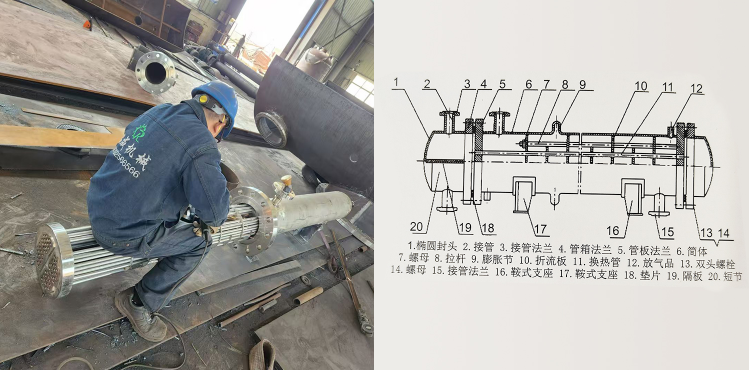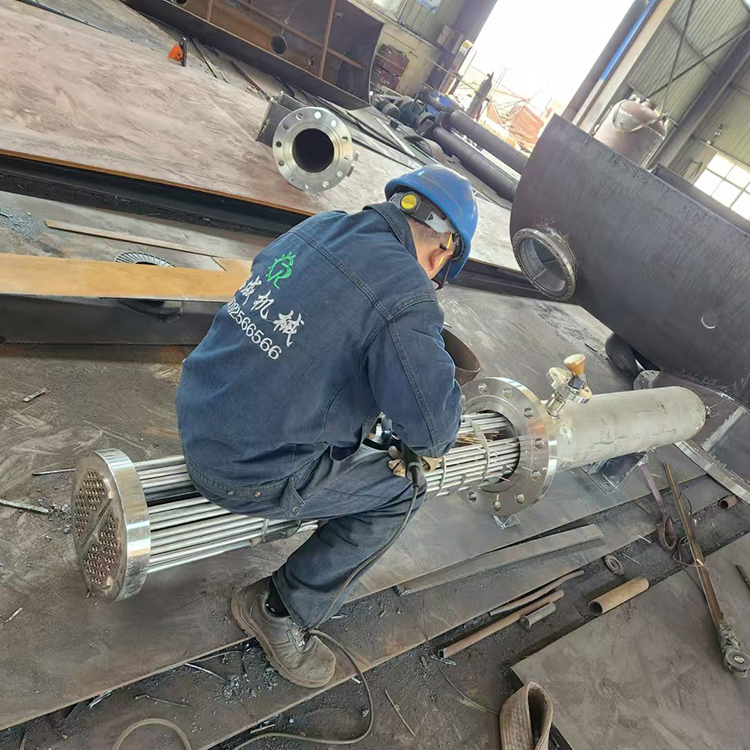


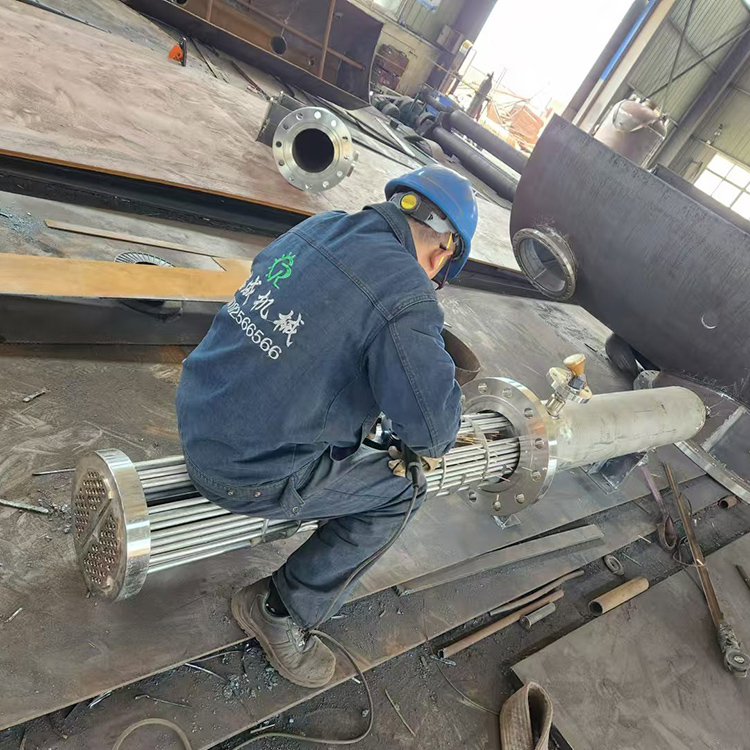
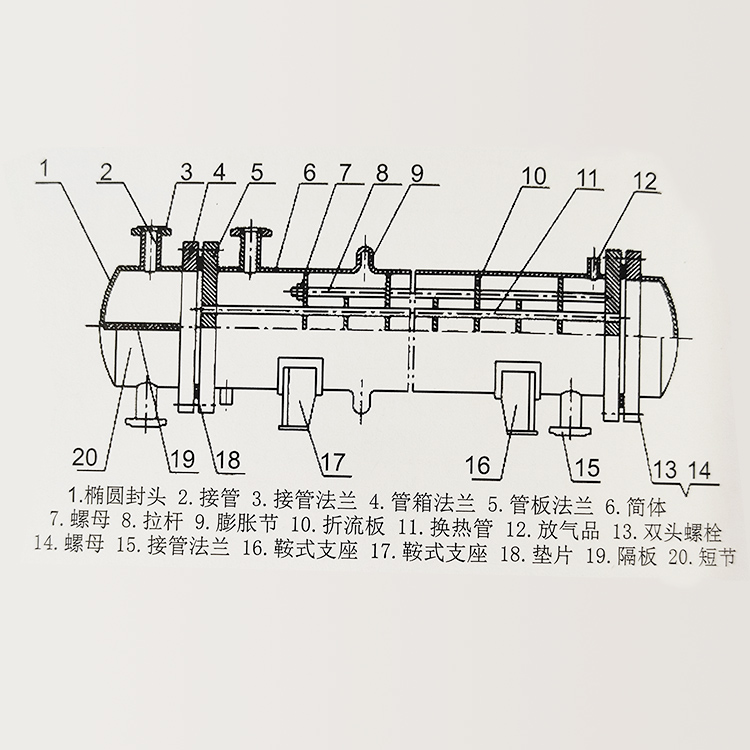











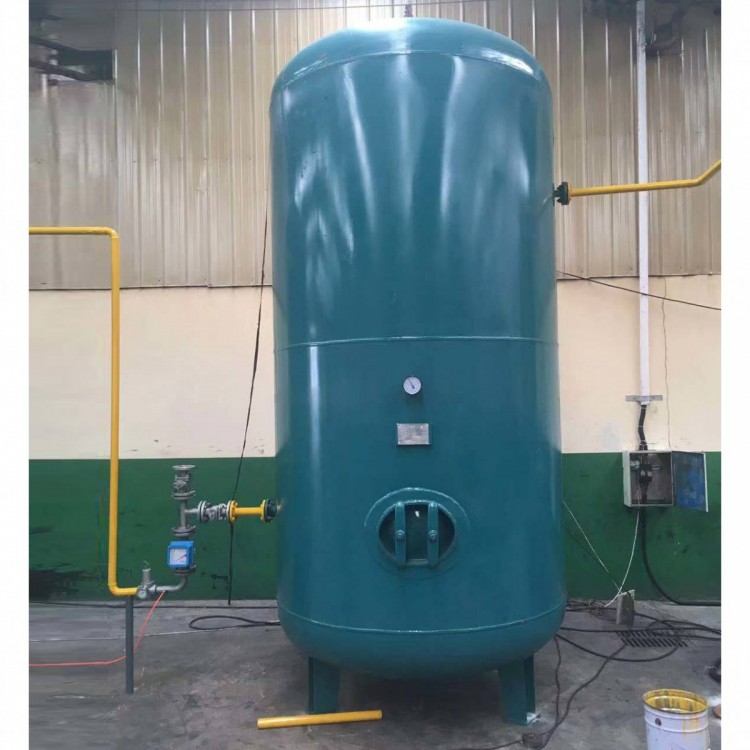
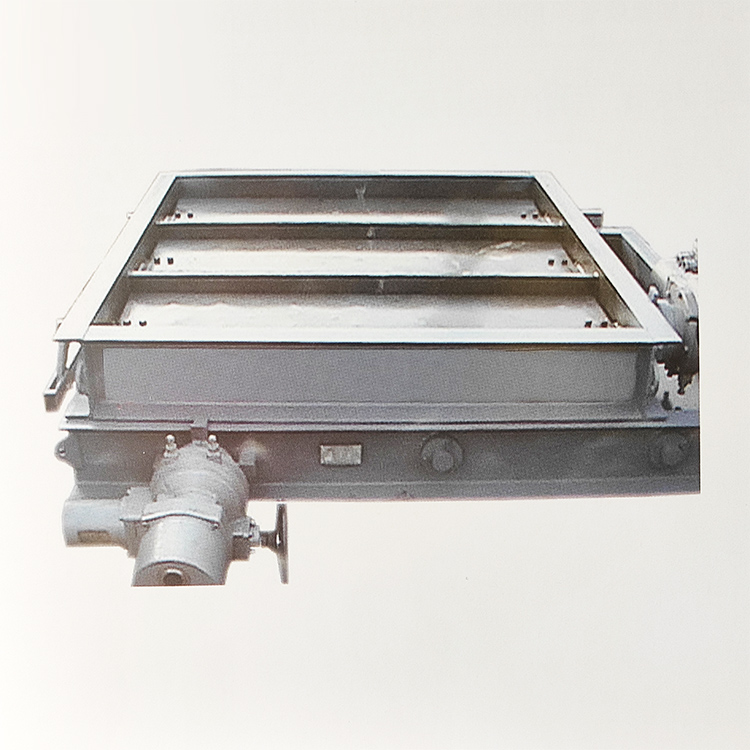
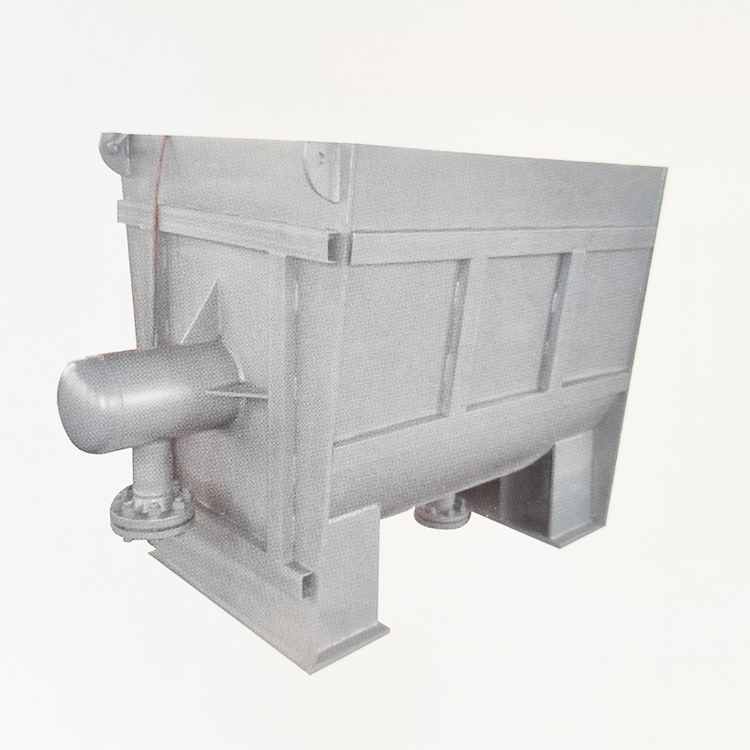
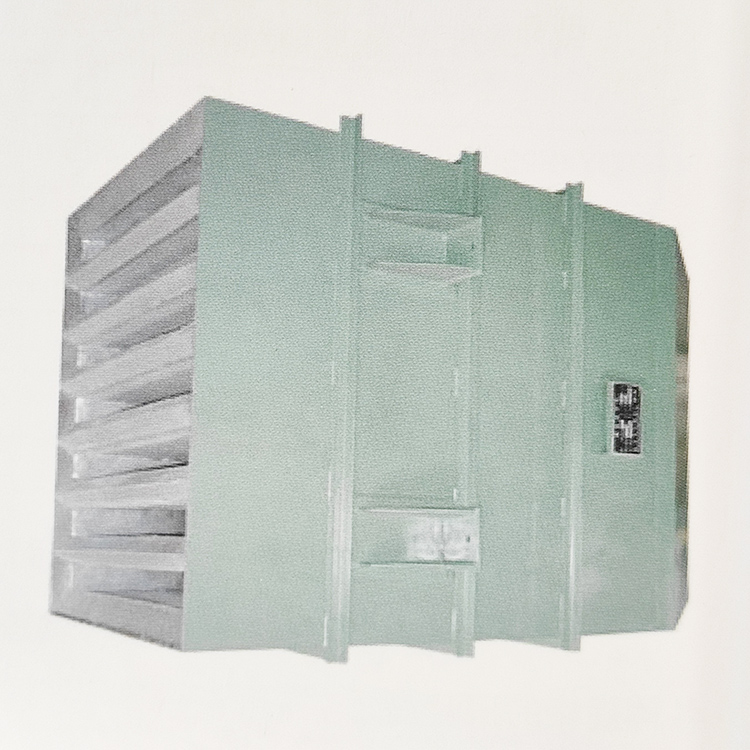
A fixed tube sheet heat exchanger is a type of heat exchanger, primarily composed of the shell, tube sheet, tube bundle, and top cover (also known as a head). The tube plates at both ends of a fixed tube sheet heat exchanger are connected and fixed to the shell using welding. The heat exchange tubes can be plain or low finned. It features a simple structure, low manufacturing cost, and allows for a smaller shell internal diameter. The tube side can be divided into various sections, and the shell side can also be divided into multiple passes using longitudinal baffles. With a wide range of specifications, it is widely used in engineering applications.
Overview
The fixed tube plate heat exchanger integrates both ends of the tube plates and the shell. When there is a significant temperature difference between the two fluids, a compensating ring (or expansion joint) is welded at an appropriate position on the shell. The compensating ring undergoes a slow elastic deformation to compensate for the thermal expansion caused by the differential thermal expansion between the shell and the tube bundle.
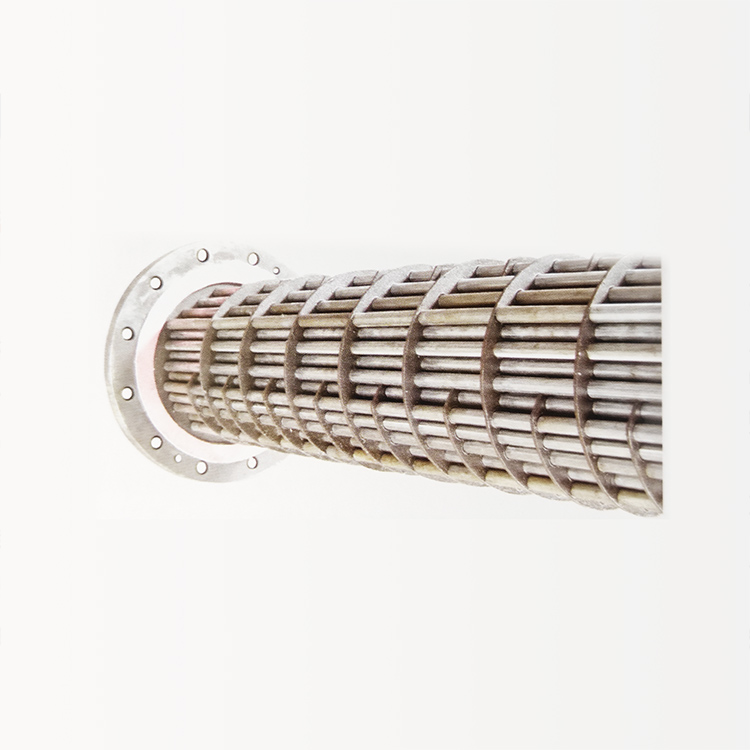
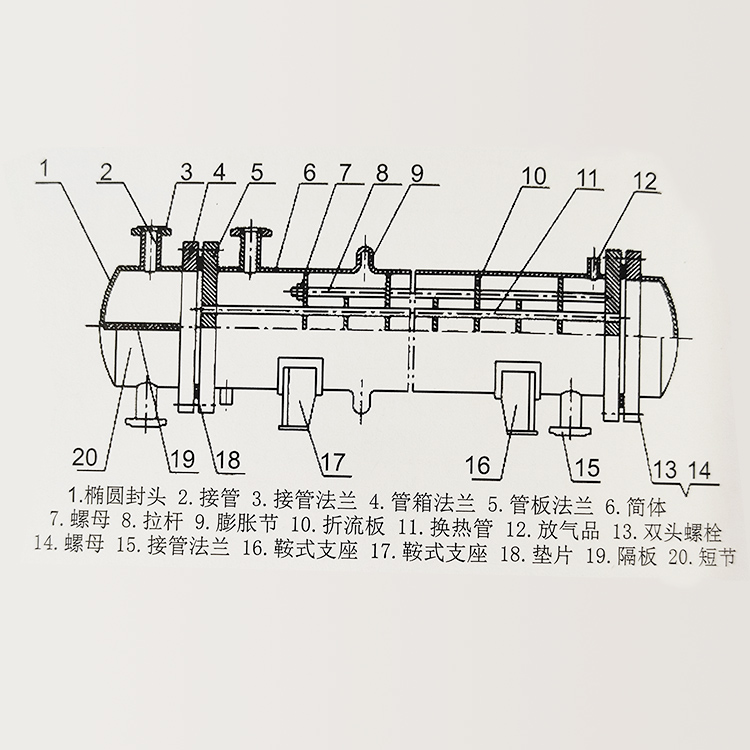
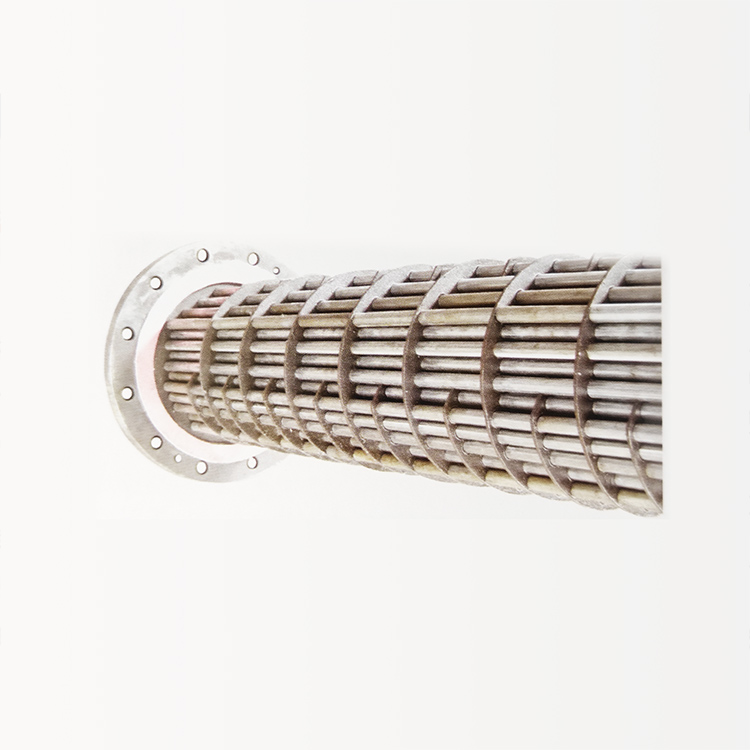
Fixed-tube sheet heat exchangers consist mainly of the shell, tube sheet, tube bundle, and end caps. The structural feature of a fixed-tube sheet heat exchanger is that the tube bundle is set within the shell, with tubes secured to the tube sheet at both ends via welding or胀接. The ends of the tube sheet are then directly welded to the shell. The inlet and outlet pipes of the shell are directly welded to the shell itself. The outer circumference of the tube sheet and the end cap flange are secured with bolts. The inlet and outlet pipes of the tube side are directly welded to the end cap. Several baffle plates are set within the tube bundle according to the length of the heat exchange tubes. This type of heat exchanger can be divided into any number of passes using baffles.
This type of heat exchanger has a simple, compact structure and is cost-effective, but it is difficult to clean the shell side and is not suitable for mediums that are dirty or corrosive. The tube bundle is connected to the tube plate, which is separately welded to both ends of the shell. A top cover is connected to it, and fluid inlets and outlets are typically fitted with pipe connections on the shell. A series of vertical baffles perpendicular to the tube bundle are usually installed outside the pipes. Moreover, the connections between the tubes, tube plates, and the shell are rigid, while the fluids inside and outside the tubes are at different temperatures. Consequently, when there is a significant temperature difference between the tube wall and the shell wall, a large temperature difference stress is generated due to the different thermal expansions of the two, which can cause the tubes to twist, bend, or even become loose from the tube plates, potentially damaging the heat exchanger. To overcome the temperature difference stress, a temperature difference compensation device is necessary, usually when the temperature difference between the tube wall and the shell wall exceeds 50°C for safety reasons. However, the compensation device (expansion joint) can only be used when the temperature difference between the shell wall and the tube wall is below 60~70°C and the pressure of the fluid in the shell is not high. Generally, when the shell side pressure exceeds 0.6 MPa, due to the excessive thickness of the compensation bellows, it becomes difficult to伸缩, and the temperature difference compensation effect is lost, other structural considerations should be made.