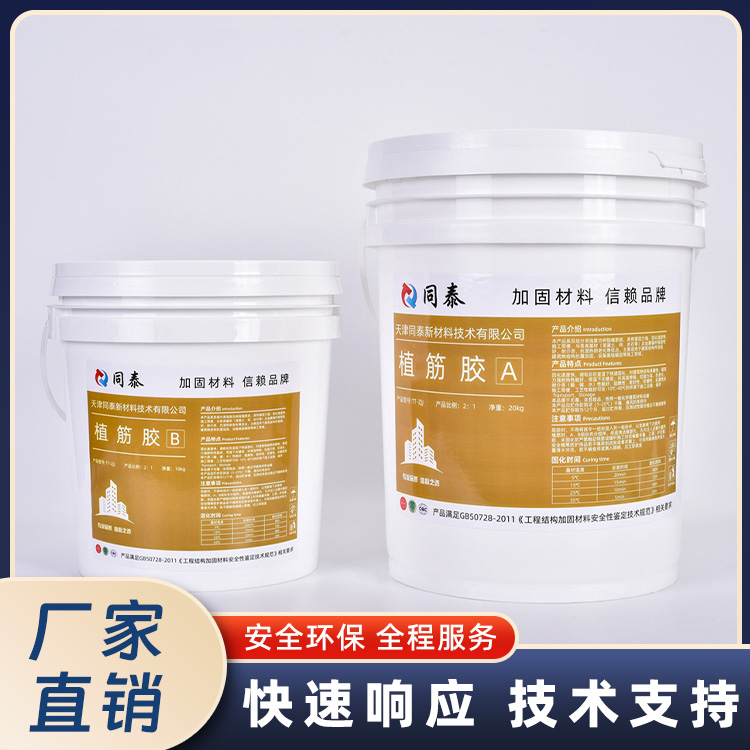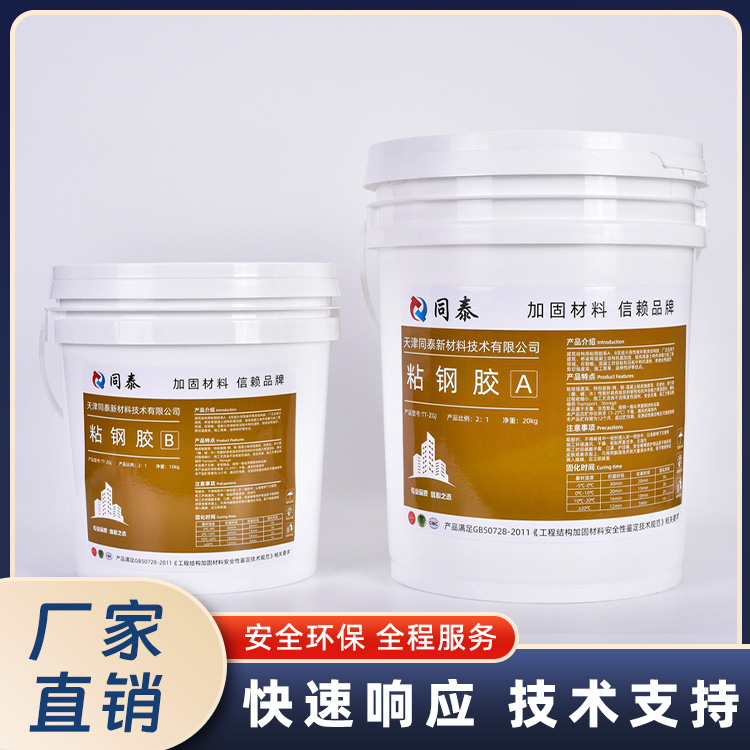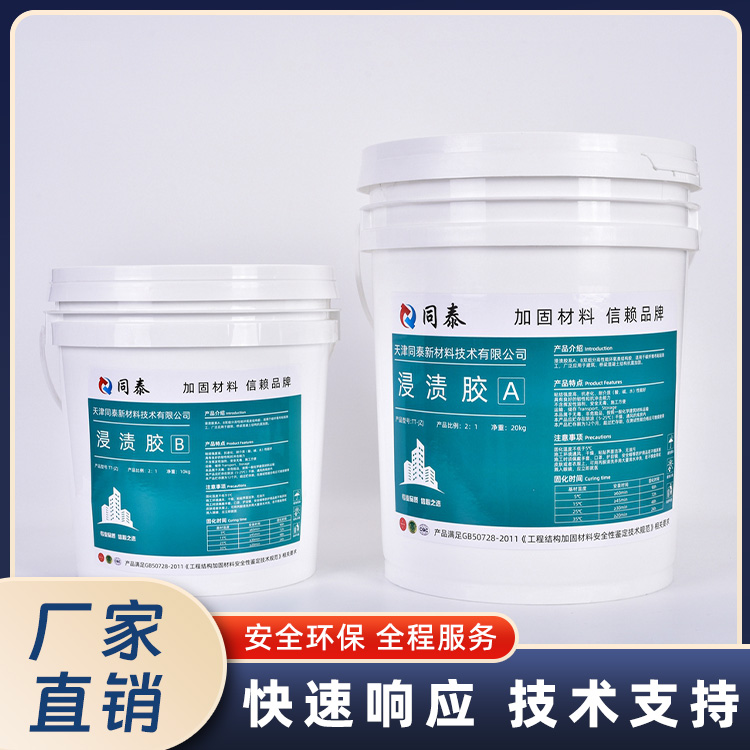










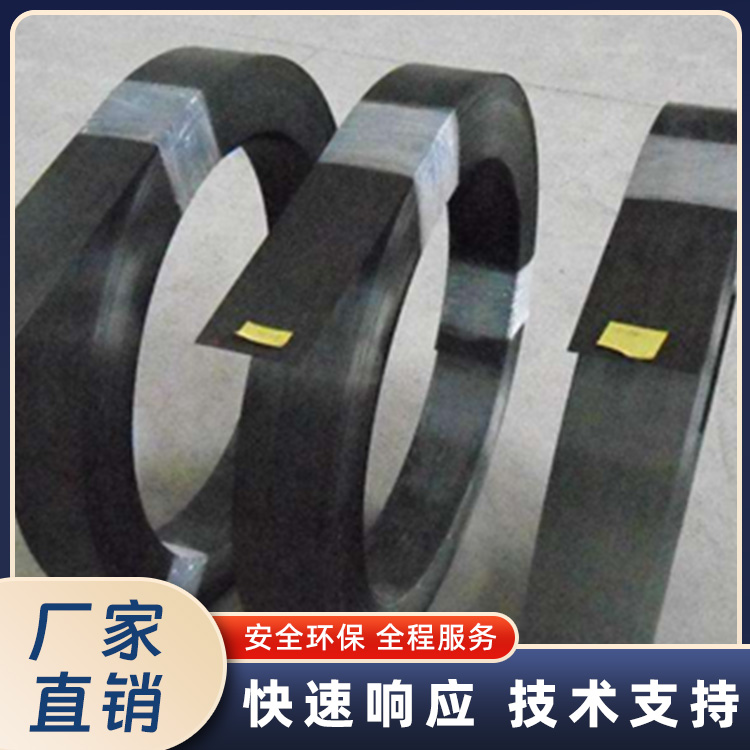
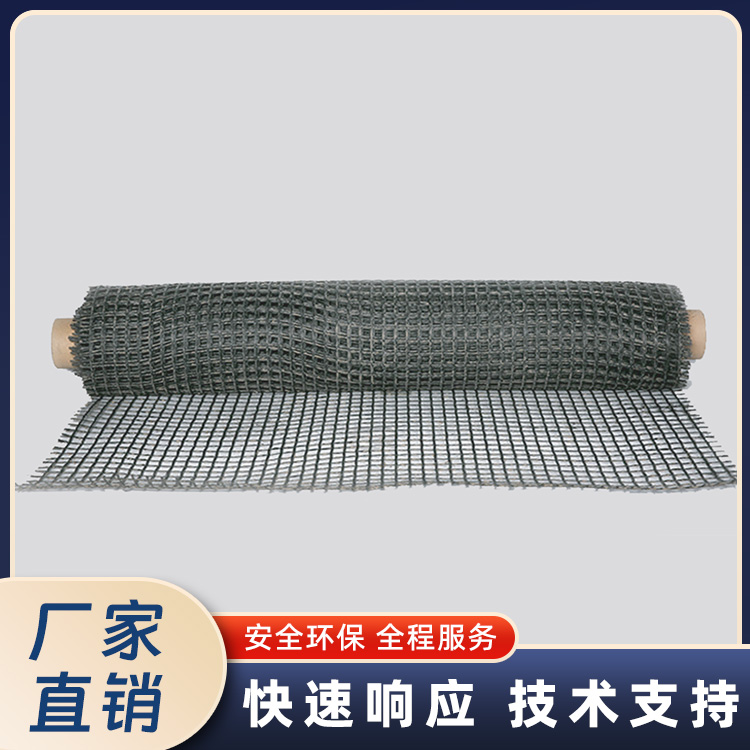
Product Advantages
Performance enhanced: indicators meet national standard A-grade
Stable and Durable: Resistant to humid heat aging and long-term stress, meets the 50-year service life requirements of the design.
High liquidity: Fully adheres to the structural surface
Wide Application: Suitable for construction at temperatures ranging from -15°C to 35°C
Ease of Construction: Quick and convenient, saves labor time
I. Construction Process Flow
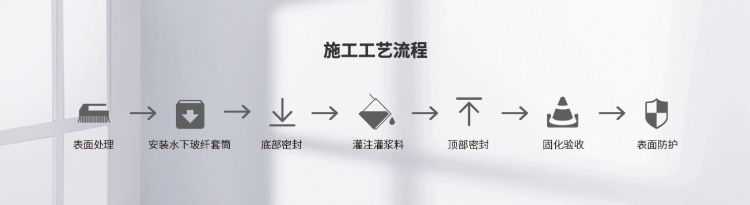
Installation Instructions:
Surface Treatment
(1) Clean and remove all surface defects and damage from concrete components, ensuring the surface remains dry.
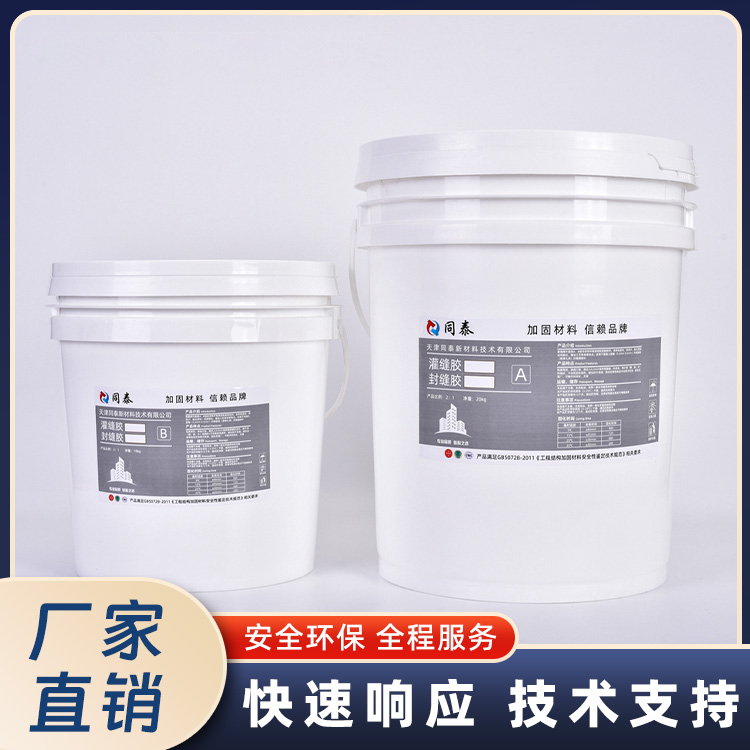
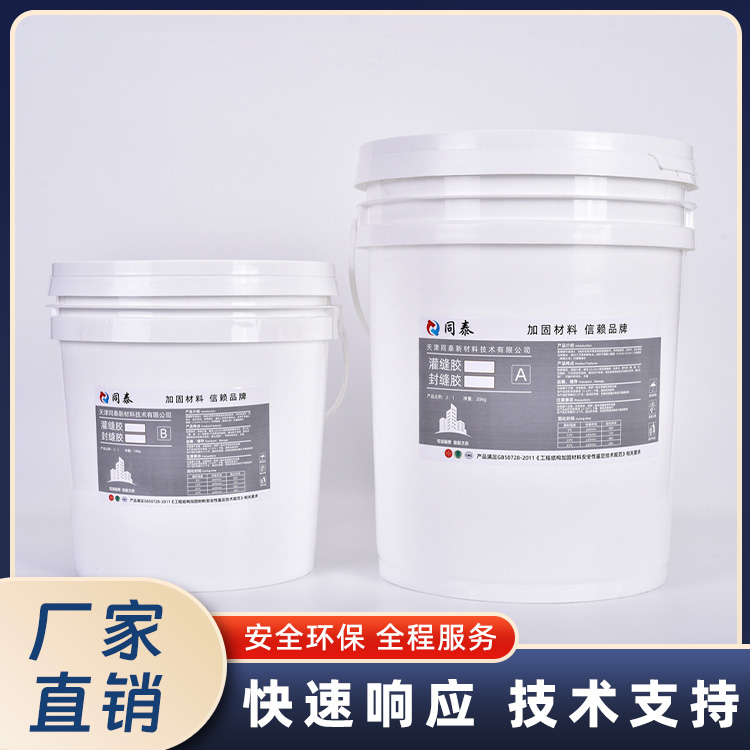
(2) For cracks narrower than 0.15mm, surface sealing is required with seam sealant.Cracks larger than 0.15mm require treatment with crack sealant.
2. Fixed Components
(1) Blast rust from the steel plate surface until the metallic sheen is visible, then position and drill according to the design. Allow for bolt holes and injection holes; typically, 6 to 8 bolt holes and 3 to 5 injection holes can be set per square meter.
(2) Concurrently, locate, drill, install rebars, and secure steel plates in the reinforced concrete areas according to design specifications.
3. Rabbet gap
(1) Insert a flexible tube every approximately 0.5 meters around the perimeter of the adhesive surface as an exhaust vent. Each corner of the steel plate should have an exhaust vent, and the level steel plate must ensure the overflow position of the exhaust vent is above the adhesive surface.
(2) Seal the gaps around the steel plate edges and the injection nozzle gaps with sealing glue.
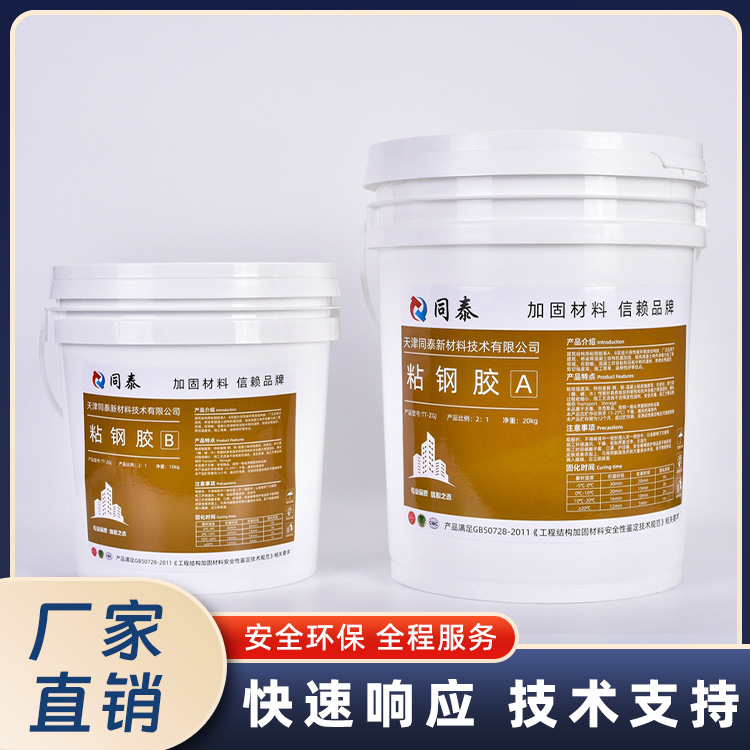
4. Configuration of steel pipe adhesive
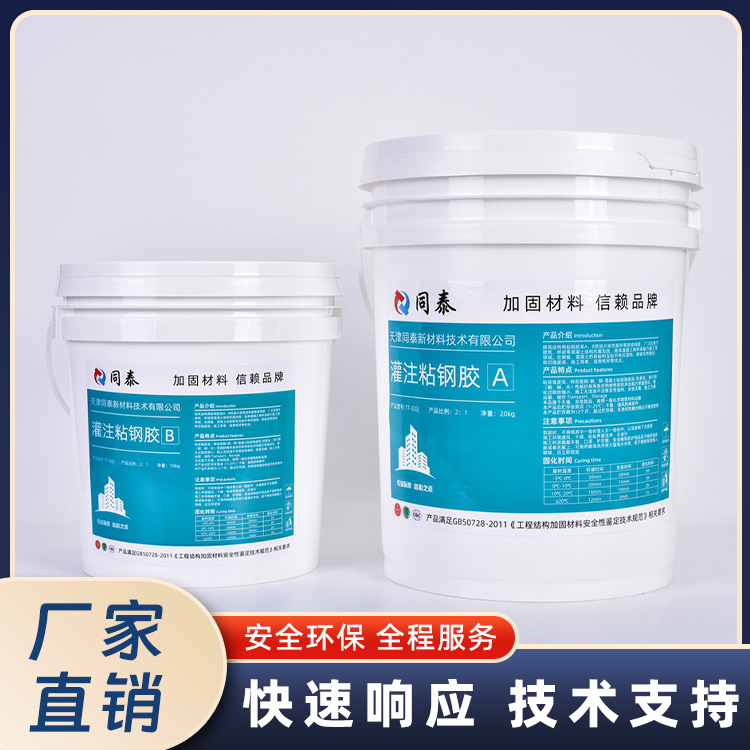
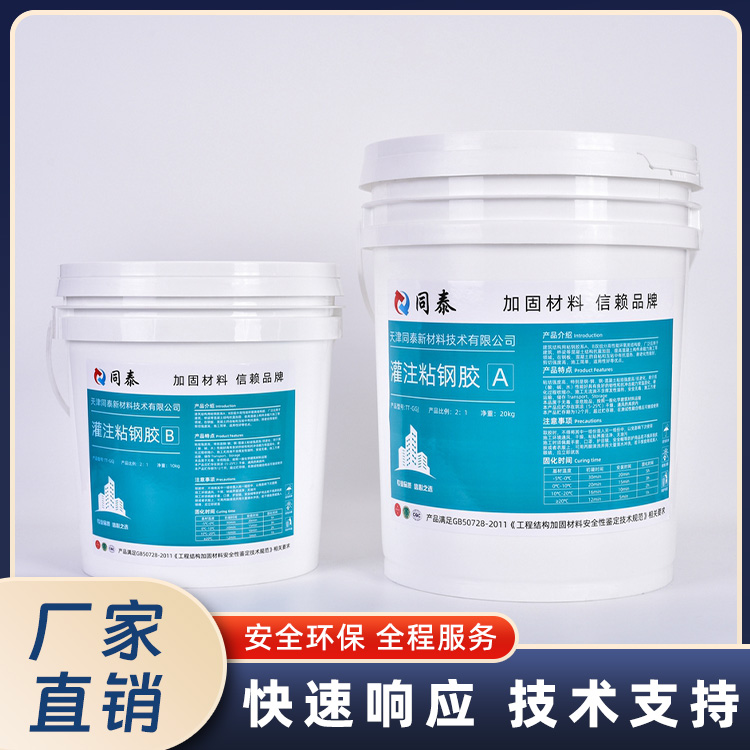
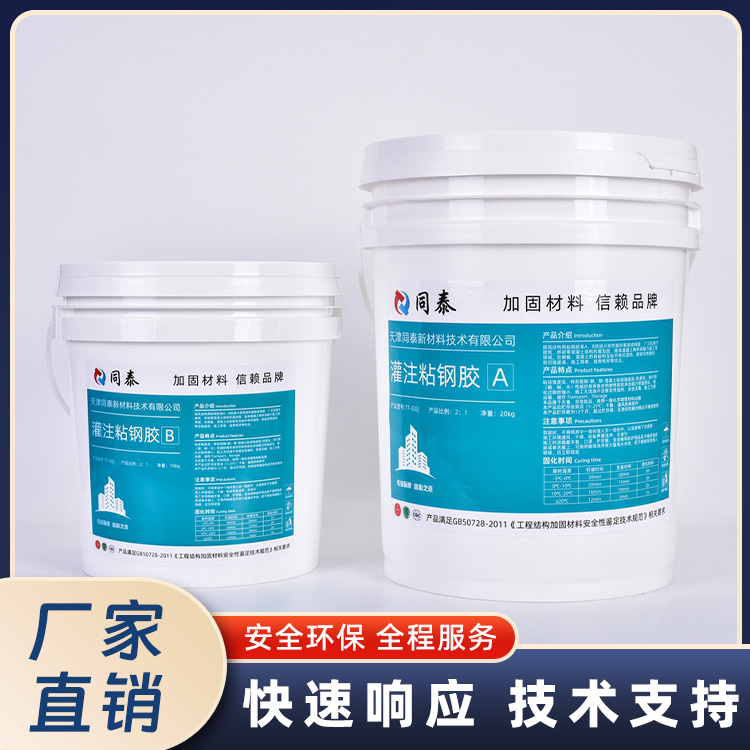
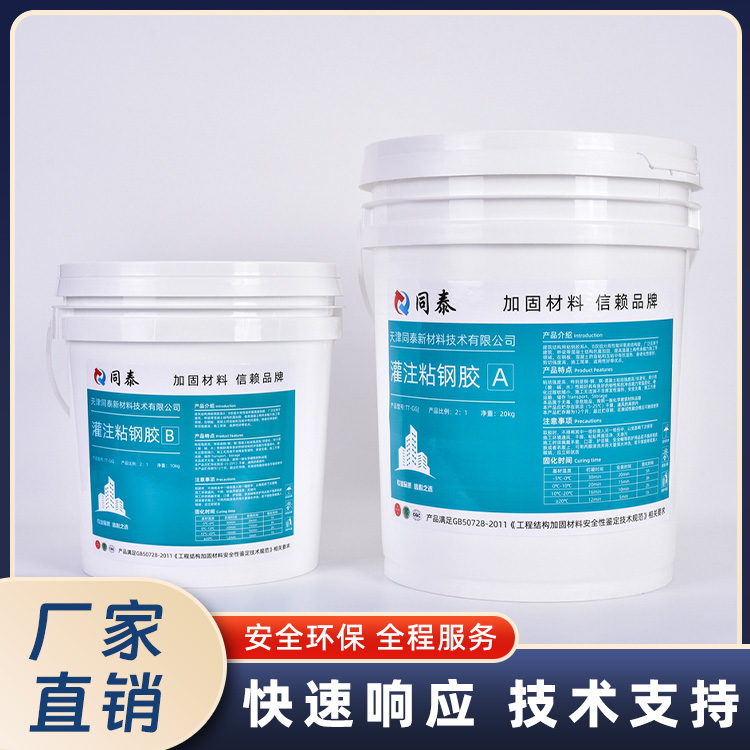
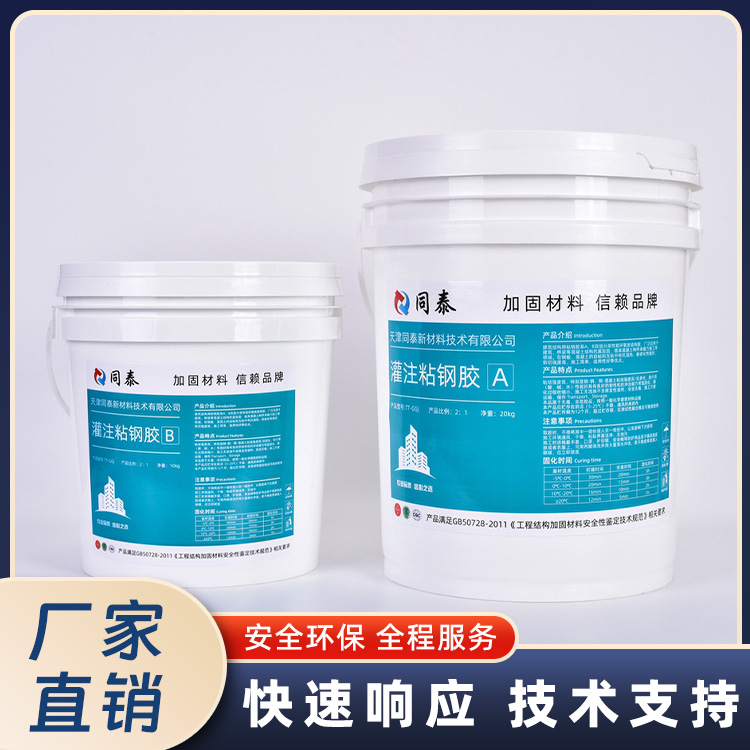
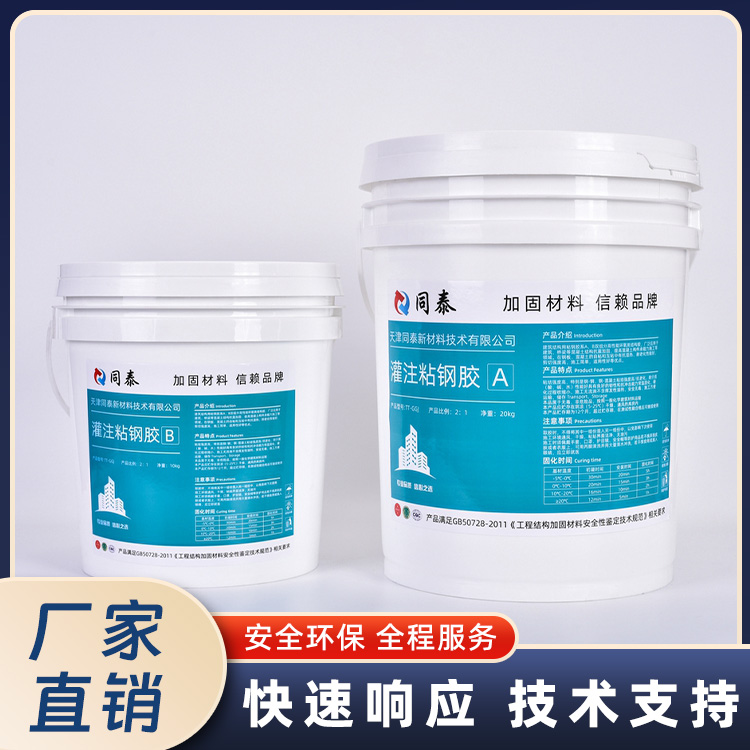
Please measure an appropriate amount of Tong Tai galvanized steel adhesive, weigh it according to a ratio of 2:1 or 3:1, mix it at a constant speed for about 5 minutes until it is uniform and free of any discoloration.
5. Pressure Filling
(1) Following the principle of bottom-up and appropriate speed, use grouting equipment to inject steel gel through the nozzle at pressure. The injection process should start from one end. When gel starts to flow near the injection nozzle, seal and secure the current nozzle, then move to the nozzle with flowing gel to continue the injection.
(2) While injecting the adhesive, strike the steel plate with a small hammer to assess the flow of the adhesive and whether it is fully injected. The last exhaust pipe should be sealed while maintaining the injection pressure to prevent the adhesive layer from becoming hollow.
(3) Be mindful of checking for any oozing after the construction is completed, to prevent delamination; in areas that are not compact, you can drill and inject sealant into the holes for reinforcement and venting.
7. Surface Protection
(1) At room temperature, curing time should be no less than 3 days; if applied in lower temperatures, the curing time should be extended accordingly.
(2) Conduct concealed protection based on the actual on-site conditions.
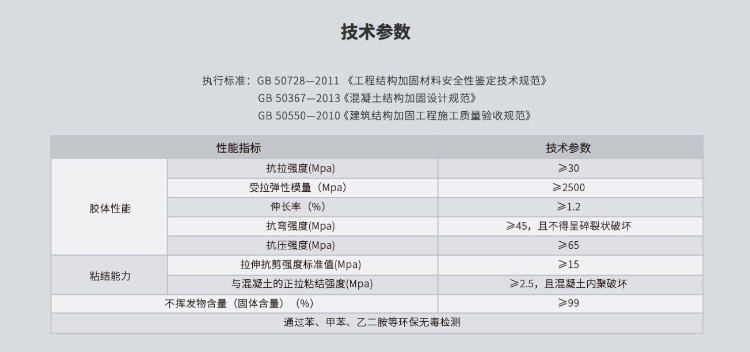
II. Performance Parameters
Section 3: Precautions
1. Ready-to-use; it is recommended to use 20-30 minutes' worth of adhesive at a time for single-person operation to prevent waste and loss.
2. Environmental temperature affects curing speed; the higher the temperature, the faster the curing speed, and vice versa.
3. During winter construction, heating can be applied when the colloidal temperature is low, but the heating temperature should not exceed 50℃.
Do not allow children to handle; do not ingest.
5. Gloves, masks, and eye protection should be worn during construction. In case of accidental contact with the skin or clothing, the affected area should be washed with water immediately. If accidentally ingested or enters the eyes, seek medical attention promptly.