










Our spirit: "Integrity, Devotion, Self-discipline"; Our service宗旨 is that serving you is our immediate duty, and we sincerely hope to join hands with both new and old customers to create a brighter future together!
Wear-resistant ceramic elbow prices show a trend of high at both ends and low in the middle.
This week, the price of wear-resistant ceramic elbows showed a trend of high at both ends and low in the middle, with price declines in various regions ranging from 10 to 100 yuan/ton. Some areas have stabilized or experienced slight increases. Overall, the market trend was weak, with unstable market sentiment, and more focus on clearing inventory through sales. The market has been in a sustained weak consolidation, dragging down both market sentiment and prices. From the trend perspective, influenced by the afternoon rebound today and the subsequent price increases in some regions, the majority of areas saw wear-resistant ceramic elbow prices follow a high at both ends and low in the middle pattern, which generally aligns with our expectations from last week.
Overall, the demand for wear-resistant ceramic elbows is moderate, with limited actual procurement volume by end-users. As the weather turns colder, deliveries from construction sites are restricted. With the market failing to meet expectations, traders are showing a strong wait-and-see attitude, and transactions only slightly increase when there's a rebound in the market, followed by immediate reduction after a price increase. From the market perspective: towards the end of the month, merchants face significant pressure, leading to covert price cuts and reduced deliveries. In terms of transactions, a few construction sites have reported planned orders, indicating that peak season demand is waning and projects are approaching the year-end phase. Overall, transaction volume is much lower than before.
Steel mill support has weakened, and ceramic elbow suppliers are discouraged. Market prices have continuously fallen. Although steel billets have slightly rebounded, the boost to the local market is limited. Most suppliers are focusing on clearing stocks. Market feedback indicates a serious gap in螺纹规格 in the local market, with abundant resources in the market slightly supporting prices. With northern rolling mills resuming production one after another, the demand for steel billets from downstream manufacturers is increasing, limiting the decline in steel billet prices. The cost of ceramic elbow is still supported, but overall demand is limited, and as the month-end approaches, the financial pressure remains. Overall, it is expected that the price trend of ceramic elbow will likely weaken next week, with a potential rebound after adjustment, with fluctuations of about 20-50 yuan/ton.
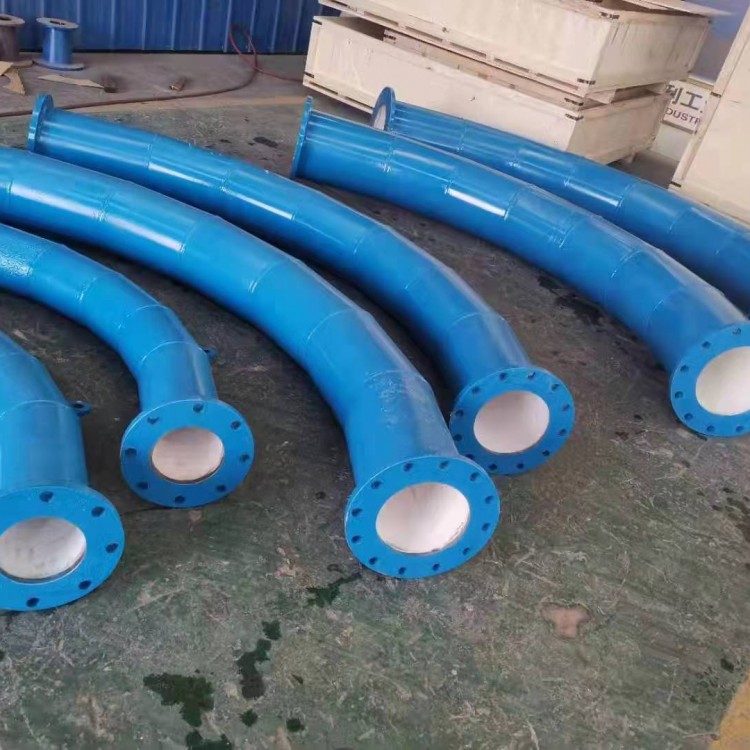
Ceramic Abrasion-Resistant Elbow, full name: Corundum Ceramic Lined Abrasion-Resistant Composite Elbow. It is a type of ceramic lined steel pipe. Ceramic lined steel pipes are manufactured using advanced production technology - self-igniting high-temperature pyrolysis synthesis method.
Composite pipes take advantage of the high strength, good toughness, impact resistance, excellent welding properties of steel pipes, as well as the high hardness, high wear resistance, corrosion resistance, and good heat resistance of alumina ceramic, overcoming the shortcomings of steel pipes, such as low hardness, poor wear resistance, and the poor toughness of ceramics.
Wear-resistant Elbow Application Range
Applications in the metallurgy and power industries
Metallurgy and power industries annually require substantial amounts of metal pipes for conveying coal powder, slag, slurry, and lime gypsum slurries. Replacing other pipes with ceramic composite pipes offers high wear resistance, extended lifespan, ease of installation, and significant economic benefits. Their operational lifespan is several to even tens of times longer than that of steel pipes.
2. Applications in the Mining and Coal Industry
(1) Mining: Severe wear on pipelines from ore filling, concentrate powder, and tailings transportation has been a challenge. The previous ore powder conveying pipelines, such as those in Panzhihua and Daye mines, have a lifespan of less than a year. Switching to this pipe can extend the lifespan by approximately 50%. (2) Coal: Coal selection and long-distance pipeline coal transportation commonly use wet conveying methods, requiring pipelines that are both wear-resistant and corrosion-resistant.
The wear-resistant ceramic pipeline is a transportation pipeline composed of wear-resistant ceramic elbows and some components. This invention in the field of transporting ore and other materials provides a service to people, reducing some costs incurred.
Why are people mostly choosing wear-resistant ceramic pipes in this market? Let's analyze it in detail. It's because wear-resistant ceramic pipes possess many characteristics that are unmatched by other materials, which have provided a vast sales market for these materials, leading to a large number of people purchasing these pipes. First, the hardness of this pipe is second only to diamond, ensuring long-term use for the people.
Its excellent wear resistance is its primary characteristic; under erosive wear conditions, the wear resistance of wear-resistant ceramics is several times that of ordinary steel, ensuring a longer lifespan for the pipeline. Thirdly, its good impact resistance is due to the nature of transport, which mostly involves minerals and coal; only good impact resistance can withstand such conditions. This might be the reason why people choose this type of pipeline.
Wear-resistant ceramic elbow outer steel pipe, due to the extreme hardness of the inner layer of alumina ceramic, reaching HV1100-1400, conventional cutting methods such as oxygen cutting, sawing machines, and grinding wheel cutters cannot be used. Special attention must be paid to the feasibility of cutting wear-resistant ceramic elbows, as they come in two processes: self-propagating high-temperature synthesis and sticker-type.
Surface mount ones are not cuttable; the self-propagating type 1 can be cut, but we do not recommend it. If cutting is unavoidable, we suggest using a plasma cutter to cut the wear-resistant ceramic elbow. It must be cut flat, and after cutting, the wear-resistant ceramic elbow needs to be polished with a grinder to ensure the end is smooth.
Before operation, the operator must wear insulating shoes, gloves, and protective goggles. The equipment must be securely grounded. For arc striking methods, press the button first, then quickly touch the nozzle to the wear-resistant ceramic elbow for cutting, which is more conducive to arc cutting. If arc striking is difficult, adjust the air pressure to the minimum! The pressure relief valve and air compressor should be drained frequently. Do not move the cutting at high speed to prevent the wear-resistant ceramic elbow from not being cut through, which may cause slag and arc reflection. Also, do not slow down the cutting speed too much to avoid overheating the wear-resistant ceramic elbow, which can affect the quality of the cut.
Cutting interrupted, first release the button, then lift the blade. The above standard significantly improves the service life of electric nozzles. During cutting, always pay attention to the pressure, voltage, and condition of the electric and nozzle usage, and avoid the short circuit and burning of the cutting due to the use of tungsten wire in the electric nozzle and the formation of copper spray forming a short circuit with the electrical and conductive nozzle. Each tungsten wire in the electric nozzle is about 3mm long. After the nozzle orifice, the cutting quality and thickness will severely decrease; replace the nozzle immediately!
WeChat Official Account

Scan to follow Official Account