













Our company prioritizes customer satisfaction, focusing on details, honoring commitments, and acting swiftly! We have cultivated an exceptional team with modern management systems, capable of providing personalized services to our clients.
Abrasion-resistant ceramic tubes are stepping up their ascent with the arrival of spring.
Will the耐磨陶瓷管 accelerate its upward trend with the arrival of spring, or will it face a "late spring cold snap" like in the past two years? Analyst Ma Guanghui from the Lang Steel Research Center said that under the condition that the demand is released without any unexpected circumstances, there is a slightly higher possibility of the steel market experiencing a slight upward fluctuation.
From market feedback, post-holiday, the market enthusiasm was ignited due to the continuous increase in the price of wear-resistant ceramic tubes and the scarcity of supply. Merchants holding stocks have been raising prices and showing a strong reluctance to sell. However, after the price exceeded 10,000, steel mills on the downstream side showed some hesitation in procurement, with fewer transactions at high prices, weakening price support. Currently, both buyers and sellers are maintaining a stalemate, with an expectation that scrap materials may remain stable or slightly stronger in March.
Overall, the fundamentals are strong at present, with construction sites opening up, demand warming up, and the northern market clearing out stocks. Merchants are quickly following the price increases. In terms of production restrictions, they are ongoing, with steel mills still operating in ABC rotation, which greatly impacts production and is part of the market price increase. In the southern region, there's a strong intention to catch up on price increases, and shipments are also improving.
Economic Outlook: Anticipated positive outcomes from US-China trade negotiations and frequent favorable macroeconomic news; Policy Front: China's foreign policy may be implemented in March; Raw Materials: The expected rise in raw material prices is significantly supporting steel mill costs; Supply Side: The overall crude steel production in the first quarter is expected to be lower than last year, indicating excessive supply pressure; Demand Side: Although the warming trend in downstream demand for stainless steel is not as fast as anticipated, the demand trough in February will soon pass, and it is predicted that overall demand in March will be better than in February. In summary, the stainless steel market in March is expected to show a "Golden March" trend.
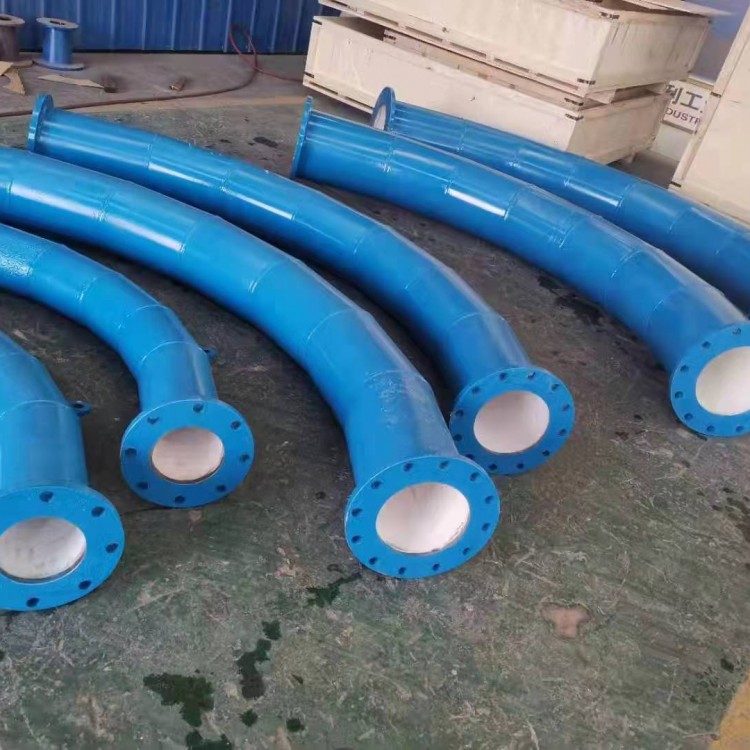
The wear-resistant ceramic elbow experienced a low opening followed by a rebound overnight, and the day session continued the rally, nearly turning positive before noon. However, after the release of social inventory data, which initially brought a wave of positive sentiment, the rebar prices surged and then plunged rapidly, instantly dampening market enthusiasm. Nonetheless, the pig iron prices had already locked in gains, thanks to their warming performance before noon.
It's understood that in recent times, manufacturers of wear-resistant ceramic elbows in Shandong, Shanxi, and Hebei provinces have proposed a price reduction. Currently, some coking enterprises have accepted this reduction, and it's expected that the number of coking enterprises accepting the reduction will gradually increase in the later stage, with the overall market sentiment weakening. In some parts of Hebei, environmental protection efforts have increased recently, leading to a rise in the number of blast furnace maintenance in steel mills, which has slightly reduced the overall demand for wear-resistant ceramic elbows. Inventory levels are maintained at a medium to high level, and purchases are primarily made on a needs basis. Company inventories remain low, and shipment conditions are satisfactory. Considering these factors, it is predicted that the market for wear-resistant ceramic elbows will experience a weak downward trend in the short term.
How to Identify the Authenticity of Wear-Resistant Ceramic Tubes
As the application of wear-resistant ceramic tube products continues to increase, the market is gradually becoming chaotic, and it can sometimes be difficult to distinguish between genuine and counterfeit products. The editor will tell you how to identify the authenticity of ceramic products, which can serve as a reference for your purchase.
It's not difficult to distinguish between genuine and counterfeit products; a thorough inspection can reveal the truth. Low-quality products have not yet been confirmed by institutions (i.e., provincial and ministerial-level agencies). They misuse terms, speeches, or advertisements, appearing very appealing, such as wear-resistant corundum ceramic lined steel pipes, high-wear-resistant materials, wear-resistant products, ultra-wear-resistant materials, WEA. Wear-Resistant Products, New Wear-Resistant Materials, Ultra-Hard Wear-Resistant Materials, Abrasion-Resistant Materials, New Wear-Resistant Products, Ultra-Hard Wear-Resistant Products, Abrasion-Resistant Products, etc.
This jacket is brightly colored. Upon closer inspection, it's riddled with flaws and jokes. In terms of terminology, it can only be referred to as corundum or wear-resistant ceramic. With so many names to reference, the wear resistance of the corundum ceramic depends on its formula and sintering temperature. A good formula, equipment, and quality product are essential. We can see some things with the naked eye.
Wear-resistant ceramic elbow outer steel pipe, due to the extreme hardness of the inner layer of alumina ceramic, reaching HV1100-1400, ordinary cutting methods such as oxygen cutting, sawing machines, and polishing wheel cutters are not feasible. When cutting wear-resistant ceramic elbows, pay attention to whether it can be cut, as there are two processes involved: self-propagating high-temperature synthesis and sticker-type.
Surface mount types cannot be cut. The self-propagating type 1 can be cut, but we do not recommend it. If cutting is unavoidable, we suggest using a plasma cutter to cut the wear-resistant ceramic elbow. It must be cut flat. After cutting, the wear-resistant ceramic elbow should be polished with a grinder to ensure the end is smooth.
Before operation, the operator must wear insulating shoes, gloves, and protective goggles. The equipment must be securely grounded. For contact arc starting, press the button first, then rapidly touch the nozzle to the wear-resistant ceramic elbow for arc cutting. This method is more conducive to arc cutting. If arc starting is difficult, adjust the air pressure to the minimum! The pressure relief valve and air compressor should be drained frequently. Do not move the cutting at excessive speed to prevent incomplete cutting of the wear-resistant ceramic elbow, which can cause slag and arc reflection. Also, avoid cutting too slowly to prevent the wear-resistant ceramic elbow from overheating, which can affect the quality of the cut.
Cutting interrupted, first release the button, then lift the blade. The above standard significantly improves the service life of electric spray nozzles. During cutting, always pay attention to the pressure, voltage, and condition of the electric and nozzle use, and never let the tungsten wire in the electric nozzle burn out, causing the nozzle and the conductive mouth to short circuit and burn the cutter. Each tungsten wire in the electric nozzle is about 3mm long. After the nozzle bore, the cutting quality and thickness will significantly decrease, replace the nozzle immediately!
WeChat Official Account

Scan to follow Official Account




















