












Our entire team is enthusiastic about collaborating with both new and old friends from all over the world. We have always adhered to a business philosophy of meeting customer needs, being sincere and honest, focusing on the present, and looking forward to the future.
Abrasive ceramic elbow night session opened low and rebounded, the day session continued the rebound after opening, almost turned red before noon. However, after the release of social inventory and a wave of positive market sentiment, the futures of steel rebars surged and then plunged rapidly, instantly dampening market enthusiasm. Nonetheless, billets had already locked in gains with their warming performance before noon.
According to information, recent price reductions for wear-resistant ceramic elbow manufacturers in Shandong, Shanxi, and Hebei provinces have been proposed. Currently, some coking enterprises have accepted the reductions, and it is expected that the number of coking enterprises accepting the reductions will gradually increase in the later stage. The overall market sentiment is weakening. In recent days, the environmental protection efforts in some areas of Hebei have increased, leading to a rise in the number of blast furnace maintenance at steel mills, which has slightly reduced the overall demand for wear-resistant ceramic elbows. Inventory levels remain at medium to high levels, and purchases are mostly made on a demand basis. Company inventories continue to be low, and shipment conditions are satisfactory. Considering these factors, it is predicted that the short-term market for wear-resistant ceramic elbows will weaken and decline.
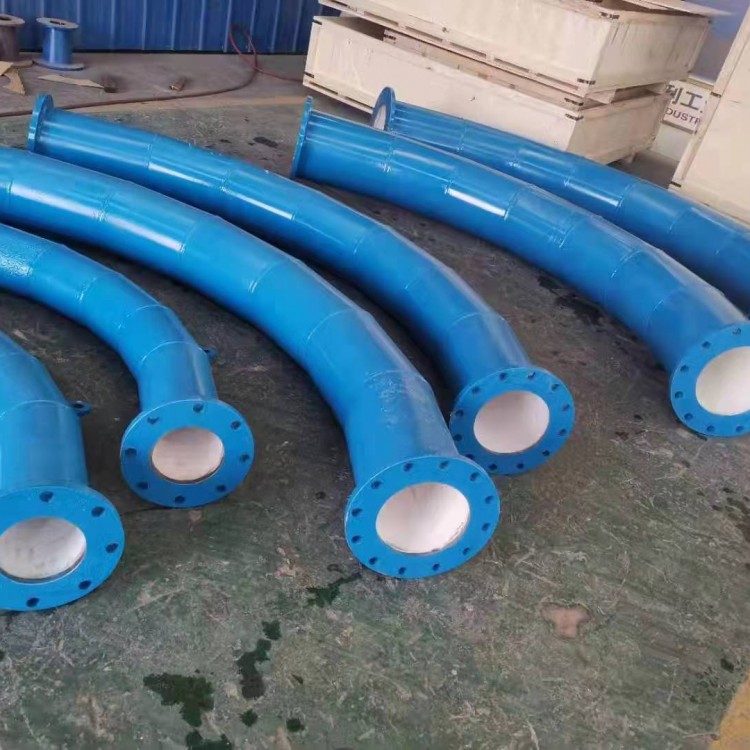
Ceramic Abrasion-Resistant Elbow, full name Corundum Ceramic Lined Abrasion-Resistant Composite Elbow. It is a type of ceramic composite steel pipe. Ceramic composite steel pipes are manufactured using a high-tech production process - the self-igniting high-temperature cladding synthesis method.
Composite pipes fully utilize the high strength, good toughness, impact resistance, excellent welding properties of steel pipes, as well as the high hardness, high wear resistance, corrosion resistance, and good heat resistance of alumina ceramic, overcoming the low hardness and poor wear resistance of steel pipes, as well as the poor toughness of ceramics.
Wear-resistant elbow application range
Applications in metallurgy and power industries
Metallurgy and power industries require a substantial amount of metal pipes annually for conveying coal powder, slag, slurry, and lime gypsum slurries. Replacing other piping with ceramic composite pipes offers superior wear resistance, extended lifespan, ease of installation, and significant economic benefits. Their operational lifespan is several to tens of times longer than that of steel pipes.
2. Applications in the Mining and Coal Industry
(1) Mining: Severe wear on pipelines is caused by mine filling, concentrate powder, and tailings transportation. The previous mine powder conveying pipelines, such as Panzhihua and Daye Mines, have a lifespan of less than a year. Switching to this pipe can extend the lifespan by approximately 50%. (2) Coal: Coal selection and long-distance pipeline coal transportation commonly use wet conveying methods, requiring pipelines that are both wear-resistant and corrosion-resistant.
Wear-resistant ceramic elbow outer steel tube, due to the extreme hardness of the inner layer of alumina ceramic, reaching HV1100-1400, ordinary cutting methods such as oxygen cutting, sawing machines, and polishing wheel cutters are unable to complete the task. When cutting wear-resistant ceramic elbows, attention must be paid to the feasibility of cutting, as there are two processes involved: self-propagating high-temperature synthesis and adhesive bonding.
Surface-mounted items cannot be cut. The self-propagating type #1 can be cut, but we do not recommend it. In case cutting is unavoidable, we suggest using a plasma cutter to cut the wear-resistant ceramic elbow. It must be cut flat, and after cutting, the wear-resistant ceramic elbow should be polished to ensure the end is smooth.
Prior to operation, the operator must wear insulated shoes, gloves, and protective goggles. The equipment must be securely grounded. For contact arc cutting, press the button first, then quickly touch the nozzle to the wear-resistant ceramic elbow for a smoother arc cutting process. If arc initiation is difficult, lower the air pressure to the minimum! Regularly drain the pressure relief valve and air compressor. Do not move the cutting head too fast to prevent incomplete cutting of the wear-resistant ceramic elbow, which could cause slag and arc reflection. Also, avoid cutting too slowly, as it may heat the elbow red and affect the cut quality.
Cutting should be stopped first by releasing the button, then lifting the blade. The above standards significantly improve the service life of electric spray nozzles. During cutting, always monitor the pressure, voltage, and the condition of the electricity and nozzle. Avoid using copper to replace the hafnium wire in the electrode after it runs out, as this can cause a short circuit between the electrode and the conductive nozzle, damaging the cutting tool. Each hafnium wire in the electrode is about 3mm long. After the nozzle diameter, the cutting quality and thickness will significantly decrease; replace the nozzle immediately!
Wear-resistant ceramic tubes are stepping up their pace as spring approaches.
Will the耐磨陶瓷管 accelerate its upward trend with the arrival of spring, or will it face a "late spring cold" like the past two years? Analyst Ma Guanghui from the Lang Steel Research Center said that under the condition of demand release not being a surprise, there is a slightly higher possibility of the steel market experiencing fluctuations and moving upwards.
Based on market feedback, post-holiday, the continuous increase in the price of wear-resistant ceramic tubes, coupled with tight supply, has ignited market enthusiasm. Merchants holding stocks have been accumulating and raising prices, with a strong aversion to selling. However, after the price surged past 10,000, downstream steel mills have shown some hesitation in procurement, resulting in fewer high-priced deals and weakened price support. Currently, both buyers and sellers are maintaining a stalemate, with expectations that scrap materials may remain stable or slightly stronger in March.
Overall, the fundamentals are strong at present, with construction sites opening up, demand warming up, and the northern market clearing out stocks. Merchants are quickly following the price increase. In terms of production restrictions, they are ongoing, with steel mills still operating in ABC rotation, which greatly impacts steel production and is part of the reason for the market price rise. In the southern region, there's a strong intention to catch up on prices, and they are all increasing prices, with sales improving accordingly.
Economic outlook: Expectations for positive outcomes in US-China trade negotiations and frequent positive macroeconomic news; Policy front: China's foreign policy may be implemented in March; Raw materials: The expected rise in raw material prices significantly supports steel mill costs; Supply side: The overall crude steel production for the first quarter is expected to be lower than last year, indicating excessive supply pressures; Demand side: Although the warming trend of downstream demand for stainless steel is not as expected, the demand trough in February will soon pass, and it is predicted that overall demand in March will be better than in February. In summary, the trend of stainless steel in March is expected to present a "Golden March" market scenario.
WeChat Official Account

Scan to follow Official Account