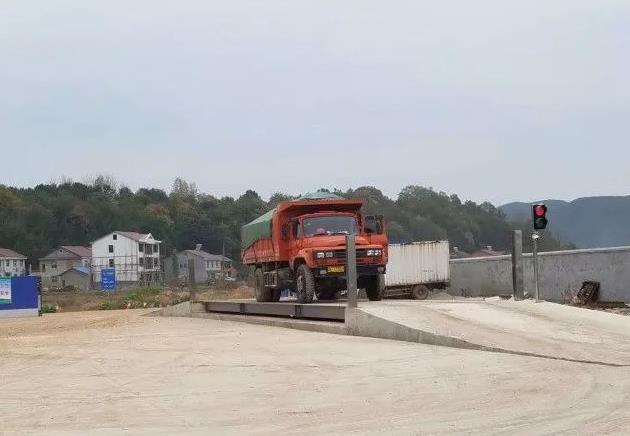
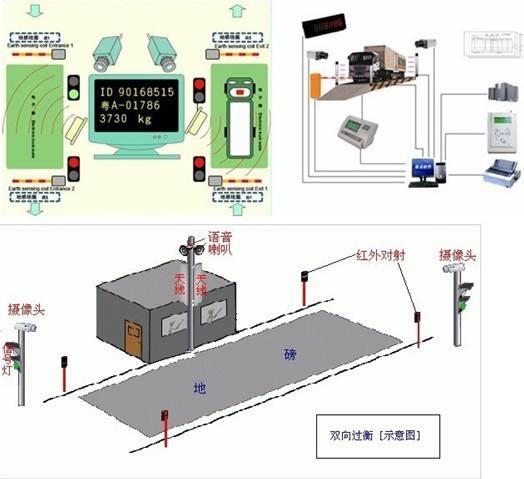







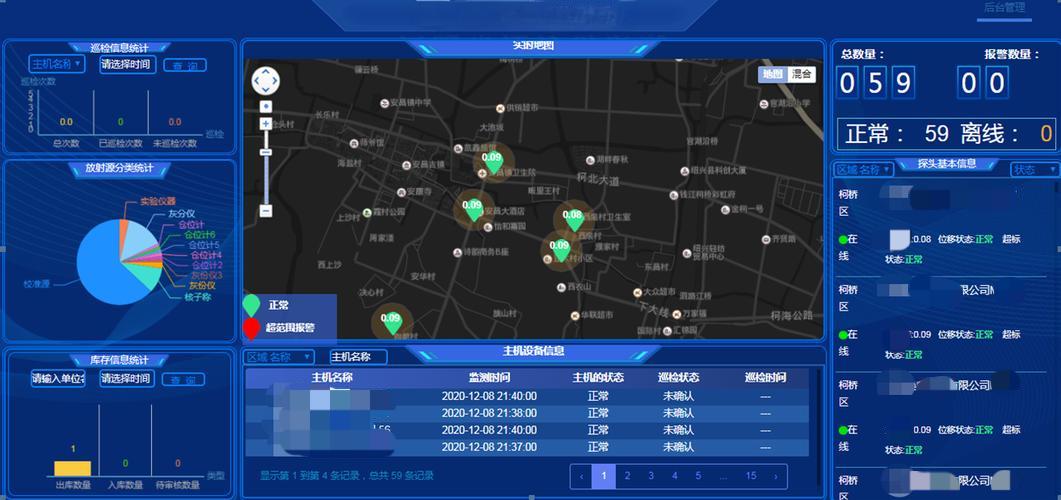


Unmanned intelligent weighing system workflow:
1. The system administrator distributes the RFID card to the driver, which has already been recorded with the vehicle number and other information. The driver can place the card on the front windshield of the car. As the vehicle approaches a few meters from the weighing platform, the card reader detects the arrival of the vehicle. When it is determined that no vehicles are on the weighing platform, the entrance barrier opens to allow the vehicle to pass and ascend onto the platform.
2. Upon the vehicle coming to a complete stop, the camera automatically captures a photo of the vehicle's license plate and saves it on the computer.
3. The computer reads and saves the weighing data from the instrument.
4. After weighing is complete, the exit barrier lift is raised to allow the vehicle to exit the weighing platform.
5. At the export point, place a weighbridge ticket printer. After the driver tears off the printed ticket, they may leave.
6. The system can operate online, transmitting data and image materials over long distances.
Throughout the entire weighing process, ensure automatic, reliable collection, identification, command, processing, and control of measurement data, greatly reducing the disadvantages and work intensity caused by manual operations, and enhancing the informatization and automation of the system.
For the management department, current production and logistics status can be understood through the consolidated reports within the system.
2. For the finance settlement department, they can obtain clear and accurate settlement statements.
3. For the warehouse department, they can gain insights into their receiving and dispatching of goods, etc.
These report data are readily accessible, thereby enhancing management consistency, shortening decision-makers' response time to production, improving management efficiency, reducing operational costs, and promoting the informatization of corporate management.
Features
Tailor-made:
Tailor-made intelligent weighbridge systems with unattended operation, developed based on the specific work processes of clients and actual measurement conditions, catering to their unique requirements and circumstances.
(II) Weighing Data Collection Module:
The unattended intelligent weighing system features an open interface protocol design, catering to the various domestic and international car scales used by domestic factories, mines, customs ports, and other enterprises.
(3) Achieve bidirectional weighing with intelligent scale system:
This system meets the requirements for bidirectional weighing of automotive scales, with both directions capable of achieving unmanned, intelligent weighing.
(4) Long-distance Bluetooth Automatic Identification Subsystem - Electronic Anti-cheating Module
Electronic license plate recognition extends up to 15 meters, automatically identifying the vehicle number, type, owner, transportation unit, and other information of overweight vehicles, and determining their legality. Authorized vehicles can weigh smoothly, while unauthorized vehicles are not permitted to weigh.
(V) Anti-skin Weight Module:
The unmanned intelligent weighing system utilizes smart anti-skin weight measures for the measurement of material supply and finished product sales, employing intelligent judgment for vehicle skin weight, effectively preventing potential issues at the skin weight stage.
(Six) Real-time image capture module for front, middle, and rear of the vehicle to prevent cheating
The system integrates image and weighing software, with the image embedded in the software interface. It captures real-time images of the vehicle's front, rear, and cargo area during the initial gross weight (tare weight) measurement. During the second weighing, the previous real-time images are displayed within the software interface.
Unmanned intelligent weighing system main features:
1. Fast information speed: The entire system allows for weighing, enhancing efficiency and eliminating the need for queuing for weighing.
2. Easy and Convenient Operation: When weighing vehicles, there's no need to park and then come down to submit documents, and the operator in the weighing room doesn't have to input information into the computer anymore. This saves valuable time for both parties and reduces the inconvenience of drivers getting out and weighbridge operators manually entering information.
3. Seal human operation loopholes: With the adoption of automatic data reading, all overweight vehicles are automatically recorded by the computer, eliminating manual intervention, automatically recording data, and automatically releasing.
4. High Security: With the use of an electronic tag in the microwave automatic identification system that provides an unchangeable ID number, this fundamentally eliminates copying and counterfeiting phenomena.
5. Long-lasting Use: The electronic tags utilize passive technology, requiring no maintenance, and have a long service life, typically lasting up to 10 years without damage.
Unmanned Intelligent Weighing System Basic Configuration
1. Weighing Host Machine
Recommended Configuration: Advantech Industrial PC P4 2.8GHz/2GB/500GB/17-inch LCD, if frequent recording is needed, it is recommended to opt for a larger hard drive (such as 1TB); at the same time, it is advised to choose a better motherboard to ensure system stability.
2. Ground Sensor Coils
The previous ground sensor loop primarily detects if the car's rear has passed the loop, ensuring the car is fully on the weighbridge. After the car is on the weighbridge, lower the barrier of the previous barrier machine; once the car is weighed and passes the ground sensor loop of the next barrier machine, the barrier of the next machine automatically lowers, at which point the car has fully exited the weighbridge.
3. Smart Bar Gate (Barrier Gate)
Requiring one barrier arm at the front and another at the rear of the weighing platform (the barrier arm requirement can be omitted), to control the orderly weighing of vehicles. Traffic signs can be added to the barrier arms to remind drivers to enter from one side only and to prohibit entry from the other side.
4. Radio Frequency (RF) Reader
Electronic tag reader with long reading distance (effective reading distance over 7 meters), adaptable to moving object speeds (up to 160 km/h), high reading accuracy (and above), and strong environmental adaptability. It is a component of an intelligent weighing system.
5. RFID Radio Frequency Identification Cards (Electronic Tags)
Utilizing writable electronic tags that operate passively, these tags offer a long service life and relieve users of the maintenance concerns. The electronic tags are affixed to the car's windshield with imported adhesive, containing a fixed, unchangeable ID number and featuring anti-dismantling capabilities to prevent tampering.
6. Camera
When the car drives onto the weighing platform, capture the image of the car (mainly the number plate) and save it to the computer. Video recording can also be performed simultaneously. The camera is a color camera with a resolution of 480 pixels.
Printer
Printer with automatic paper cutting capability required.
8. Traffic lights
When there's a car on the scale platform, meaning the barrier arm of the previous gate is down, the red light is displayed; when there's no car, meaning the barrier arm of the previous gate is raised, the green light is displayed.
9. Infrared Beam Break Detector
Pairs of infrared beam break sensors are installed at both ends of the weighbridge. The infrared equipment is connected to the switch input/output (IO) card via signal lines. When the beam is obstructed, the infrared sensors send a signal to the switch IO card. The weighbridge weighing software extracts the signal from the switch IO card. Upon detecting an alarm signal, the system prohibits the saving of weighing system data, and the weighing process is terminated.
The Nanjing Shilun Unmanned Automated Weighing System is an integrated system consisting of the "Card Production Center Subsystem," the "Automatic Weighing Station Subsystem," the "Vehicle Weighing Process Subsystem," and the "Remote Centralized Management Center System." It achieves a seamless, closed-loop control safety concept, realizing the goal of information-based management.
System Construction Goals
"The Nanjing Shilun Unattended Automatic Weighing System" is a crucial equipment system for material weighing control, boasting a high level of informatization and automation. This system refers to the rapid, accurate, safe, stable, and reliable completion of the entire weighing process without human intervention, with staff able to remotely access, query, analyze, and print measurement data.
The system not only provides real-time and accurate data for ERP/MIS but also meets the requirements of weighing management. Designed with consideration for the current usage of weighing equipment by users, the system adheres to the principle of maximizing the use of existing hardware without compromising system functionality, thereby saving investment costs for users. Moreover, the system features integrated expansion capabilities, facilitating the integration of additional weighing equipment in the future and providing room for expansion.
1. Standard Specifications: An informational weighing management platform that achieves standardized, automated, and integrated management of weighing business data.
2. Data Integration: Seamless integration with ERP systems for data exchange, enabling an immediately operational automatic weighing system.
3. Weighing Task: Based on data provided by the ERP system interface, the card-making center retrieves information for each vehicle and card, and issues cards for weighing.
4. Automatic Weighing: The weighing station subsystem verifies information based on electronic label data or numbers, completing the automatic weighing process.
5. Centralized Management: Weight station's business information, equipment, and process specifications are uniformly managed and scheduled to achieve automatic weighing management.
6. Rate Increase: The weighing process requires no manual intervention; the equipment automatically identifies vehicle information and provides voice guidance through the weighing procedure.
7. Eliminate: Implement weighing process with image capture, store images corresponding to weighing information, monitor the vehicle and entire weighing process in real-time, and ensure the vehicle is fully on the scale using infrared detection technology for precise data acquisition.
8. Flexible Configuration: Open manual or automatic weighing mode based on business requirements, and set one-way or two-way traffic mode according to management needs.
9. Weighing: Self-service single bike weighing processing time <20S, remote weighing processing time <30S.
10. Task Scheduling: Balance the measurement load across various measurement points for continuous, orderly measurement throughout the day.
11. Channel Binding: Binding the ID card information with the vehicle's entry and exit gates, weighing stations, and cargo yard channels for controlling the vehicle's route.
12. One Card, One Truck: Implement a single-card management system for weighing, loading, and unloading processes, with the measurement process also managed through a single card, binding ID cards to vehicles.
13. Logic Control: Strict control and flexible settings for closed-loop management; compliant with standard procedures; failure to meet these requirements precludes completion of measurement services.
14. Remote: Centralized weighing operations and equipment status, with real-time abnormality alerts for convenient remote emergency equipment inspection and debugging.
15. Accounting: Business information inquiries and statistical reports are available; issues can be traced back through detailed system records.
16. Client: Enable PC client access to query data.
Standardized Management