












Five Constant Air Conditioning System
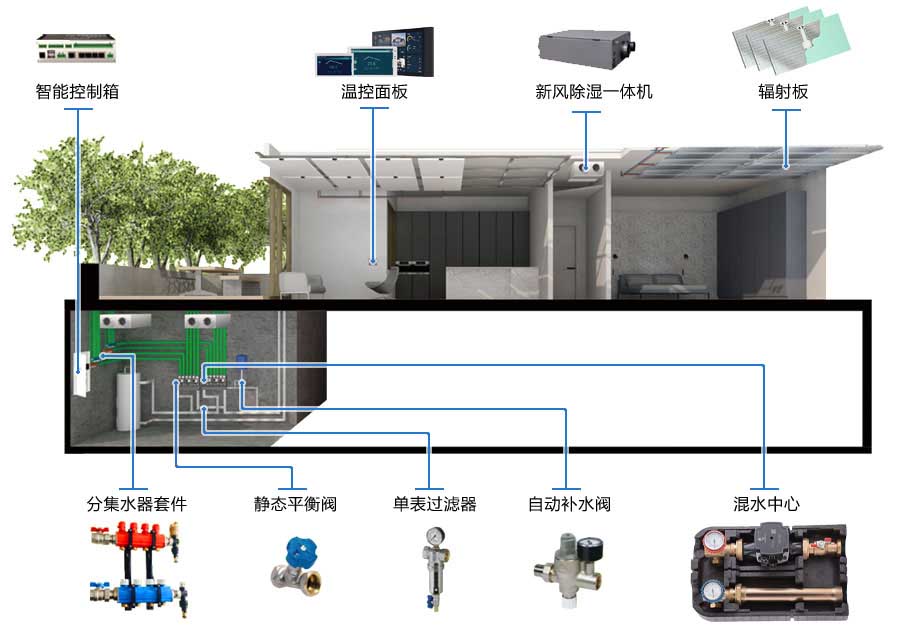
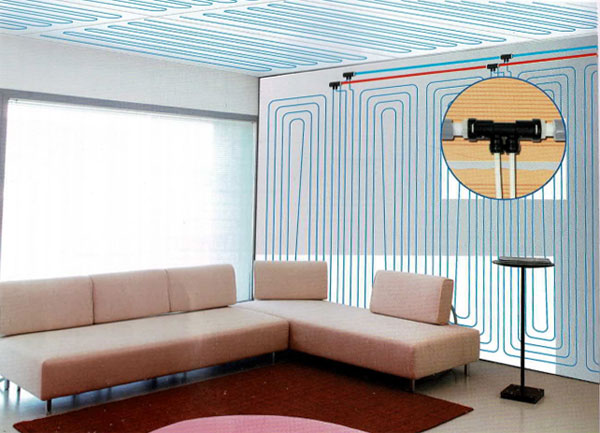
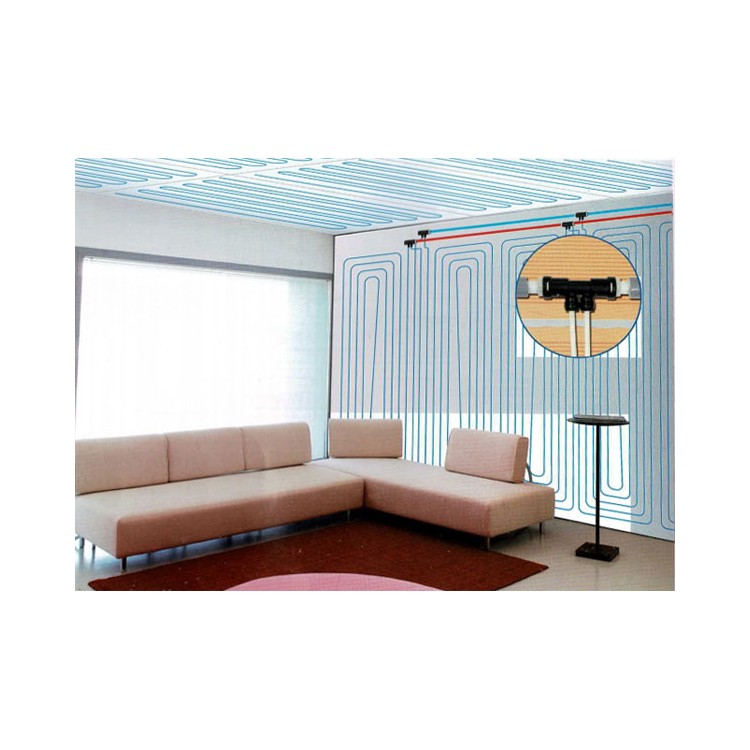
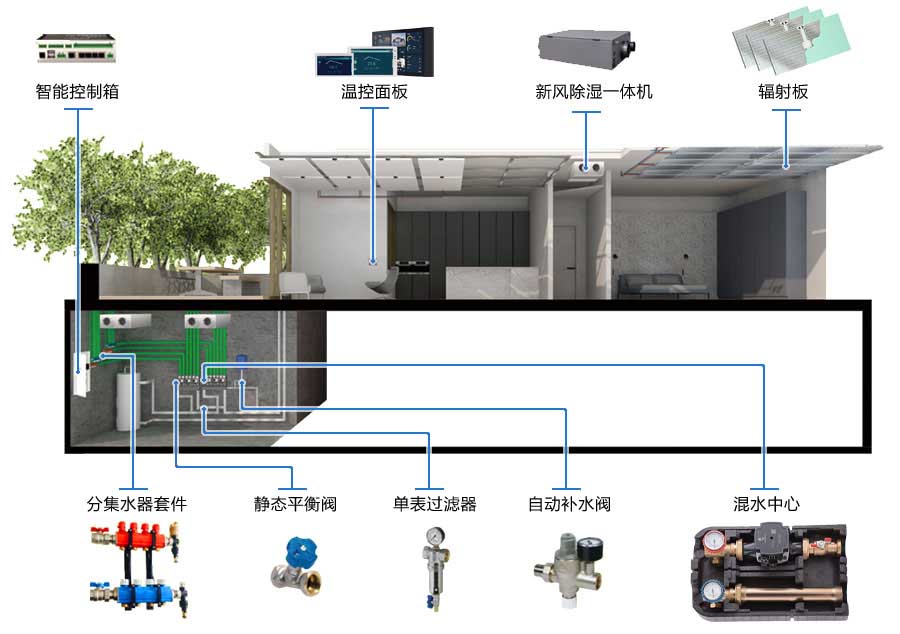
Ceiling radiant air conditioning system refers to a technique that involves installing finished waterproof gypsum radiant panels (with embedded Φ8MM or Φ10MM oxygen-resistant PE-X high molecular polymer piping) on the ceiling surface of the building's envelope. In summer, high-temperature cold water is circulated (and low-temperature hot water in winter), thereby lowering (or raising) the temperature of the ceiling radiant panels to create a cold (or hot) radiation surface. This surface relies on radiant heat exchange with the human body, furniture, and other surfaces of the building's envelope to provide cooling or heating. It also incorporates a fresh air humidity control system and an intelligent temperature and humidity control system to achieve a comfortable and healthy indoor climate.
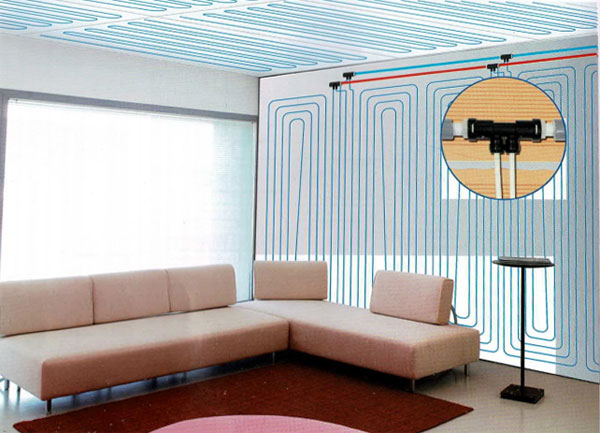
Ceiling radiant air conditioning systems have gained increasing attention and recognition in recent years, due to their ability to ensure effective cooling (heating) while maintaining human comfort.
Room temperature constant
The radiant cooling surface temperature of the ceiling radiant air conditioning is not significantly different from the ambient air temperature, offering a very gentle experience; the constant room temperature aligns with people's sense of comfort.
2. Independent temperature and humidity control for greater comfort
With independent control of temperature and humidity, the indoor humidity is maintained at 40-65%, providing a comfortable and natural environment, especially during the plum rain season.
3. Whisper Quiet Operation - No Airflow
Compared to traditional air conditioning systems, significantly reduces forced convection of indoor air, without a breeze feeling; no indoor air conditioner unit, thus no noise from corresponding fans.
4. Clean Air, Quality Assured
No condensate trays, no breeding ground for bacteria, for a cleaner environment. Primarily heats or cools buildings through radiant ceiling heat transfer, eliminating the need for a condensate system compared to fan coils. This prevents issues like poor drainage and dripping. Additionally, there's no risk of bacteria growth in the traditional fan coil drip pans, which can affect indoor hygiene.
5. Significant Energy Savings
Ceiling radiant air conditioning requires higher supply water temperatures than traditional air systems, resulting in significantly higher energy efficiency ratios during operation, meaning it can save a considerable amount of energy. Ceiling radiant cooling is based on the principle of radiation. Generally, the human body and the surrounding environment exchange heat naturally through radiation, approximately 45%-50% of the suitable heat exchange. Due to the radiant air conditioning system cooling the environment through surface radiation, large ceiling surfaces maintain a constant, even, and comfortable dispersion of coolness without the disturbance of traditional air conditioning cold air currents. Moreover, radiant air conditioning ceilings are space-saving, require no maintenance, are noiseless, can start up quickly, and achieve thermal comfort in a short time. The combination of health, comfort, and energy savings brings more benefits to everyone.
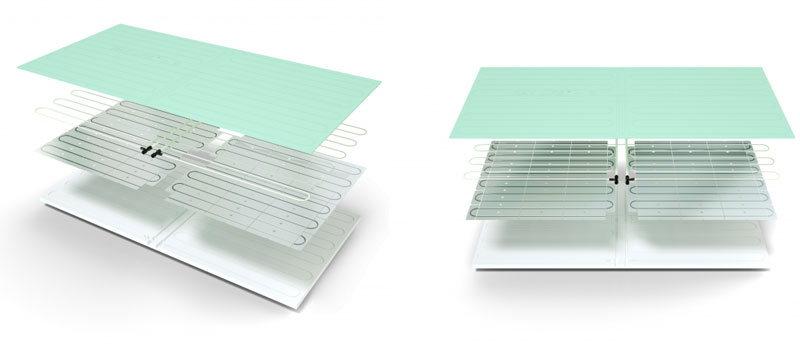
Ceiling Gypsum Radiant Panel Features
Energy-saving
Ceiling gypsum radiant panels can be considered an upgraded version of capillary radiant air conditioning. Factory-produced for the purpose of increasing the radiant area of the ceiling (the area of the room ceiling where radiant panels can be laid), they offer a significantly large heat exchange surface. With a supply water temperature of 12-18°C in summer and 26-32°C in winter, they have higher supply water temperatures in summer and lower ones in winter compared to traditional air conditioning, thereby reducing operation costs and saving a substantial amount of energy.
2. Lower thermal inertia
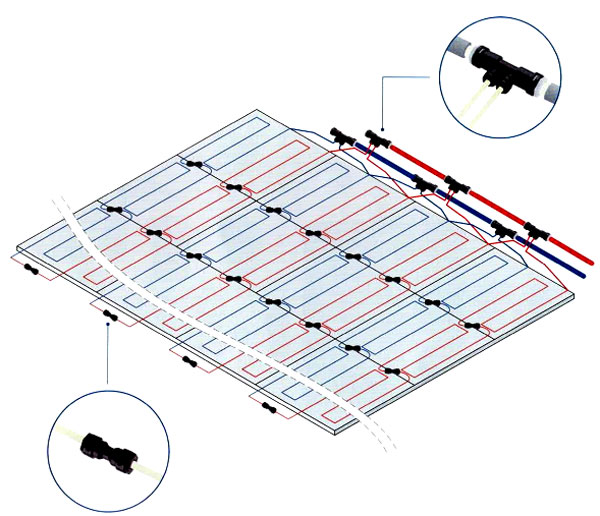
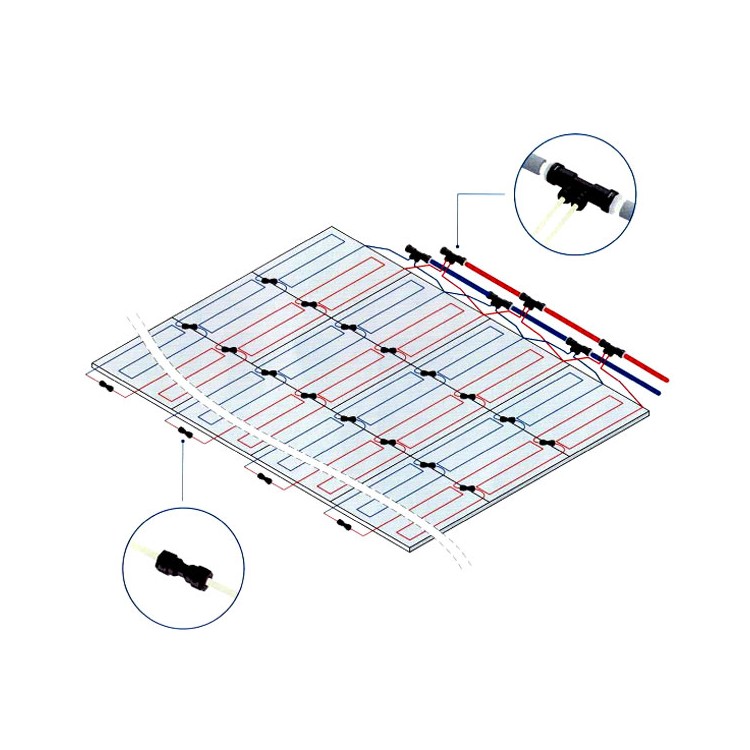
The pipe material embedded in the ceiling gypsum radiant panel is 8*1.0mm or 10x1.3mm (diameter x wall thickness), utilizing a figure-8 preformed coil for even surface temperature distribution across the石膏 radiant panel. The back of the ceiling石膏 radiant panel features an EPS insulation layer with δ=20/30MM, offering one-way heat transfer characteristics, effectively reducing thermal inertia and significantly enhancing the heat transfer response speed of the石膏 radiant panel.
The following images are two infrared thermograms of the gypsum radiant panel during cooling operation with an average water temperature of 18°C.
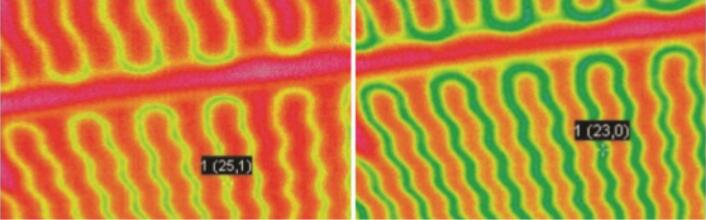
On the left is the thermal imaging at 5 minutes of operation, on the right is the thermal imaging at 20 minutes of operation.
3. Easy and safe installation
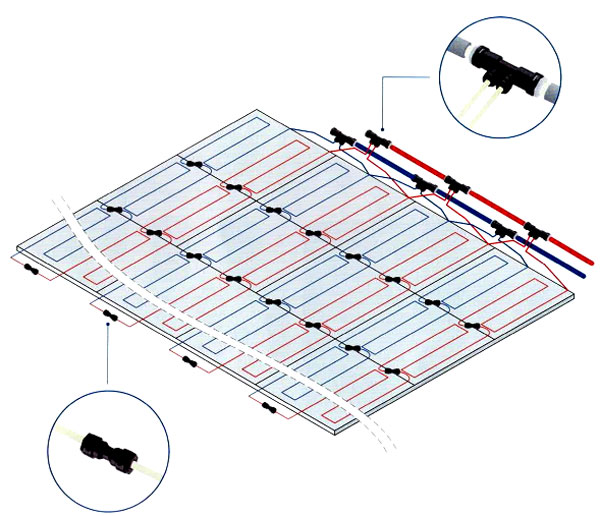
Utilizing a slip-tight connection method to ensure no leakage at the joint. When connecting pipe fittings, simply slide the pipe material over the retainer and fitting, then use a special tool to pull the retainer back into place. This significantly reduces installation time and avoids human errors. This advanced connection technology ensures the safety and reliability of the connection system throughout its entire service life.
4. Laying Area
The system can increase the coverage area to over 85%. The reason is that the gypsum radiation board is modular, with modules measuring 300*1200MM, accommodating various room sizes. The larger radiation surface ensures more even wall temperatures and higher cooling and heating outputs, thereby enhancing environmental thermal comfort.

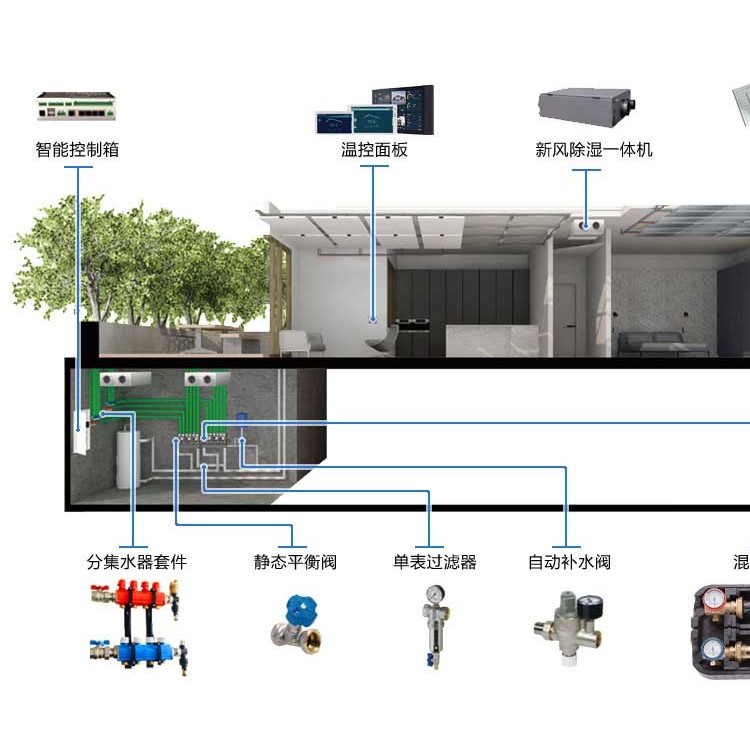
Ceiling radiant panel air conditioning system composition
The ceiling radiant plate air conditioning system consists of the following five major systems:
Energy-saving building maintenance structure thermal insulation and heat preservation system
2. High-comfort finished gypsum board ceiling radiant cooling and heating system
3. Temperature and humidity control with fresh air system
4. Independent Temperature and Humidity Control Intelligent System
5. High-efficiency cooling and heating equipment.
Amongst
Energy-efficient building maintenance structure thermal insulation and heat preservation system
Key contents include: exterior wall thermal insulation, roof insulation, exterior window heat insulation and shading, and other aspects.
Based on our engineering experience and relevant building energy-saving standards, we recommend maintaining the thermal parameters of the structural elements to the following values:

2. High-comfort gypsum board ceiling radiant cooling and heating system
δ = 30 MMEPS Insulation (with Uniform Heat Aluminum Sheet)
b. 8X1.0MM Oxygen-Barrier PE-RT Pipe
c. δ=15MM Waterproof Gypsum Layer
Ceiling radiant air conditioning systems utilize gypsum radiant panels for direct radiant heat exchange. During cooling, the perceived temperature felt by individuals is 1 to 2°C lower than the indoor air temperature; during heating, the perceived temperature is 1 to 2°C higher than the indoor air temperature.
Therefore, the indoor design temperature for radiant cooling (and heating) systems can be 1 to 2 degrees Celsius higher than that of conventional air conditioning systems when cooling, and 1 to 2 degrees Celsius lower when heating, yet still achieve the same cooling and heating effects as conventional systems. As the radiant system can reduce the indoor-outdoor temperature difference during operation and minimize heat transfer between the room and the outside, it offers both comfort and energy efficiency.
High-efficiency ceiling radiant simulation of natural heat transfer:
High-efficiency ceiling radiant air conditioning utilizes suspended ceiling gypsum board radiation, accurately mimicking the natural phenomenon of Earth being heated during the day (solar radiation) and cooled at night (radiating heat to the sky).
Gypsum radiation boards cover 70% or more of the ceiling surface:
High-efficiency ceiling radiant air conditioning with a radiant cooling output of 70-90 watts per square meter, ensuring to meet the supply load for the vast majority of buildings.
Pure, even, quiet, and clean heat:
It radiates energy like the sun.
It's silent, but you can feel it.
It's even, invisible, silent, and clean heat.
It doesn't harbor dirt like fan coils, making it a healthy and safe choice for your home.
Use less energy:
Energy is transferred through the pipes within the radiation plate by means of thermal radiation, offering greater stability and efficiency compared to air convection.
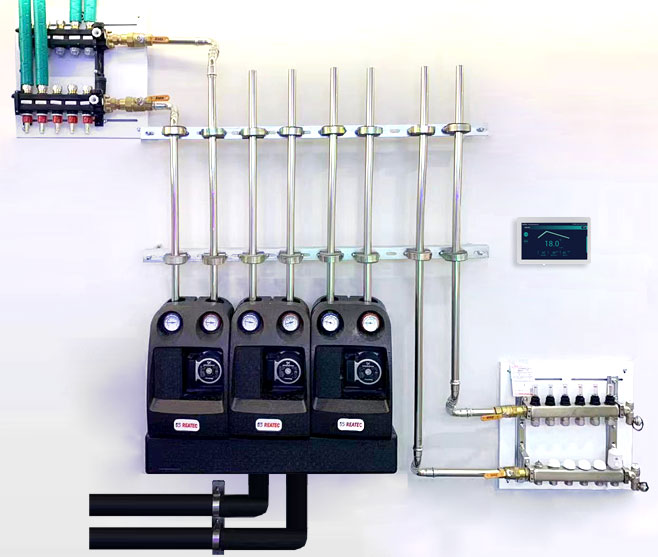
High-Precision Mixing Water System:
The mixed water center achieves an accuracy of ±1℃ or less. Different functional zones can be independently set for temperature, humidity, and fresh air volume, meticulously catering to the comfort needs of family members. The system automatically adjusts water temperature to prevent condensation, and actively changes the water temperature when condensation risk is detected.
3. Temperature and humidity control with fresh air system
To meet the demand for fresh air and to address the potential issue of condensation on ceilings and floors during air conditioning, a comprehensive control of indoor air temperature and humidity is required. The roof radiant air conditioning system needs to be supplemented with a temperature and humidity control fresh air system, which introduces outdoor fresh air and processes it for temperature control and humidity removal, ensuring both functional and comfortable use.
Supply air outlets of the temperature and humidity control fresh air system are generally located at the ground level or lower spaces of the building; utilizing the principle of cold air sinking, they act like pistons to expel the original air from the building space. As the treated air is supplied from below, it forms a fresh air lake, which can be more quickly accepted by the human body, thus its effect is much better than the traditional top supply and bottom return air flow organization.
In a climate-controlled, humidity-controlled, and oxygen-efficient building system, during winter, the ceiling radiant air conditioning system primarily considers the user's temperature requirements, allowing for the use of displacement ventilation. However, in summer, due to higher relative humidity, the dew point temperature is significantly above the operating temperature of the ceiling radiant heating and cooling system. Although such weather occurs infrequently and for a short duration, there is a high possibility of water dripping from the ceiling, as experienced in many cold radiation ceiling systems. Therefore, outdoor air cannot be fully utilized for indoor air renewal. Displacement supply air primarily introduces fresh air that has been purified, disinfected, humidified, or dehumidified and is rich in oxygen, ensuring sufficient oxygen levels, fresh air, and moderate humidity inside the building. The air volume supplied by displacement ventilation is 20-30% of the volume supplied by traditional air conditioning systems.
In the temperature and humidity controlled fresh air system, all ducts are installed within the floor or side walls of the corresponding floor, without occupying the ceiling space or thickening the floor structure layer. This saves a significant amount of building space, making your room appear more spacious and grand.

Direct expansion air handling unit, an innovative product for China's hot and humid climate, addressing issues of fresh air, purification, dehumidification, and humidification. Deep dehumidification (outlet dew point ≦ 7℃) reduces the airflow. Utilizes internal heat recovery to enhance the dehumidification ratio per unit of cooling. Variable-frequency constant airflow fan maintains a consistent airflow, suitable for year-round operation. Automatically runs based on the set air quality value.
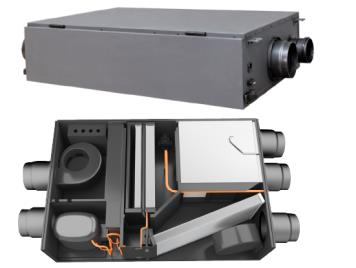
Dual-cooling source dehumidifier: Cold water + compressor two-stage cooling for deep dehumidification effect, built-in refrigerant exchange to enhance energy efficiency ratio, easy installation, suitable for year-round operation, and automatically runs based on air quality set values.
4. Independent Temperature and Humidity Control Smart System
To maintain an indoor microclimate that meets standards for comfort and health, simply having good air treatment equipment is not enough. It requires ideal control and adjustment of the system's operation, which necessitates a reliable smart control system.
The Rui Mei ceiling radiant control system integrates temperature, humidity, CO2, VOC, PM2.5 monitoring, and numerous control and alert functions. It manages and controls various devices and valves in real-time to ensure optimal operation, thereby creating an ideal indoor living environment.
The control system is easy to operate, featuring a one-touch comfort mode setting. It allows for remote control anytime, anywhere, facilitating centralized management of overall comfort levels, independent adjustment of individual rooms, and separate control of corresponding equipment.
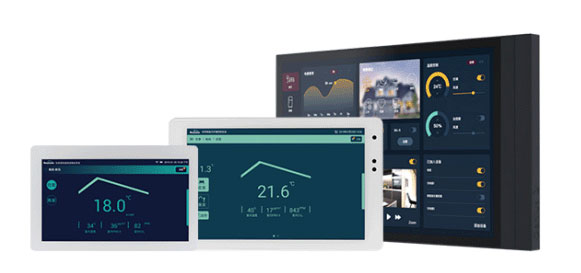
Simple and straightforward operation
The operating system features a simple and clear interface, easy to learn, with child-proof settings to ensure the system runs safely and stably.
5. High-Efficiency Cold and Hot Source Equipment
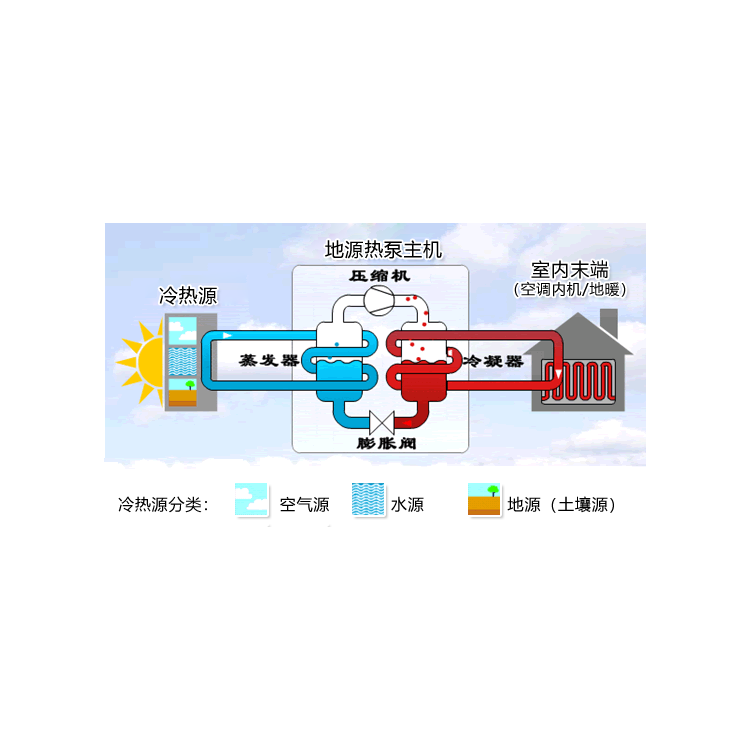
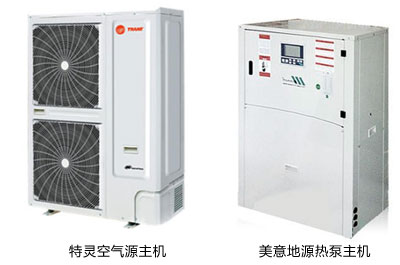
Generally, air-source or ground-source heat pumps are commonly used, as these devices have a high energy efficiency ratio, significantly improving the overall energy-saving of the system. The following image is just an example of the main units from American Trane and American McQuay brands.
Finished Gypsum Board Ceiling Radiant Air Conditioning Applicability:
Suitable for new construction or renovation projects; applicable from frigid to tropical regions. Offers high-comfort air conditioning systems for office buildings, maternity centers, villas, apartments, clubs, and various other structures.