












Ever-renewing in origin
47% of solar energy is absorbed by the earth's surface, thus, the shallow layers of the earth contain an immense, inexhaustible energy source, exceeding 500 times the energy humans utilize annually, and it is unrestricted by regional resources, being omnipresent. Due to its nearly limitless and constant nature, geothermal energy becomes a readily accessible clean and renewable energy source. Similarly, solar energy is absorbed in large quantities by groundwater, rivers, and lakes. In ground-source heat pump systems, the earth acts as an infinite "cooling tower" or "boiler."
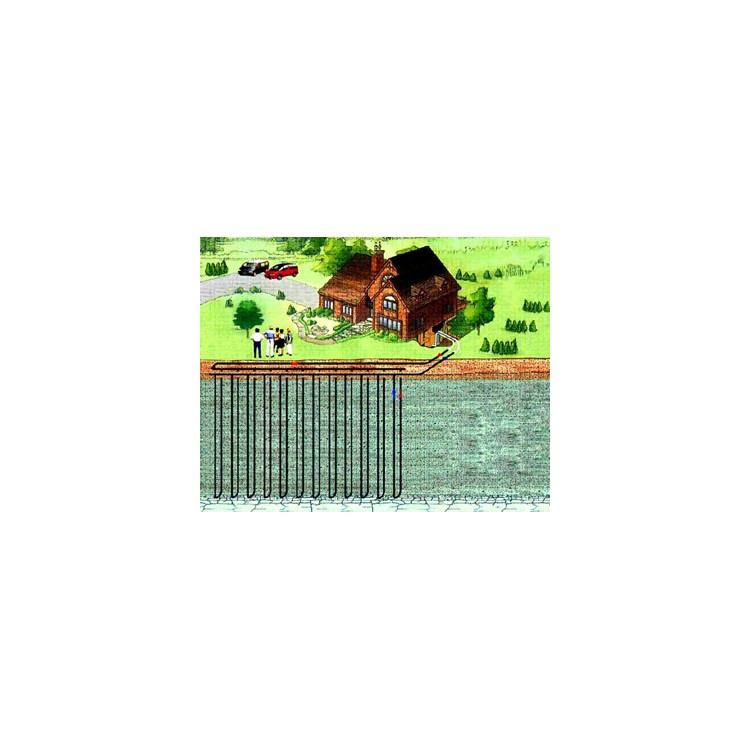
The traditional ground-source heat pump central air conditioning system uses water as the carrier of energy, dissipating the heat released by the air conditioner into the soil or extracting heat from the soil to supply the central air conditioning system indoors. During the heat rejection/absorption process, the system uniformly operates through a reversible reverse Carnot cycle, with a minimal electrical energy cost, thus utilizing the ground energy several times more efficiently. This fundamentally differs from any resource-based energy source, where resources become scarcer with use, yet the sun rises every day.
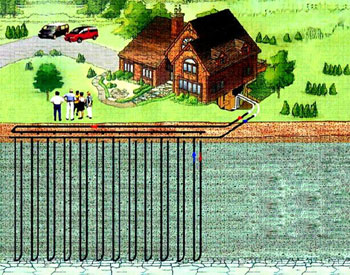
What is a ground-source heat pump?
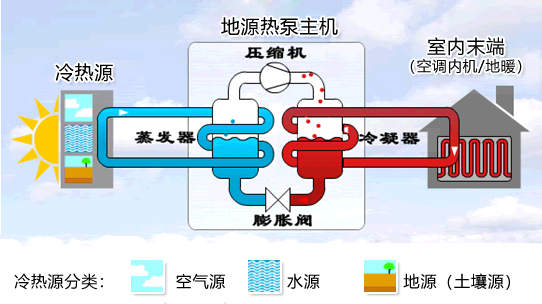
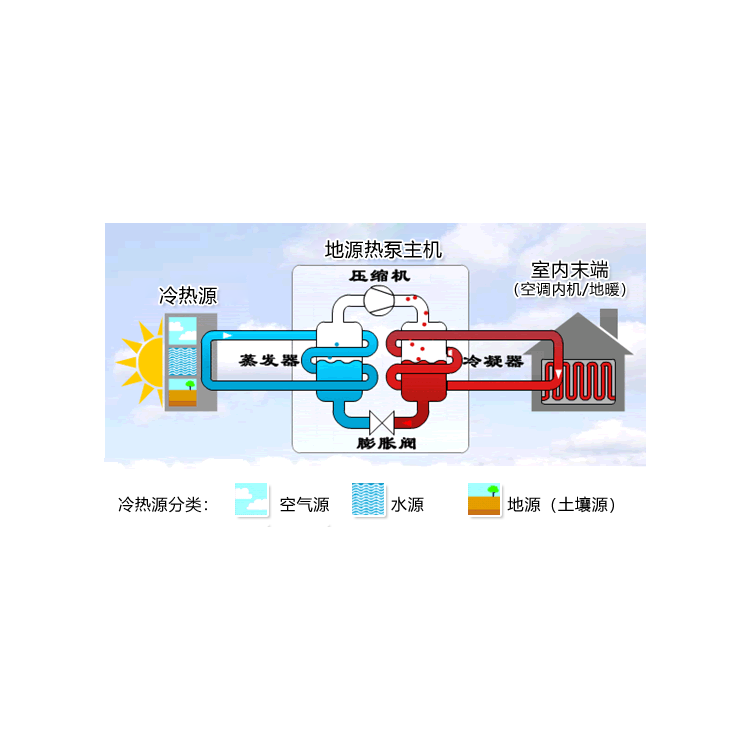
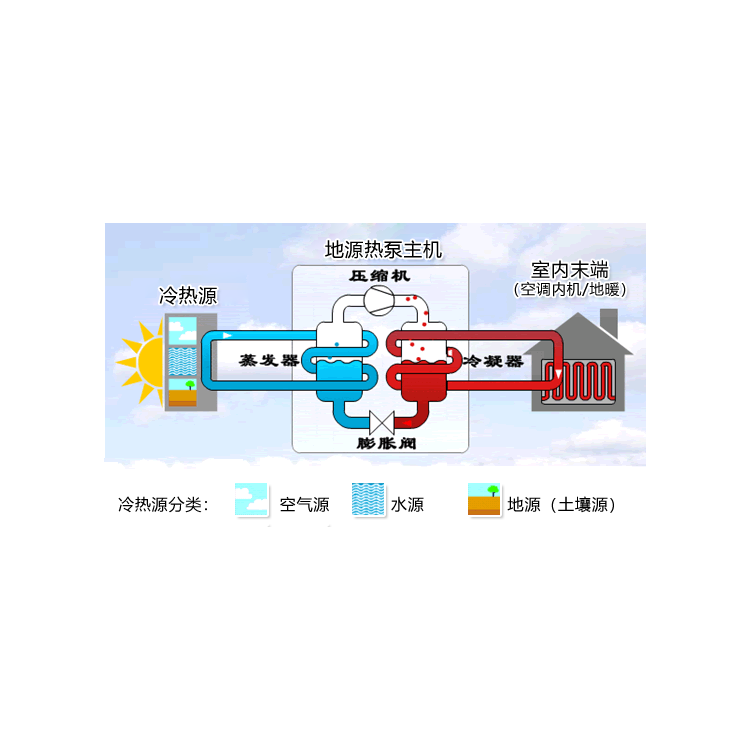
Ground-source heat pumps are a type of water-source heat pump, which uses water and geothermal energy (groundwater, soil, or surface water) for heat and cold exchange as the heat and cold source for water-source heat pumps. In winter, it extracts heat from the geothermal energy to provide indoor heating, at which point geothermal energy serves as the "heat source." In summer, it removes indoor heat and releases it into groundwater, soil, or surface water, making geothermal energy the "cold source."
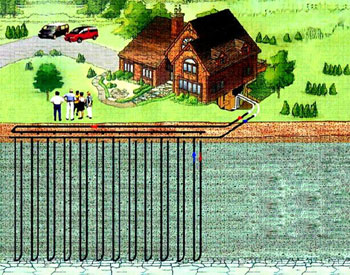
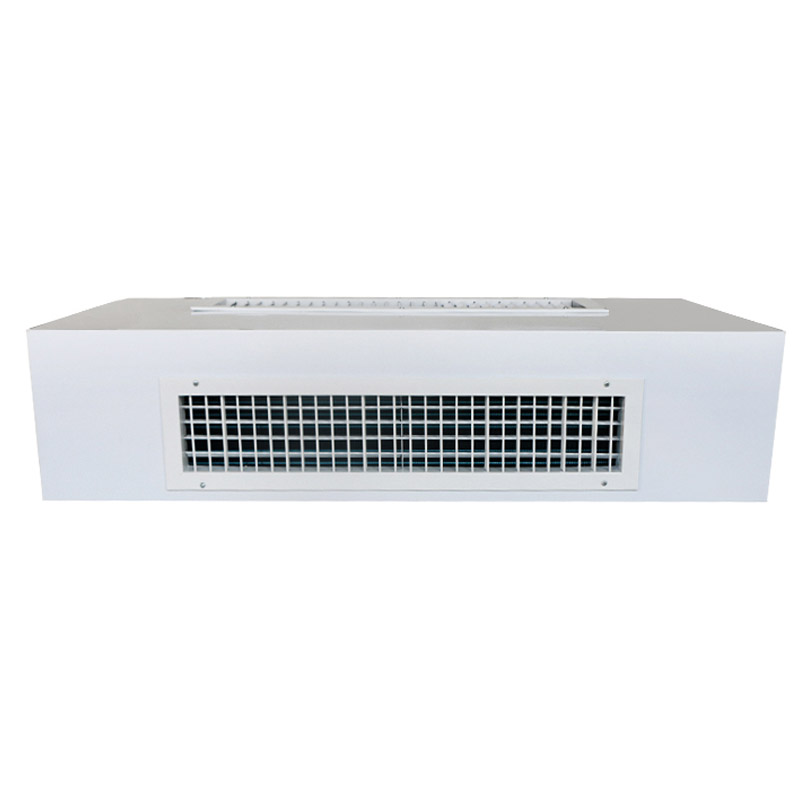
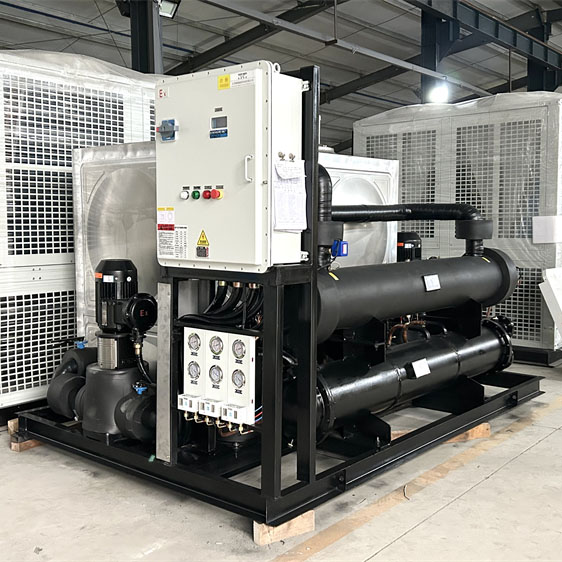
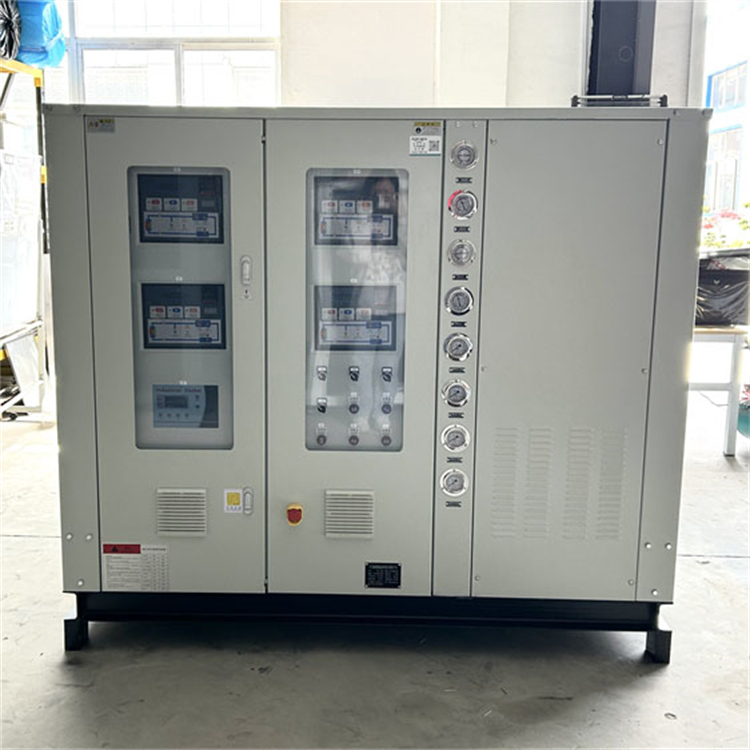
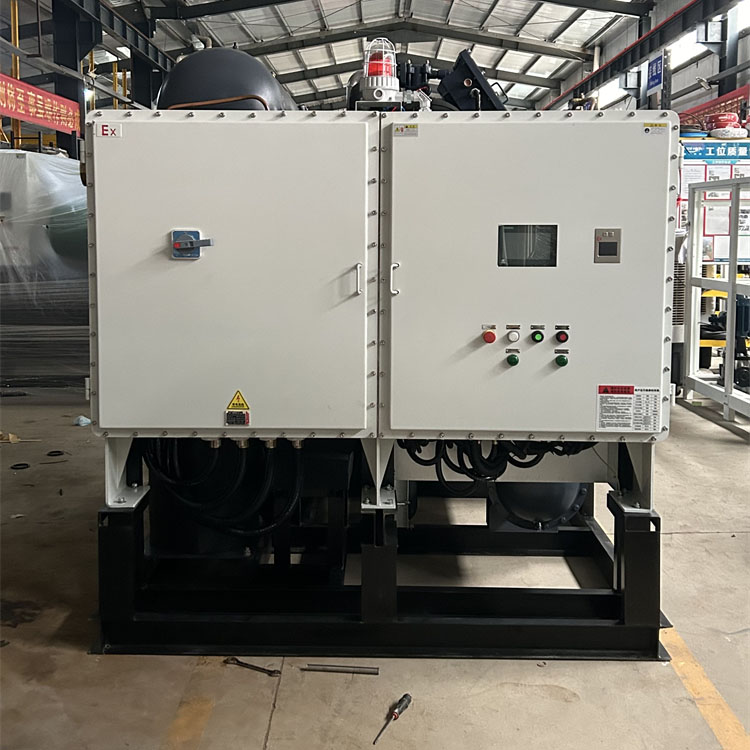
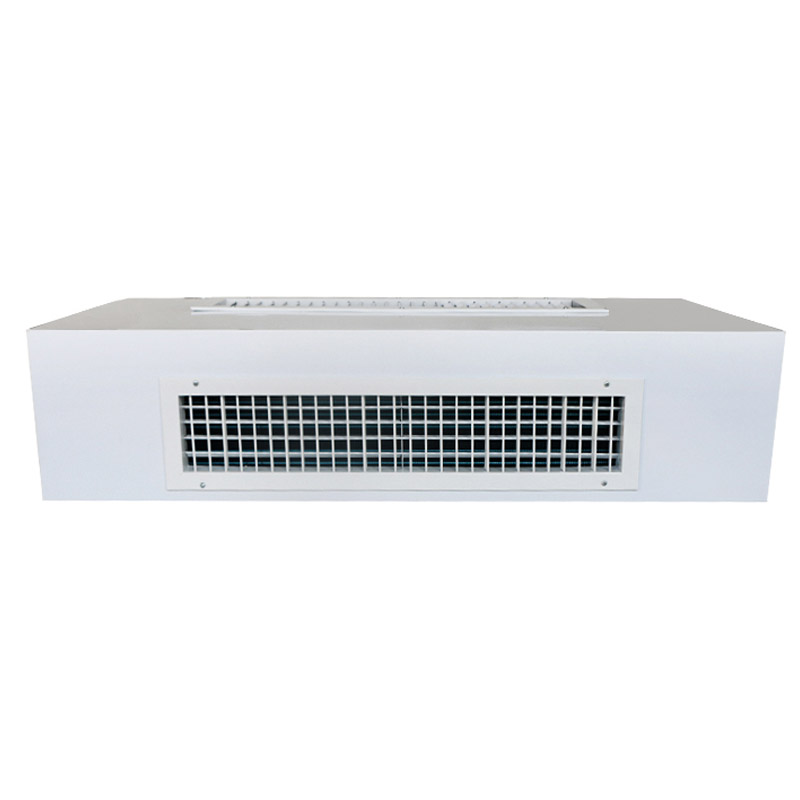
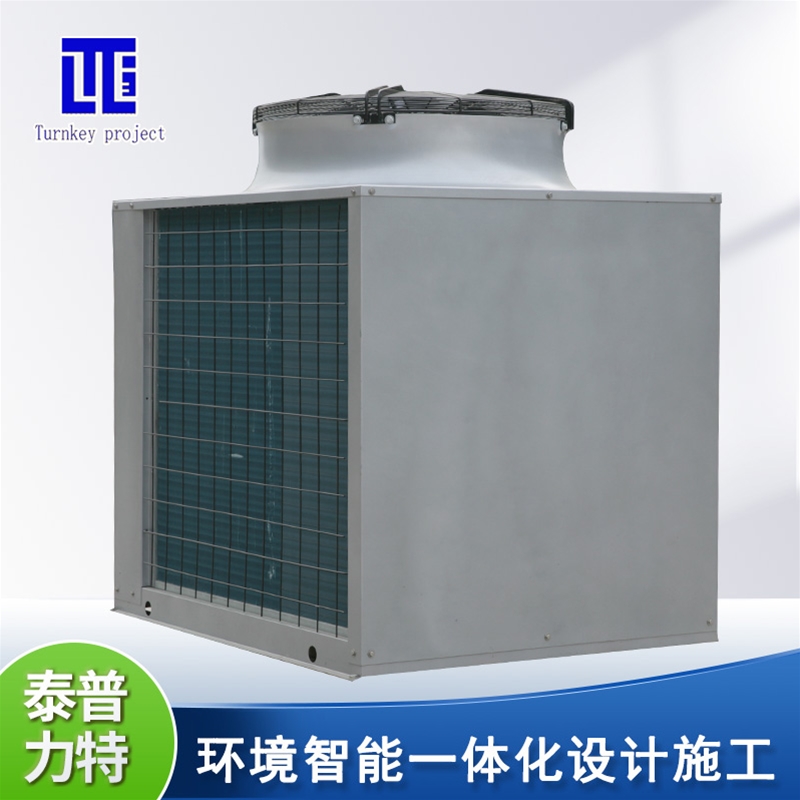
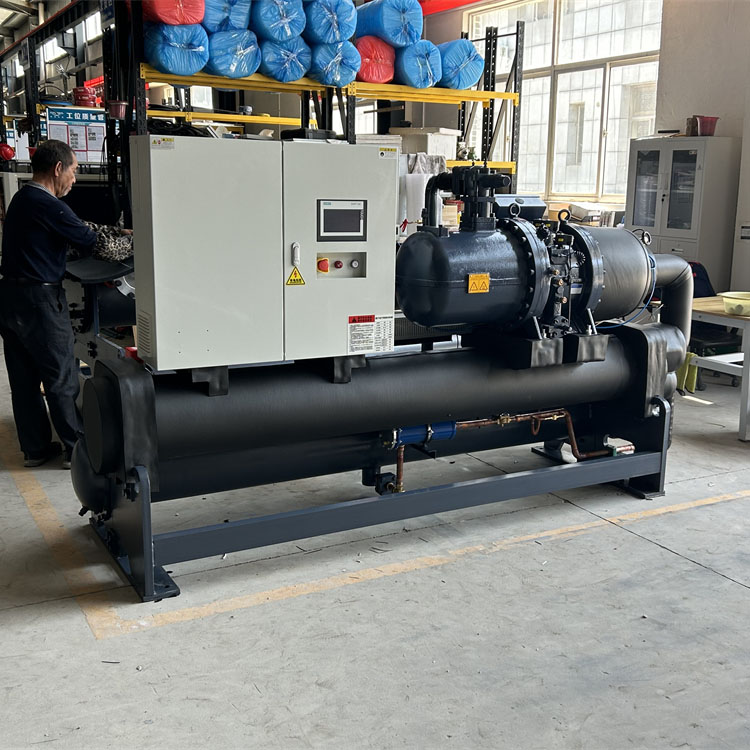
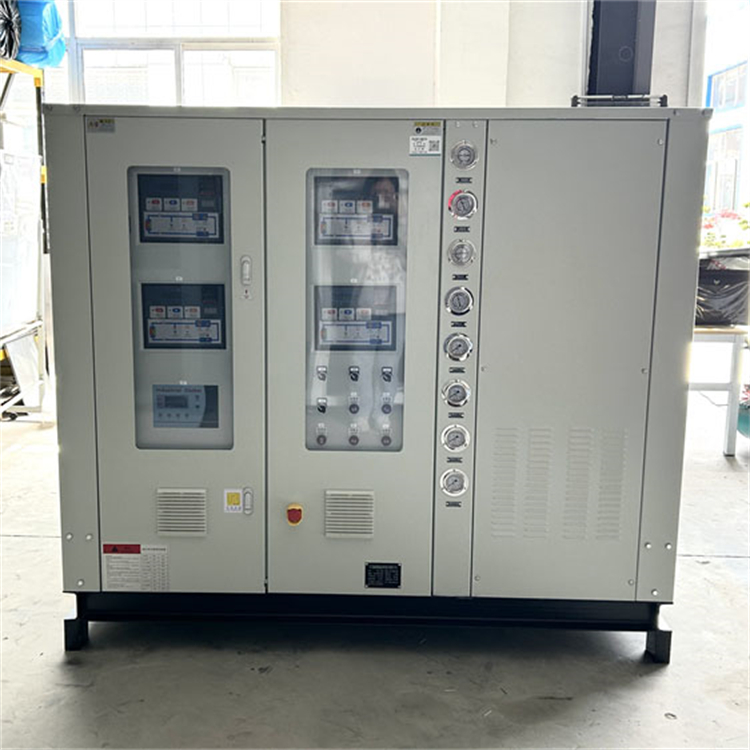
The ground source heat pump heating and air conditioning system is mainly divided into three parts: the outdoor ground energy heat exchange system, the water source heat pump unit, and the indoor heating and air conditioning terminal system. The water source heat pump units come in two main forms: water-to-water or water-to-air. The three systems transfer heat through water or air heat exchange mediums. The heat exchange medium between the water source heat pump and the ground energy is water, while the heat exchange medium with the building's heating and air conditioning terminal can be either water or air.
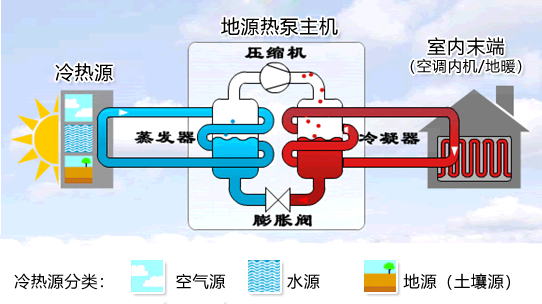
The primary advantages of ground-source heat pump technology
Efficient
The general air-cooled heat pump, which exchanges heat with the air, has the drawback of reduced efficiency during hot or cold weather when cooling or heating is needed. Ground temperature remains relatively constant at around 16℃ throughout the year, slightly higher than the average temperature of the region by 1 to 2 degrees, ensuring the heat pump operates at peak efficiency in both cooling and heating modes.
2. Energy-saving and cost-effective
During winter operation, the COP is approximately 4.0, meaning 1 kW of electrical energy input yields over 4 kW of heat. In summer operation, the COP is around 5.0, with 1 kW of electrical energy input producing over 5 kW of cooling. The energy utilization efficiency is 3-4 times that of electric heating methods; plus, the heat exchanger does not require defrosting, reducing the energy consumption for frosting and defrosting. It saves 30-50% more energy compared to conventional air-source air conditioners.
3. Environmental Protection:
No combustion during heating, eliminating exhaust pollution; during cooling, it saves on cooling towers, avoiding noise and mold contamination.
4. Comfort
Because ground source heat pump units provide heating and cooling by exchanging cold and hot water through the fan's bypass pipes (or embedded floor pipes, wall pipes), the resulting cool and warm air (or radiant heat) is much gentler than that of conventional air conditioning, reducing the likelihood of catching a cold.
5. Save on land area
Eliminated cooling towers, boilers, and the associated coal sheds and ash yards, saving land resources, generating additional economic benefits, and enhancing the exterior appearance of the buildings.
6. Safety:
No combustion equipment is present, eliminating the risks of explosion, fire, and poisoning.
7. Long service life for the engine assembly
The ground-source heat pump unit operates for extended periods under favorable low-temperature well water (16°C) for heat exchange, significantly extending the unit's lifespan.
8. Multi-functional Machine
The ground-source heat pump system can provide heating, air conditioning, and even domestic hot water, serving multiple purposes with a single unit. One system can replace the original two systems of a boiler and air conditioning.
9. Renewable:
The soil possesses excellent heat storage capabilities. In winter, ground-source heat pumps elevate low-level ground heat energy to heat buildings, while also storing coolness for summer use. During summer, the heat pumps transfer the building's heat to underground, cooling the structure while storing heat for winter use, ensuring the balance of ground heat.
10. Zone-controlled operation
Central air conditioning with the luxury of individual units, achieving local control without the issue of "a big horse pulling a small cart."
Application Scope
Ground-source heat pumps are suitable for new construction, expansion, renovation projects, and can be implemented in phases. They are applicable from cold regions to tropical ones. They provide dual-purpose air conditioning systems for office buildings, hotels, restaurants, shops, supermarkets, kindergartens, villas, residential communities, clubs, and various other buildings, and can also supply domestic hot water.