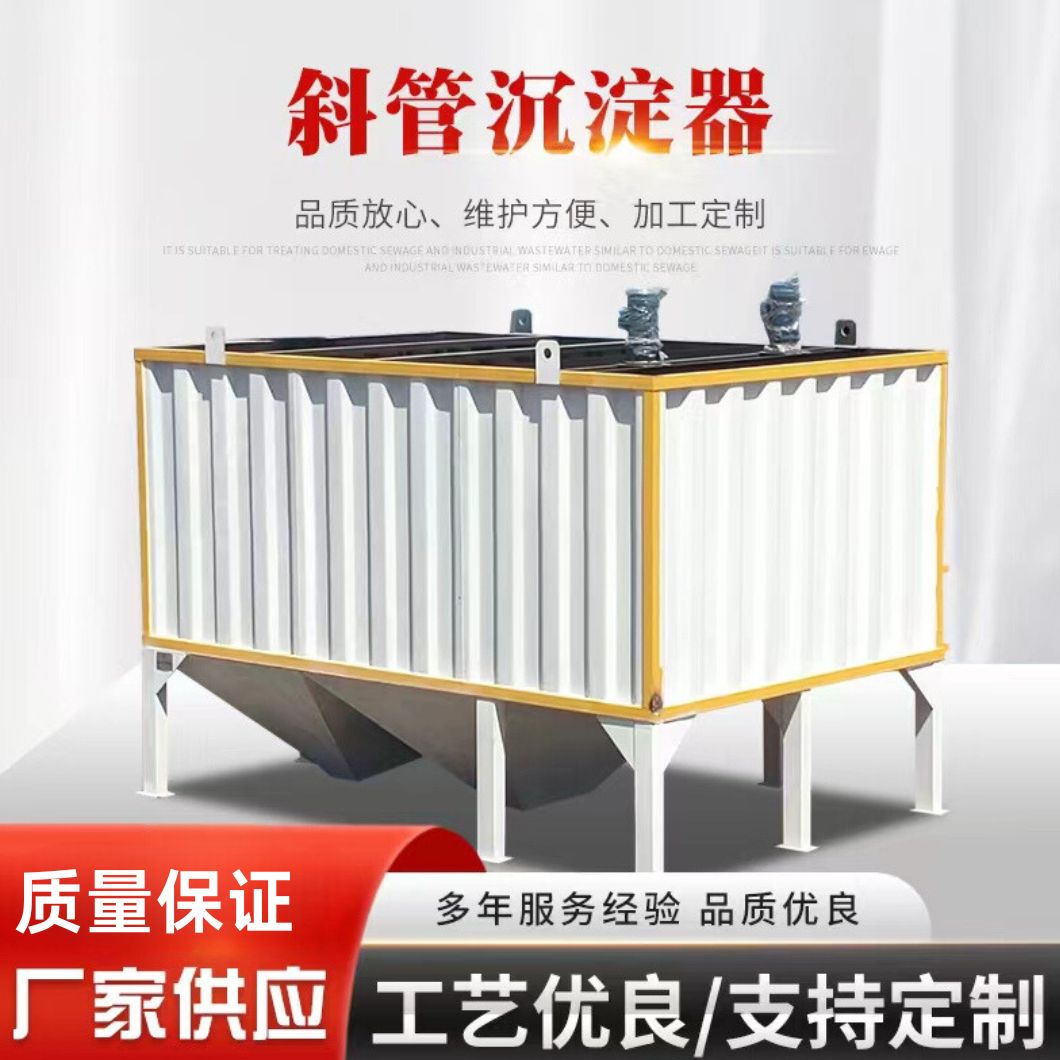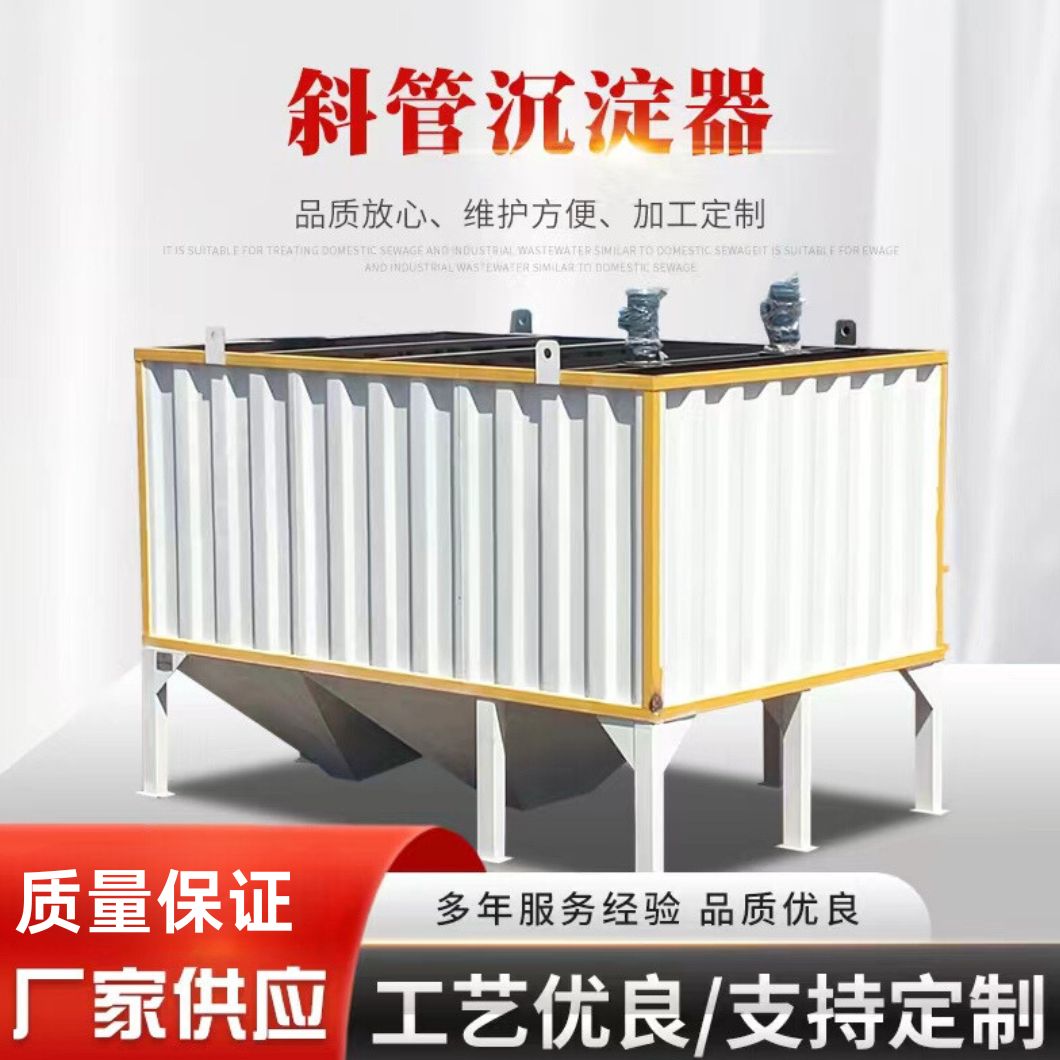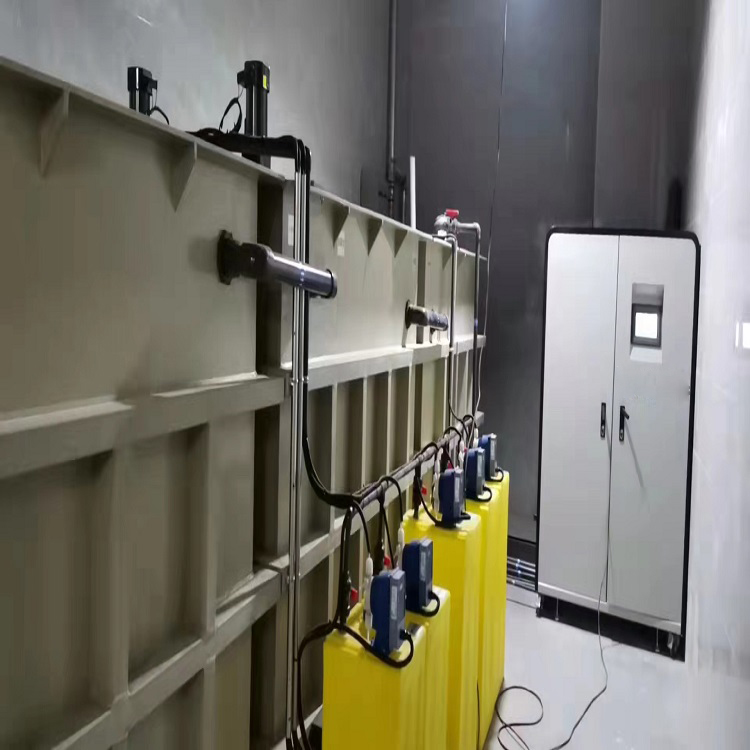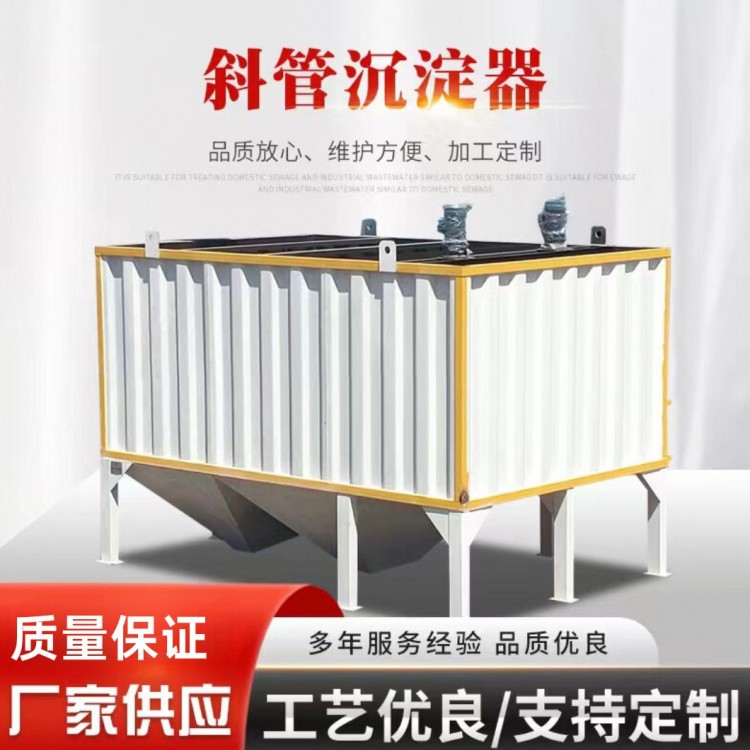

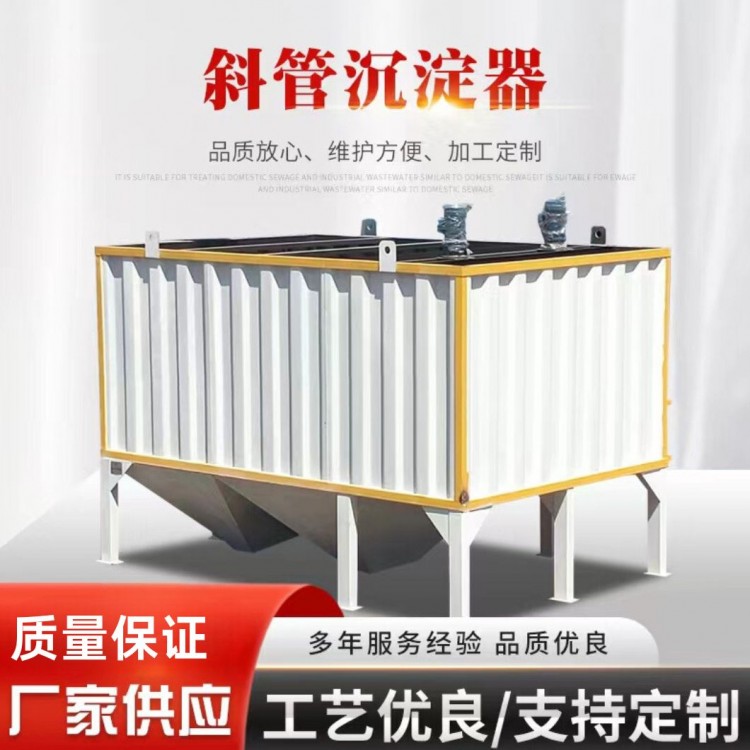









The working principle of the inclined tube sedimentation tank is primarily based on the force of gravity and the design of the inclined pipes. Specifically, when raw water enters the inclined tube sedimentation tank, the suspended solids, particulates, or flocs formed after adding coagulating agents will accumulate on the bottom side of the inclined pipes as a thin mud layer. These flocs slide back to the sludge suspension layer under the force of gravity and eventually settle into the sludge collection trough. Then, the sludge is discharged through the sludge discharge pipe into a sludge pond for further treatment or comprehensive utilization. Simultaneously, the clarified liquid gradually rises to the collecting pipe and is gradually discharged, which can be directly discharged or further utilized.
The internal structure of inclined tube settlers is typically divided into three sections: the upper section is the wastewater inlet area, the middle section is the inclined tube sedimentation area, and the lower section is the clean water outlet and sludge pond. Due to the influence of the inclination angle of the tubes and the flow rate, solid particles will settle to the bottom of the pipes from the wastewater, forming a thicker layer of sludge, which is periodically discharged through a sludge pump.
Additionally, the design of the inclined tube settler takes into account the hydrodynamic characteristics of the water flow. By adding inclined tubes, the hydraulic radius can be reduced, and the wetted perimeter of the pool cross-section can be increased. This allows for a lower Reynolds number (Re) at the same horizontal flow velocity, reducing the flow retention and promoting settlement. Moreover, the addition of inclined tubes can also shorten the settling distance of particles, decrease the settling time, and enhance the settling efficiency.