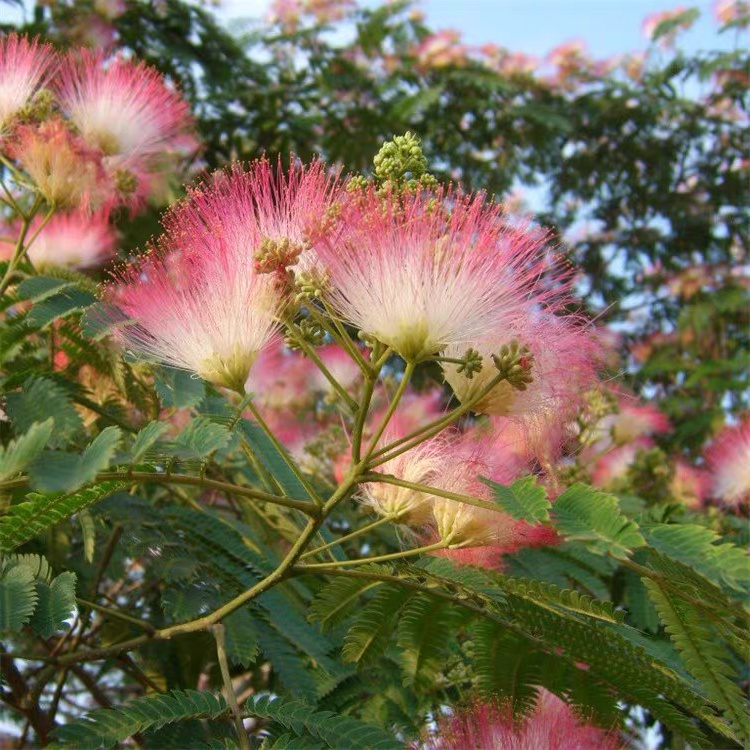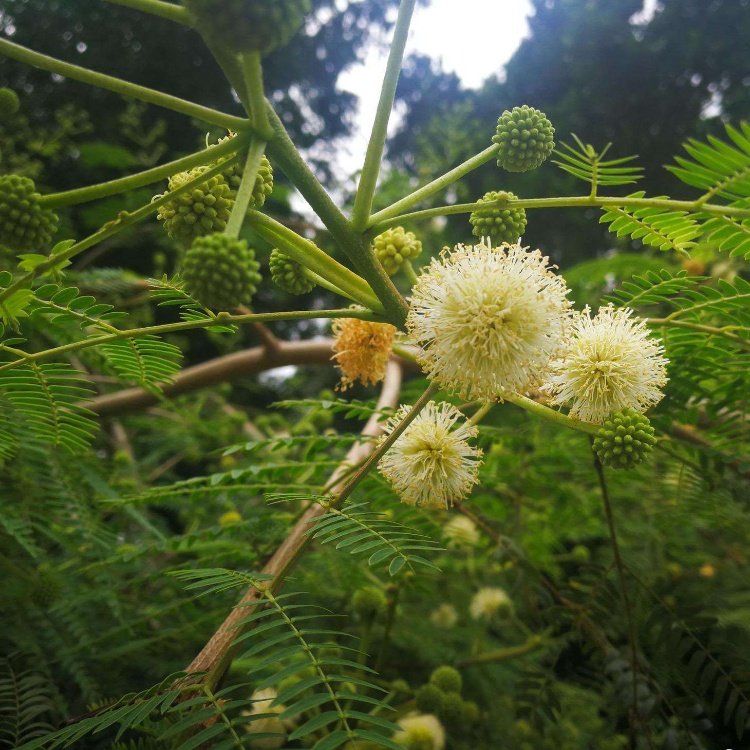

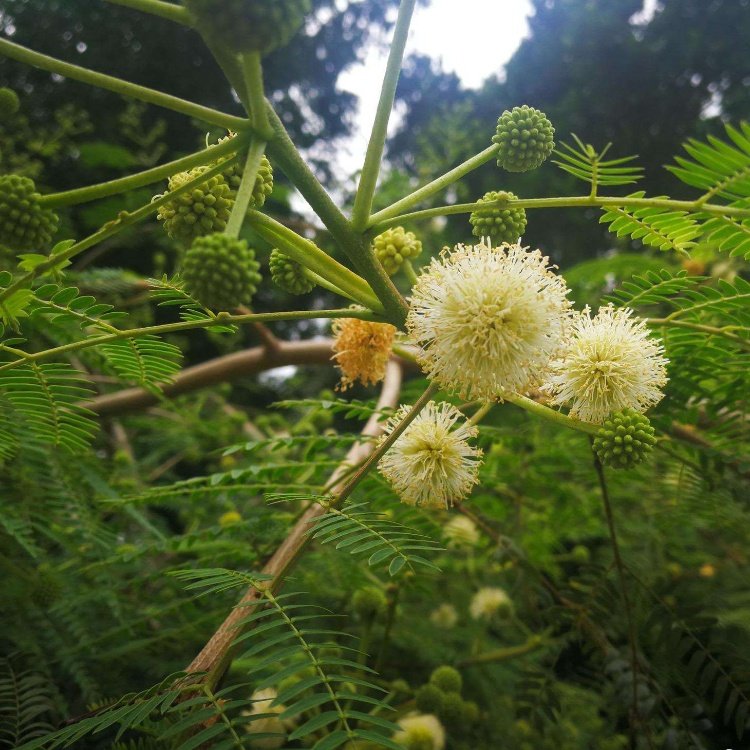
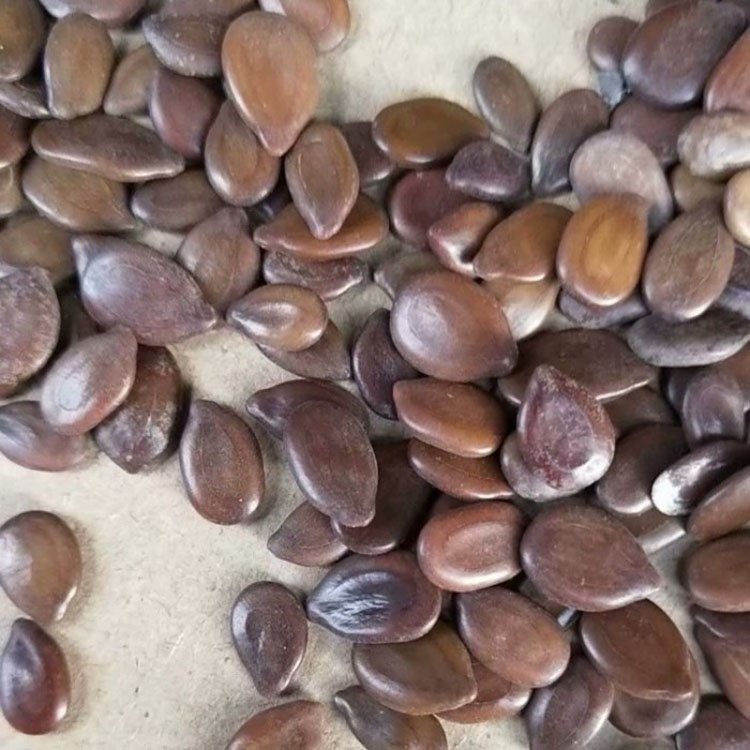











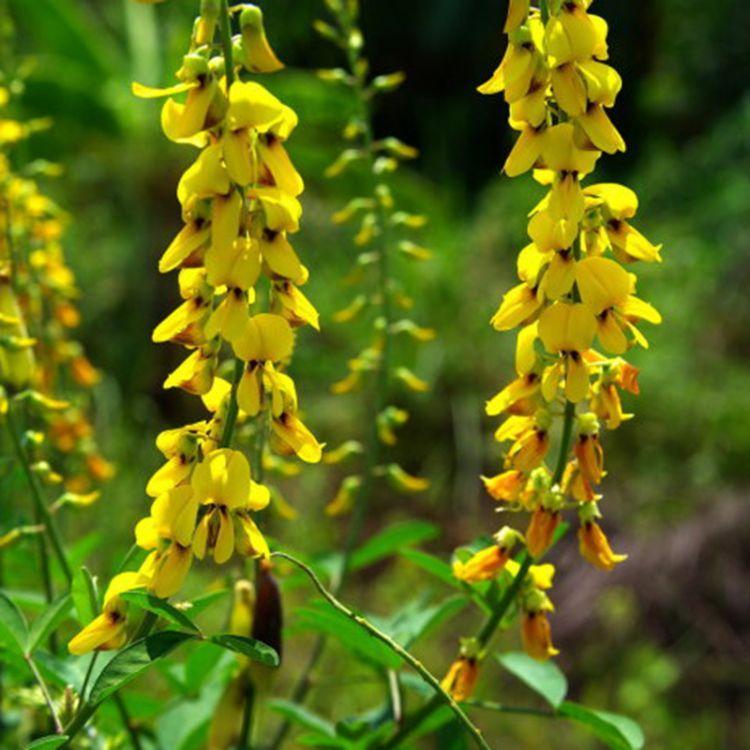
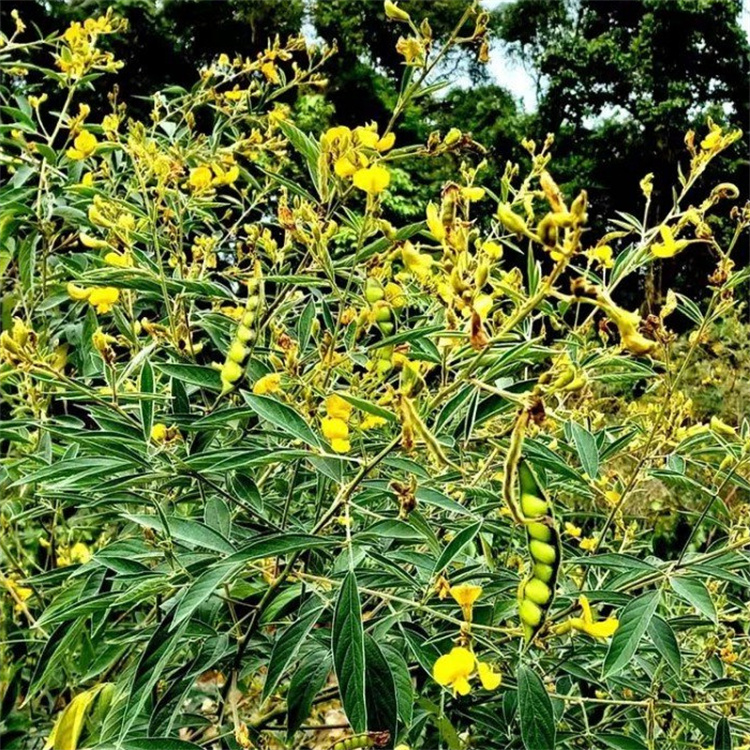
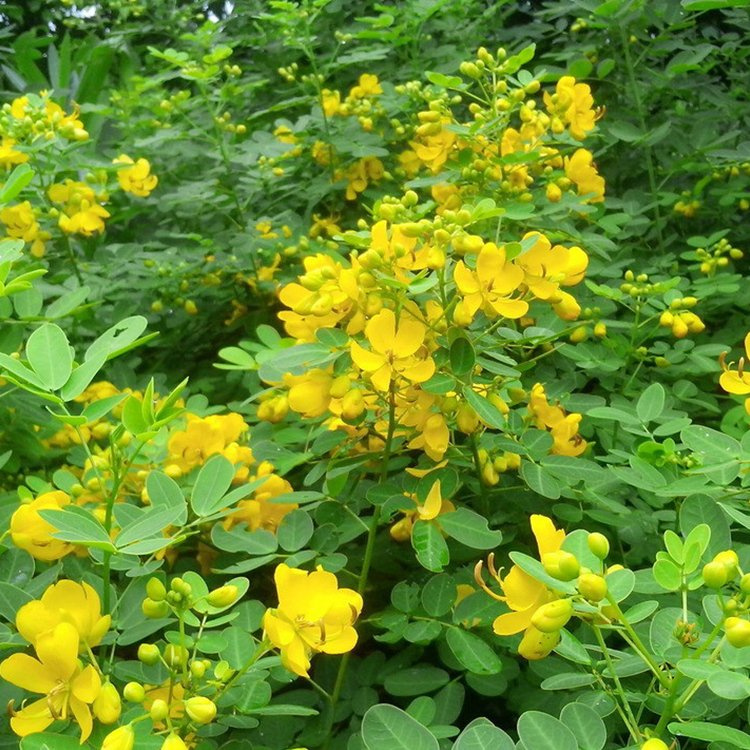
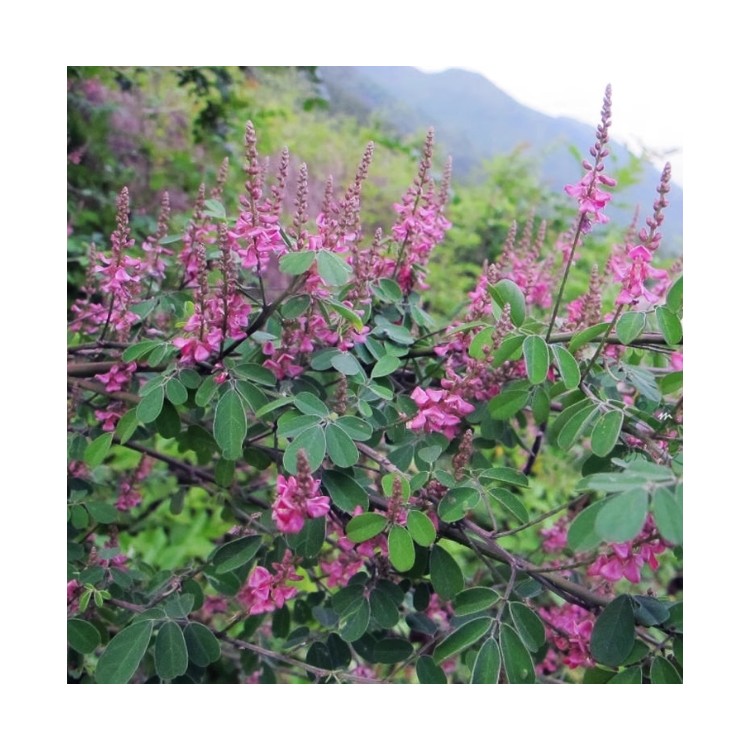
Leucaena leucocephala (Lam.) de Wit is a small tree in the Leucaena genus of the Fabaceae family. Young branches of the silver wattle are covered with short silky hairs, while older branches are hairless with brown lenticels and no thorns; stipules are triangular; the rachis is covered with silky hairs, linear-oblanceolate, with an acute apex and cuneate base; racemes have white flowers; the calyx is externally covered with silky hairs; petals are narrowly oblong-sagittate, with sparse silky hairs on the back; stamens are usually covered with sparse silky hairs; the ovary has a short peduncle, upper part covered with silky hairs, and the stigma is concave and cup-shaped; pods are strap-like, with an acute apex and a peduncle at the base; seeds are ovate, brown, flat, and shiny. Flowering period is from April to July, fruiting period from August to October.
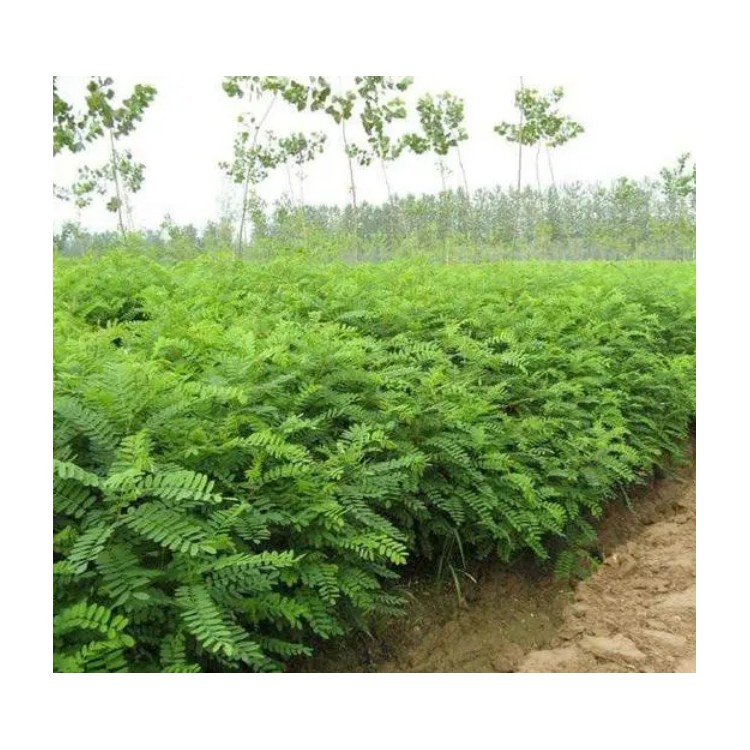
Native to tropical America, Silver Acacia is now distributed in Taiwan, Fujian, Guangdong, Guangxi, and Yunnan in China. [5] It thrives in warm, humid climates, slightly tolerates shade, is drought-resistant, and prefers neutral to slightly alkaline soil; typically propagated through seeds and seedling cultivation.
Silk Acacia flowers, fruits, and bark are used in medicine, known for their pain-relieving and pus-excreting properties, as well as for hemostasis. They are primarily used to treat tuberculosis, scabies abscesses, and arthritic joints. [7] The Silk Acacia is also used as feed, fertilizer, fuel, and timber, earning it the titles of "Miracle Tree" and "Protein Storehouse."