






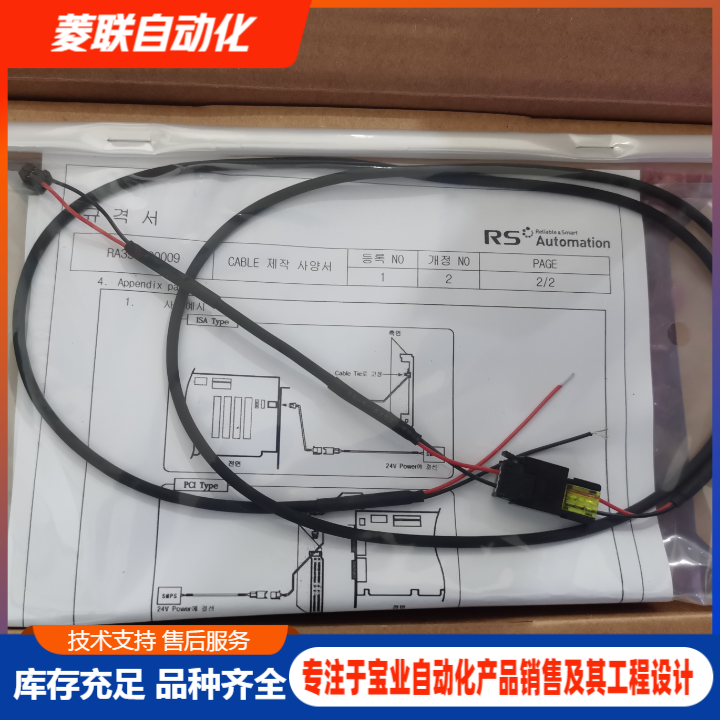
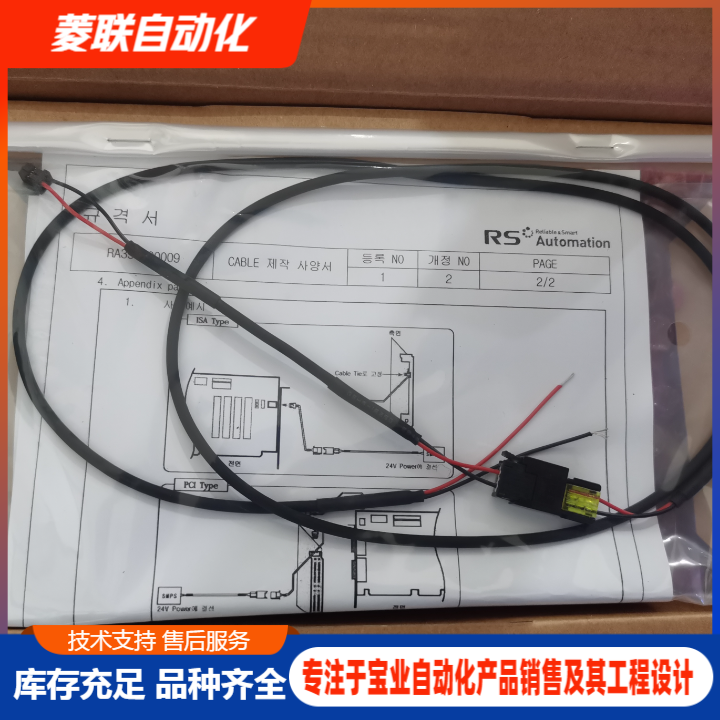
South Korea RS Controller Price. South Korea RS China Agent Supply. MMCBDPO41PNA
DS60 Series Machine I/O, RS OEMax DS60 Series is a distributed I/O, designed to optimize system connections. The DS60 Series is a distributed I/O product with an actual full-standard, i.e., Device and Net specifications. The DS60 Series allows for simple configuration of open control systems, enabling easy integration of multiple systems, including PC, PLC, and HMI devices. Upgraded open distributed I/O system configuration: - Reduces single-line wiring. - Quick and convenient installation and maintenance. - Multi-supplier compatibility, allowing for a wider product selection. - Proven reliability through applications on semiconductor/FPD equipment. - Optimized solution for device control. - Compact size minimizes installation space. - Flexible expansion up to 64 nodes, with each node supporting over 80 points. - Various I/O types (DC/AC input, relay, TR, SSR output, and analog I/O). - Choose between T/B terminals and D-SUB connectors. All products are internationally certified.
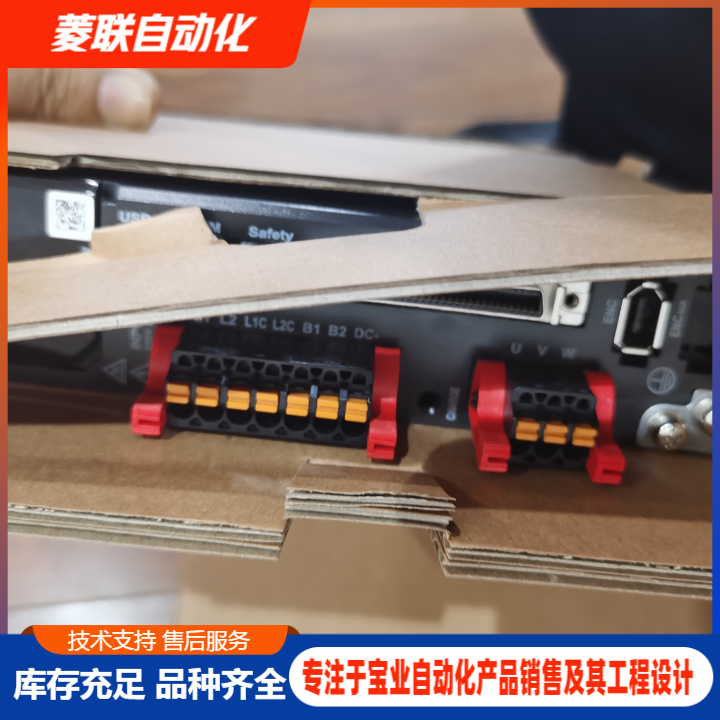
Servo drives are a vital component of modern motion control, widely used in automated equipment such as industrial robots and CNC machining centers. Particularly, servo drives for controlling AC permanent magnet synchronous motors have become a hot research topic both domestically and internationally. Current AC servo drive designs commonly employ a three-loop control algorithm based on vector control for current, speed, and position. The rationality of the speed loop design plays a crucial role in the overall servo control system, especially in the performance of speed control.
In the speed closed-loop of servo drives, the accuracy of real-time motor rotor speed measurement is crucial for improving the dynamic and static characteristics of the speed loop. To achieve a balance between measurement accuracy and system cost, incremental optical encoders are generally used as speed sensors, with the corresponding common speed measurement method being the M/T speed measurement method. Although the M/T speed measurement method offers certain measurement accuracy and a wide measurement range, it has inherent drawbacks, including: 1) The need to detect at least one complete disc pulse within the speed measurement cycle, which limits the measurable low-speed rotation; 2) The two control system timers used for speed measurement are difficult to maintain strict synchronization, resulting in a lack of speed measurement accuracy in scenarios with significant speed changes. Therefore, traditional speed loop design approaches using this speed measurement method are challenging to enhance the speed following and control performance of servo drives.