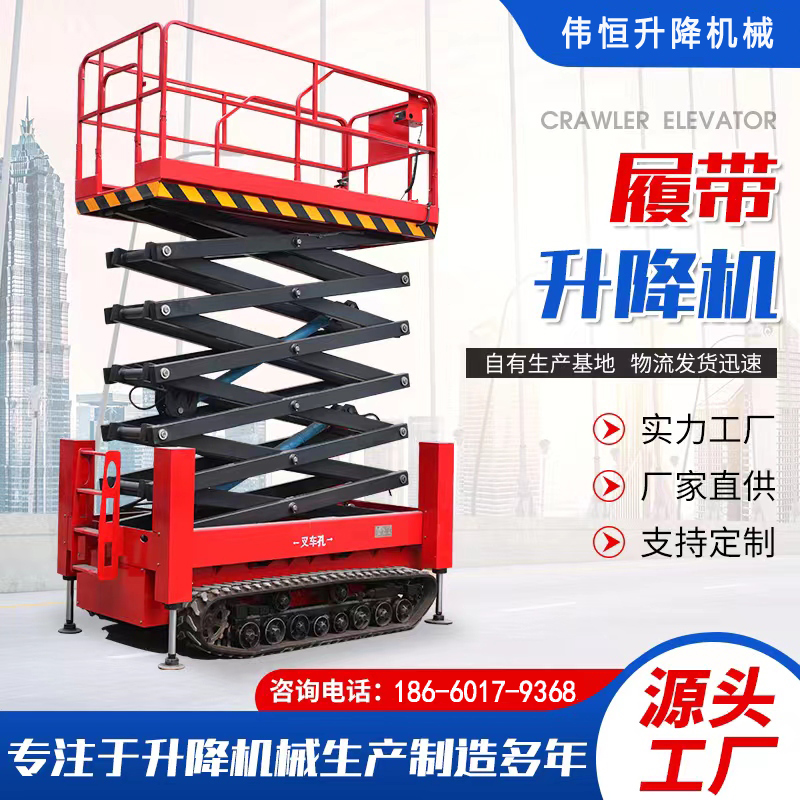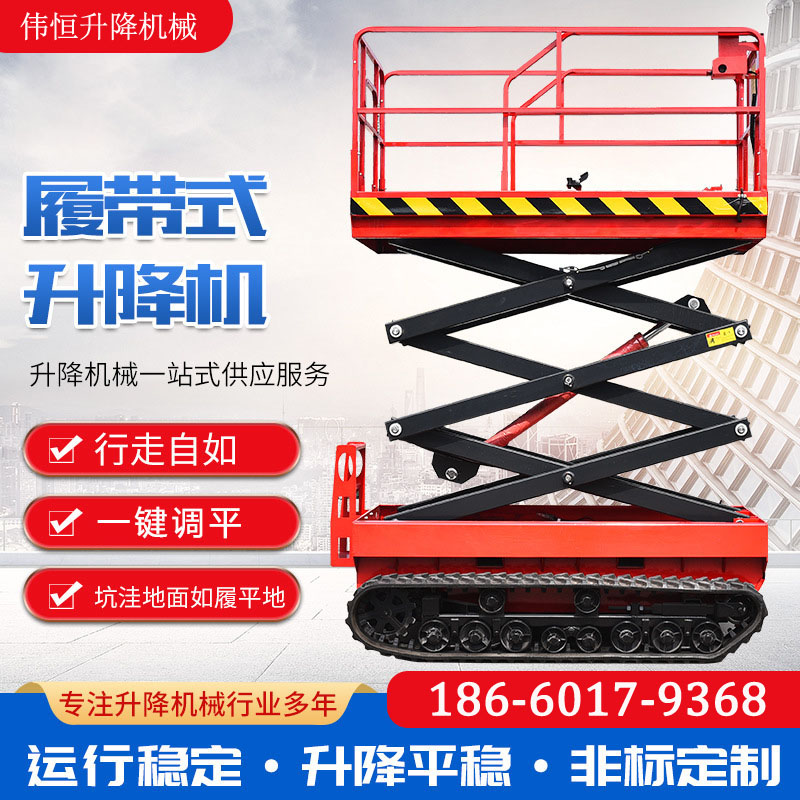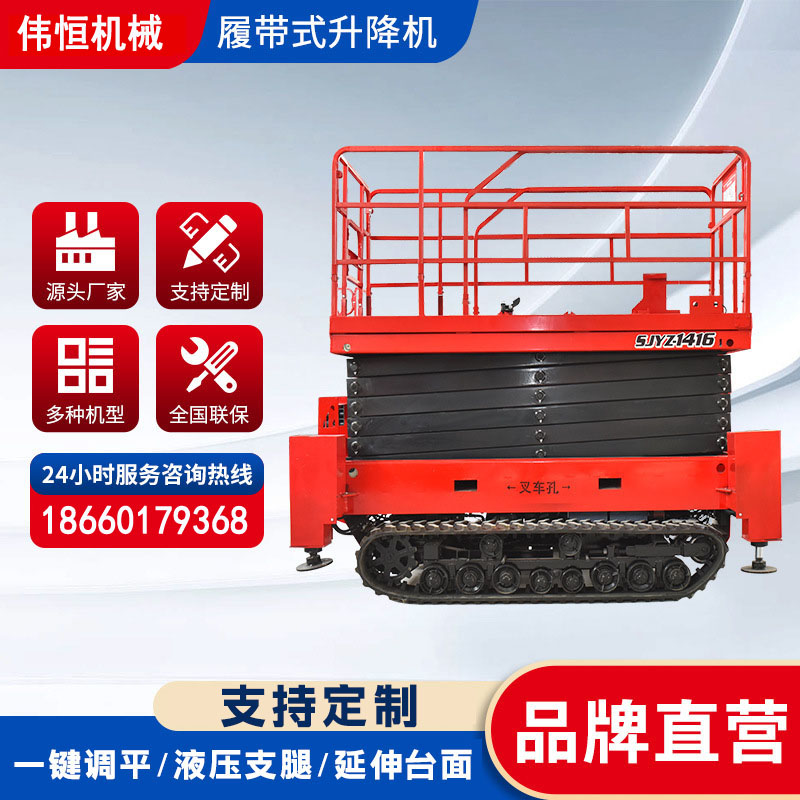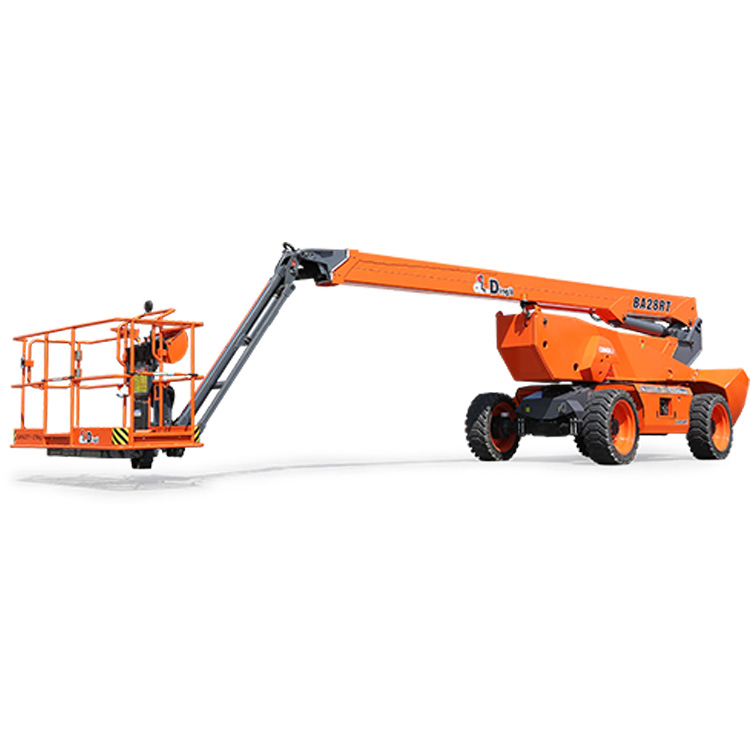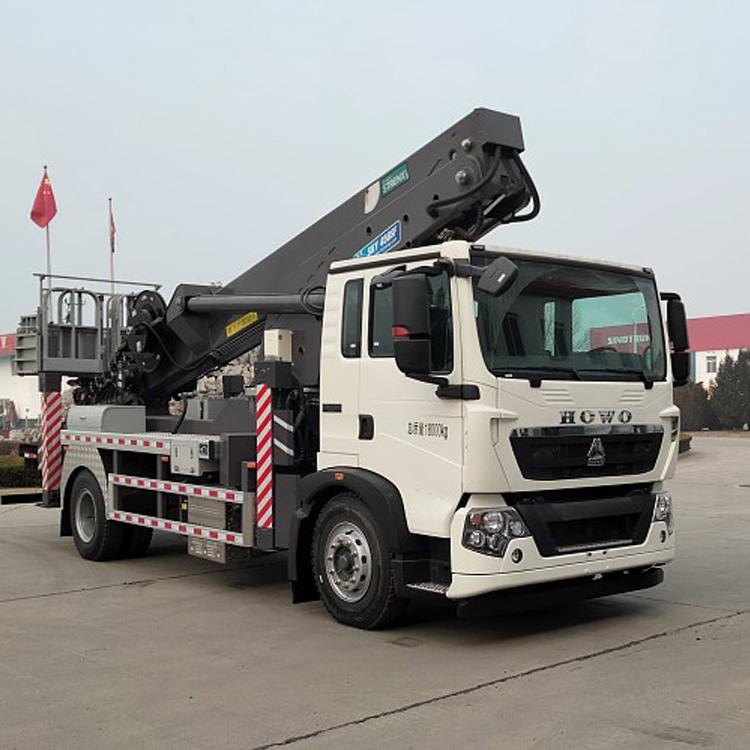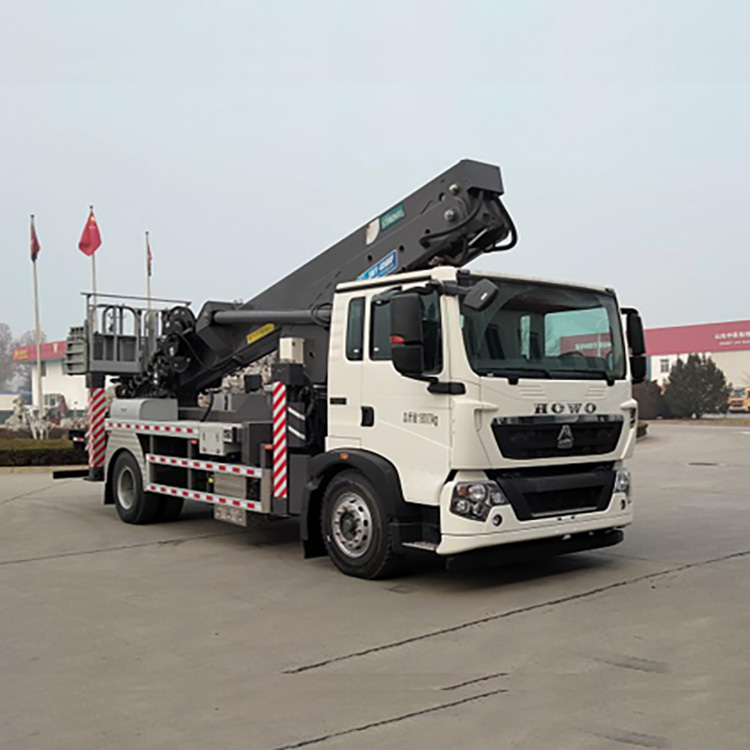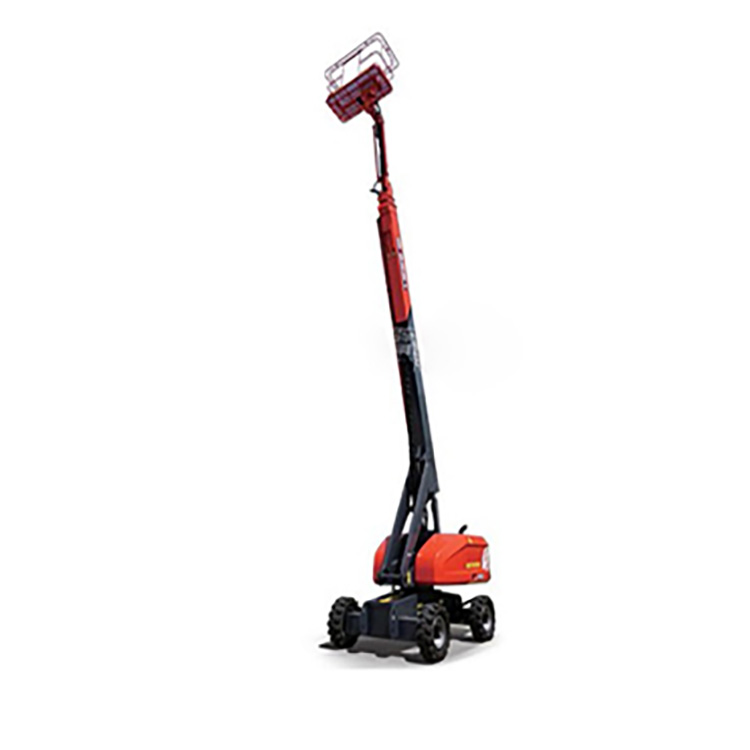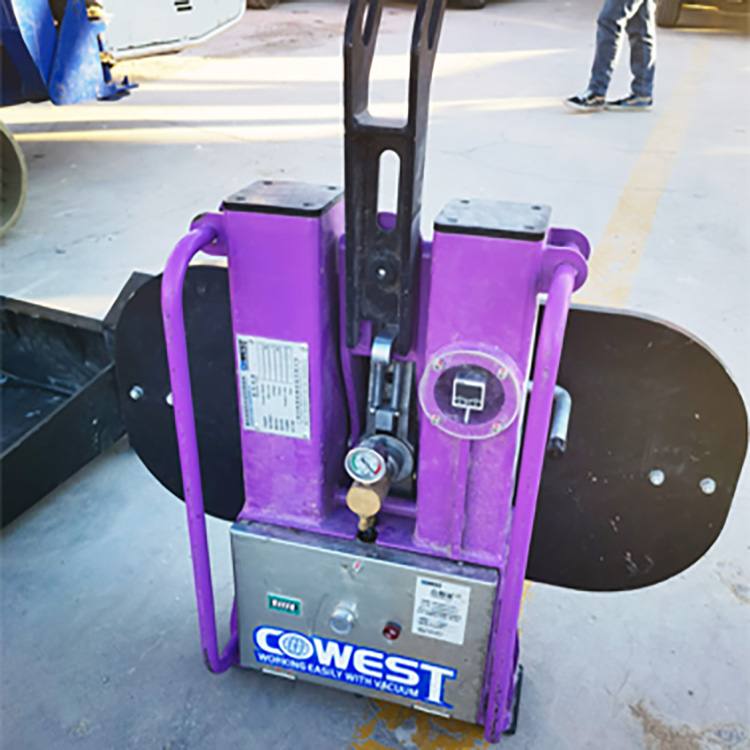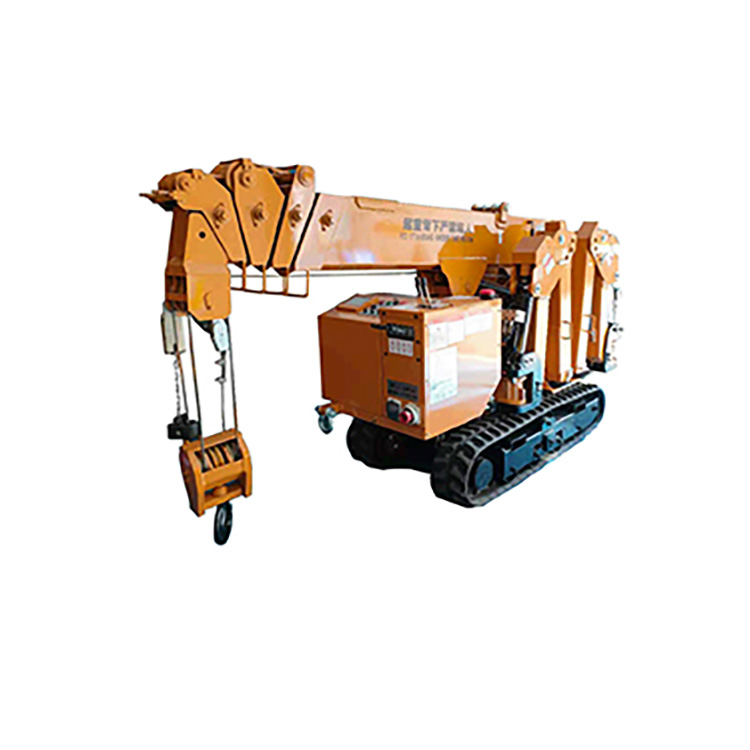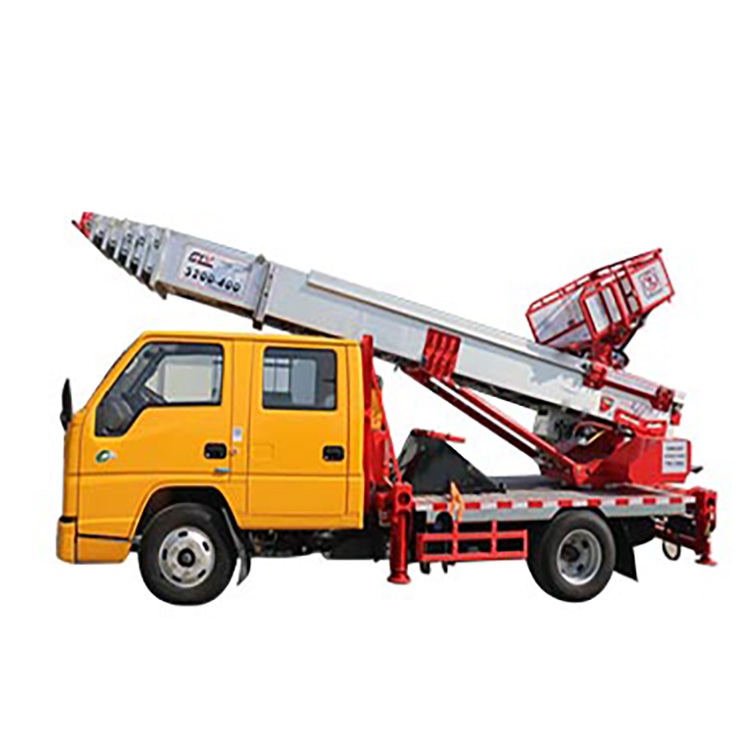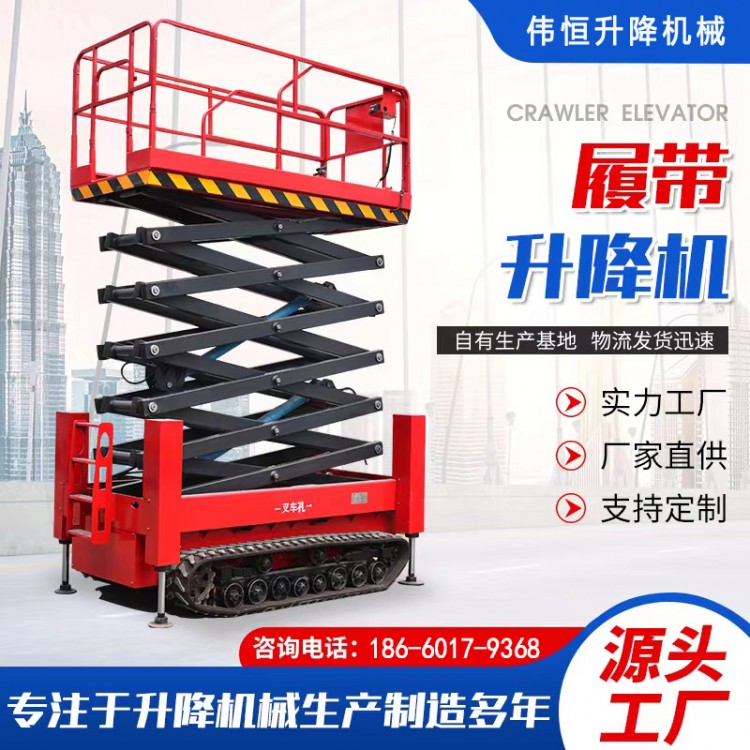
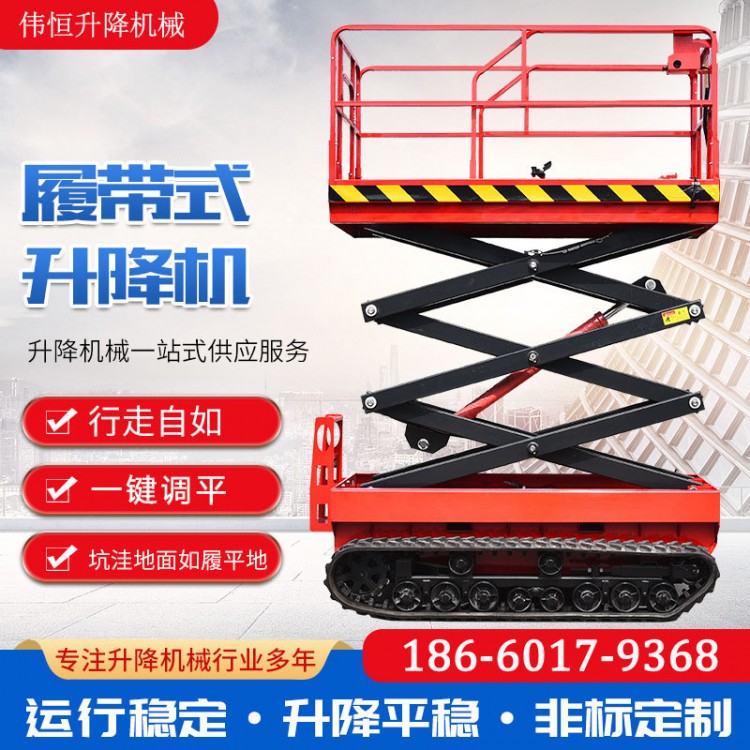
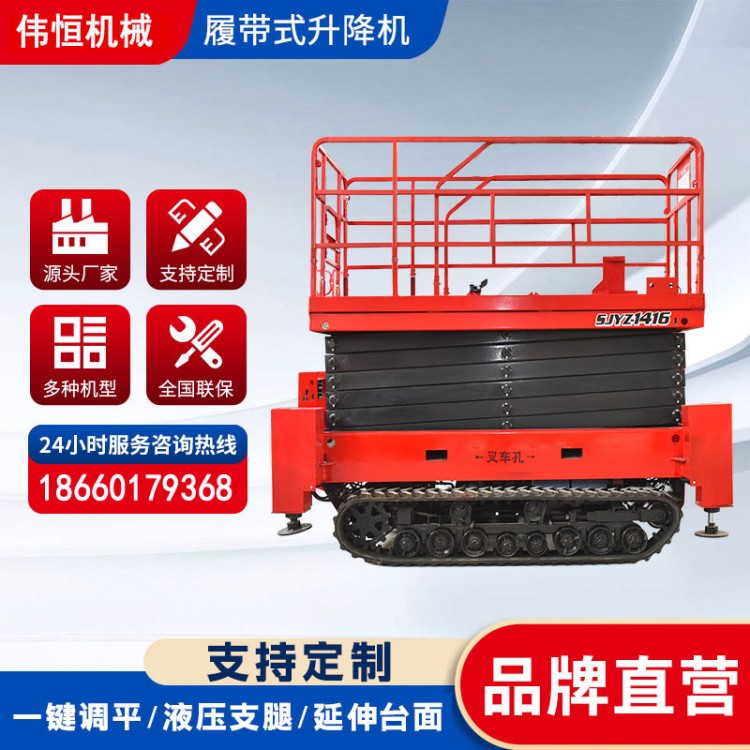
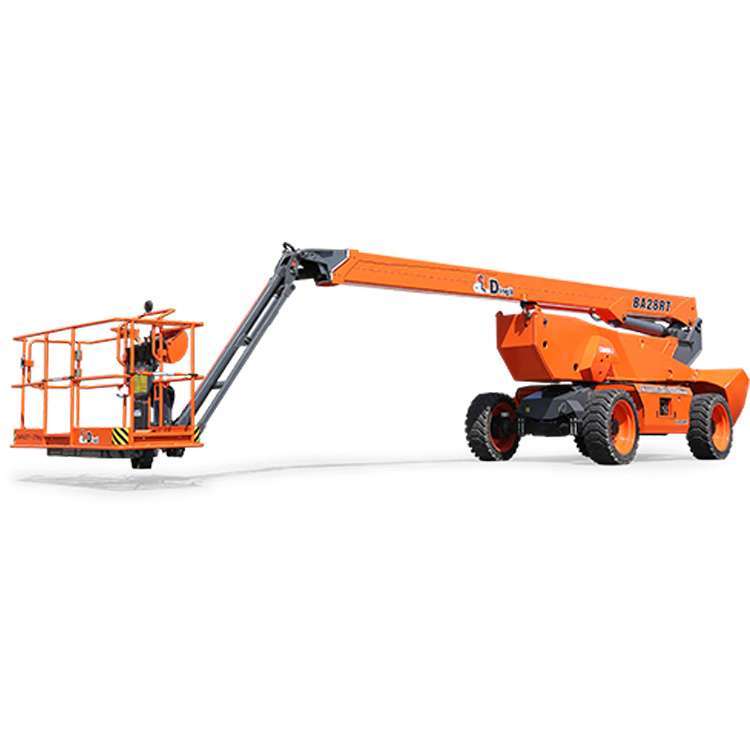
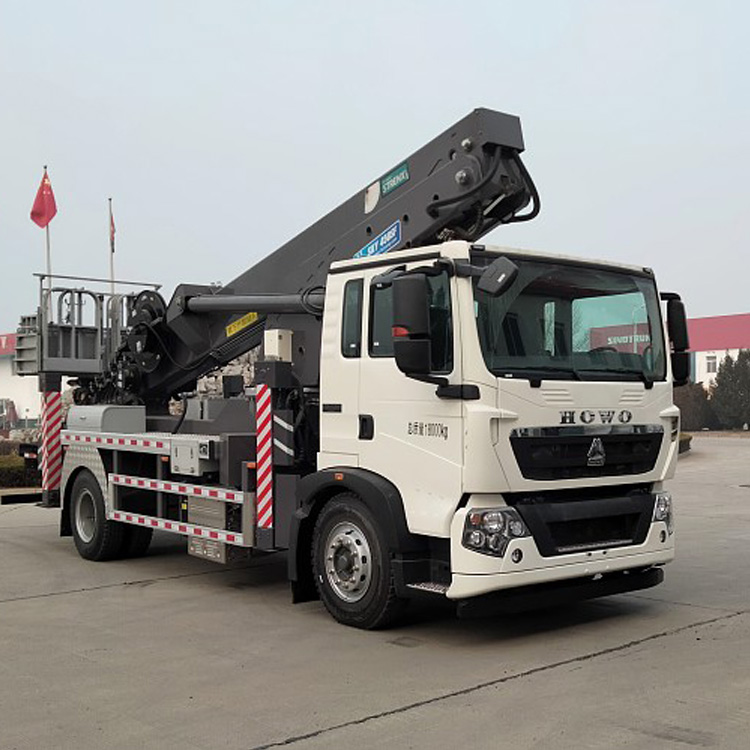







Key operational features of the aerial work platform:
1. Wide stance legs for excellent stability and adaptability to various working conditions.
2. Performance optimization, multi-functional, safe and reliable, compact design; maximum working height of 18 meters, maximum working width of 8.6 meters.
3. The rotating mechanism drives the turntable for a 360° rotation, allowing for convenient and precise transport of workers performing high-altitude operations to their work location safely.
4. Equipped with 2-ton heavy-duty crane lifting devices; working heights vary from 6 to 38 meters. Suitable for: construction, landscape planning and building, aerial photography and videography, engineering projects, industrial installation, equipment maintenance, factory maintenance, property management, ship power, airports, convention centers, hotels, skyscrapers, bridges, and other industries involving manufacturing, installation, inspection, and special maintenance.

Key Features of Elevated Work Platforms:
1. High Load Carrying and Stability in Operation: The undercarriage structure breaks through traditional design theories and methods, reducing the center of gravity shift by optimizing the overall layout of the mounting platform and load distribution. It features a unique large-angled rear-tilt hinge structure, reasonably sets various counterweight modules, and effectively balances the working torque. The adoption of an H-shaped variable cross-section composite box girder flexible chassis and high-load solid rubber tires increases the overall rigidity of the undercarriage, ensuring stability during both driving and operation, and enabling the elevated work platform vehicle to carry loads while in motion.
2. Multi-functional and versatile operation equipment: With the front arm bracket, it allows for quick installation of lifting devices or personnel platforms, enabling material lifting, hoisting, and high-altitude personnel operations. It also provides interfaces for rapid switching between various operation attachments and work devices.
3. New Full-Hydraulic Self-Propelled Chassis: A self-propelled aerial work platform vehicle with completely independent intellectual property rights has been developed. It incorporates technologies such as mechatronics integration, reliability design, and computer-aided design, successfully creating a full-hydraulic drive, self-propelled chassis. This breakthrough overcomes the previous limitation that domestic aerial work platform vehicles could only be modified and designed from car or crane chassis.
4. Unique 3D Rotating Lifting Mechanism: The designed 3D rotating lifting mechanism can automatically maintain the posture of the lifted material, and also allows for adjustments to the height, position, and direction of the lifting material within any space, with sensitive speed control and excellent micro-motion performance. It meets the requirements for high-altitude operations and ventilation pipeline installation in large underground storage facilities.

High-Angle Lifting Vehicle Loading Features:
1. Lifting Arm: Four telescopic arms with length sensors installed. If the operation exceeds the safe operating angle and height controlled by the PLG, the sensor automatically alarms. The lifting angle and operating height are automatically displayed on the electrical control panel for clear visibility. Single hydraulic lifting cylinder with a bidirectional balance valve for stable and reliable arm operation; no winch attached to the whole vehicle.
2. Four hydraulic jacks: Each jack is equipped with a leg extension sensor and features a bidirectional hydraulic lock installed separately. This ensures that the legs will not retract automatically after being lowered; if they do not extend fully or not at all, an alarm will sound, and the jack will be locked in place, preventing operation to ensure safety. The leg control valve is manual, allowing each of the four legs to be controlled individually.
3. The center rotates 360 degrees, featuring dual-position operation on the rotation and work bucket, controlled by PLC electrical control (consisting of two electrical control boxes).
4. Work Bucket: Capable of horizontal and vertical movement for convenient operation. The working bucket has a load limit of 200kg.
5. Equipped with a power unit, which means that in case of the main vehicle malfunction, this power unit can be used for emergency purposes. It also allows for the extension of the arm and the telescoping of the legs. This feature is controlled by both a manual switch and an electric switch, offering flexible operation.

Safety Management Standards for Aerial Work Platforms
1. Tools, equipment, cables, water pipes, etc., used for suspended work at heights must have reliable fall protection measures.
2. Rental companies for suspended equipment must ensure the safety and reliability of the equipment, provide a safety permit and a safety performance inspection report, and simultaneously sign a rental contract, taking responsibility for the safety performance of the rented equipment.
3. Individuals with heart conditions, acrophobia, or other conditions unsuitable for high-altitude work are prohibited from performing suspended work at heights to prevent any accidental incidents.
4. Special Situation Safety Precautions: High-altitude work is prohibited during severe weather conditions such as thick fog, heavy rain, heavy snow, strong winds (wind speed of 10.8 m/s, equivalent to gusts of 6 levels), and when there is no lighting at night. Simultaneous work in the same vertical direction is not allowed. Work is prohibited within a 10-meter radius of high-voltage lines without special safety protection measures.
5. Special labor protection products such as hanging operation equipment, electrical and mechanical safety accessories, safety devices, safety ropes, and safety belts must comply with national or industry safety standards. A product and usage, inspection, maintenance, and repair record should be established for each hanging equipment.
6. When structural limitations prevent the use of suspended equipment, safety technical measures must be implemented and signed off by the responsible person of the construction company. Only then can you operate seated climbing platforms or suspended devices that have passed safety technical inspections. Ensuring everyone's personal safety is the first step towards success and guarantees the company's good development.