







Overview;
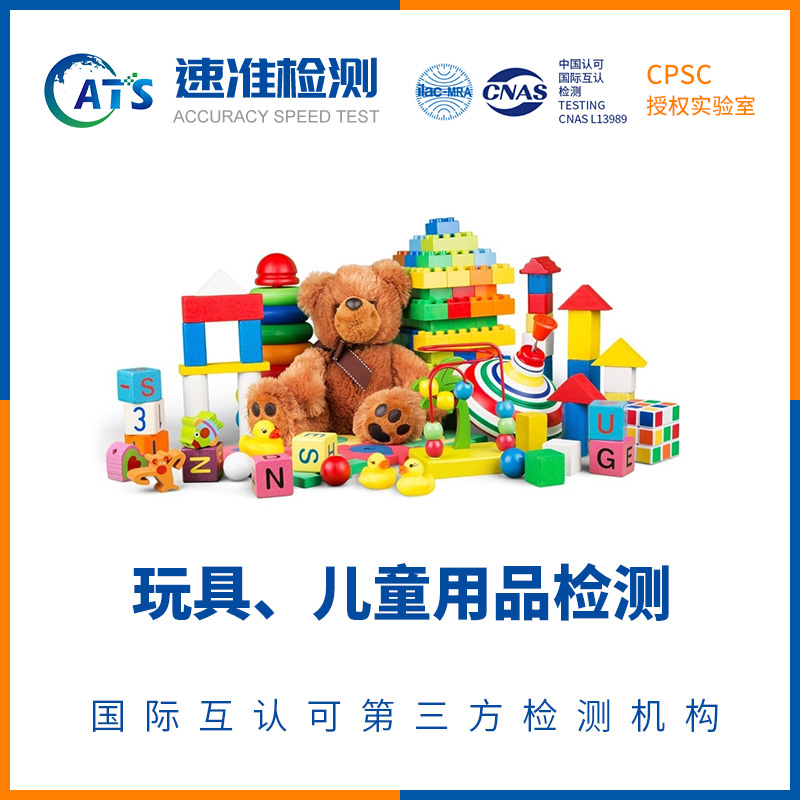
The English name for CPC certificate is Childs Products Certificate (i.e., Children's Products Certificate). It applies to children's products under 12 years old, such as toys, cradles, baby carriers, children's clothing, etc. If produced locally in the U.S., the manufacturer is responsible for providing the certificate, while in other countries, the importer is responsible. CPC refers to a self-declaration form that includes product information and the tested product standards and items.
All children's toys and products on the US Amazon site must provide a Children’s Product Certificate (CPC), abbreviated as CPC certificate. Similar to the COC certificate, when listing product categories related to children on Amazon US, including toys and baby products, a CPC certificate is required; otherwise, the products will not be sold. Although it's called a "certificate," the CPC certification is not issued by any official institution and does not need to be archived with relevant departments. Essentially, it is a "warranty" drafted and fully responsible for by the manufacturer/importer, stating that their products comply with all applicable US local children's product safety regulations and other laws and regulations.
Amazon requires sellers to upload CPC certificates when listing products in certain categories (such as children's toys, baby products, etc.). Products for children without a CPC certificate are prohibited from being sold online.
Currently, exporting children's toys and母婴 products to the United States requires a CPC certification and a CPSIA report for customs clearance. Overseas e-commerce platforms like Amazon, eBay, international Temu, and AliExpress also require Chinese-made children's toys and母婴 products to obtain a CPC Children's Product Safety Certificate.
Common Product Recommended Test Items
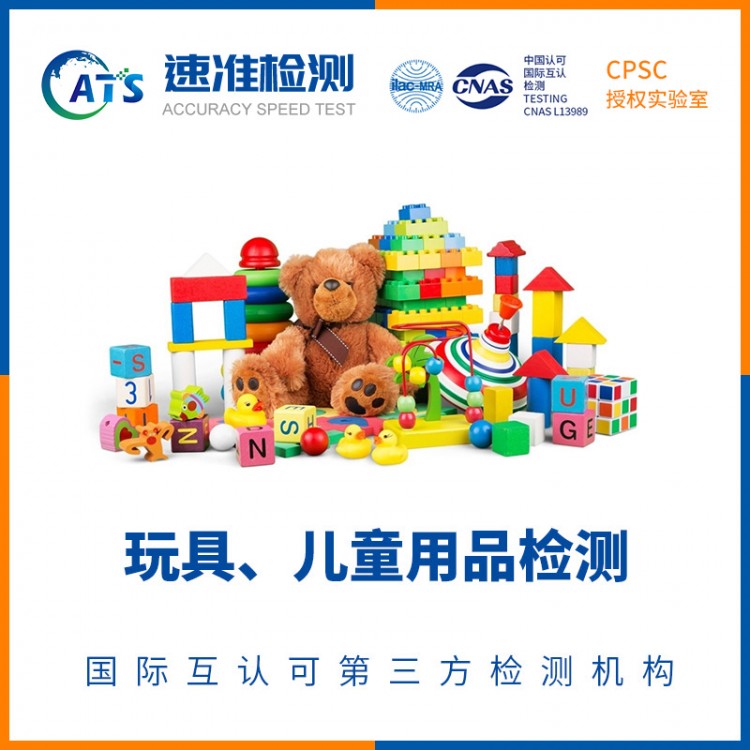
Toys category:
①. CPSIA Total Lead + Phthalates
②. ASTM F963 Toy Standard
③. 16 CFR Part 1501 Small Parts (for toys, covered by ASTM F963)
④. 16 CFR Part 1510的要求 for Rattle Toys (only applicable to rattle toys, covered by ASTM F963)
⑤. 16 CFR Part 1505 Safety Standards for Electric Toys (applicable only to electric toys)
Children's clothing:
a. CPSIA Total Lead + Phthalates
b. 16 CFR Part 1501 Small Parts
c. 16 CFR Part 1610 Clothing and Textile Combustion Properties
d. 16 CFR Part 1615 - Flammability of Children's Sleepwear, Sizes 0-6X (applies only to children's sleepwear)
e. 16 CFR Part 1616 - Flammability of Children's Sleepwear, Sizes 7-14X (applies only to children's sleepwear)
Common Amazon Products Requiring CPC Certification and Standards
Bedside Cribs, ASTM F2906-13 and CPSIA (Lead, Phthalates)
Infant Bed - ASTM F1821-16; and CPSIA (Lead, Phthalates)
Full-size Cribs - ASTM F1169-19 and CPSIA (Lead, Phthalates)
Non-full-size cribs ASTM F406 - 19 and CPSIA (Lead, Phthalates)
Crib and Cradle ASTM F2194-16e1 and CPSIA (Lead, Phthalates)
Safety doors and fences, ASTM F1004-19 and CPSIA (Lead, Phthalates)
High Chair - ASTM F404 -18a and CPSIA (Lead, Phthalates)
Baby Rocker - ASTM F2167-19 and CPSIA (Lead, Phthalates)
Fixed Activity Chairs - ASTM F2012-18 and CPSIA (Lead, Phthalates)
Baby Cradle - ASTM F2088-13 and CPSIA (Lead, Phthalates)
Bicycle helmets for children, compliant with 16 CFR § 1203 or ASTM F1898 or ASTM F1447 or Snell B-90A or B-95; and CPSIA (Lead, Phthalates)
Snowboard and ski helmets for children, meeting ASTM F2040 or Snell RS-98/S-98 standards; and CPSIA (Lead, Phthalates) compliant
Bicycle Helmets - 16 CFR § 1203 or ASTM F1447 or Snell B-90A or B-95
Skate and Snowboard Helmets ASTM F2040 or CSA Z263.1 or Snell RS-98 or S-98
Baby Feeding Products - CPSIA (Lead, Phthalates)
Infant Bathing Seat ASTM F1967 - 19; as well as CPSIA (Lead, Phthalates)
Baby Bath Tub - ASTM F2670-18; and CPSIA (Lead, Phthalates)
Stroller and Baby Buggy - ASTM F833 - 15; and CPSIA (Lead, Phthalates)
Baby Diaper Changing Accessories - ASTM F2388-18; and CPSIA (Lead, Phthalates)
Climbing Carabiners ANSI/ASSE Z359.12-2009, ASTM F1774, or UIAA 121
Infant Carriers ASTM F2050 and 49 CFR 571.213
Height-Adjustable Stool (without backrest and safety belt restraint) 49 CFR 571.213
Forward-Facing Child Restraint System 49 CFR 571.213
Rear-facing Child Restraint System 49 CFR 571.213
Travel Systems (Collapsible Child Restraint Systems for Use in Vehicles, including Systems with婴儿Strollers) ASTM F833-15, ASTM F2050, 49 CFR 571.213
Children's Jewelry ASTM F2923-14, CSPA Phthalates and Cadmium, and Small Parts Warning*
Children's backpacks - CPSIA lead, CSPA phthalates and cadmium, 16 CFR 1500.50 and small parts warning*
Child Book Covers CPSIA Lead, CSPA Phthalates and Cadmium, and Small Parts Warning*
Children's Lunch Boxes/Bags - CPSIA Lead, CSPA Phthalates and Cadmium, 16 CFR 1500.50 and Small Parts Warning*
Children's pencil box/pouch - Lead, Phthalates and Cadmium (CPSIA), CSPA, and Small Parts Warning (16 CFR 1500.50)*
Children's Pull-On Garments ASTM F1816-18 and CPSIA
Finger Spinners ASTM F963-17, CPSIA, and Small Parts Warning*
Fire and Smoke Masks - Meets OSHA 29 CFR 1910.134 Standard and/or ASTM E2952-14
Children's Invisible Ink Pens ASTM F963-17 (Toys), CPSIA (Lead, Phthalates) and Small Parts Warning*
Magnetic Clay ASTM F963-16 or 17, CPSIA Phthalates
Magnetic Building Blocks ASTM F963-17 (Toys), CPSIA (Lead, Phthalates), and Small Parts Warning*
Infant Soft Toy, ASTM F963-17 (Toys), CPSIA (Lead, Phthalates) and Small Parts Warning*
Side-Crib Bed, 16 CFR § 1222, ASTM F2906-13, 16 CFR § 1303, 16 CFR § 1307, 15 U.S.C. § 1278(a)
Children's Sleepwear, sizes 9 months to 6 years, compliant with 16 CFR § 1615 or ASTM D6545-18; 16 CFR § 1610, § 1611 (where applicable); and CPSIA (lead, phthalates)
Children's Pajamas, 7 to 14 years old, in compliance with 16 CFR §1615 or ASTM D6545-18; and 16 CFR §1610, §1611 (where applicable); as well as CPSIA (lead, phthalates)
Trampoline ASTM F381-16
Height-Adjustable Stool, ASTM F2640-18 and CPSIA (Lead, Phthalates)
Folding Chairs and Stools, ASTM F2613-19, and CPSIA (Lead, Phthalates)
Child Carrier, ASTM F2549-14a, and CPSIA (Lead, Phthalates)
Baby Gate - ASTM F406-19 and CPSIA (Lead, Phthalates)
Portable Bedside Rail, ASTM F2085-19, and CPSIA (Lead, Phthalates)
Portable Child Commuter Highchair ASTM F1235-18 and CPSIA (Lead, Phthalates)
Baby Carrier ASTM F2907-19 and CPSIA (Lead, Phthalates)
Soft Baby Carrier, ASTM F22360-16a and CPSIA (Lead, Phthalates)
Dental Flosser, ASTM F963-17 and CPSIA (Lead, Phthalates)

Product Coverage;
Bicycles, bicycle helmets, children's beds, baby walkers, baby bath seats, baby bathtubs, baby swings, baby changing tables, baby rockers, strollers and baby carriages, pacifiers, electronic toys/items, rattle, cradles, bed pillows, booster seats, children's folding chairs and stools, frame-style strollers, high chairs, full-size baby cribs, handheld baby carriers, high chairs, children's pajamas, clothing textiles, mattresses, carpets, toys, etc.
CPSC Standard Regulations
(1) CPSIA Lead and Phthalates
(2) ASTM F963 American Toy Standards
(3) Electric Toy Safety Standards 16 CFR Part 1505
(4) Bell Toy Requirements: 16 CFR Part 1510
(5) Nipple Safety Standards 16 CFR Part 1511
(6) Children's clothing, carpet flammability, such as 16 CFR Part 1610;
(7) Children's Products: Standards for strollers, cribs, playpens, baby carriers, car seats, bicycle helmets, and other related products.
CPC Application Process
1. Laboratory evaluates sample and verifies contract
2. Arrange for sample dispatch
3. Laboratory Sample Testing
4. Draft Report
5. Upon report approval, issue a CPC certificate.
Certification costs and timeline.
CPC certification fees primarily include costs for mechanical and physical testing, as well as chemical testing. The chemical testing portion is mainly based on the product's material composition. Typically, the cost to obtain a CPC certificate ranges from a few hundred to a few thousand dollars. Additional calculations are required for products with more material points. Processing time is 5-7 business days, with expedited service available.
The Children's Product Certificate (CPC) is an official mandatory certification in the U.S. for safety assessment and certification of children's products during importation and sale. The CPC certification primarily relies on the regulations and standards of the U.S. Consumer Product Safety Commission (CPSC), aiming to ensure that the safety performance of children's products meets legal requirements and protects consumers' rights and children's life safety.