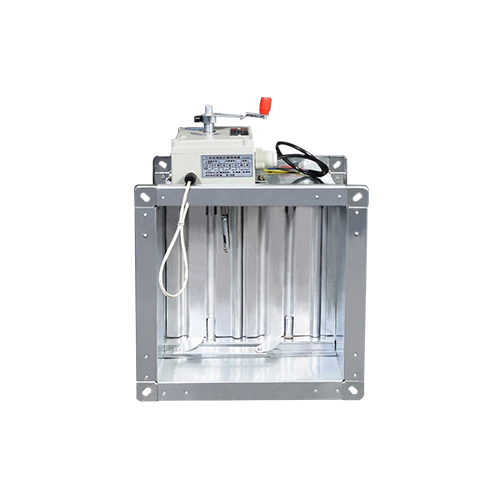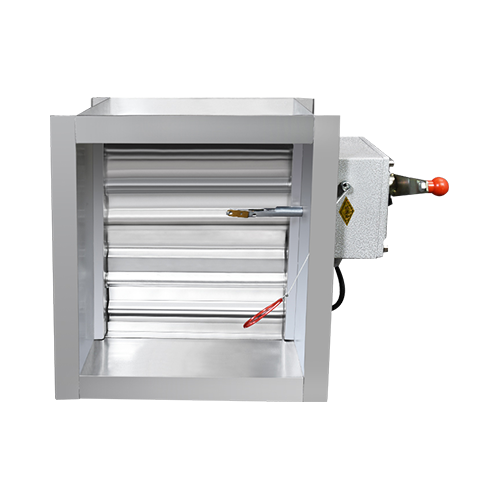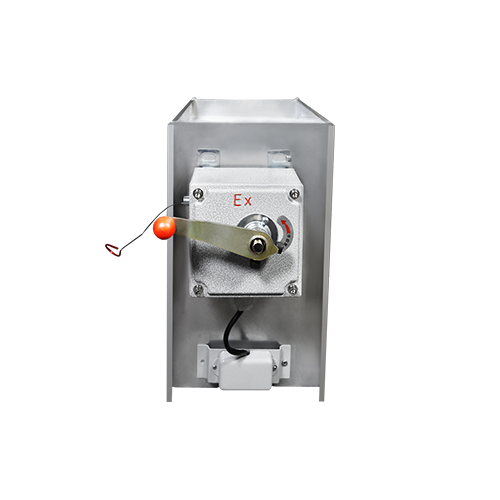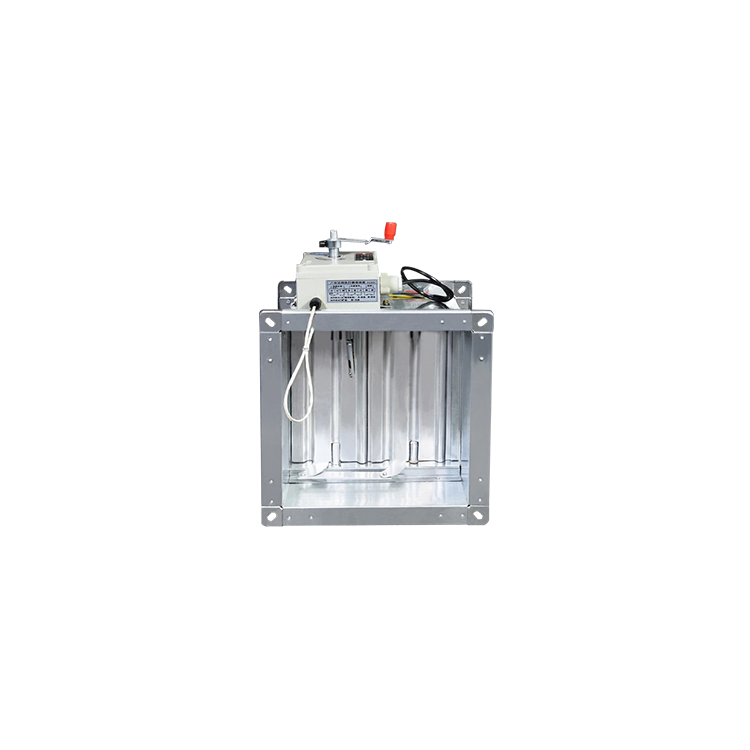

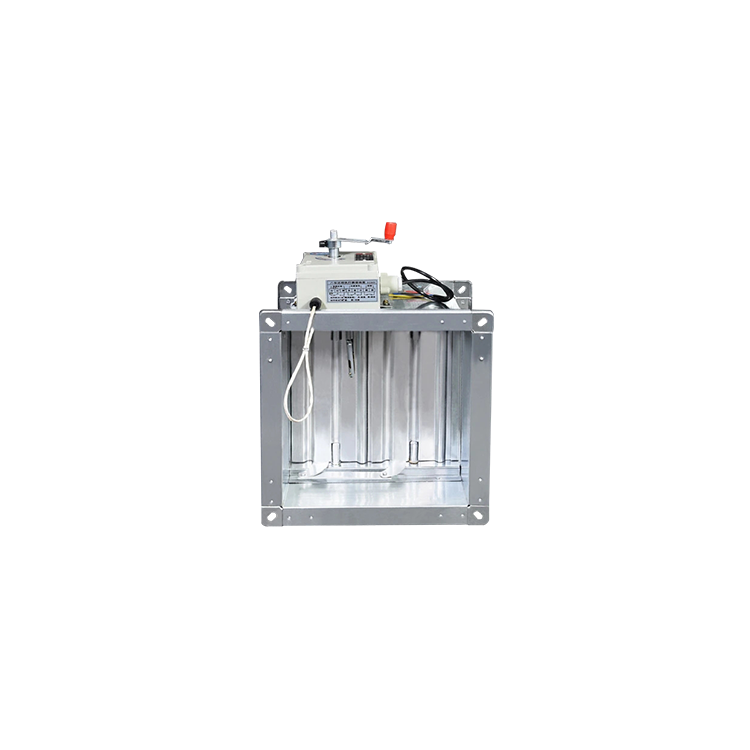
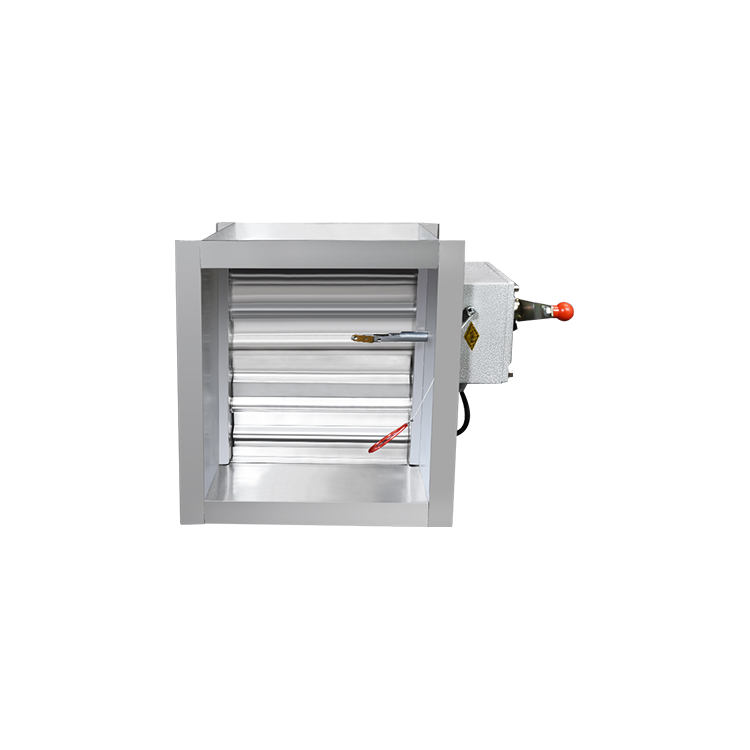
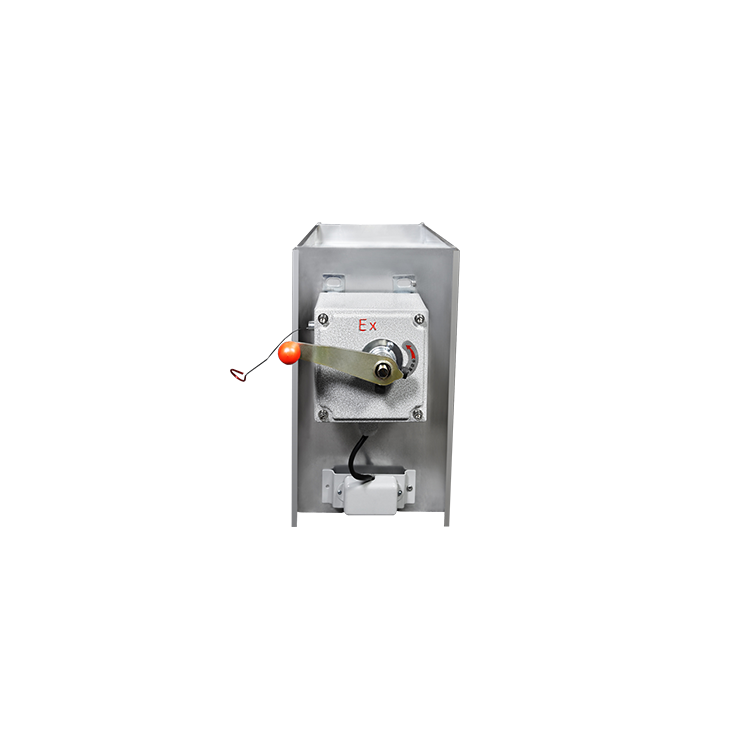


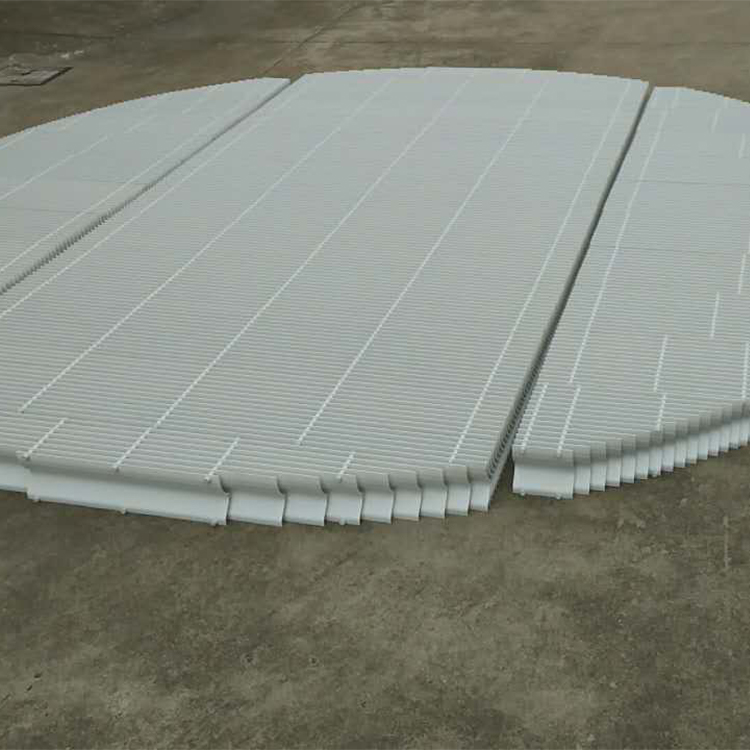
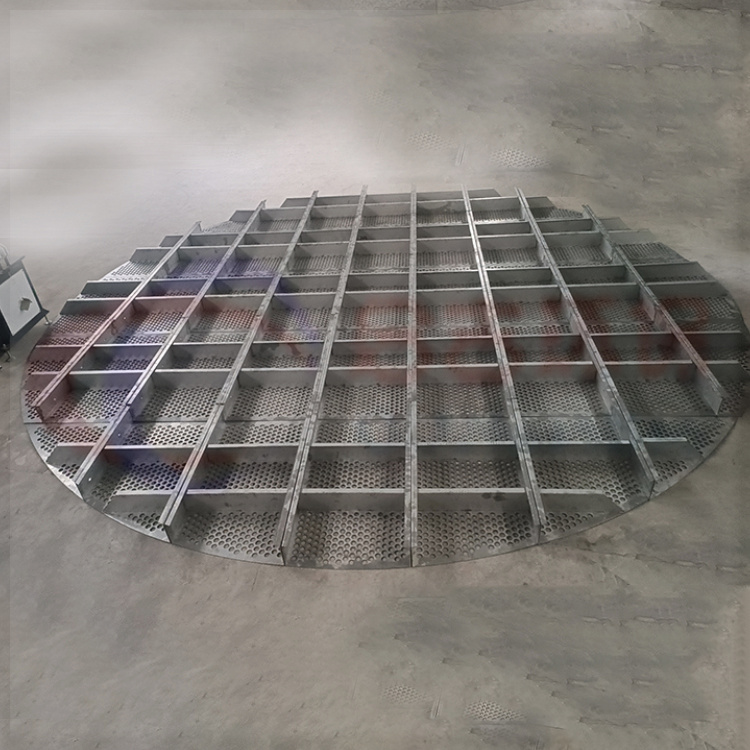







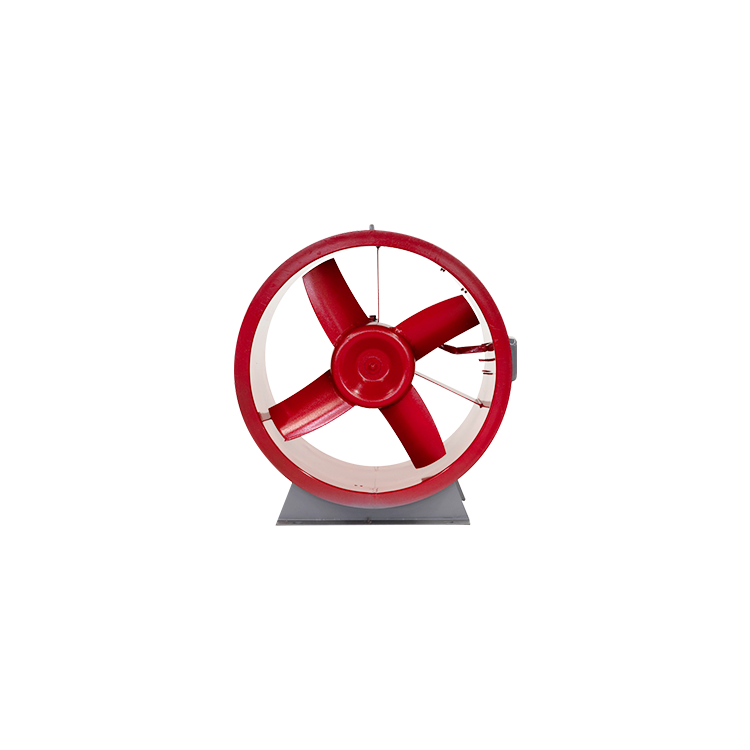
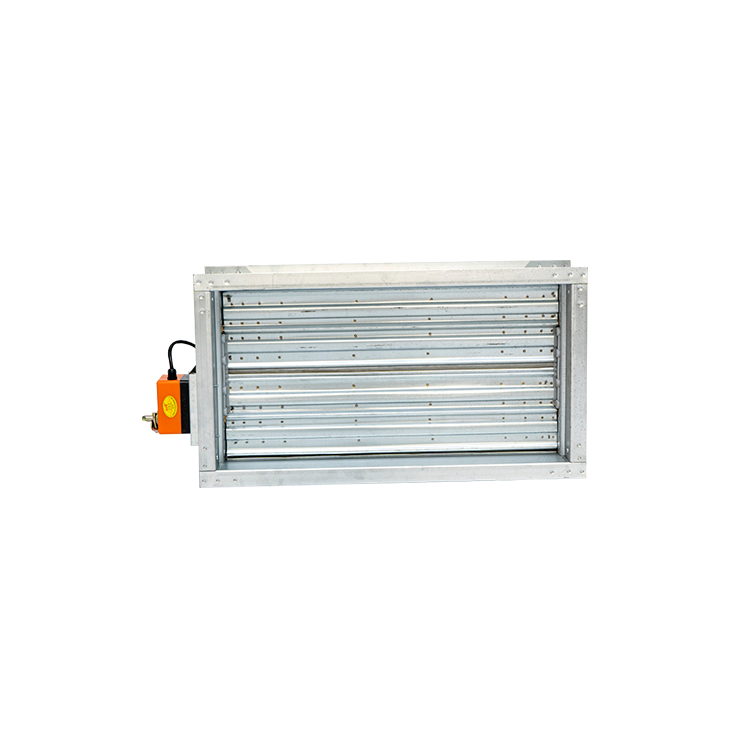
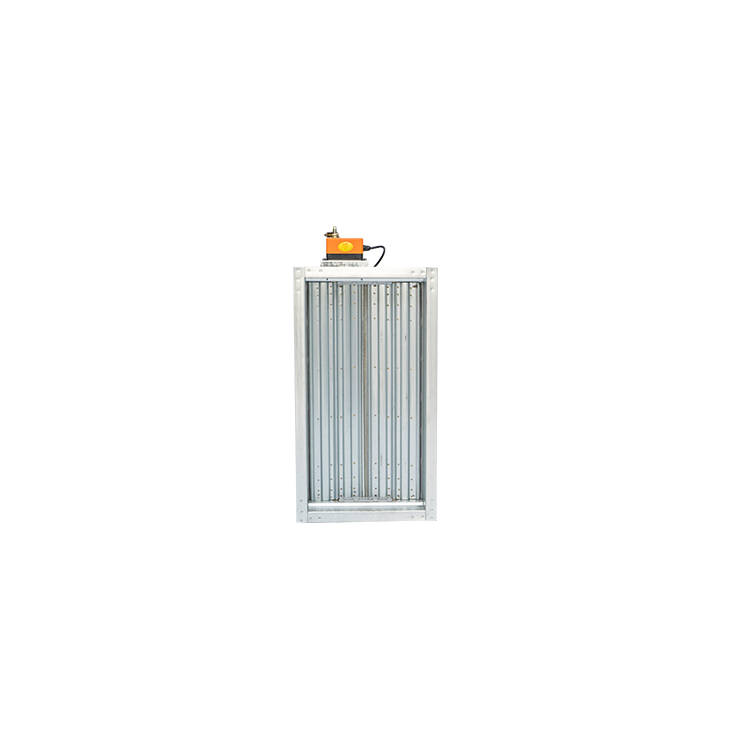
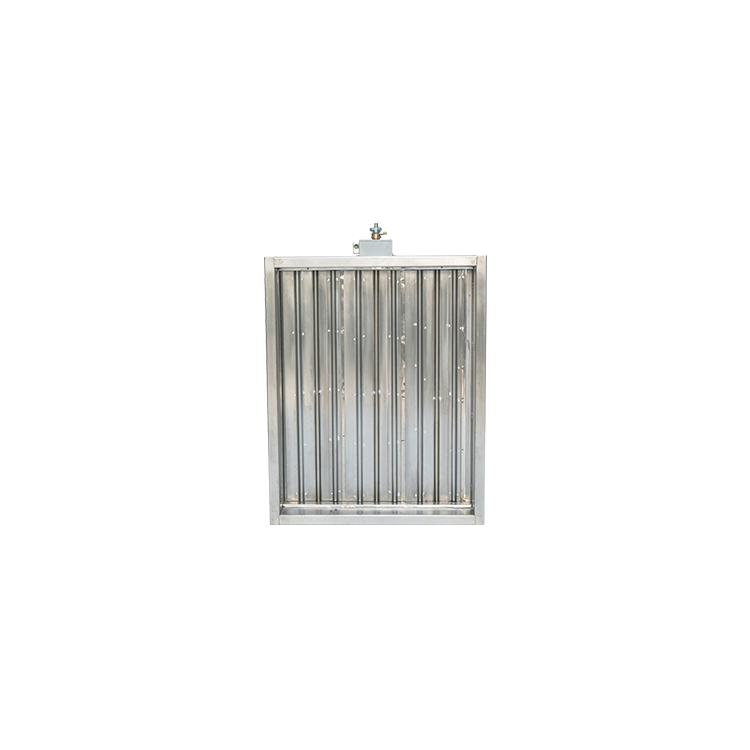
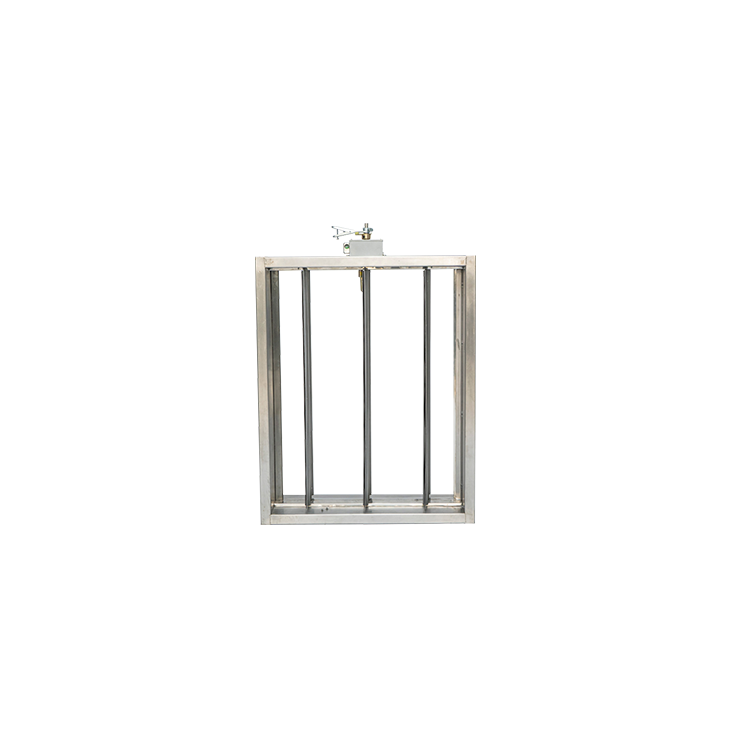
Explosion-proof and fire-resistant dampers are used in the ventilation and air conditioning systems of industrial buildings in hazardous gas or steam environments.Normally in an open state, when the gas temperature inside the pipeline reachesAt 70°C, the fusible link melts, causing the valve to automatically close under the action of the torsion spring. This valve can meet the requirements for fire resistance stability and integrity within a certain time, serving as a smoke and fire barrier. When the valve closes, it sends a closed signal output.
Explosion-proof fire-resistant valve material: zinc-plated or stainless steel frame, aluminum alloy blade material, actuator explosion-proof, explosion-proof grade:DIIBT4 or CT4, custom made according to customer requirements.
Our company actively responds to the "Notice on the Implementation of Compulsory Product Certification for Some Firefighting Products" issued by the General Administration of Quality Supervision, Inspection and Quarantine, the Ministry of Public Security, and the Certification and Accreditation Administration. ((Announcement No. 12 of 2014) stipulates the timely processing of mandatory product certification for fire products (CCCf certification), which is now fully certified across the entire range, including stainless steel materials, fully automatic, and remote-controlled options.
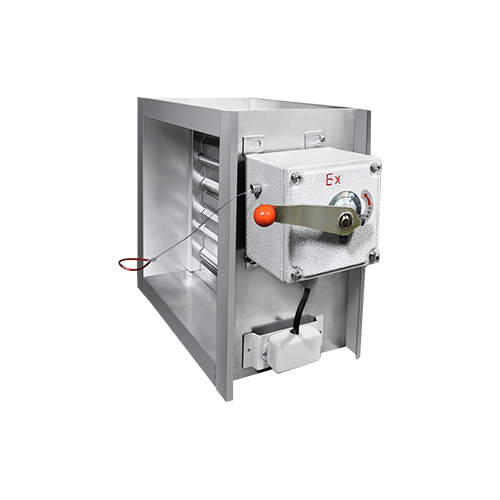
Installation of fire dampers:
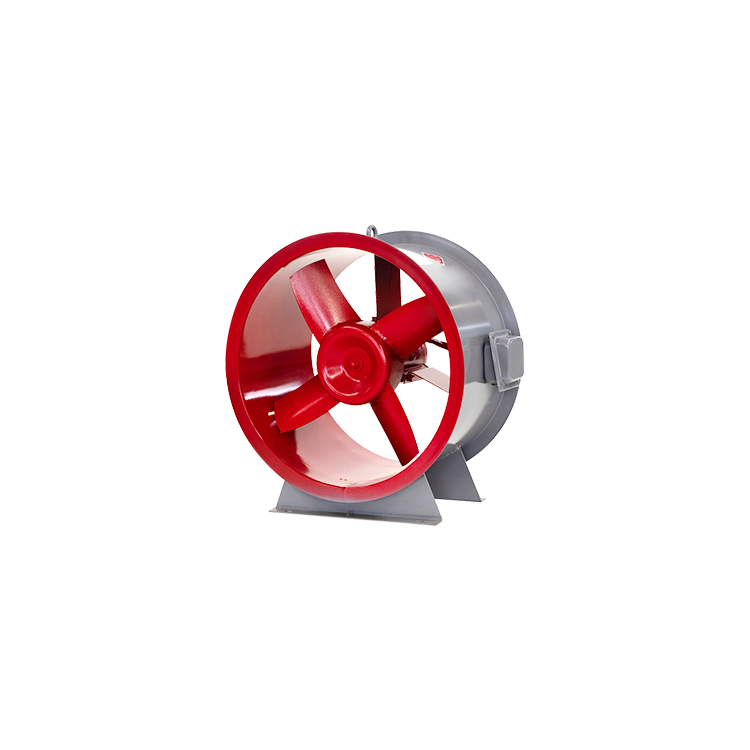
The fire damper can be interlocked with the ventilation fan and smoke exhaust fan.
2. The operating mechanism side of the valve should have a clear space of not less than 200mm for maintenance.
Before installing the valve, it is essential to check if the operating mechanism is intact and if the movement is smooth and effective.
4. Fire dampers should be installed in the duct sections adjacent to walls or floors. The distance between the fire dampers on either side of the fire partition wall and the wall surface should not exceed 200mm. The pipes and their insulation materials within a 2.0m range on both sides of the fire dampers should be made of non-combustible materials.
5. Fire dampers should be supported by independent hangers or brackets to prevent pipe deformation during a fire, which may affect their performance.
6. The fuse link of the fire damper should be installed on the side facing higher fire hazard.
Selection Key Points
1. The main control parameters for selecting fire dampers include specifications.
2. Fire dampers are suitable for ventilation and air conditioning systems. In addition to fire dampers used in kitchen exhaust systems of public buildings, which have an operating temperature of 150℃, the operating temperature of fire dampers for general ventilation and air conditioning systems is typically 70℃.
3. Fire dampers are suitable for pipes in ventilation, air conditioning, or exhaust systems; basic functions and application scope.
4. When selecting valves, pay attention to the valve functions, such as whether it's normally open or closed, automatic on/off, manual on/off, manual reset, signal output, and remote control requirements.
5. Is the valve linked with the fan?