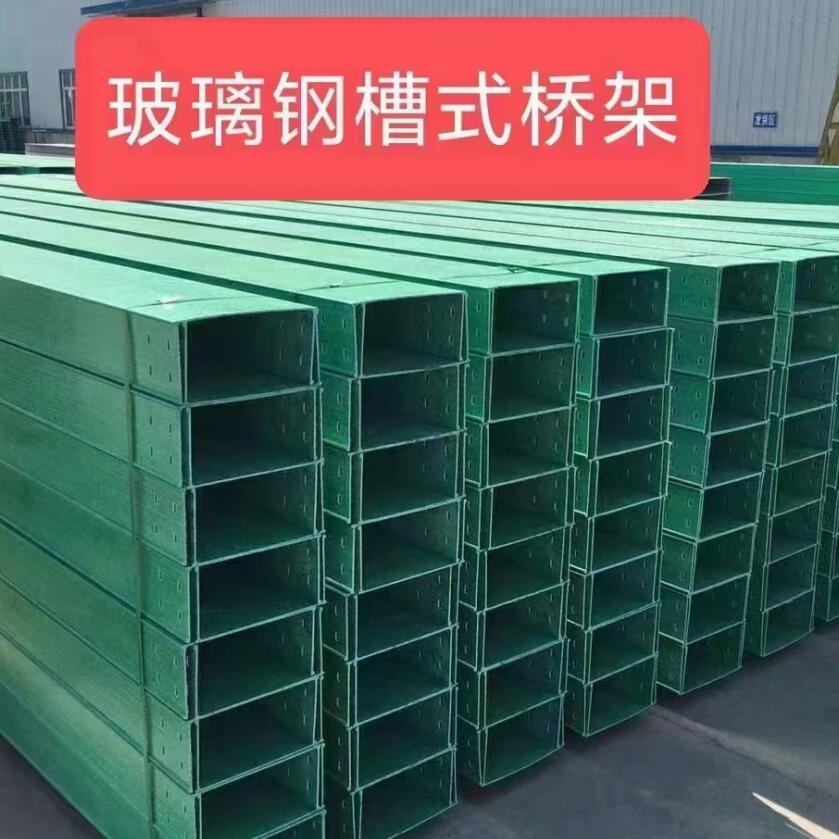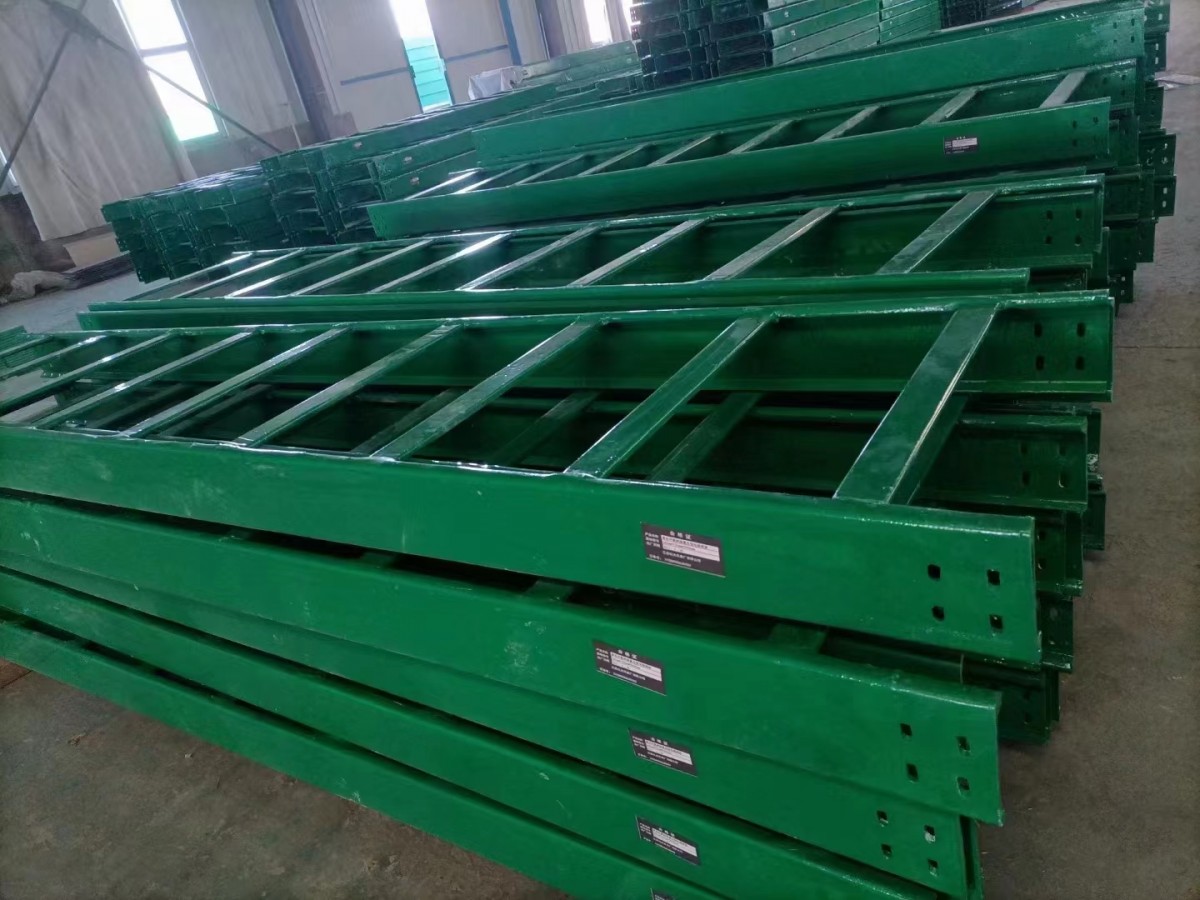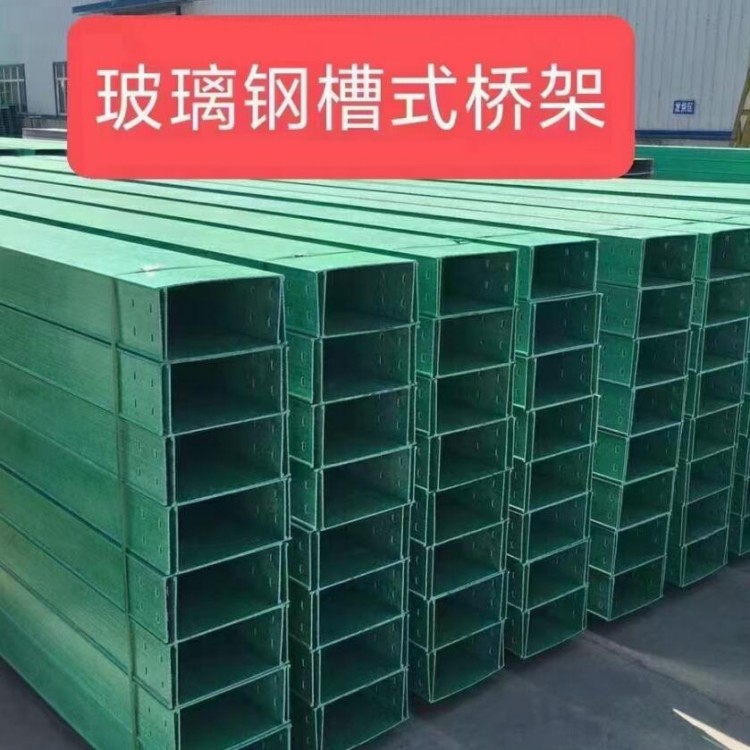

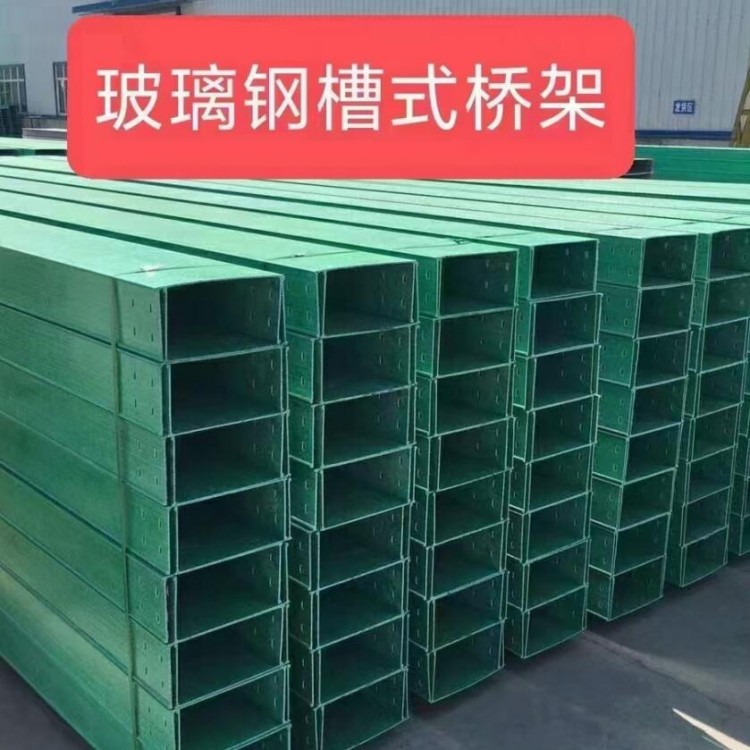
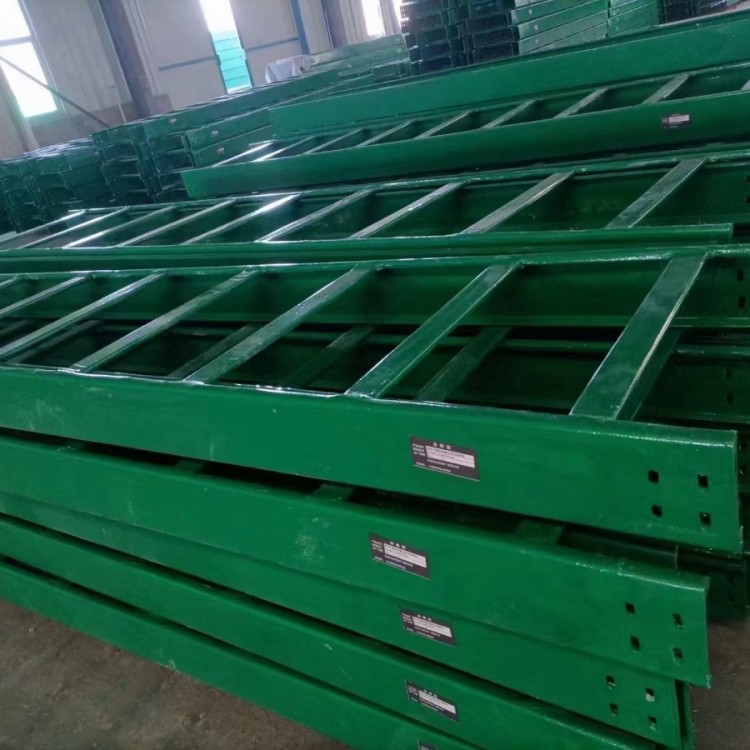
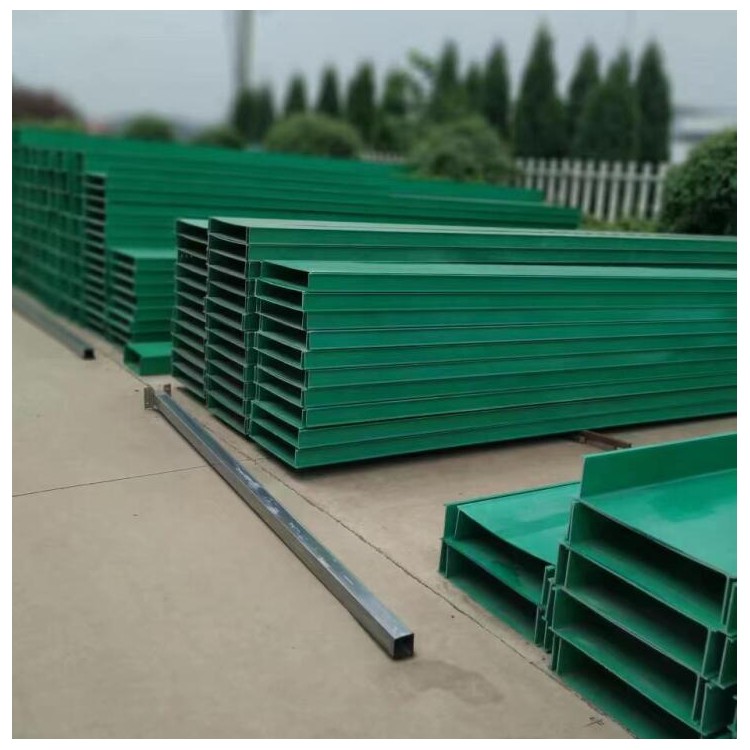









Glass-Fiber Reinforced Plastic (GFRP) Cable Trays Performance Features:
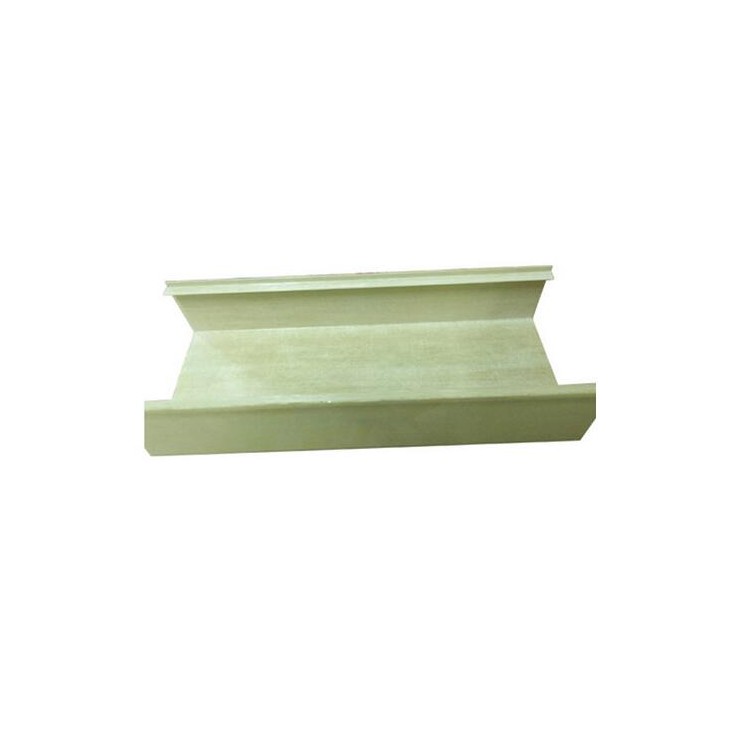
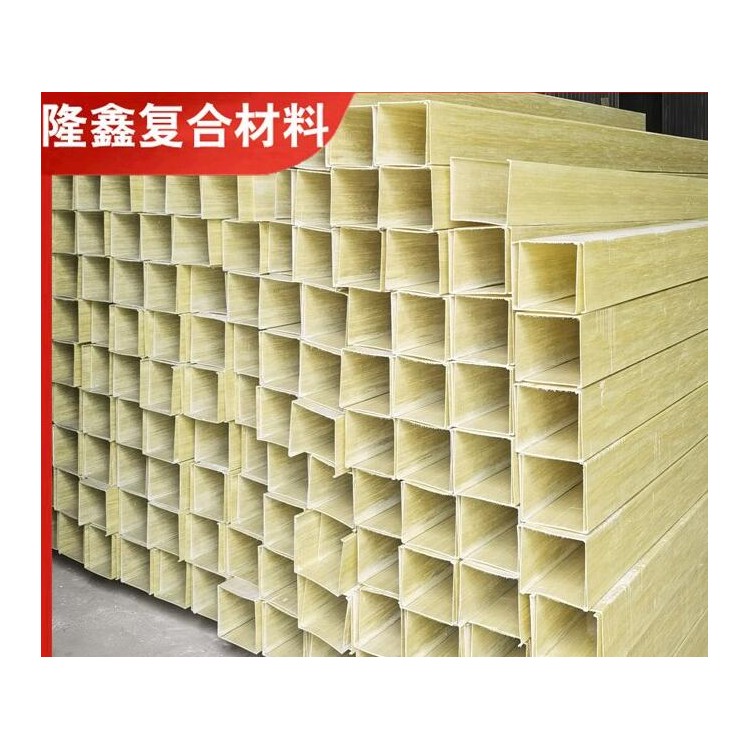
Glass cable tray is a glass fiber profile produced by impregnating continuous glass fiber felt and surface felt with thermosetting resin, then pulled out from a heated metal mold under tension, and cured under high temperature and pressure. It features a smooth, continuous surface, stable dimensions, and high strength. The material exhibits both rigidity and toughness, making it highly valuable for a wide range of applications.
2. The glass fiber cable tray offers reliable insulation performance, with a surface resistivity greater than ohms; the product does not require grounding.
3. Glass fiber reinforced cable trays feature a high oxygen index, meeting all the requirements for flame-retardant materials. The combustion performance reaches GB/B1 (flame-retardant), with low heat release, no delayed combustion, and automatically extinguishes after the flame is out.
4. Glass fiber reinforced cable trays can be used in various climates and installed in different chemical corrosive environments, featuring a long service life.
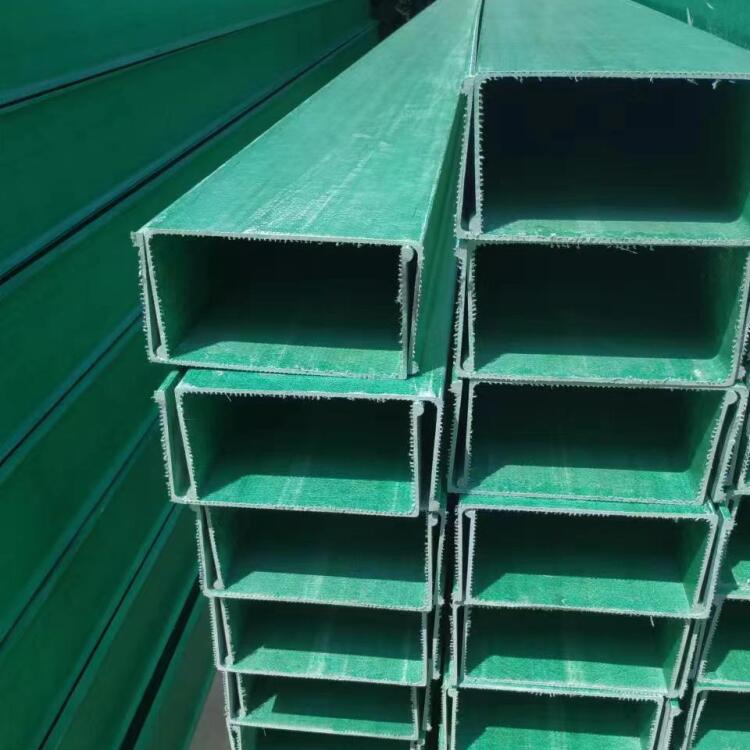
5. Glass fiber reinforced cable trays are characterized by their light weight and high load-bearing capacity, meeting the requirements for strength, rigidity, and stability. Under the rated uniformly distributed load, the relative deflection is less than 1.
6. The glass fiber cable tray thickness complies with national standards, featuring a complete range of models and specifications.
7. The glass fiber cable tray has impact resistance meeting the GB/T 1026-2013 standard, ensuring no deformation or cracks that could affect safe usage after collisions.
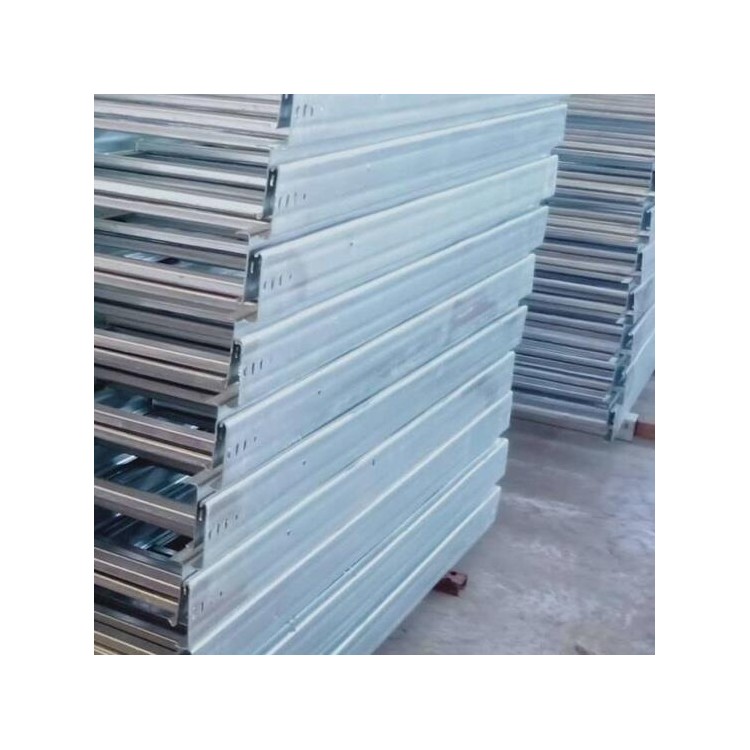
8. Glass fiber reinforced cable trays feature reasonable structure, attractive appearance, and do not require bolted connections. Traditional steel bridges require welding and securing numerous screws for assembly. During the welding process, defects such as uneven surfaces, missed welds, cracks, slag, burn-through, and arc pits may also occur.