









Apple seedlings planting density, late-maturing apple variety
The 2019 Ruiyang Ruixue Fruit Fair will be held at the Bai Shui Experimental Station. The new variety Ruixue's sister makes its dazzling debut, featuring beautiful tall fruit shape, crisp texture, sweet sugar content, rich fruit aroma, and has the potential to become a rare gem among red varieties! It is a late-maturing red apple new variety bred by Professor Zhao Zhengyang's team from the Northwest A&F University over 20 years. Hybrids in 2002 were initially approved in 2019, with its parents being Qinfu No.1 and Pink Lady. It ripens around late October each year.
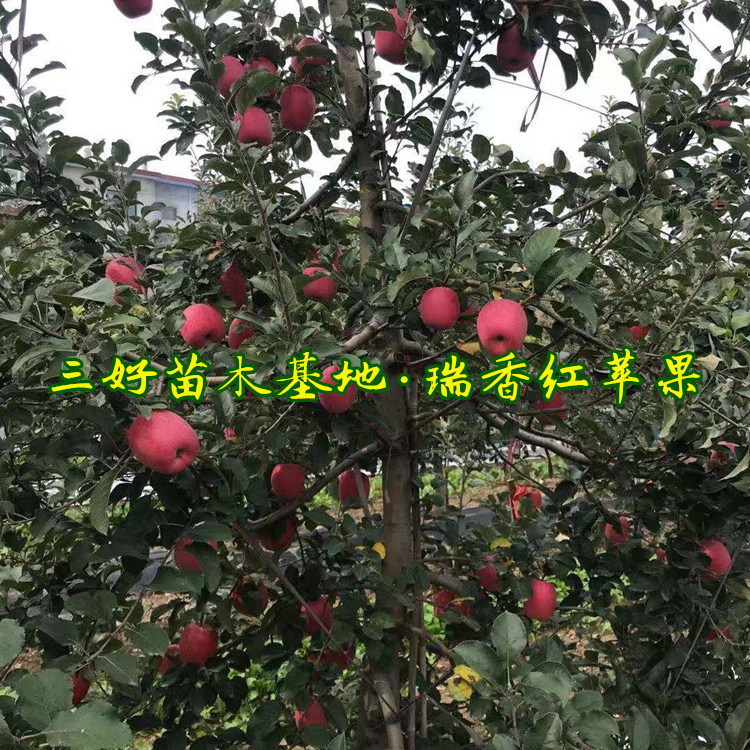
Apples - Late ripening, full red, non-bagging required, crisp and sweet with rich fruit fragrance, tall and straight shape, good appearance; ideal for secondary Fuji apple growing areas!
Apples weigh around 250 grams each, with uniform fruit size and a neat arrangement. The fruit shape index is high, the maturity period is consistent, and the fruiting capacity is excellent.
The apple flesh is tight, fine, and has a strong fragrance. It boasts a high sugar content of over 17%, offering a crisp and sweet taste. The sweetness increases after some time, which is commonly referred to as having a post-ripening period, and it won't become moldy.
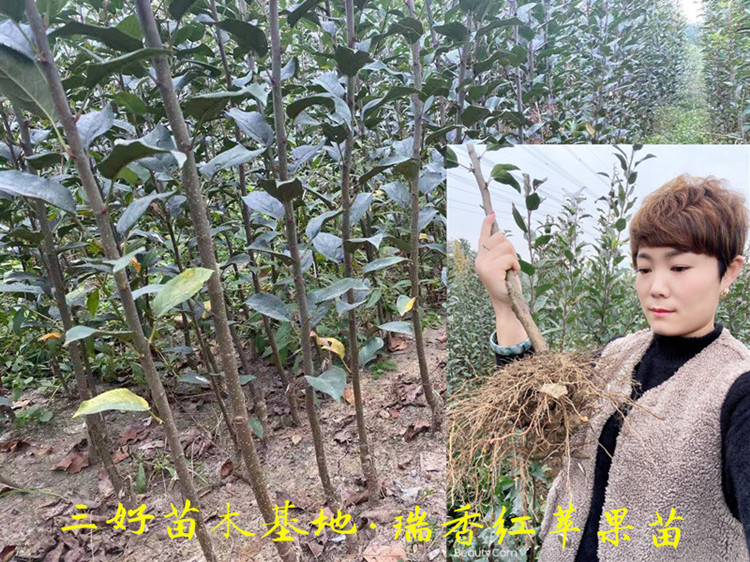
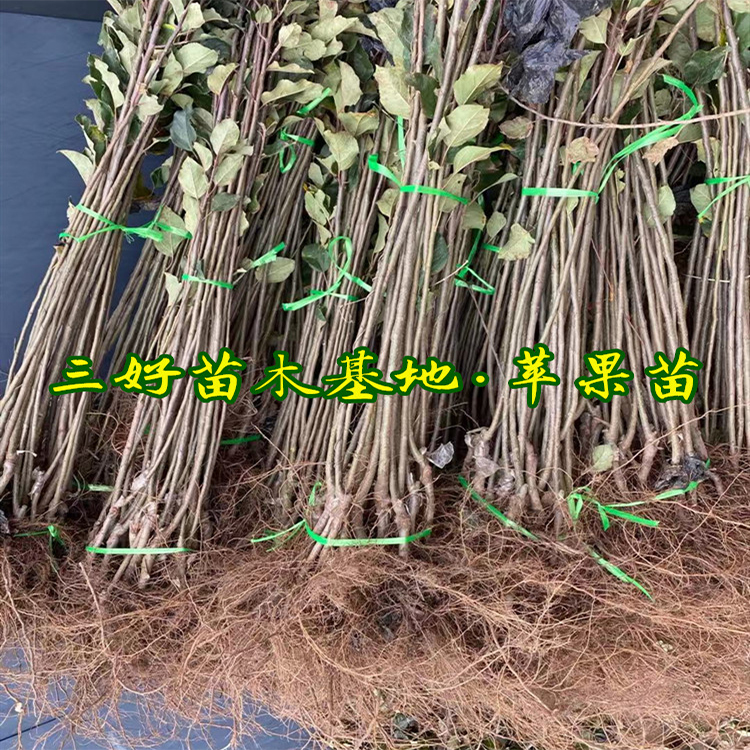
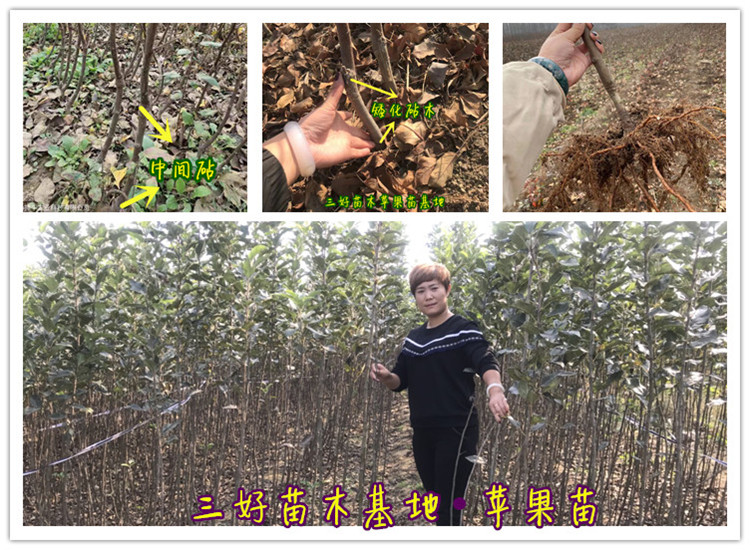
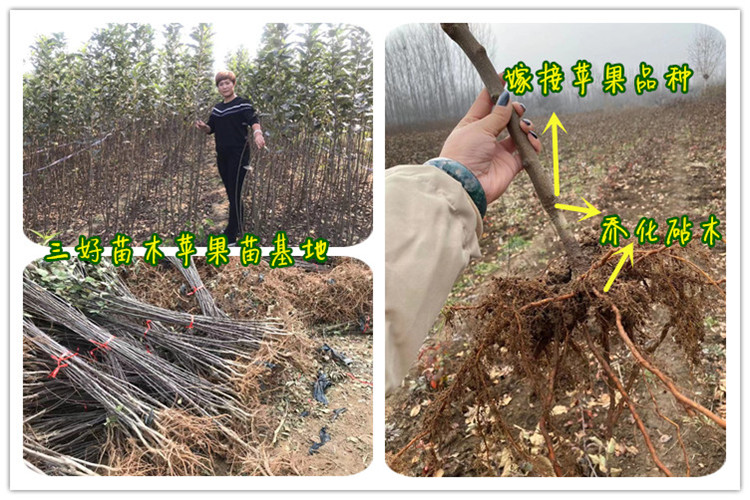
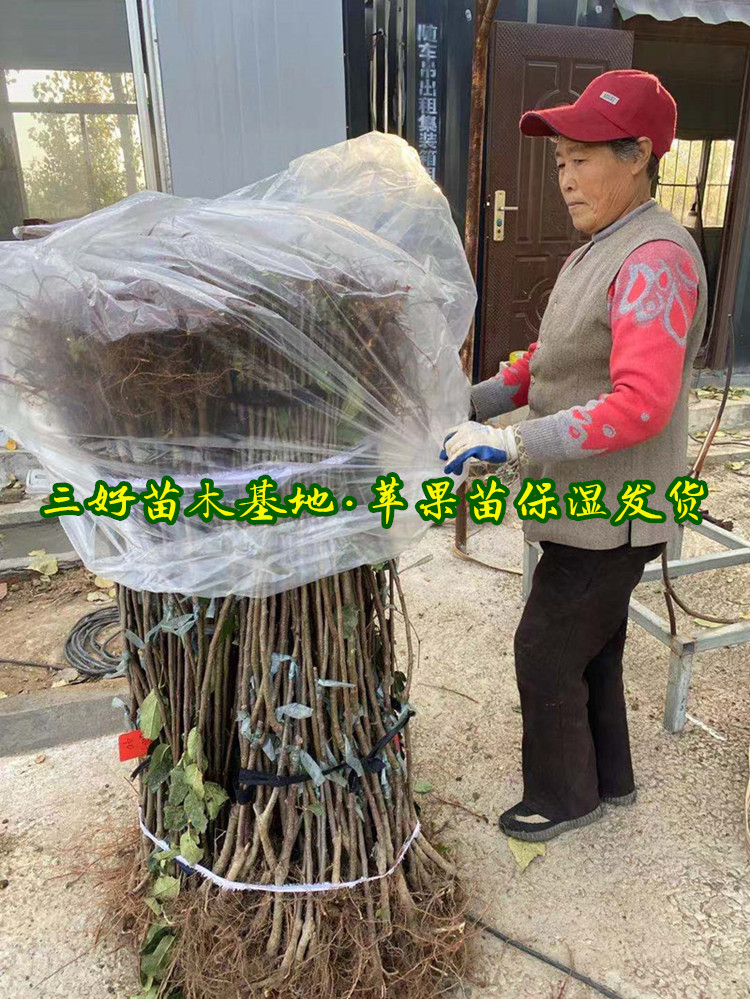
Apple seedlings can be planted with either dwarf or semi-dwarf varieties depending on local conditions. Planting typically occurs after the frost and when the seedlings enter their dormancy period, and before the buds start to swell in March. Apples are medium-sized fruits, capable of growing larger with good water and fertilizer conditions. The fruits have a bright red appearance, vibrant color, smooth surface, high sugar content, rich aroma, excellent quality, and high commercial value. They are easy to manage, with good fruit firmness, and are a rare late-maturing variety.
Cultivation Techniques: 1. Planting density: Dwarf seedlings with 4-meter row spacing and 1.5-meter plant spacing, tall seedlings with 4-meter row spacing and 2-meter column spacing. 2. Emphasize the use of organic fertilizers, applying 5-10 cubic meters per mu. 3. Properly prune to promote apple flowering and early fruiting. 4. Implement green control technologies to meet green production standards for fruit products. 5. Pay attention to bag removal timing; in Fuping area, remove bags in mid-September and observe conditions for decision. 6. Harvesting time is late October, with early storage being appropriate.