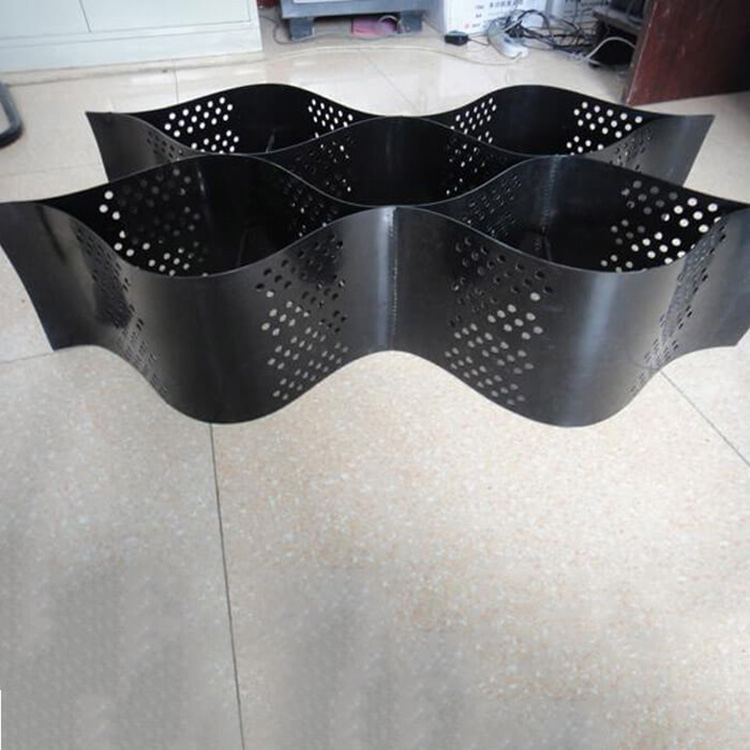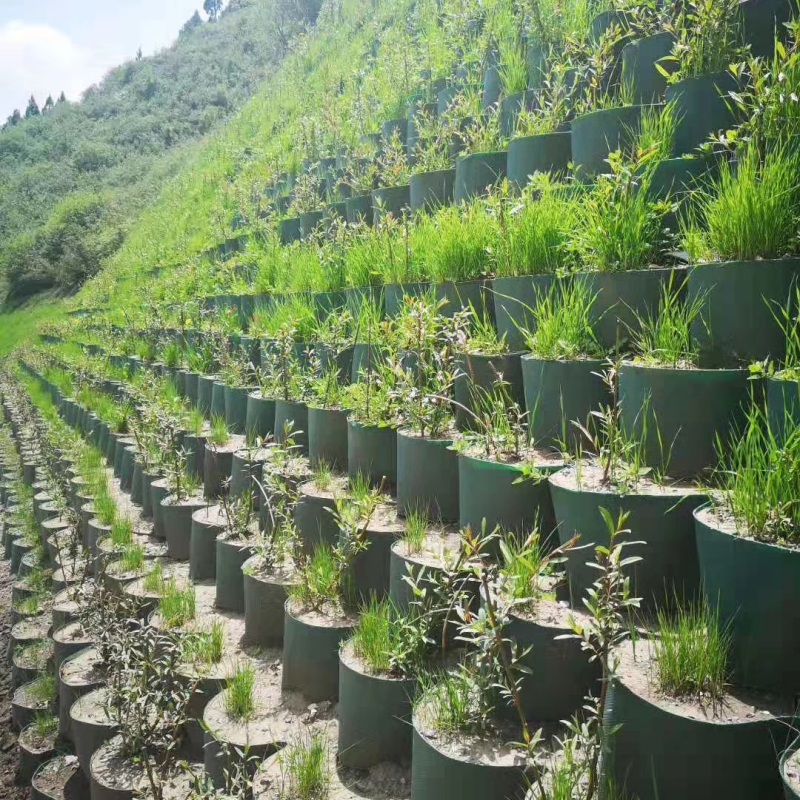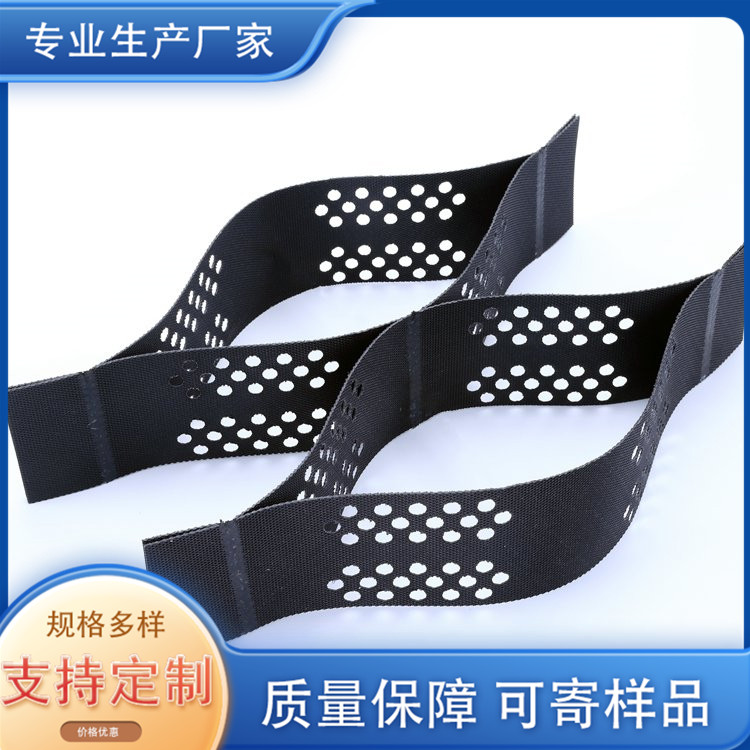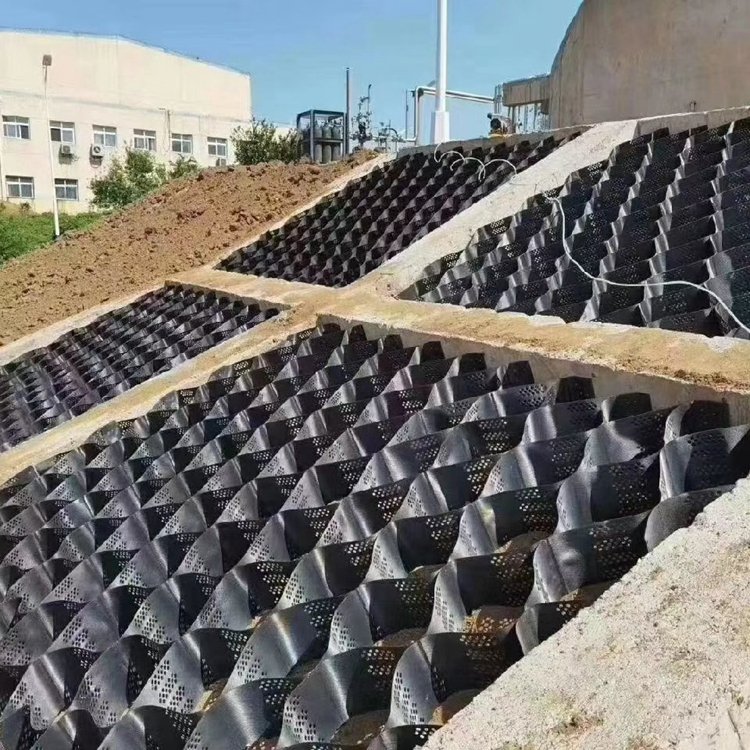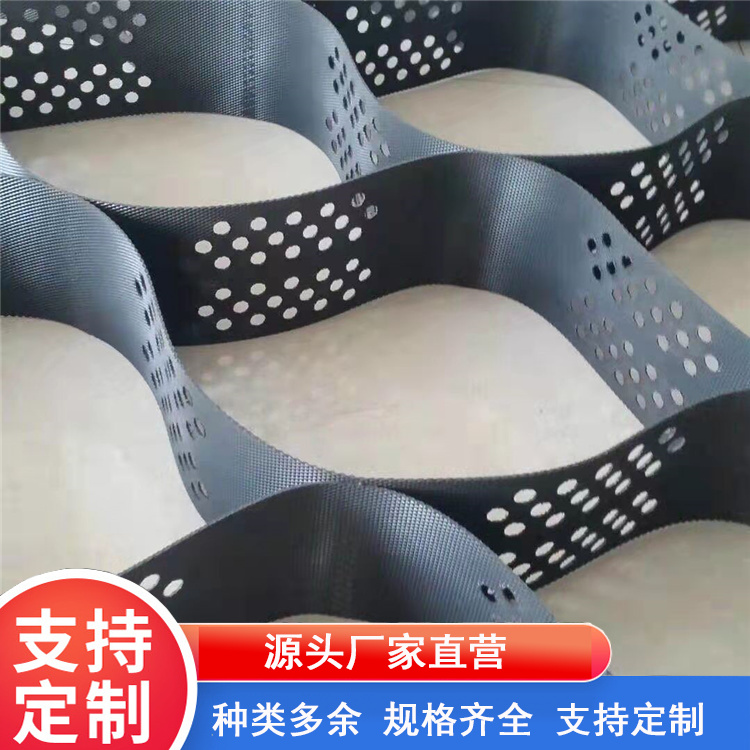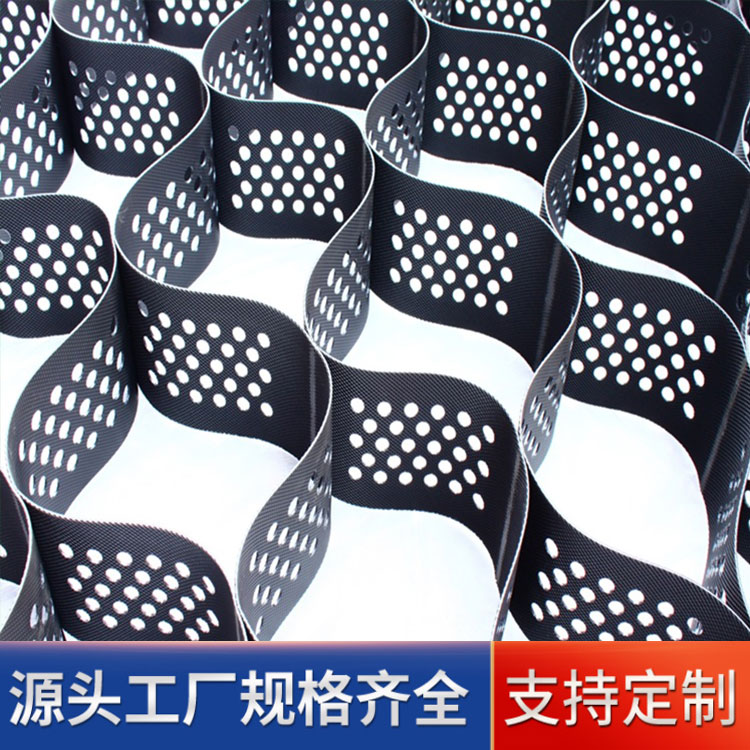


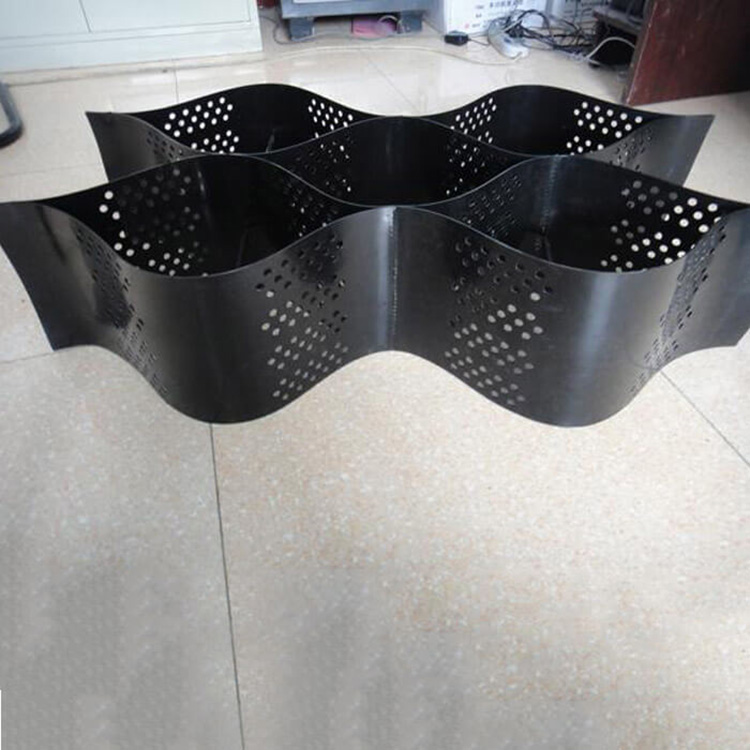







The reason why Baoding Slope Protection Geocell manufacturers' specifications of geocells have gained attention in the engineering community lies in their fundamental principle. International literature describes its principle as "a honeycomb-like three-dimensional restraint system that can significantly enhance the performance of ordinary filling materials in load-bearing and pest control applications over a wide range." Its key principle is the three-dimensional restraint. As everyone knows, when cars drive across the desert, they leave two deep tracks. The compressed area sinks deeply, with the sides of the rut rising significantly. If following vehicles continue along the rut, the sunken area will further subside and the raised area will increase in height until the raised area touches the vehicle's undercarriage. The reasons include rain infiltration, material loss, and ground settlement. Undeniably, the lateral displacement of materials towards the sides of the subgrade under the long-term load and vibration of vehicle wheels is another crucial factor. Taking our province's various levels of highways as an example, it is clearly felt on the main lanes that the road surface has been compressed into an "S"-shaped groove. This is also true for some expressways, where the vibration experienced while driving on the lanes is much more pronounced than when on the passing lanes, especially at the junction of roads and bridges (commonly known as "bridge bounce"). This type of rutted subgrade settlement is a typical example of lateral sliding of subgrade materials. The sunken rut has buried most of the wheel.
 Unable to proceed further. The reason for this is that when external loads act on the ground surface, according to Prandtl and Taylor theories: under the action of concentrated loads, the active zone 1 compresses and sinks, transferring forces laterally to the transition zone 2, which then passes them on to the passive zone 3. The passive zone undergoes unrestricted deformation and uplifts. It is flexible in expansion and contraction, has a small transport volume, easy to connect, and quick to construct. That is to say, once the load is applied to the subgrade, an active area shaped like a keel forms beneath it. It is then compressed through the transition zone, causing the passive area to uplift. In other words, the ground's bearing capacity is determined by the shearing forces along the slip line and the forces acting on the active, transition, and passive zones.
 Not only can the true process of the above principle be distinctly felt on sandy ground, but such examples can also be found on soft soil roads, although the rate of their formation is slower than the changes on sand. Even with better subgrade materials, lateral movement is still unavoidable. Generally, the subgrade of expressways is several meters above ground, making it difficult for water to seep in and cause heaving, but long-term settlement still occurs.
WeChat Official Account

Scan to follow Official Account