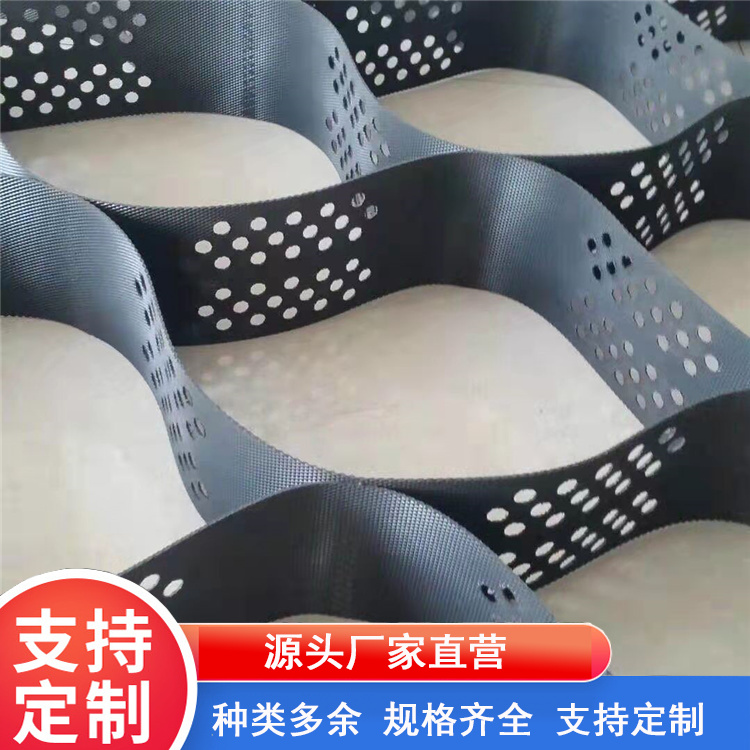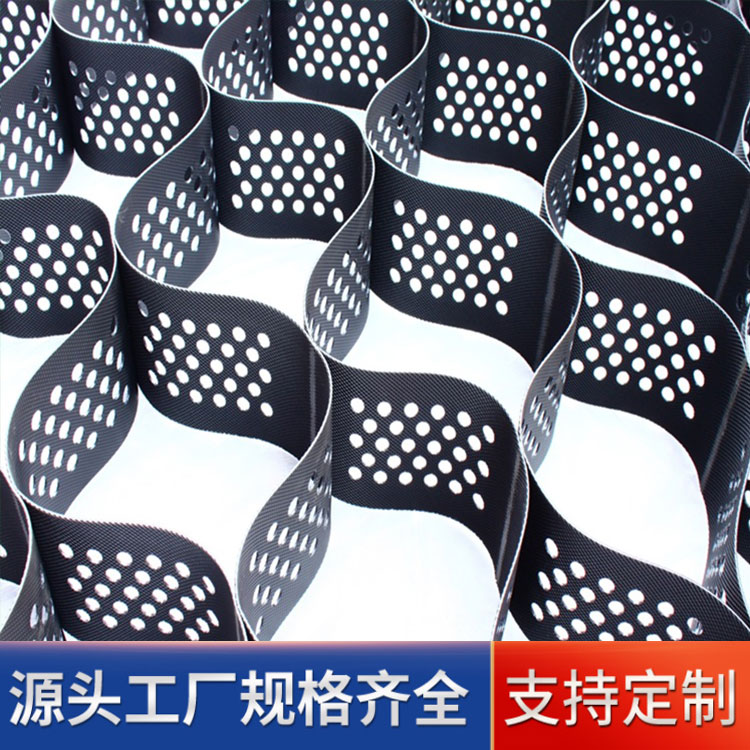


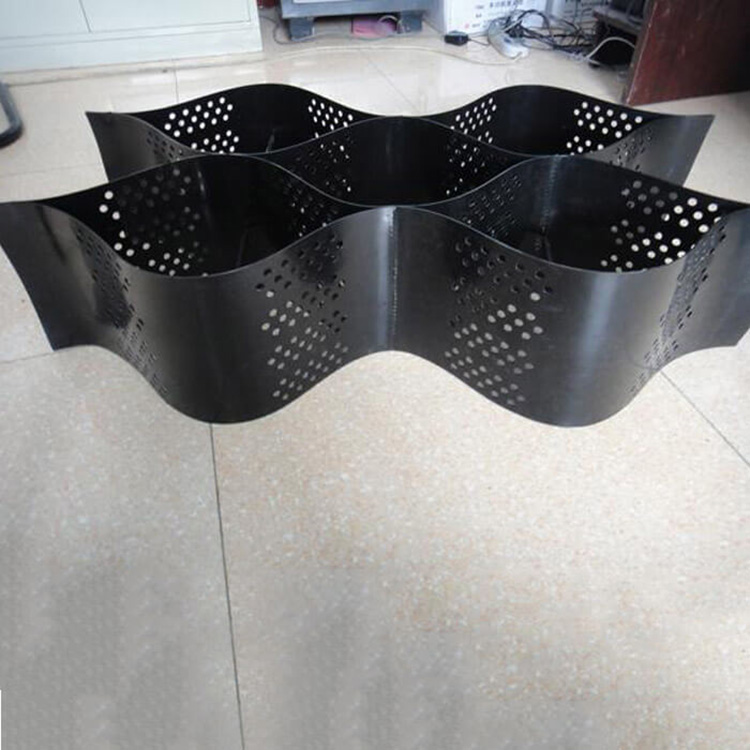







Cangzhou Slope Protection Geocell Manufacturer's Quotation - Slope Protection Geocell, High-Strength Geocell, Geocell Price, Geocell Manufacturer
For example, across various levels of highways in our province, it is clearly noticeable that the main traffic lanes have been compressed to form an "S"-shaped groove. This is no exception for some expressways, where the jarring sensation of driving on the traffic lane is distinctly more pronounced than that on the overtaking lane. It is particularly evident in the bridge and road junction sections, commonly known as "bridge jump." They are flexible, with a small transport volume, easy to connect, and fast to construct. That is to say, once the load is applied to the subgrade, an active area shaped like a groove forms beneath it. It then undergoes compression through a transition area, causing the passive area to bulge. In other words, the shear force along the sliding line and the forces exerted on the active, transition, and passive areas determine the bearing capacity of the foundation. Not only can the actual process of the above principle be felt distinctly on sandy ground,
 You'll also find this kind of prototype on soft subgrade roads, but the rate of formation is slower than on sand. Even with better subgrade materials, lateral movement is still unavoidable. Generally, the subgrade of expressways is several meters above ground, making water absorption and heaving less likely, but long-term settlement persists. The reasons include rainwater infiltration, material loss, and ground subsidence. Undeniably, the lateral displacement of materials towards the subgrade cross-section under the long-term load and vibration of vehicle wheels is another crucial factor. This kind of trough-shaped subgrade settlement is a typical example of lateral sliding of subgrade materials. The conventional methods for dealing with subgrade in engineering need no elaboration.
 The purpose is to enhance the shear and frictional strength of foundation materials, reducing or delaying their ability to move under the pressure or vibration of loads. Therefore, there are numerous stringent requirements for materials in engineering. If the required materials cannot be sourced locally, these materials must be purchased externally, and the cost of materials and transportation constitutes a significant portion of the overall project cost. However, the use of geogrids allows for sourcing materials on-site or nearby, even utilizing materials that are normally unsuitable, thereby significantly reducing material procurement and transportation costs.