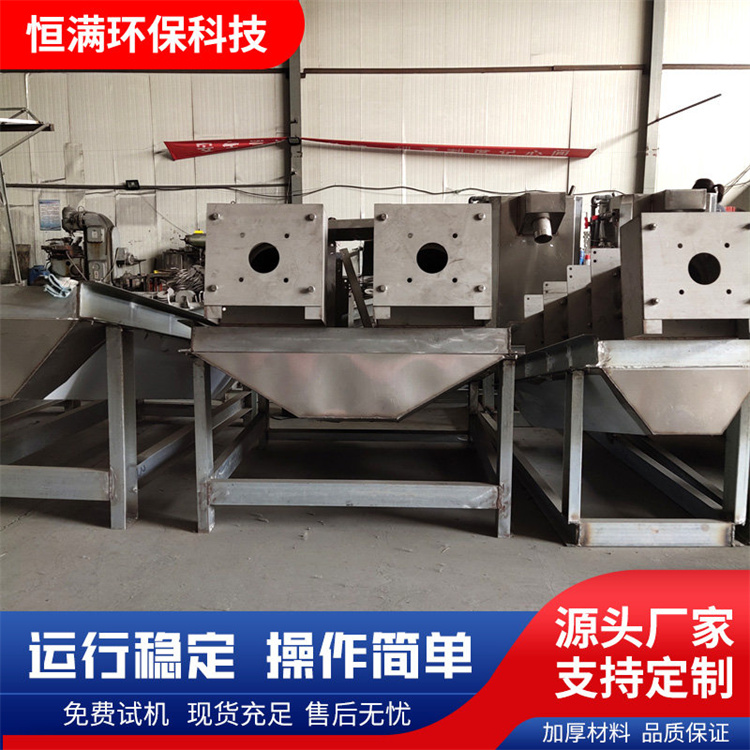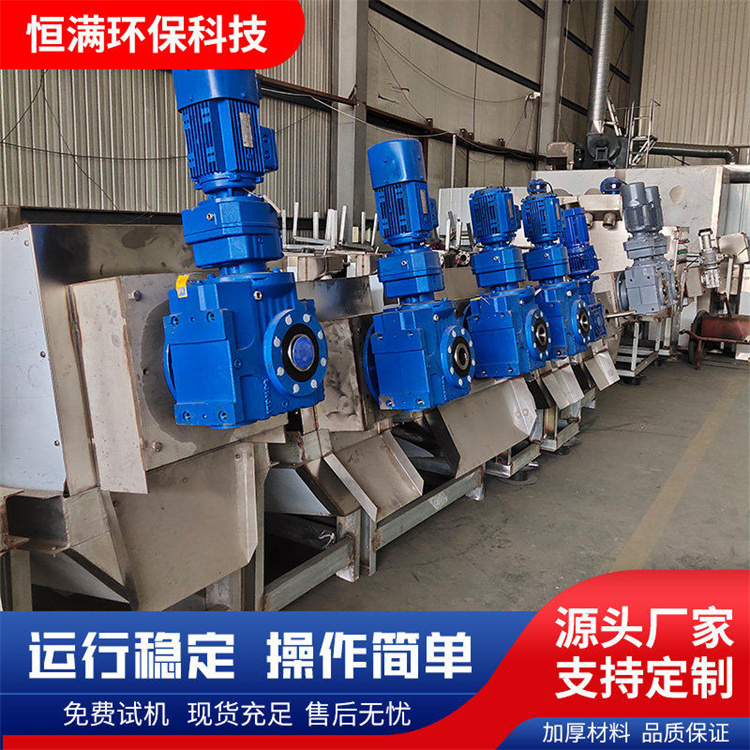


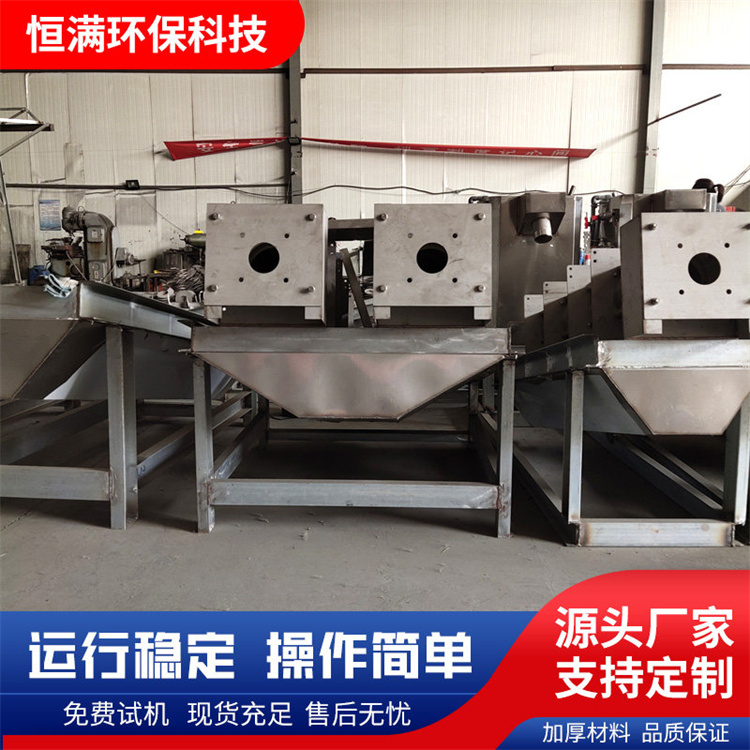
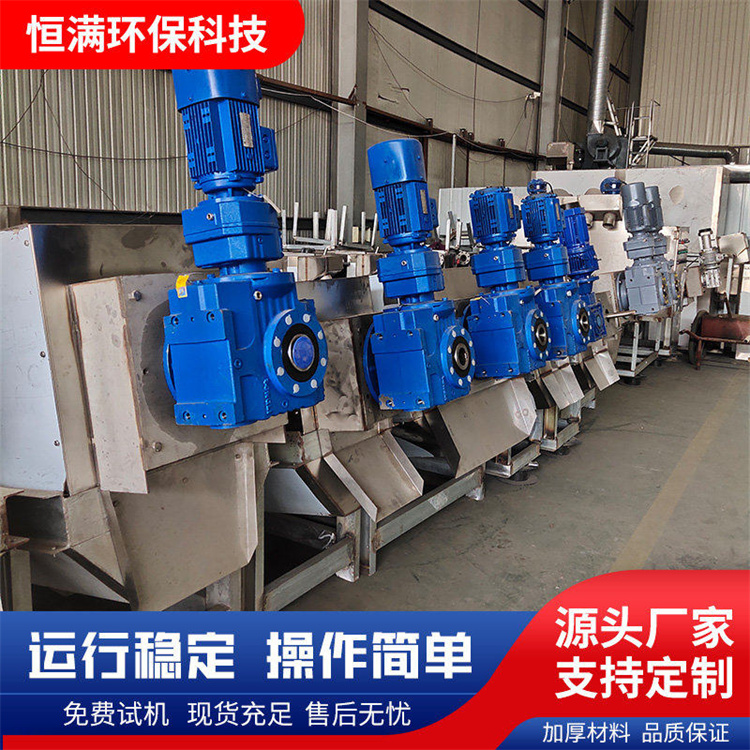











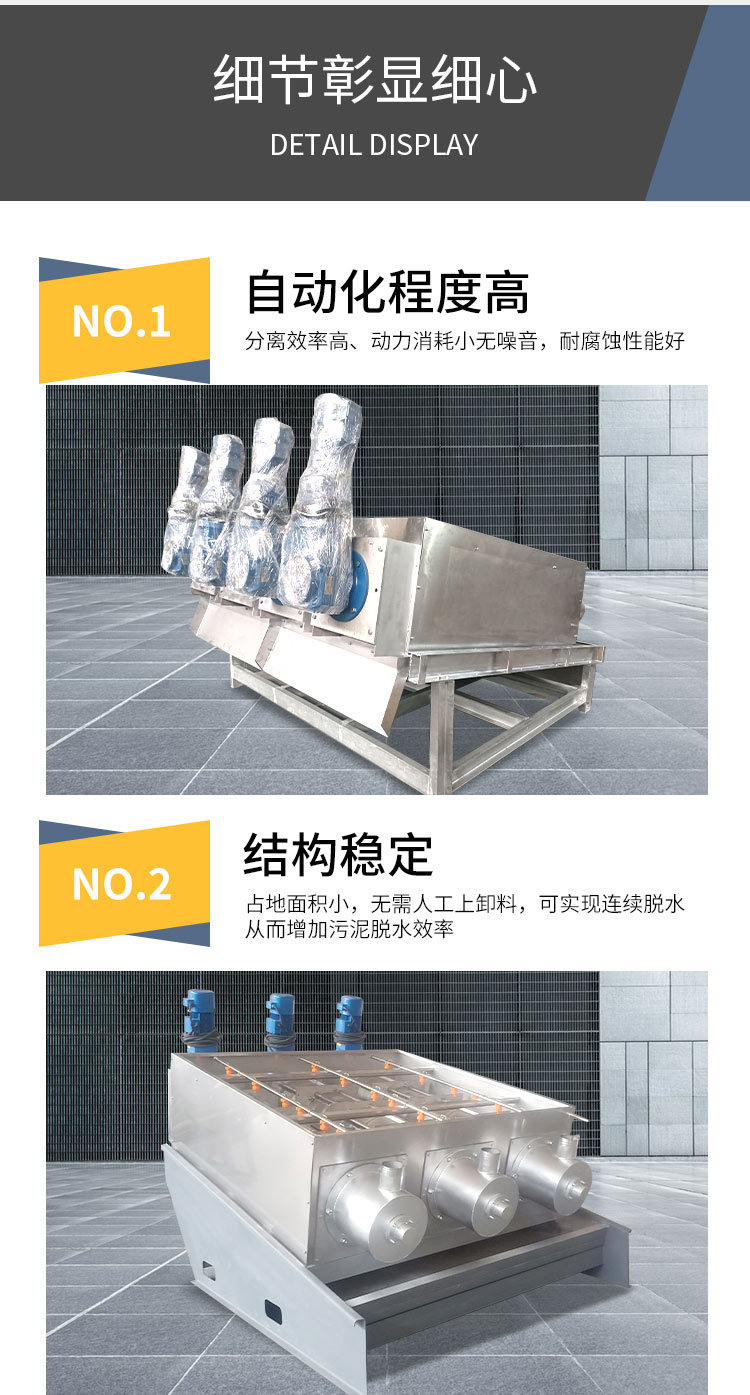



Wastewater treatment equipment has the advantages of small land occupation, simple operation and maintenance, wide application range, and the ability to self-clean without clogging and run continuously with low noise, compared to plate and frame sludge dewatering machines, centrifugal sludge dewatering machines, and belt sludge dewatering machines. The dewatering effect (sludge cake moisture content) has become a concern for many. In fact, the dewatering effect of the screw press sludge dewatering machine is excellent, with a sludge cake moisture content between 75-80%. Some customers have reported that the sludge cake moisture content is high or fluctuates, so let's discuss the reasons for this issue.
The moisture content of the sludge cake from a screw press dewatering machine is mainly influenced by the following factors:
A. Spiral shaft variable frequency inverter
a. When the helical shaft variable-frequency inverter's frequency is low, the corresponding helical shaft speed is slow. This results in a longer concentration and dewatering time for sludge within the helical screw main body, leading to a lower moisture content in the resulting sludge cake. Consequently, the processing volume in the same period of time is reduced.
b. As the frequency of the helical shaft variable-frequency converter increases, the corresponding rotational speed of the helical shaft also rises. This results in a shorter concentration and dewatering time for sludge within the screw-concentration main body, leading to a higher moisture content in the resulting sludge cake. Consequently, the corresponding processing volume within the same time frame is also improved.
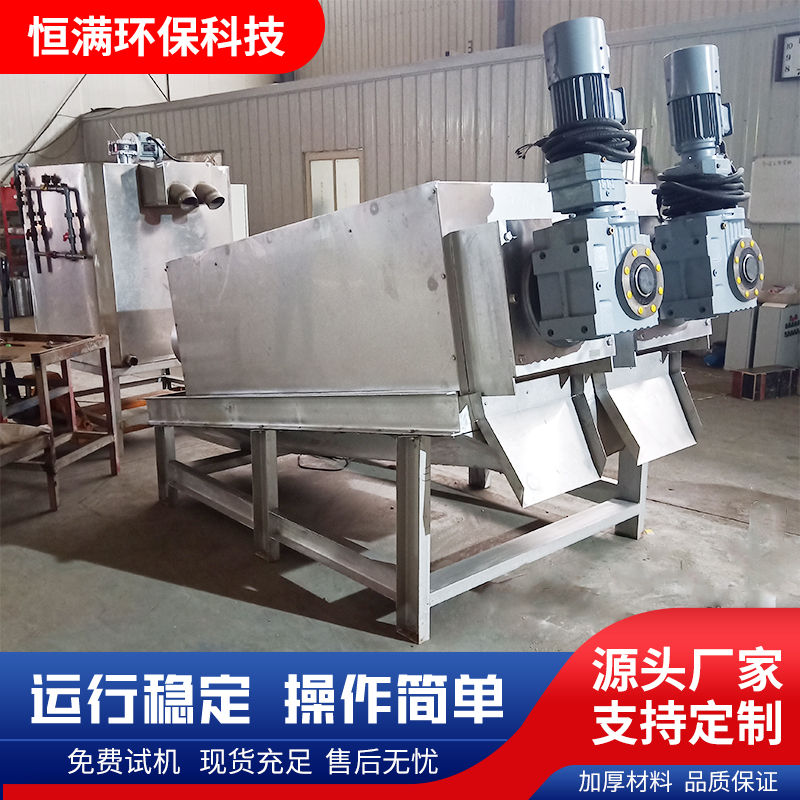
Common Faults and Solutions of Screw Compactor
During the debugging and operation of the screw press, some malfunctions are inevitable. For beginners, it's crucial to identify the cause of the malfunctions and make timely adjustments to prevent damage to the screw press and enhance its operational efficiency. Below, we analyze common troubleshooting for the screw press.
Fault 1: Incorrect direction of the main drive motor. Promptly turn off the power switch inside the auxiliary electrical control cabinet. Swap the red and black wires of the motor power corresponding to the reverse, and confirm the correct direction after reconnecting the power.
Common Issue 2: Sludge Blockage. For minor blockages, simply reverse the direction to dislodge the sludge inside. For severe blockages, disassembly and repair are required, including cleaning out debris or other maintenance checks.
Common Issue 3: Main shaft not rotating. May be due to blockage, handle as per Common Issue 2. Could also be an electric motor problem, arrange for personnel to inspect or replace the motor.
Common Issue 4: Abnormal Sounds. Contact the manufacturer for resolution.
Common Fault 5: Mud leakage. Common preventive measures include regularly replacing shafts or using shafts coated with high-alloy welding wire, which can repeatedly apply wear-resistant layers at a lower cost.
Common Issue 6: Excessive thin sludge. Check the flocculation condition, the domestic wastewater treatment equipment, and ensure the feed concentration is not too high and the back pressure plate is properly installed.
Here are several common issues, but there may often be many small and large uncertainties during actual operation. We should use the screw press and food waste water treatment equipment properly. If a fault occurs during the operation of the screw press, it is generally beyond the capability of the operators to perform maintenance, and a service call for a maintenance team is required. We are not to disassemble the screw press ourselves. We should promptly report the operation to the supervisor, who should then arrange for maintenance. If the after-sales personnel cannot arrive immediately, we should have an experienced senior staff member dismantle and repair it according to the instructions. During the repair process, others should not arbitrarily fold the machine's components to avoid losing parts.

Principle of Sewage Treatment Equipment
Wastewater treatment equipment utilizes the screw extrusion principle, employing strong compression forces generated by variations in screw diameter and pitch. This includes aquaculture wastewater treatment equipment, as well as the tiny gap between the moving and fixed rings. It is a novel solid-liquid separation device that achieves dewatering of sludge through compression.
The screw press sludge dewatering machine utilizes a multi-layered spiral pressing filtration method, featuring self-cleaning filter slots to prevent clogging, and offers water and energy-saving benefits. It has broken new ground in directly dewatering low-concentration sludge (2000mg/L~) and can operate continuously for 24 hours unattended. Additionally, it significantly reduces costs for design, construction, operation, and maintenance management.
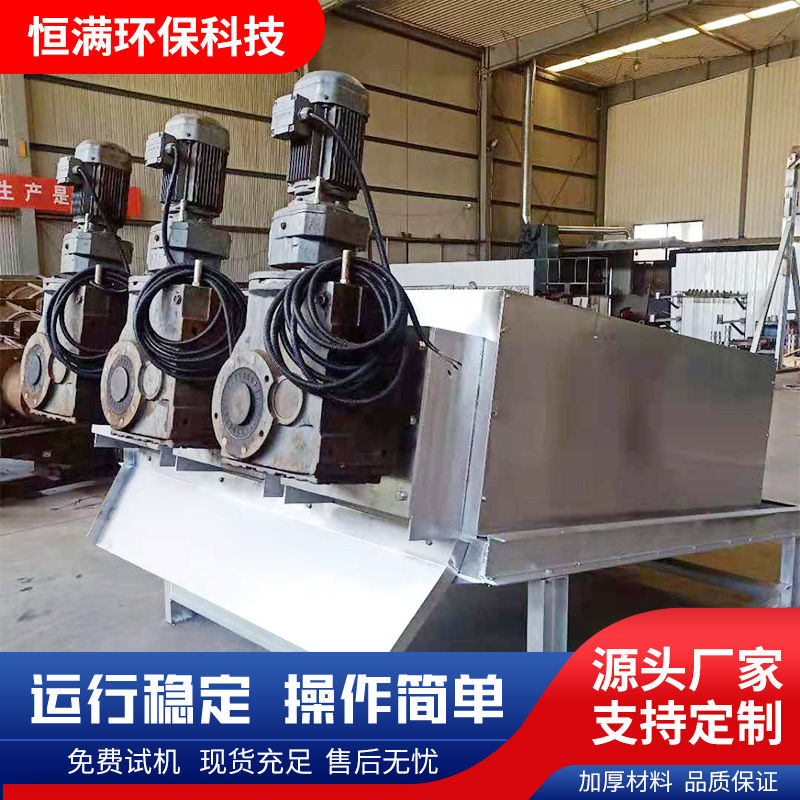
Hengman Environmental Protection (Image) - Poultry Waste Treatment Equipment - Sichuan Waste Water Treatment Equipment, provided by Dezhou Hengman Environmental Protection Technology Co., Ltd. Dezhou Hengman Environmental Protection Technology Co., Ltd. boasts excellent service and products, consistently earning the approval and trust of both new and old customers, as well as industry professionals. Our company is a member; click the icon on the page to directly communicate with our customer service staff. We wish for a pleasant collaboration in the future!