










Product Features: Utilizes solar green energy, in compliance with national industrial policies. Integrates photovoltaic technology, powered by solar energy, eliminating the need for electricity and nearly zero operational costs. Ensures long-term stable operation, peak shaving and valley filling through effective grid integration, aligning with national policy guidance and reducing operational costs. Features recirculation and aeration with denitrification and phosphorus removal capabilities, resulting in high-quality effluent. Employed A2/O process. Eligible for inclusion in the national energy conservation and emission reduction plan. Incorporates a microcomputer automatic control system and a remote online monitoring system for online communication, remote fault alarms, and troubleshooting, eliminating the need for on-site management, addressing the lack of operation and maintenance personnel in rural areas. The system is noise-free, ozone-free, with a compact structure and small footprint, significantly saving land resources, allowing for greening on the ground.
Product Introduction: The HRYTH integrated wastewater treatment equipment utilizes the world's leading biological treatment technology, integrating the removal of BOD5, COD, and NH3N. It is currently the most effective wastewater treatment equipment. It is widely used in high-end hotels, villa communities, comprehensive wastewater treatment for industrial and residential areas, and the HRYTH series integrated wastewater treatment equipment is an ideal treatment solution with convenient management, suitable for above-ground installation. Technical Principle: Wastewater first enters the ABR anaerobic pool, where anaerobic microorganisms degrade solid, macromolecular, and non-biodegradable organic matter into easily biodegradable small-molecule organic matter, enhancing the wastewater's biodegradability. The effluent from the ABR anaerobic pool is directed to the contact oxidation zone. In the contact oxidation zone, aerobic microorganisms rapidly multiply and efficiently degrade organic pollutants in the wastewater, removing COD and ammonia nitrogen, achieving the required water quality standards. The effluent from the contact oxidation zone flows into multiple quality filters, where suspended solids are retained. The clear liquid at the bottom flows into the clear water zone, which, once filled, discharges automatically. The discharged clear water is treated with disinfectant chemicals for disinfection. After disinfection, the wastewater meets the standards for discharge.

Solar Micro-Power Automatic Wastewater Treatment Equipment Introduction
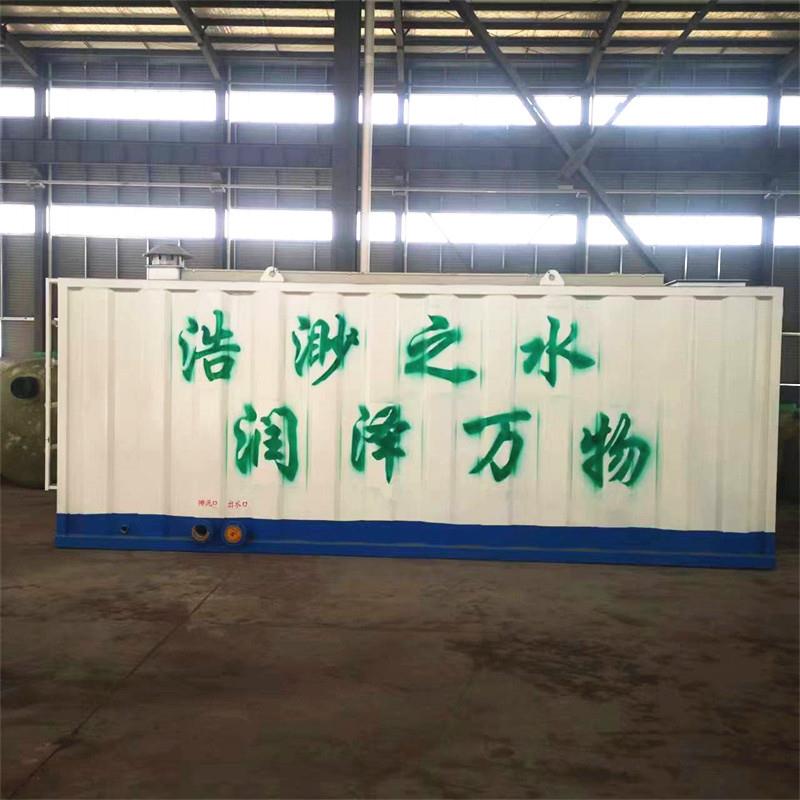
The Haorun Solar Micro-Power Automatic Sewage Treatment Equipment utilizes solar photovoltaic panels to convert solar energy into electrical power for sewage treatment. Once the battery is fully charged, the system can operate normally for up to 7 consecutive days of rain or clouds. After undergoing multiple processes including pipeline collection, anaerobic biological treatment, contact oxidation, sedimentation, and meeting emission standards, the originally turbid sewage becomes crystal clear. The treated wastewater is suitable for reuse in irrigation. The organic sludge at the sedimentation pond can be composted and, after maturation, can be used as organic fertilizer.
This system was developed by our company and is at a very high level domestically. Its main features include a small land footprint, utilizing eco-friendly solar energy as the primary power source, and being managed through micro-computerized remote full-automatic control. Compared to conventional treatment processes, it offers lower operational costs, easier management, and stable effluent water quality.
Product Features
1. Utilizes solar green energy, in compliance with national industrial policies.
2. Utilizing optoelectronic integration technology, powered by solar energy, it requires no electricity and incurs minimal operational costs. Additionally, the system operates stably over the long term, effectively balancing peak and off-peak loads by integrating with the power grid, aligning with national policy guidance while achieving minimal operational costs.
3. Enhanced with recirculation and aeration, featuring denitrification and phosphorus removal capabilities, resulting in excellent effluent water quality.
4. Utilizes A2/O technology. Eligible for inclusion in the national energy conservation and emission reduction plan.
5. The application of microcomputer automatic control system and remote online monitoring system achieves online communication, remote fault alerting, and remote troubleshooting, all without human management. This solves the real problem of a lack of operation and management personnel in rural and township areas, making the entire system feasible.
6. No noise or secondary pollution like ozone.
7. The system features a compact structure and small land footprint, significantly conserving land resources and allowing for greening on the surface.