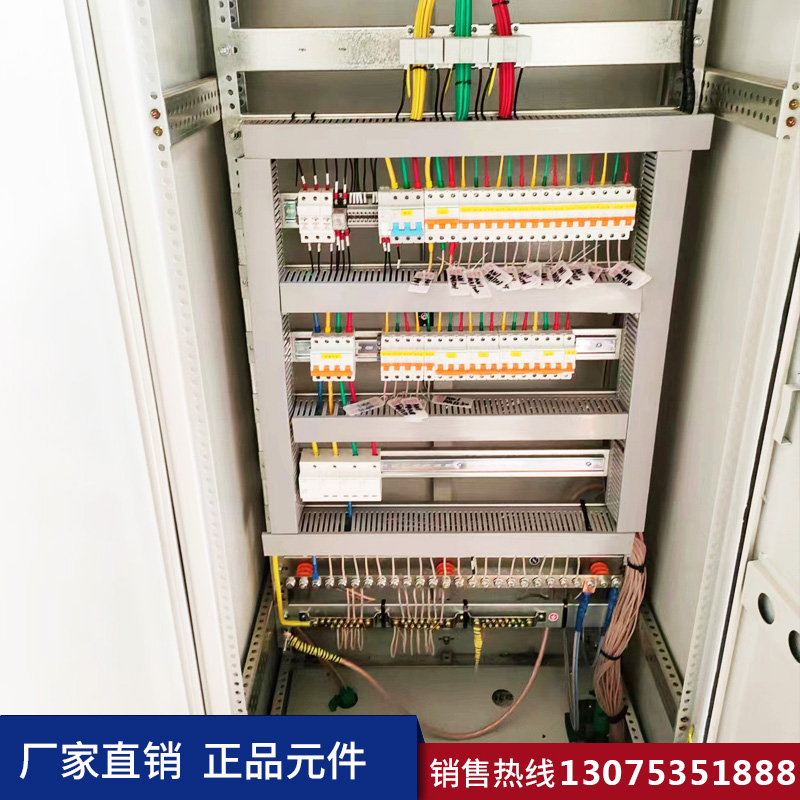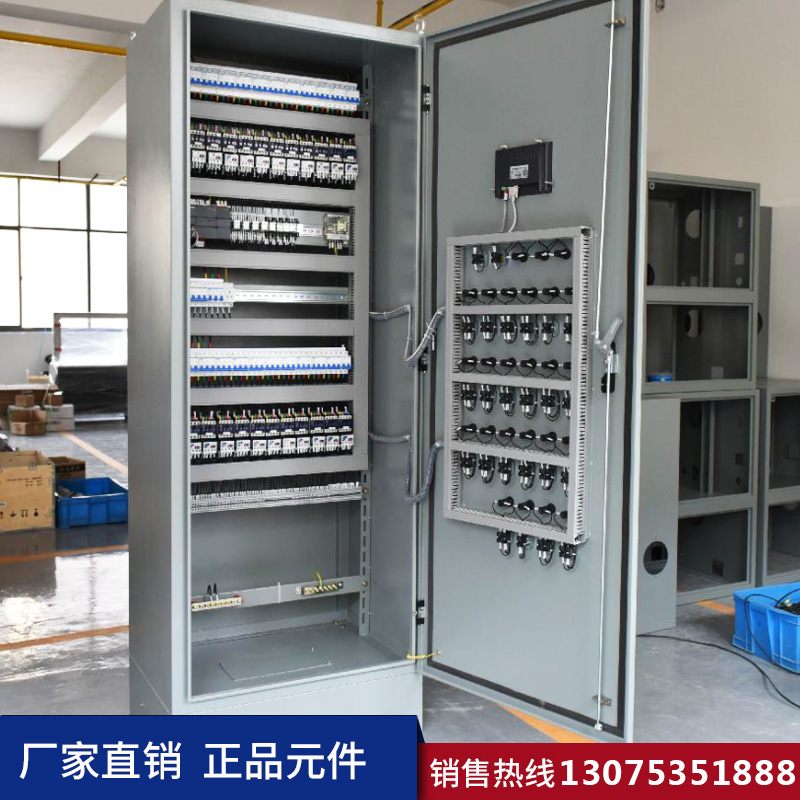

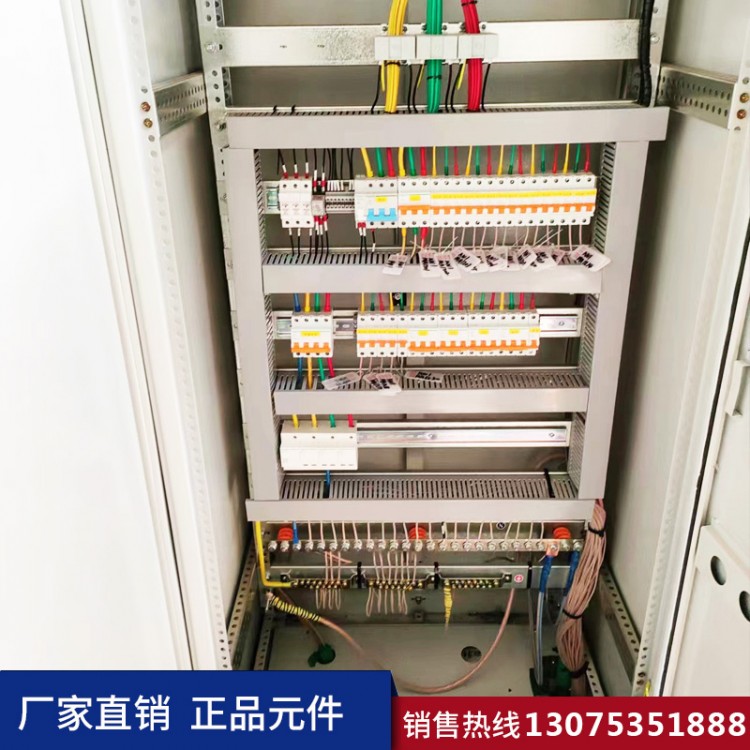

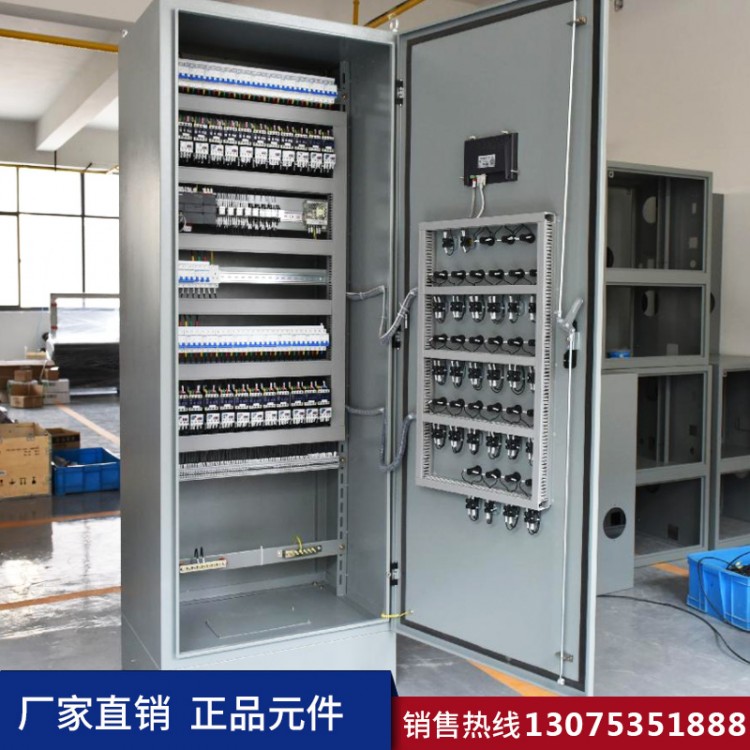
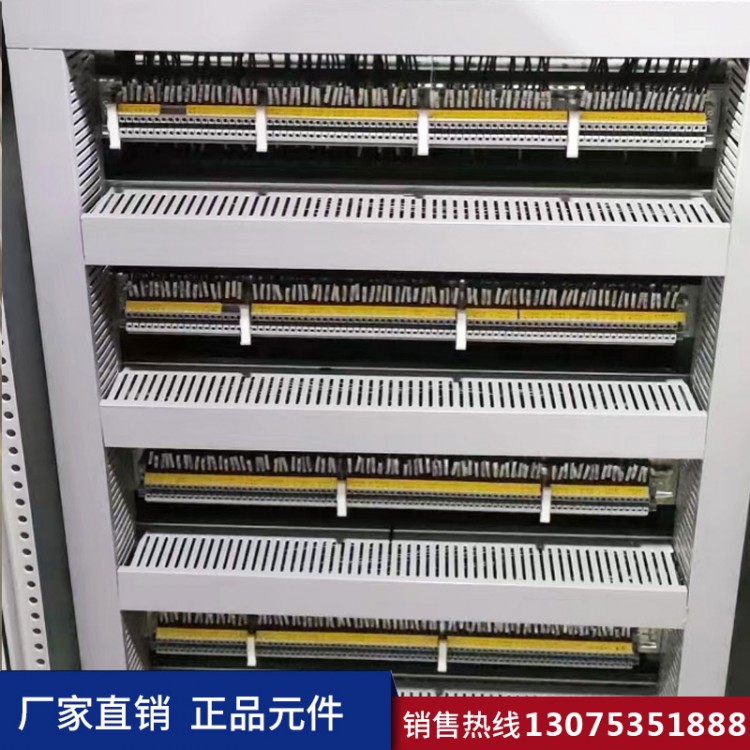







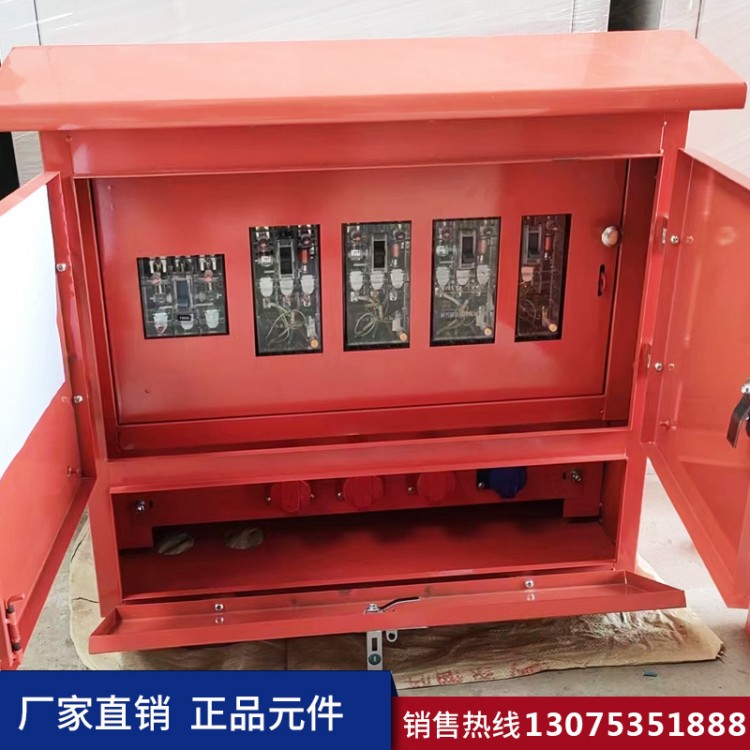
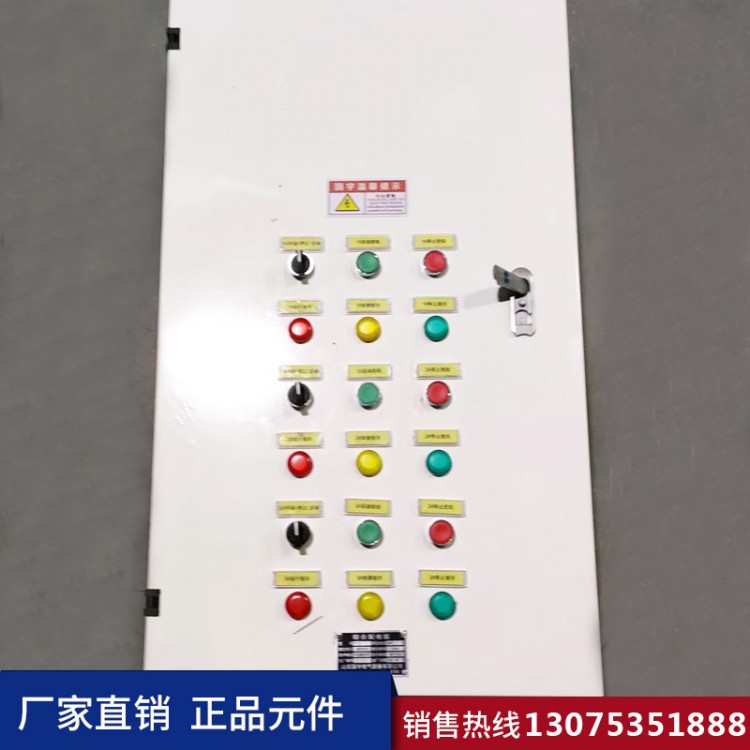

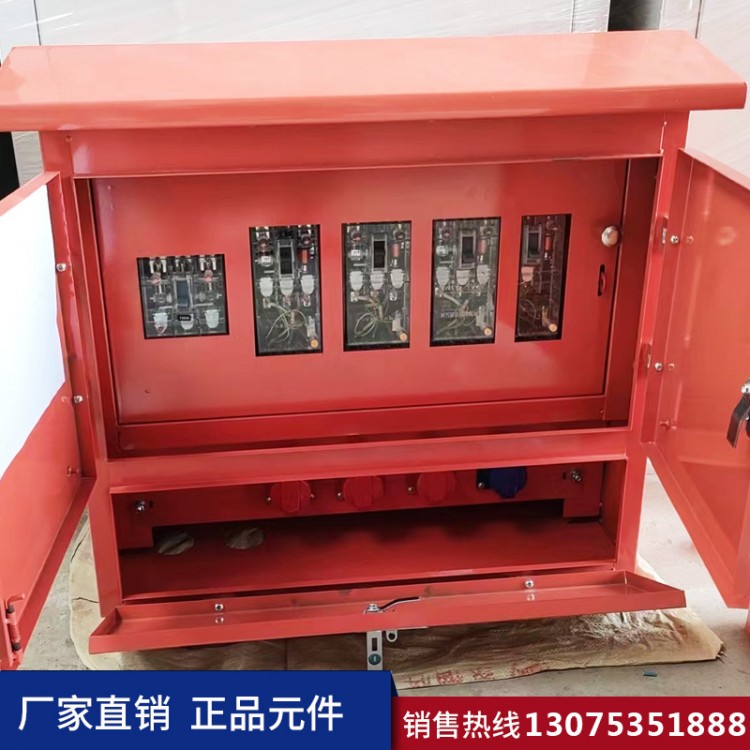
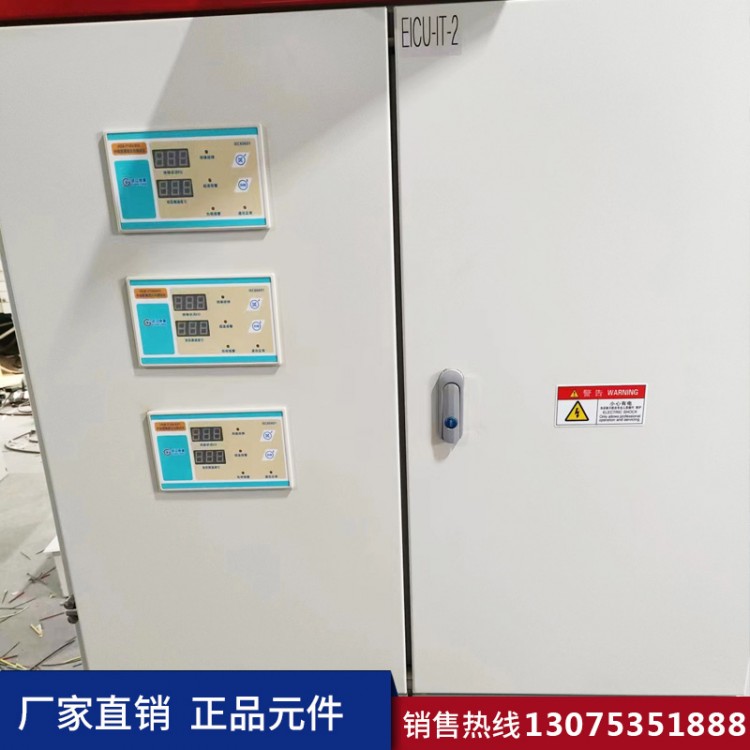
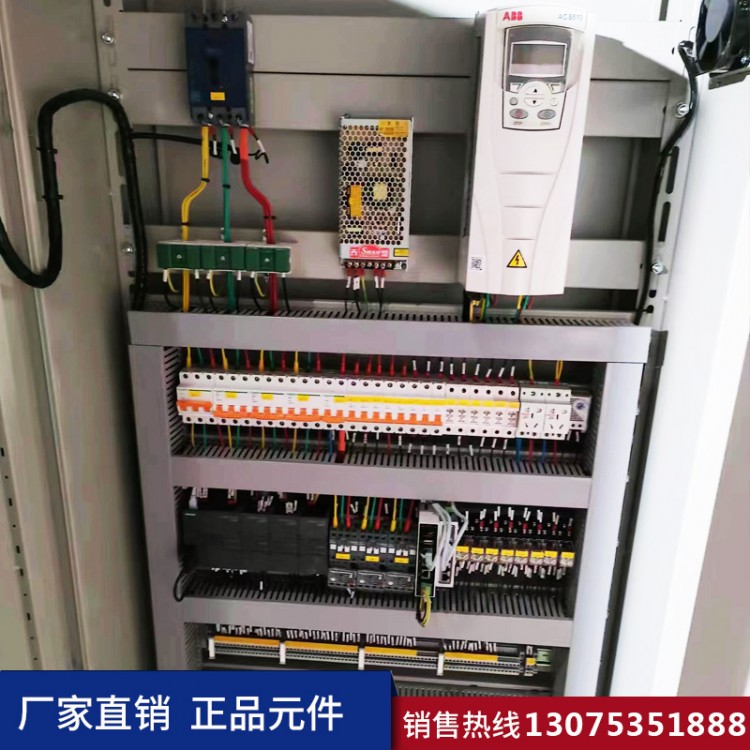
PLC control cabinet refers to a programmable control cabinet, which is a complete set of control cabinets capable of controlling motors and switches. The PLC control cabinet features protection functions such as overload, short-circuit, and phase loss protection.
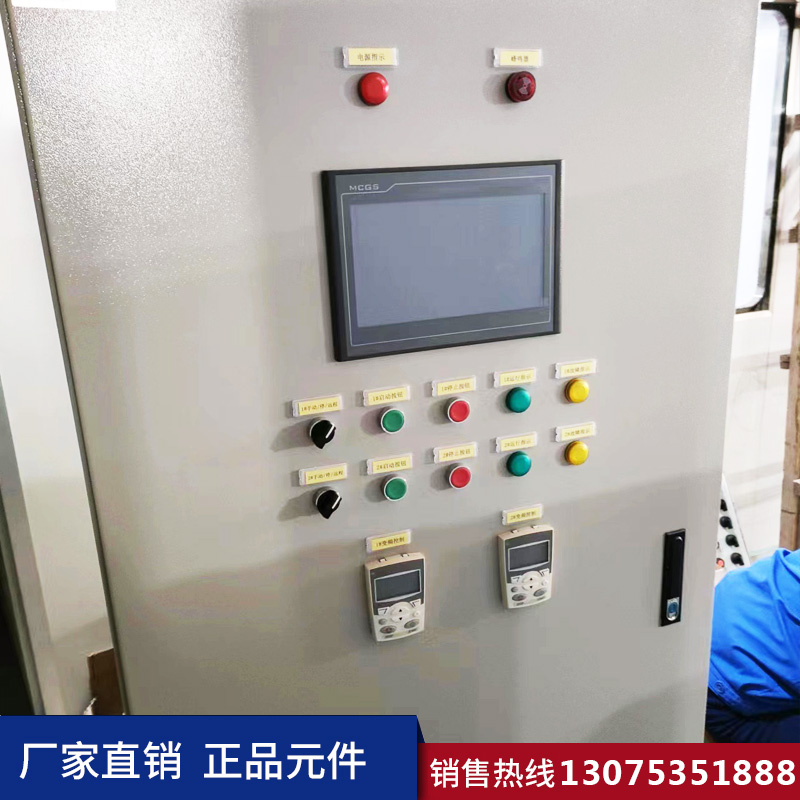
PLC Control Cabinet Overview
The PLC integrated control cabinet features protections such as overload, short circuit, and phase loss. It boasts a compact structure, stable operation, and comprehensive functions. It can be assembled according to the actual control scale, enabling both single cabinet automatic control and multi-cabinet systems through industrial Ethernet or industrial fieldbus networks to form a distributed control system (DCS). The PLC control cabinet is adaptable to various scales of industrial automation control applications. It is widely used in industries such as electricity, metallurgy, chemicals, papermaking, and environmental protection wastewater treatment.

PLC Control CabinetEffect
PLC control cabinets can accomplish equipment and process automation control, realizing perfect network functions, with features such as stable performance, scalability, and strong anti-interference, making them the core and soul of modern industry. They can be customized according to user requirements, including PLC control cabinets and variable frequency cabinets, to meet user needs. They can also be paired with human-machine interface touchscreens for easy operation. The equipment can also communicate via data transmission protocols such as DCS master station modbus, profibus, and can be controlled and monitored by industrial computers, Ethernet, etc.
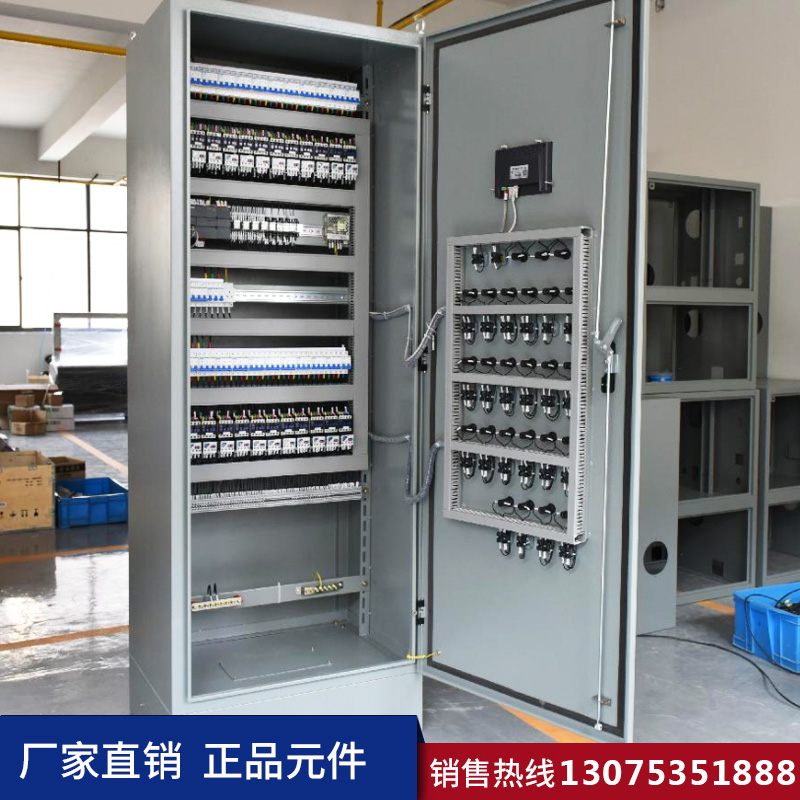
PLC Control CabinetStructure
The PLC control cabinet typically includes the following five components:
1. Air Circuit Breaker
A master circuit breaker, which controls the power for the entire cabinet. Something every cabinet must have, I believe.
2、PLC
This depends on the engineering requirements. For example, if the project is small, a single integrated PLC may suffice. However, for larger projects, modular or card-based systems might be necessary, along with redundancy (meaning two systems alternating use).
3. Power Supply
A 24VDC switching power supply; most PLCs come with a built-in 24VDC power supply. Determine whether to include this switching power supply based on actual need.
Relay
PLC instructions can be sent directly to the control loop, but they may first be relayed through a relay. To illustrate, if your PLC output is 24VDC, but the control loop diagram requires a 220VAC supply node, you must add a relay to the PLC output. This means that when the instruction is sent, the relay activates, and then the control loop node is connected to the relay's normally open or normally closed contact. Whether to use a relay is also a choice based on the situation.
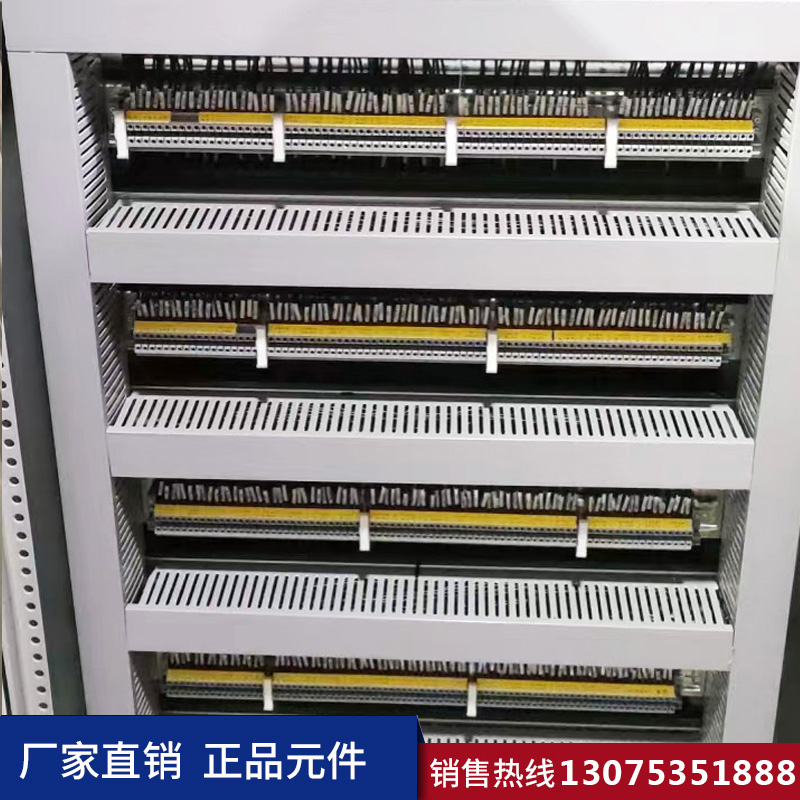
5. Terminal Block
This is definitely a must-have for every container, configurable based on the number of signals. If it's just a plain PLC control cabinet, these items are typically required. If your control cabinet needs additional components, adjust accordingly. For instance, if you need to power certain on-site instruments or small control boxes, you might have to increase the number of circuit breakers. Or if you need to connect the PLC to a higher-level computer, you may need to add switches and the like. It varies depending on the situation.
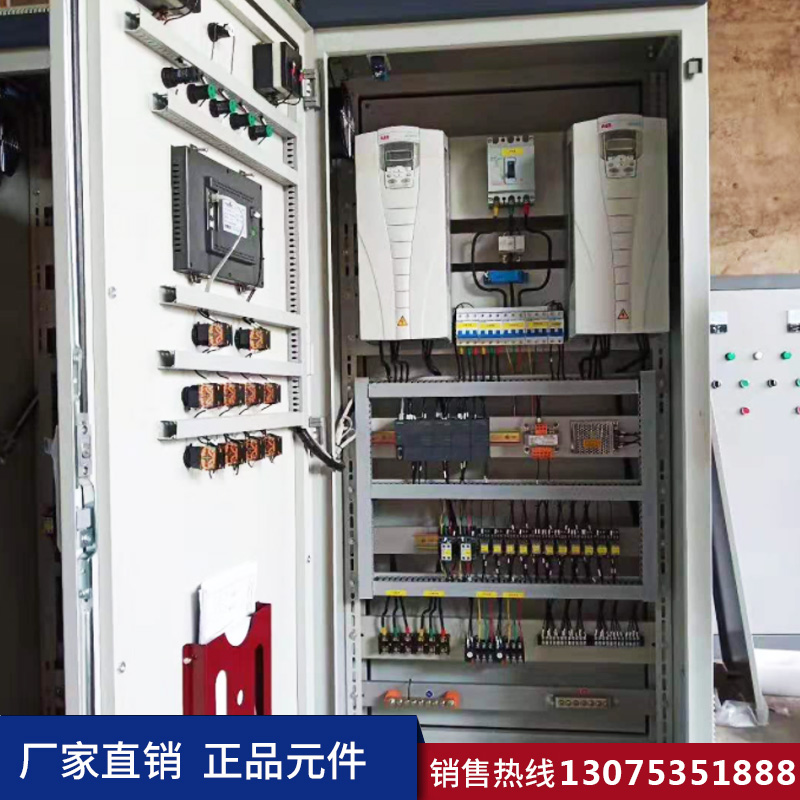
PLC Control CabinetBrand
Key Brands: U.S. AB, ABB, Panasonic, Siemens, Inovance, Mitsubishi, Omron, Delta, Fujitsu, Schneider, Hikone, YungHua, etc.
PLC Control CabinetTerms of Use
Power Supply: DC 24V, Single-phase AC 220V, (-10%, +15%), 50Hz
Protection Rating: IP41 or IP20
Environmental Conditions: Maintain a temperature range of 0℃ to 55℃; prevent direct sunlight exposure. Relative humidity should be less than 85% (no condensation). Keep away from sources of strong vibration; avoid frequent or continuous vibrations with a frequency of 10-55HZ. Avoid corrosive and flammable gases.
PLC Control CabinetApplication Fields:
Typical Applications: Constant pressure water supply, air compressors, fans and pumps, central air conditioning, port machinery, machine tools, boilers, papermaking machinery, food machinery, etc.