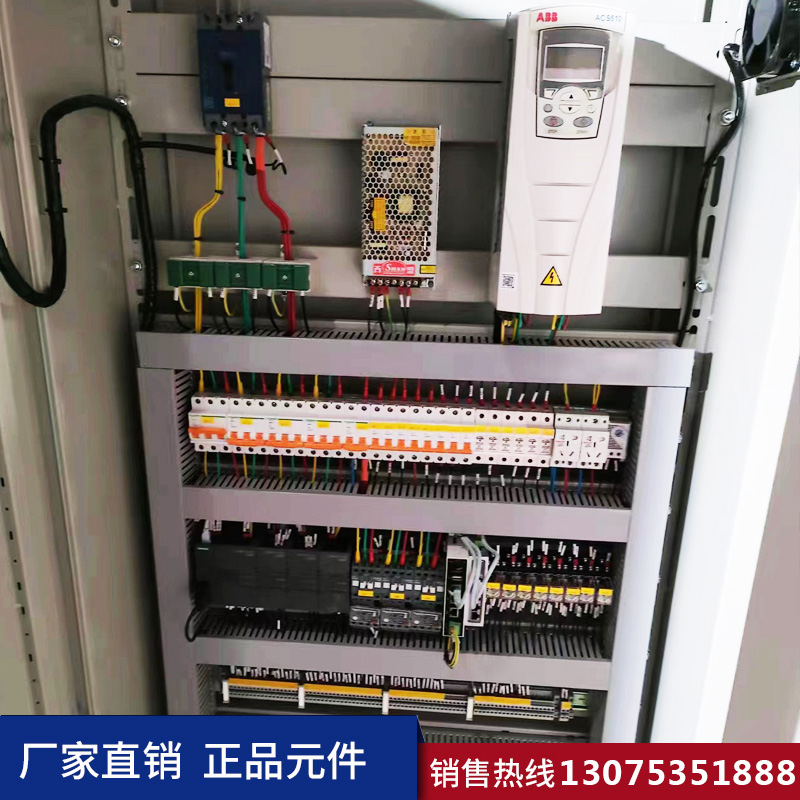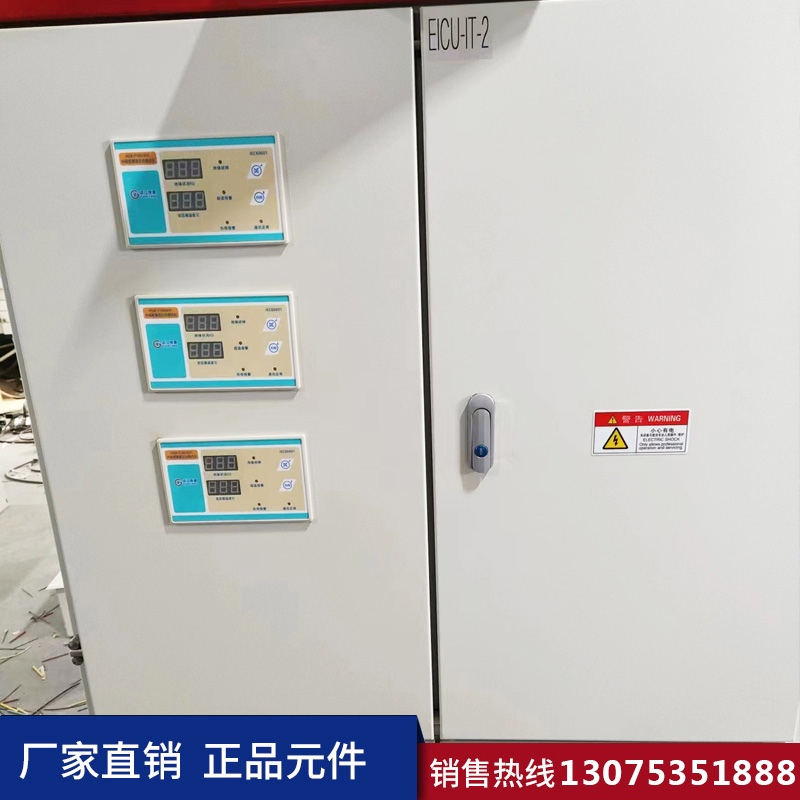


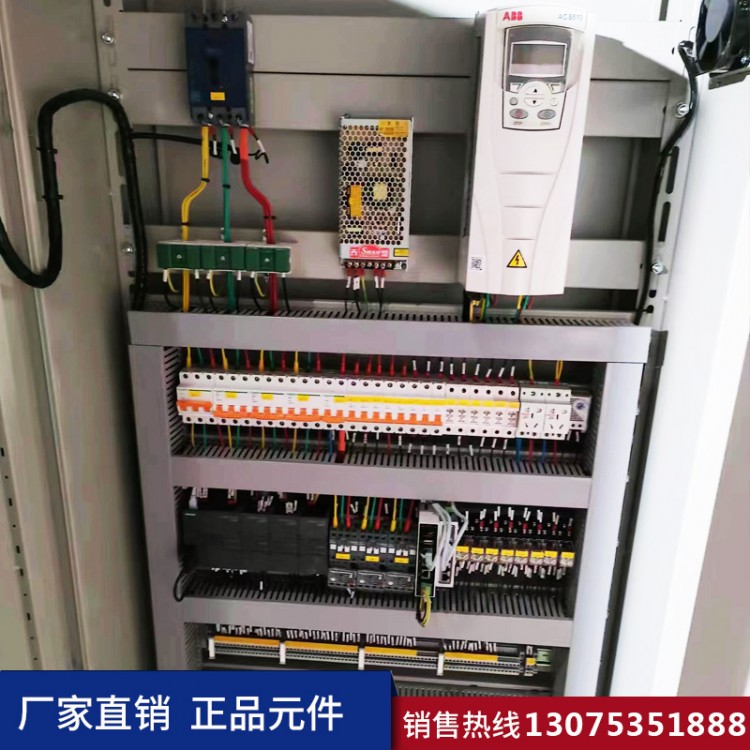
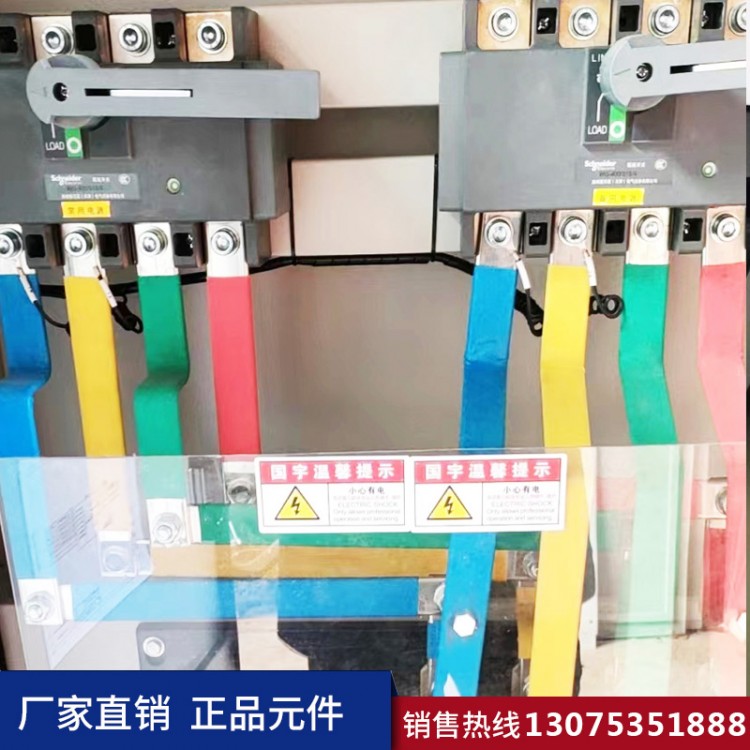
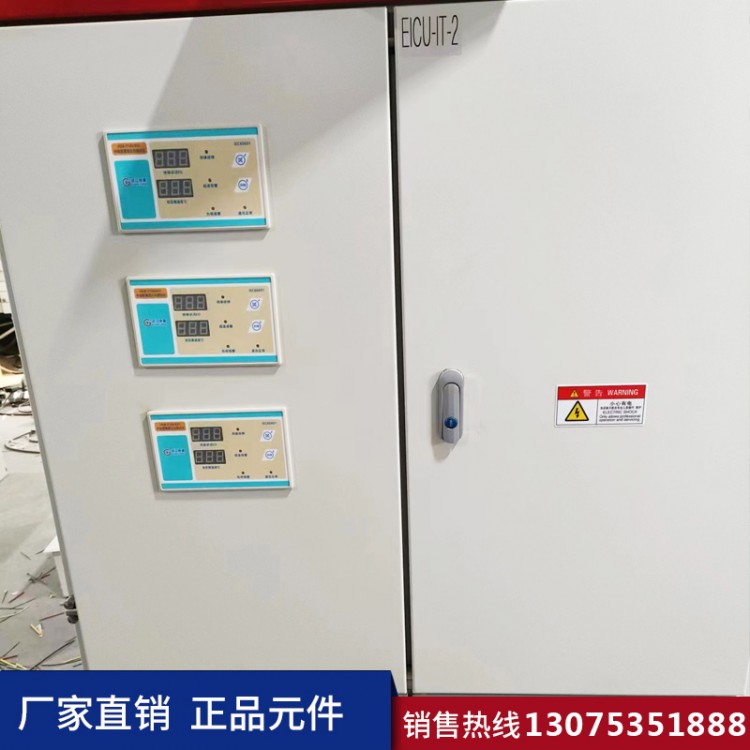











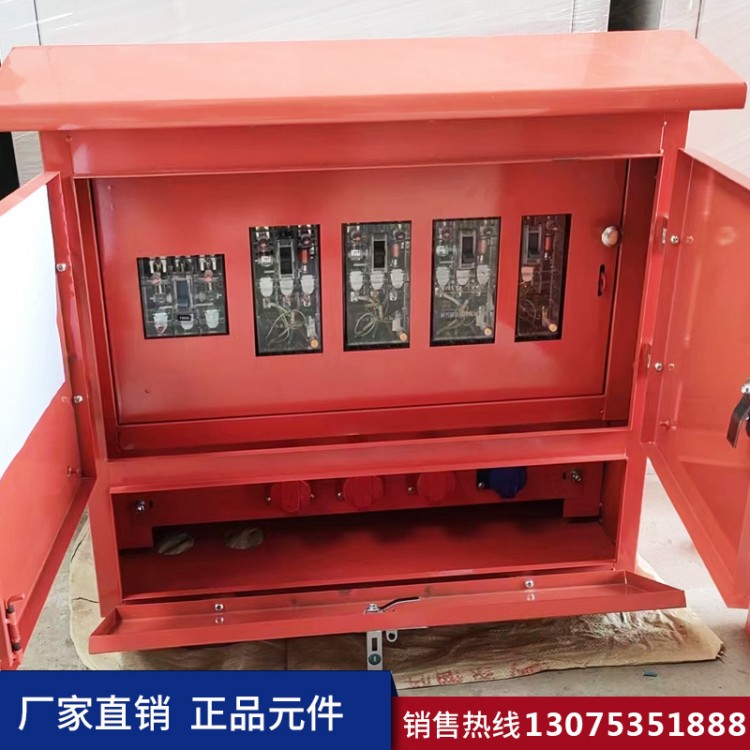
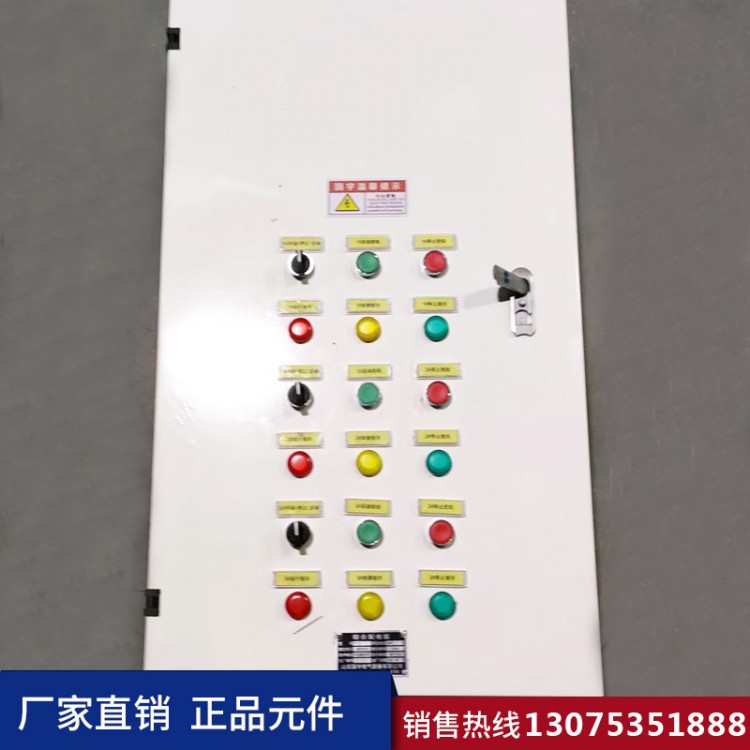

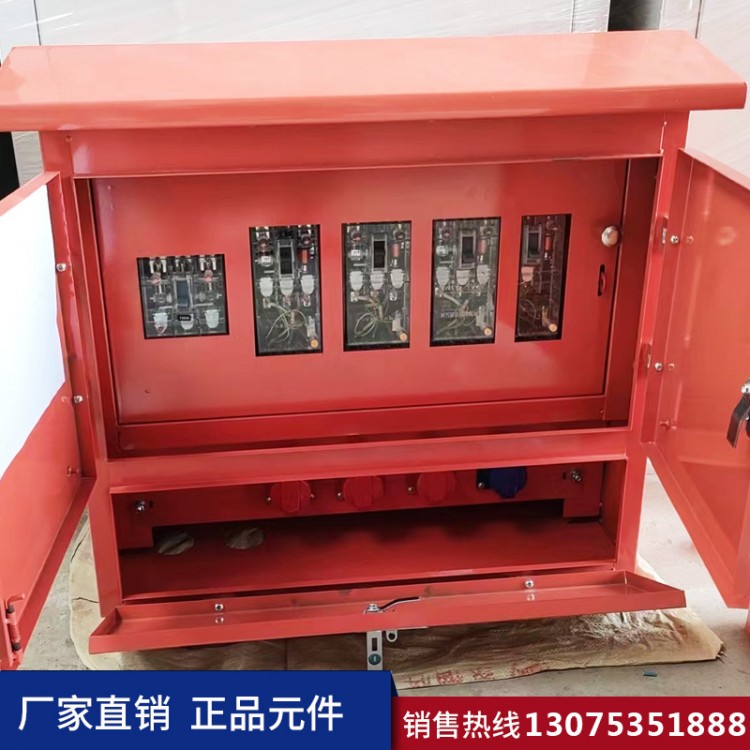
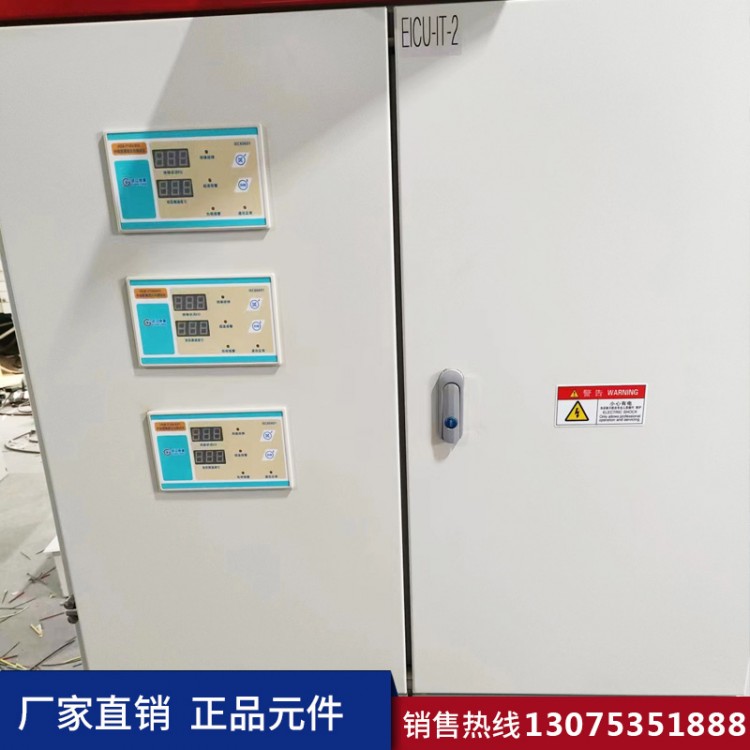
High-voltage distribution cabinet
Electrical products for power system generation
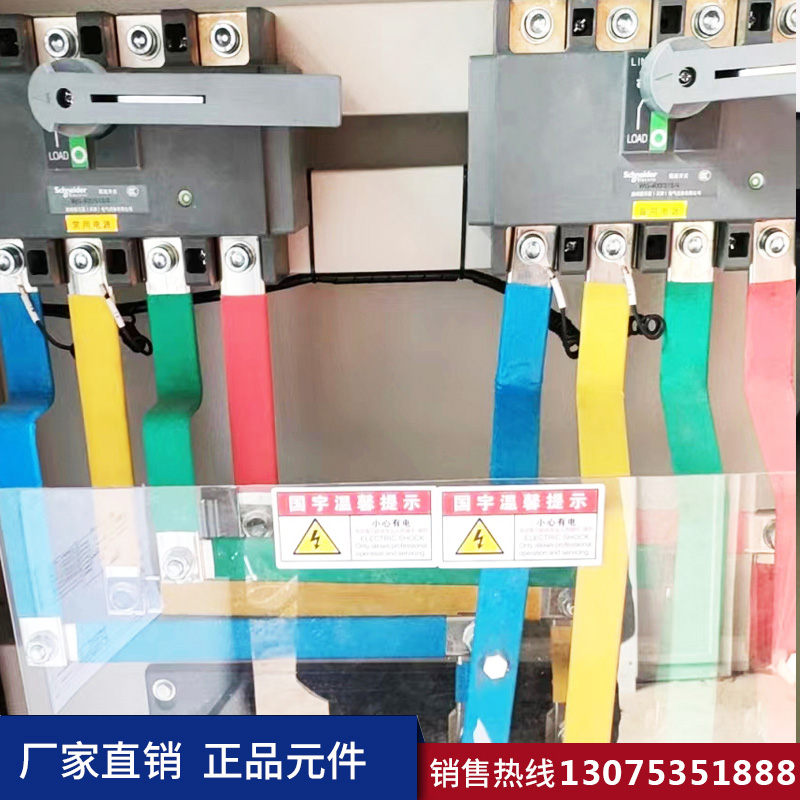
High-voltage switchgear refers to electrical products used in power systems for generation, transmission, distribution, energy conversion, and consumption, which perform functions such as switching, control, or protection. These products operate at voltage levels ranging from 3.6kV to 550kV and mainly include high-voltage circuit breakers, high-voltage disconnectors and earthing switches, high-voltage load switches, high-voltage automatic reclosers and sectionizers, high-voltage operating mechanisms, high-voltage explosion-proof distribution devices, and high-voltage switch cabinets. The high-voltage switchgear industry is a crucial component of the power transmission and transformation equipment manufacturing industry, holding a very significant position in the entire power industry.
Feature
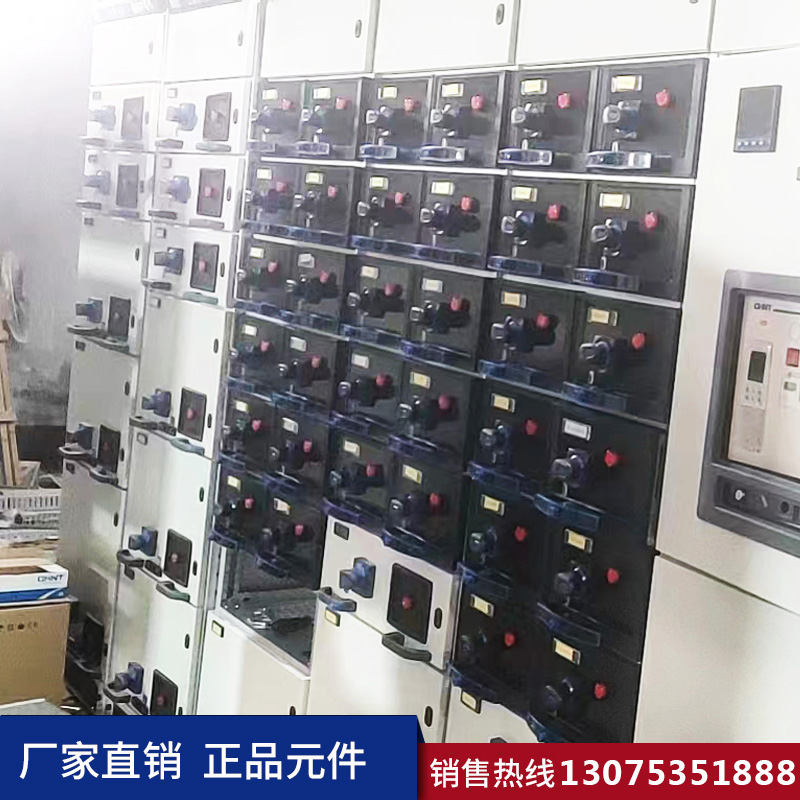
The distribution cabinet features overhead incoming and outgoing lines, cable incoming and outgoing lines, and bus connection functions.
Composition
The distribution panel should meet the requirements of GB3906-1991 "3-35 kV AC metal-enclosed switchgear," consisting of two main parts: the cabinet and the circuit breaker. The cabinet is composed of the shell, electrical components (including insulating parts), various mechanisms, secondary terminals, and connections.
Cabinet Material
1) Cold-rolled steel plates or angles (for welding cabinets)
2) Aluminum-zinc coated steel sheet or galvanized steel sheet (for cabinet assembly)
3) Stainless Steel Sheets (Non-magnetic)
4) Aluminum Plate (Non-magnetic)
Function Unit
1) Main busbar room (the general arrangement of main busbars is in a "Chinese character" or "1" shape structure)
2) Circuit Breaker Room
3) Cable Room
4) Relays and Control Panels
5) Busbar Compartment on Top of Cabinet
6) Secondary Terminal Compartment
Interior components
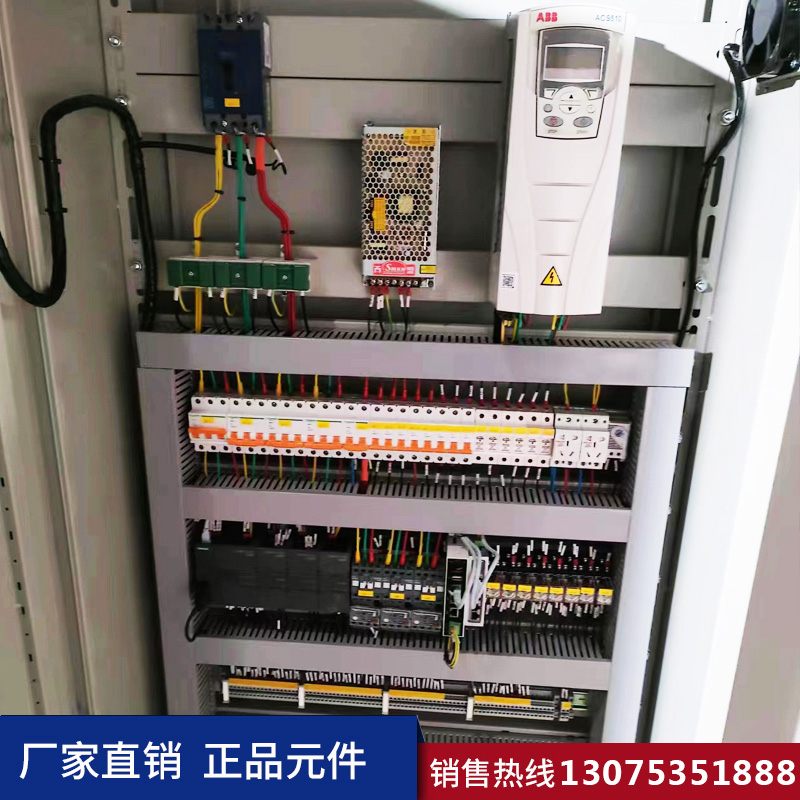
1. Common one-time electrical components (main circuit equipment) used inside cabinets include the following equipment:
Current Transformer, abbreviated as CT [e.g., LZZBJ9-10]
Voltage Transformer, abbreviated as PT [e.g., JDZJ-10]
Zero-sequence Current Transformer
Circuit breaker cabinet
Grounding Switch [e.g., JN15-12]
Surge Protectors (Capacitive Reactors) [e.g., Single-phase type HY5WS; TBP, JBP combined type]
Isolation Switches [e.g., GN19-12, GN30-12, GN25-12]
High-voltage circuit breakers [such as: Low-oil type (S), Vacuum type (Z), SF6 type (L)]
High Voltage Contactor [e.g., JCZ3-10D/400A Model]
High Voltage Fuses [e.g., RN2-12, XRNP-12, RN1-12]
Transformers [e.g., SC(L) Series Dry-Type Transformers, S Series Oil-Type Transformers]
High Voltage Live Display [DXN-Q Model, DXN-T Model]
Insulating Components [such as: wall passing sleeves, terminal boxes, insulators, insulated heat shrink (cold shrink) sleeves]
Main busbar and branch busbar
High-voltage reactors [such as series type: CKSC and starting motor type: QKSG]
Load Break Switch [e.g., FN26-12(L), FN16-12(Z)]
High-voltage single-phase capacitive banks [such as: BFF12-30-1] etc.
2. Main secondary components commonly used inside cabinets (also known as secondary equipment or auxiliary equipment, referring to low-voltage devices that monitor, control, measure, adjust, and protect primary equipment), including the following equipment:
Relays, watt-hour meters, ammeters, voltmeters, power meters, power factor meters, frequency meters, fuses, circuit breakers, changeover switches, signal lights, resistors, buttons, microcomputer integrated protection devices, etc.
Categories
Breaker
Circuit breakers are categorized by installation type into withdrawable (handcart type) and fixed types.
(1) Draw-out or Handcart Type (represented by Y): Indicates that the main electrical components inside the cabinet (such as circuit breakers) are mounted on a removable handcart. Due to the high interchangeability of the handcart cabinet, it significantly enhances the reliability of power supply. Common types of handcart include: isolation handcart, metering handcart, circuit breaker handcart, PT handcart, capacitor handcart, and transformer handcart, etc., such as KYN28A-12.
(2) Fixed-Type (represented by G): Indicates that all electrical components inside the cabinet (such as circuit breakers or load switches, etc.) are fixed-type installations. Fixed-type switch cabinets are simpler and more economical, such as XGN2-10, GG-1A, etc.
By location
Indoor and outdoor, categorized by installation location
(1) For indoor use (denoted as N); indicates that it can only be installed and used indoors, such as: KYN28A-12 switch cabinets, etc.
(2) For outdoor use (indicated by "W"); denotes that the product can be installed and used outdoors, such as: XLW switch cabinets.
As per cabinet structure
Switchgear cabinets can be divided into four main categories: metal-enclosed armored switch cabinets, metal-enclosed interval switch cabinets, metal-enclosed box switch cabinets, and open switch cabinets.
Metal-enclosed armored switchgear (represented by letter K) mainly consists of components such as circuit breakers, transformers, busbars, etc., which are individually housed in metal-enclosed switchgear compartments separated by grounded metal partitions. For example, the KYN28A-12 type high-voltage switchgear.
(2) Metal-enclosed modular switchgear (represented by the letter J) is similar to armored metal-enclosed switchgear. Its main electrical components are also mounted in separate compartments, but it features one or more non-metallic partitions that meet certain protection levels. For example, the JYN2-12 high-voltage switchgear.
(3) Metal-enclosed switchgear cabinets (represented by the letter X) are switchgear devices with metal-enclosed housing. For example, the XGN2-12 high-voltage switchgear cabinet.
(4) Open-type switch cabinets without a specific protection grade requirement; the enclosures partially expose the switching equipment. Such as the GG-1A(F) type high-voltage switch cabinet [2].
Five Precautions
1. The vacuum circuit breaker carriage within the high-voltage distribution cabinet fails to reach the working position after being closed at the test location. (Prevents incorrect opening/closing of circuit breakers)
2. When the grounding switch in the high-voltage distribution cabinet is in the closed position, the draw-out circuit breaker cannot be closed. (Prevents closing with the grounding wire connected)
3. During the closing operation of the vacuum circuit breaker within the high-voltage distribution cabinet, the rear cabinet door is mechanically locked with the grounding switch to prevent accidental entry into the energized compartment.
4. The vacuum circuit breaker within the high-voltage distribution cabinet fails to close when operating, and the grounding switch cannot be engaged. (To prevent live-line grounding)
5. The vacuum circuit breaker within the high-voltage distribution cabinet cannot be withdrawn from the working position of the mobile circuit breaker during operation (to prevent opening the switch with a load).
Relevant Standards
SJ/T 31401-1994 | Requirements and Inspection and Evaluation Methods for High-Voltage Switchgear完整性
DL/T 791-2001 | Guidelines for Selection of Indoor Air-Insulated Switchgear
DL 404-1991 | Technical Conditions for Ordering Indoor High-Voltage Switchgear
DL/T 404-1997 | Indoor AC High-Voltage Switchgear Ordering Technical Conditions
DL/T 539-1993 | Indoor AC High-Voltage Switchgear and Components - Technical Conditions for Dew Condensation and Pollution Tests
TB/T 2010-1987 | 27.5kV AC Electrified Railway Switchgear Technical Conditions
DL/T 404-2005 | Indoor AC High-Voltage Switchgear Ordering Technical Conditions [1]
Product Model and Its Meaning
Application
1. KYN-10 Indoor AC Metal Armored Withdrawable Switchgear (hereinafter referred to as switch cabinet) is suitable for indoor complete distribution systems with a rated voltage of 3-10KV and a 50Hz AC supply, where the neutral point is not grounded, for single-line and single-line section systems. It is used by various types of power plants, substation, and industrial and mining enterprises for receiving and distributing electrical energy, as well as for circuit control, protection, and monitoring.
2. The KYN-(F-C) type indoor armored double-layer moving open AC metal-enclosed switchgear system is a complete indoor switchgear for 3.6~12kV three-phase AC 50Hz, single busbar and single busbar section systems. It is mainly used as a high-voltage distribution unit for power plants, transformer stations, metallurgy, papermaking, petrochemical, textile, and industrial and mining enterprises. It is suitable for control and protection of motors, transformers, and capacitors.
3. The KYN-12/1250-31.5 indoor armored withdrawable AC metal-enclosed switchgear, referred to as a switch, is a complete power distribution system for 3.6-12KV three-phase AC 50Hz single bus and single bus section systems. It is mainly used for power plants, transmission of electricity from small and medium-sized generators, distribution of power in industrial and mining enterprises, and receiving and transmitting power in secondary sub-stations of the power system, as well as starting large high-voltage motors. It is used for control, protection, and monitoring. This switchgear meets the requirements of IEC298, GB3906, and other standards.
Structural Features
1. The KYN indoor AC metal-enclosed switchgear (hereinafter referred to as the switch cabinet) is designed and manufactured in accordance with the standard "AC Metal-Enclosed Switchgear for 3-35KV" and the IEC298 standard for "AC Metal-Enclosed Switchgear and Control Equipment", while also meeting the requirements of the Ministry of Hydropower for high-voltage switchgear to possess the "Five Preventive" functions.
2. The KYN-(F-C) indoor armored double-layer withdrawable AC metal-enclosed switchgear is a component of the KYN-(F-C) indoor armored double-layer withdrawable AC metal-enclosed switchgear. It can be used with the KYN-(F-C) indoor armored double-layer withdrawable AC metal-enclosed switchgear to form a modular distribution device. This switchgear cabinet is a double-layer armored F-C cabinet, with one cabinet capable of housing two F-C switchboards, equivalent to the functionality of two single-layer cabinets, while occupying approximately the same floor space as a single-layer cabinet. It saves a significant amount of floor space and equipment investment for the user. This product features a vacuum contactor specifically designed for double-layer cabinet structures, offering simple structure, compact size, attractive appearance, high insulation level, and long service life. It comes with both electrical retention and mechanical locking mechanisms.
3. KYN-12/1250-31.5 Indoor Armored Withdrawable AC Metal Enclosed Switchgear, with armored cabinet structure and centralized arrangement, divided into circuit breakers room, main busbar room, cable room, and relay/instrumentation room. To enable the cabinet to withstand internal fault arcs, exhaust ducts and pressure relief windows are provided in all functional compartments except the relay room, with primary contacts being bundled round terminals.
Switches can be high-availability as per customer requirements, featuring a front-maintenance structure for wall-mounted or back-to-back installations. The switch equipment is equipped with a safe and reliable interlock device, fully meeting the "Five Preventive" locking requirements.
a, The circuit breaker's handcart cannot close during the pushing or pulling process.
b, The circuit breaker's handle cart can only be operated to close or open when it is in the test position or operating position, and the handle cart cannot be pulled out from the operating position when the circuit breaker is closed.
c, The circuit breaker handle can only be moved from the test position to the working position when the earthing switch is in the disengaged position; The earthing switch can only be operated to open or close when the circuit breaker handle is in the test position or outside the cabinet.
d, The back door cannot be opened when the grounding switch is in the open position.
The handcart's secondary plug is locked in place when at the working position and cannot be removed.
The base frame of the circuit breaker room, on both sides of the fixed guide rails for the handcart movement, also features retractable extension guides on the sides for easy observation and inspection of the circuit breakers. After the circuit breaker is opened, the two extension guides can be pulled out to the outside of the cabinet, allowing the handcart to be directly moved from inside the cabinet to the extended guides outside.
Please attach some high-pressure cabinets that are available in the market.
① GR Series:
Usage
The GRC1 type high-voltage distribution cabinet is used in 3~10kV transformer stations to improve the power factor of the power grid. This series of cabinets consists of a capacitor cabinet, a transformer cabinet, and a measurement and discharge cabinet.
Solution Categories
The GRC1 model is a standard type, consisting of a capacitor cabinet and a transformer cabinet. The capacitor cabinet offers four options, while the transformer cabinet comes in three different configurations.
2. The GRC1C model is a transverse differential protection type, which means that when a capacitor in the cabinet trips, the main circuit breaker is tripped by the current transformers connected in a transverse differential circuit. This model also has four schemes.
3. The GRC1Y model is an inductive reactor type, specifically a capacitor cabinet equipped with a series inductive reactor for harmonic suppression.
Structure
The cabinet is made of angle steel and thin steel plates, bent and welded together in three layers. The bottom layer houses oil channels, measurement and discharge cabinets, with voltage transformers in the middle layer. The reactor is installed at the bottom, and the front is a steel door, which can accommodate instruments, switches, and signal lights.
② GGX2 Series:
Usage
GGX2C10 High-Voltage Vacuum Circuit Breaker Switch Cabinets are suitable for three-phase AC power grids with rated voltages of 3~10kV and a frequency of 50Hz. They serve as complete power distribution systems for accepting and distributing electrical power, as well as for controlling, monitoring, and protecting the circuit.
Structural Features
This distribution box features a metal-enclosed cabinet, with all live components enclosed within. It is functionally divided into busbar room, circuit breaker room, cable room, and the instrument box is a separate structure mounted on the cabinet; the vacuum circuit breaker and electromagnetic or spring-operated mechanism are an integrated unit, which is bolted in place after being pushed into the cabinet. There are 24 main wiring schemes.
③ GGX2 Series:
Application
The GSGC1A type double busbar high-voltage switchgear is suitable for regional sub-stations, large-scale industrial and mining enterprises' sub-stations, and electrical equipment testing stations with voltages of 3, 6, and 10kV. It is also applicable to power supply systems with a single busbar and bypass busbar, used for receiving and distributing electrical energy.
Structure
The cabinet is constructed of thin steel plates and angle steel焊接, with the base made of channel steel焊接. The front features a single-leaf protective mesh door, while the back has a double-leaf protective mesh door. The busbars on top are exposed.
The cabinet is divided into two compartments, the front compartment equipped with a spare (starting) busbar isolator switch, circuit isolator switches, cable heads, etc., and a spare (starting) busbar installed at the top. The rear compartment houses the main (operational) busbar isolator switch, oil circuit breakers, and a main (operational) busbar isolator switch at the top. Current transformers can be installed below the compartments. The operation mechanisms for the oil circuit breakers and isolator switches are mounted on the front of the cabinet. A single-leaf steel door is located on the left rear of the cabinet, leading to the relay room. Thin steel plates separate the compartments and primary from secondary electrical equipment. Maintenance of secondary electrical equipment can be performed without interrupting power to the primary equipment.
To prevent accidental operation by staff, the cabinet is equipped with a programmed electrical interlock device.
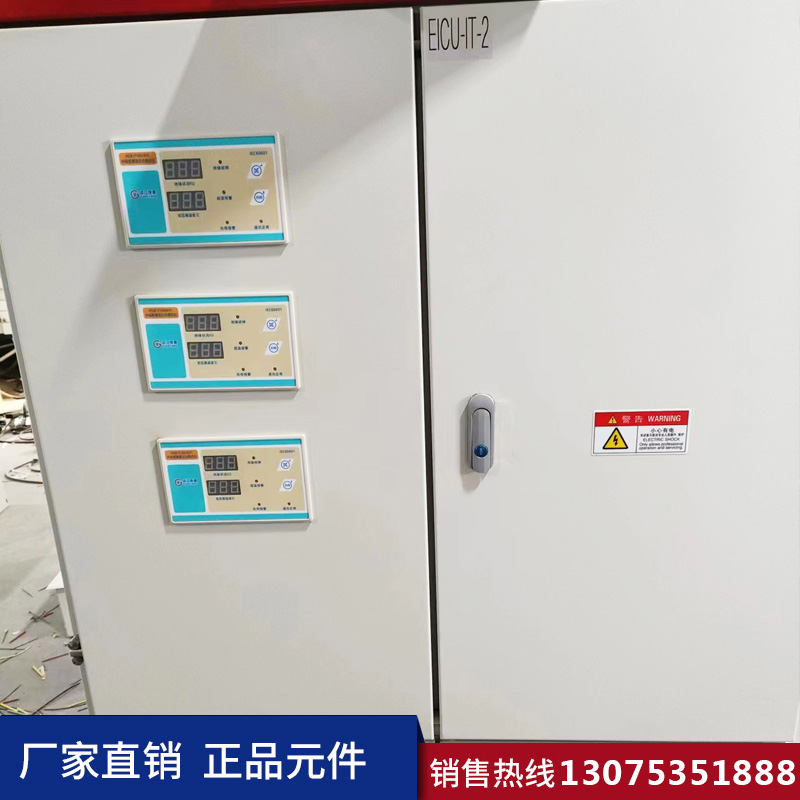
Electric Display Unit
I. Analysis of Issues with High-Voltage Distribution Cabinets
(1) The function of the high-voltage distribution cabinet preventing accidental entry into the live compartments creates a locking relationship between the opening and closing of the cabinet door and the grounding switch, meaning the cabinet door can only be opened after the grounding switch is closed. This incident has exposed the imperfections in the "five-protection" mechanical locking device of the old model high-voltage switch cabinets.
(2) The issue of electrical testing for high-voltage distribution cabinets has been a long-standing concern in electrical safety production. The fully enclosed "Five Precautions" switchgear with mechanical "Five Precautions" locking devices, which is currently being promoted, does not meet the safety regulation requirements of "testing electricity first, grounding wire second." This is because, during the execution of power-off work, it is necessary to verify that the equipment has no voltage before closing the grounding switch. However, the fully enclosed high-voltage switchgear is in a fully sealed state, and according to normal operation procedures, it is not possible to test the equipment with a portable high-voltage tester. Therefore, a method of forcibly unlocking and opening the cabinet door to test for electricity has emerged.
(3) A high-voltage power distribution cabinet extensively utilizes neon lamps as display elements in its energized indicator devices. After prolonged operation, a high rate of failure and extensive neon bulb damage has been observed. To address this defect, a neon lamp on/off switch has been installed on the energized indicator device, which is usually kept in the off position, temporarily deactivating the entire high-voltage energized indicator device. This approach eliminates the device's monitoring function for the energized status of the line side.
(4) Neon lights have low brightness, especially in bright environments where their brightness is washed out, resulting in poor visibility.
(5) Outdated high-voltage live display devices equipped with mandatory electrical interlock, featuring a simplistic interlock principle. It merely rectifies the signals from the A, B, and C phase sensors with half-wave rectification and then combines them directly to control the interlock circuit. This method, however, can lead to accidents when the system encounters abnormal conditions such as single-phase grounding or phase loss, as the fluctuation in the interlock control voltage can cause the device to fail to reliably interlock, resulting in live-to-ground switch operations.
(6) Neon lamp-type high-voltage voltage indication devices installed usually have plastic casings and are mounted within the high-voltage equipment compartments. In the event of an internal short circuit and arc discharge within the switchgear during operation, the high-temperature arc may melt the plastic casing of the device, potentially harming personnel operating or maintaining the equipment.
II. Solutions to Existing Issues
Given the numerous issues with the outdated high-voltage live display devices, there is an objective need for a brand new type of live display device that boasts high reliability, long lifespan, maintenance-free operation, clear and prominent display, and the ability to compensate for the shortcomings of the old high-voltage live display devices. The Beijing Power Supply Bureau has successfully developed a new high-voltage live display verification device, which, when used with CG series sensors, displays live status and performs on-site verification to indicate whether high-voltage equipment is powered and equipped with electrical interlock functionality. This device resolves the issues of neon lamp live display devices, with its dual display consisting of a liquid crystal monitor and a long-life flash verification plug, which is suitable for operation in various light conditions and is highly visible. A dedicated verification plug provides a unique pull-out independent verification function, enhancing the device's reliability as a verification basis. The device utilizes phase-detection digital superimposed interlock control technology to ensure that the interlock voltage remains unchanged during abnormal operations, such as system phase loss, thus maintaining stable operation. The mandatory electrical interlock function can reliably interlock grounding switches (cabinet doors). The application of the new high-voltage live display verification device effectively prevents accidents caused by incorrect entry into live intervals or engagement of live switches with grounding, thereby reducing the risk of personal and equipment accidents.
Safety is the foundation of power generation, and prevention is the key to ensuring safe production. In the current efforts to ensure safe power production, accidents caused by electric shock to personnel and accidents due to improper operations remain the two major threats. Continuously improving and refining technical measures to prevent accidents caused by electric shock to personnel and improper operations is the goal that each of us in the power industry should strive to achieve.