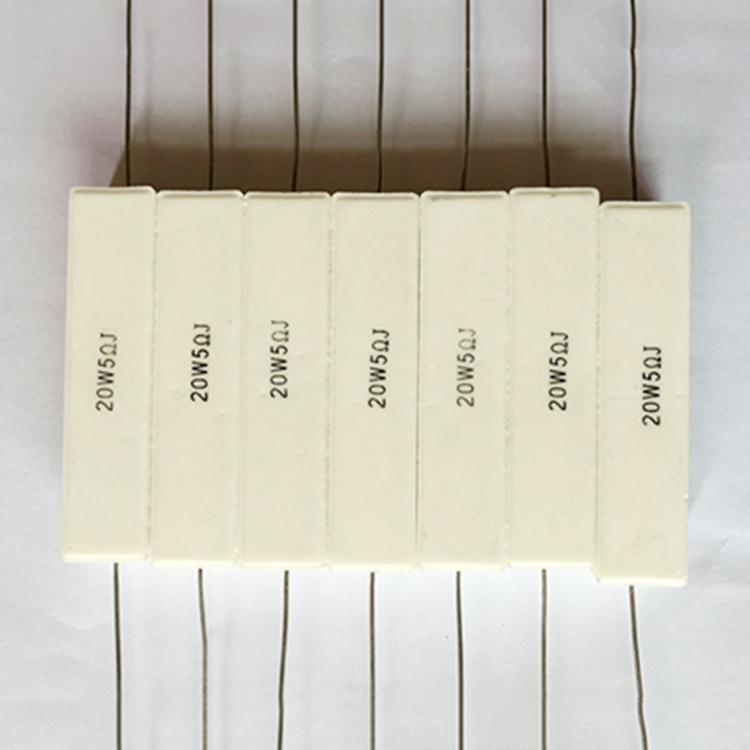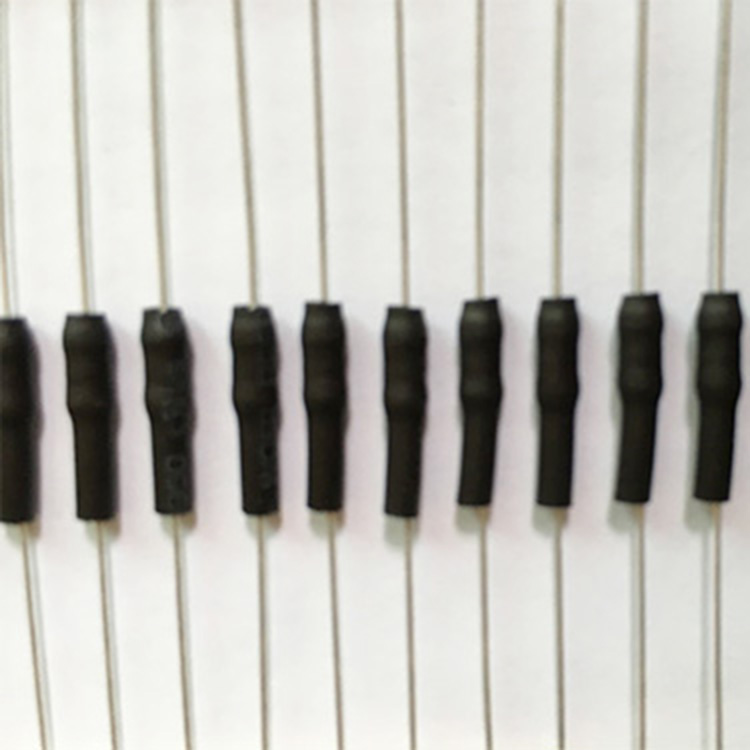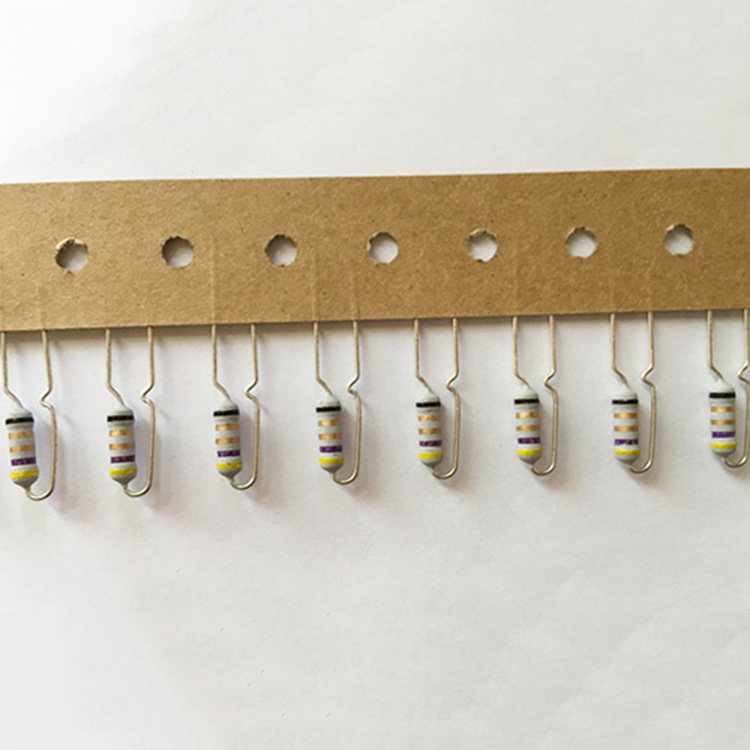


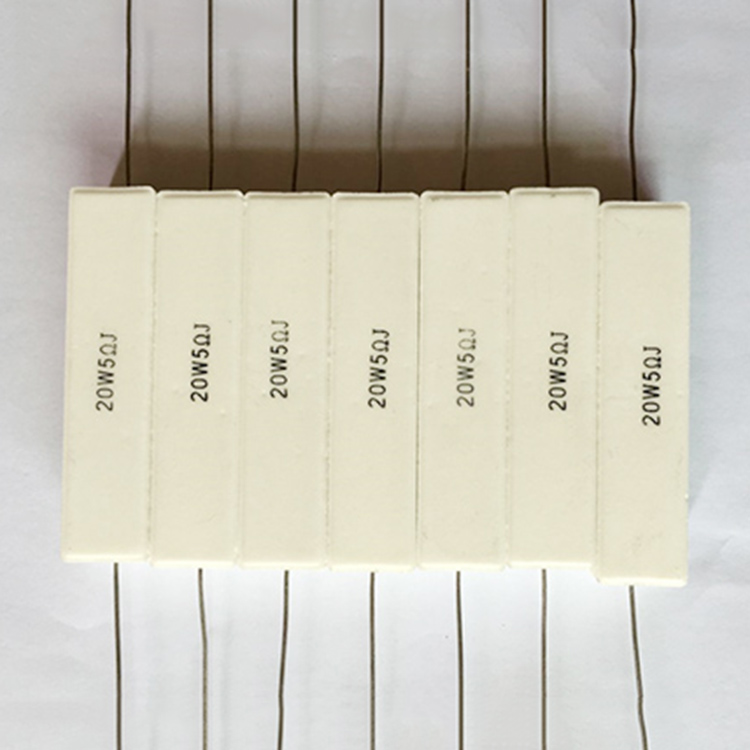







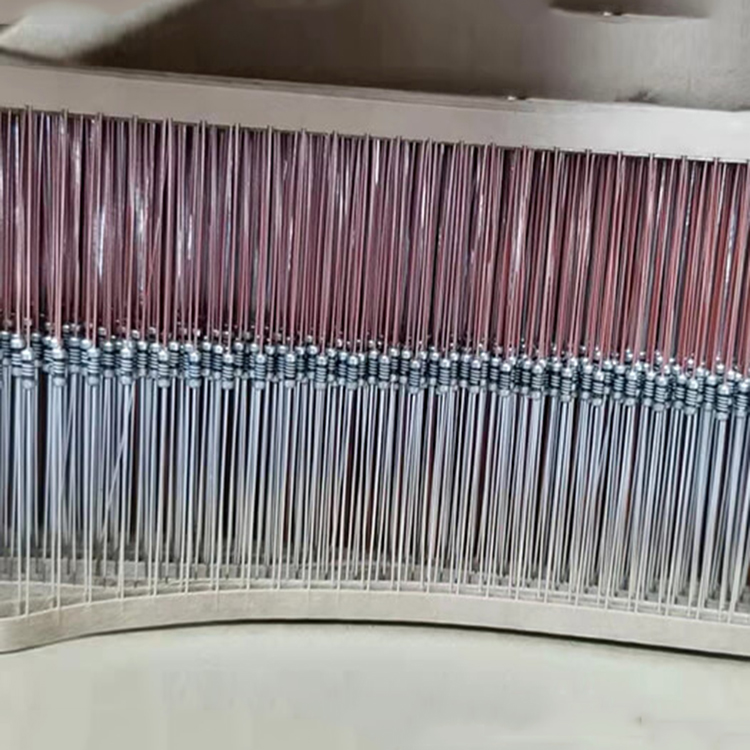
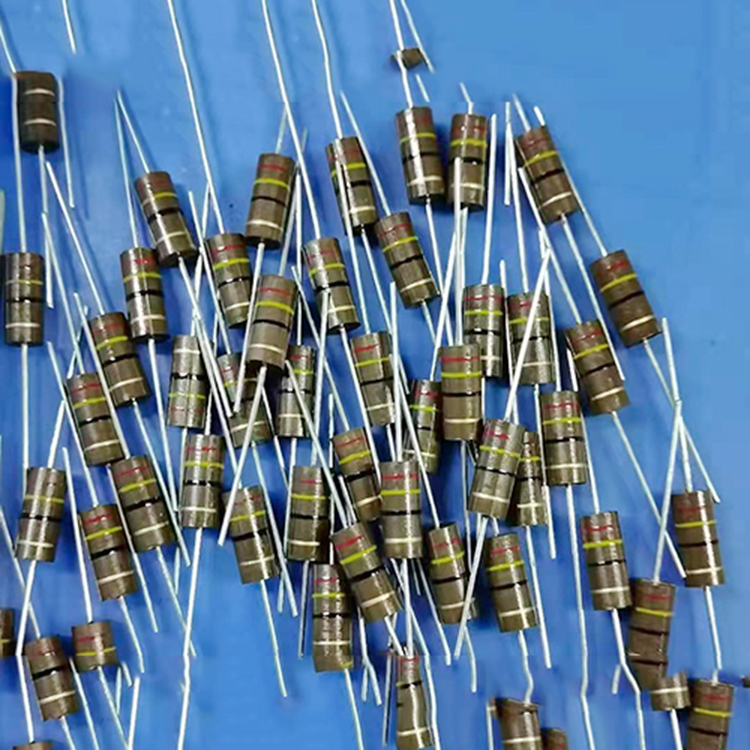


Cement Resistors: These are made by winding resistance wire around a non-basic heat-resistant ceramic component, then coating it with heat-resistant, moisture-resistant, and corrosion-resistant materials for protection and fixation. The coiled resistance body is placed inside a square ceramic frame, sealed and filled with a special non-combustible heat-resistant cement. The outer side of the cement resistor is mainly ceramic material (generally divided into high-alumina ceramic and feldspar ceramic).
Cement resistor, which is actually a refractory mortar (commonly referred to as cement), encased resistor. It involves winding resistance wire around a non-basic, heat-resistant ceramic component, then covering it with heat-resistant, moisture-resistant, and corrosion-resistant materials for protection and fixation. The wound resistor is then placed inside a square ceramic frame and secured with a special non-combustible heat-resistant material.
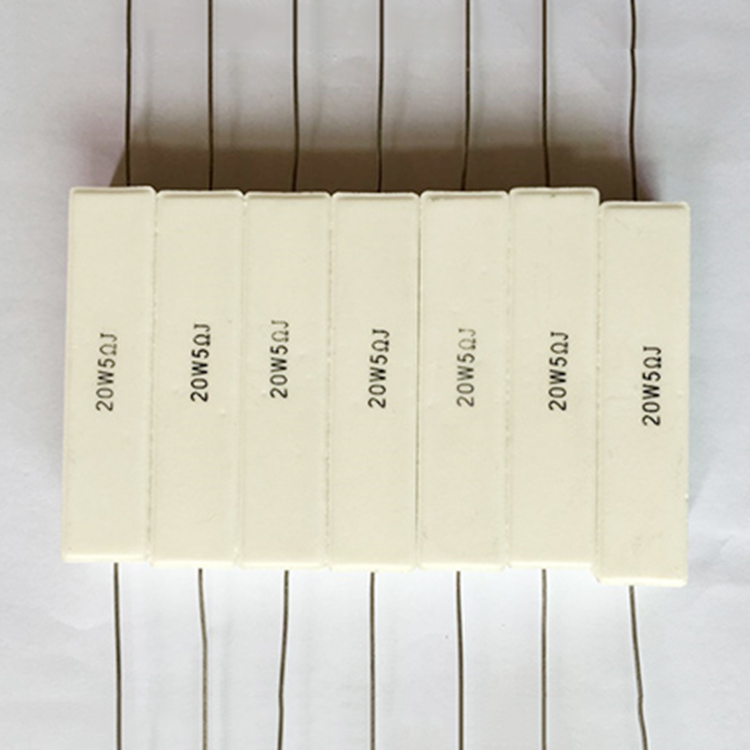
Cement-filled and sealed. There are two types of cement resistors: ordinary cement resistors and cement wire-wound resistors. Cement resistors are a type of wire-wound resistor, belonging to high-power resistors that can allow the passage of large currents. They serve the same function as general resistors but are suitable for high-current applications, such as in series with motors to limit the starting current, with resistance values typically not very high. Cement resistors feature large dimensions, resistance to vibration, moisture, and heat, as well as good heat dissipation and low cost. They are widely used in power supplies, audio equipment, audio crossover networks, instruments, meters, televisions, and vehicles, among other devices.
Application of cement resistors
Cement resistors are commonly used in high-power and high-current applications, with power ratings of 2W, 3W, 5W, 10W, and even higher. They are essentially used in appliances like air conditioners and televisions that consume over 100 watts.