













Product Information
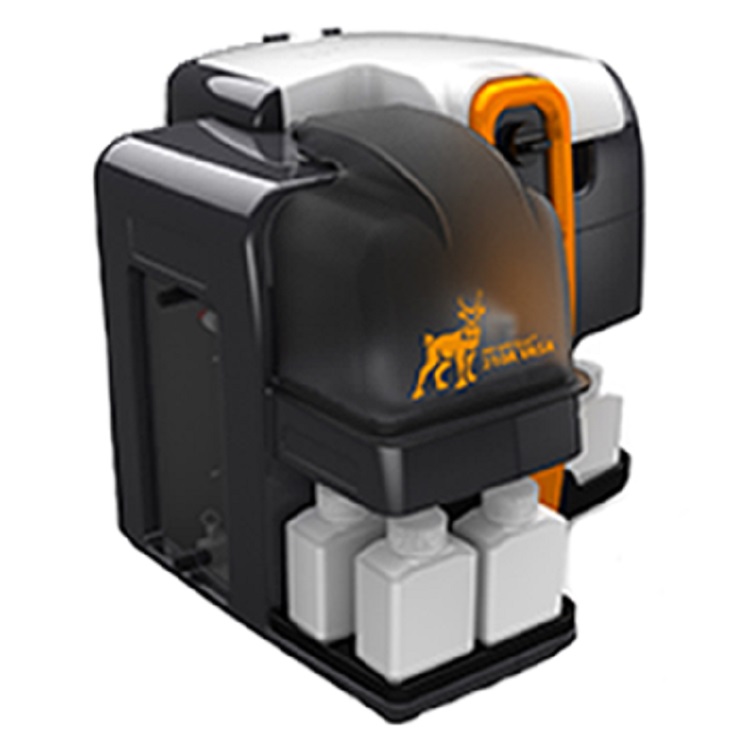
6-sample automation is not just for material characterization!
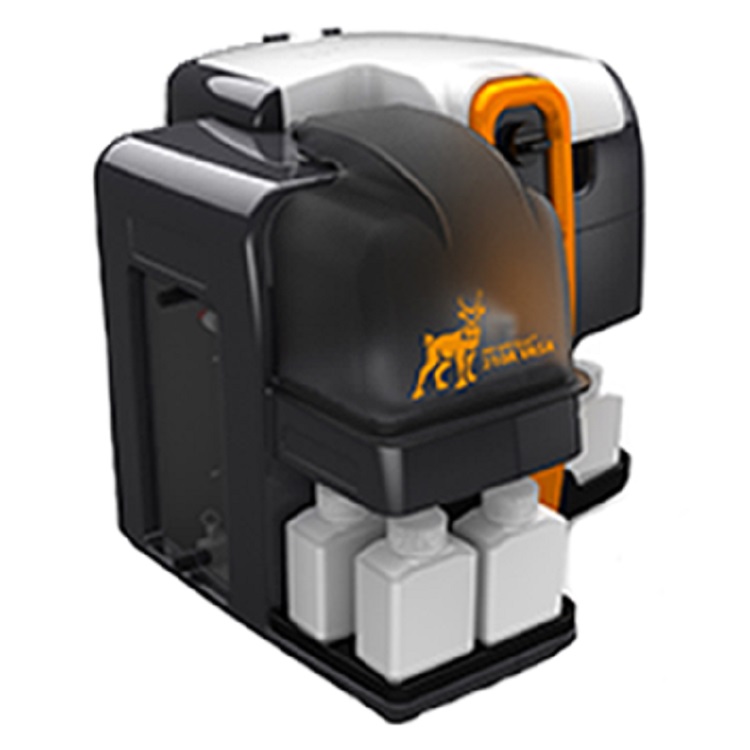
The larger inner diameter of the flow cell circuit and the automated operation for 6 samples make the MP-SPR Navi™ 210A VASA an instrument for material characterization and nanoparticle research.
Technical Specifications
Measurement Principle | Real-time and unmarked multi-parameter surface plasmon resonance (MP-SPR) is an SPR device based on actual angle measurement, equipped with a rotating laser and detector. | ||||||
| Liquid Treatment | Automatic liquid handling for up to 6 different samples, suitable for unattended operation. | ||||||
| Sample consumption rate | Partial ring injection can reduce the sample consumption to the lowest. | ||||||
| Laser Wavelength | Both flow channels are standard wavelength: 670 nm. | ||||||
| Refraction Range | 1.00-1.40 (measurement of the body environment), expandable by additional wavelengths. | ||||||
| Medium | One scan encompasses two environments: gas and liquid. Measurement is not limited to aqueous liquids but also includes organic liquids such as ethanol and acetonitrile. For compatibility with other organic liquids, please inquire with us. PureKinetics™ can correct differences in running buffer and sample composition, even differences of up to 5% DMSO! | ||||||
| Operation Mode | Angular scan mode, "MP-SPR mode": Scans a series of angles, providing a complete SPR curve and multiple parameters. Several sensor maps can be extracted from the SPR curve, such as PureKinetics™. | ||||||
| Measurement Range | Thickness: From angstroms to micrometers (specific range depends on the refractive index of the material) | ||||||
| Sensitivity | 1μRIU (Refractive Index); 1pg/mm2(Protein Surface Coverage); Smallest Detected Molecule: In gas phase, hydrogen (2 Da); in liquid phase, smallest molecular weight < 100 Da | ||||||
| Noise | Short-term noise 0.3 μRIU, baseline drift (long-term) < 1 μRIU/min | ||||||
| Temperature | Temperature Measurement Range: 15°C – 45°C (Room Temperature +20°C/-7°C) | ||||||
| Prism | Prisms with matched adhesives facilitate rapid sensor replacement, prevent sample contamination caused by refractive index matching oil, and allow for further analysis of the sample through other methods. No need for refractive index matching oil or expensive gold-plated prisms. | ||||||
| Flow Pool | Easily replace the flow pool with a single release button. | ||||||
| Sensor/Substrate | We offer a wide range of surfaces, including metals (Au, Ag, Cu, Pt, etc.) and other inorganic substances (SiO2, etc.).2,Al2O3,TiO2, etc.) or functionalized surfaces (CMD, Ni)2+Chip holders enable non-in-situ deposition on the sensor surface (e.g., dipping coating). | ||||||
| Software | MP-SPR Navi™ Control and DataViewer software. | ||||||
| Maintain | No service contract required, unless you wish to have one. HPLC piping makes it easy to replace fluid components. | ||||||
| Computer requirements | Windows 7, 8.1, or 10, 1x USB 2.0, 4GB RAM, 10GB Hard Drive (1GB for installation, remaining space for measurement data) | ||||||
| Dimensions & Weight | W 45 x H 41 x D 51 cm (18” x 16” x 20.5”),22 kg (48 lbs) | ||||||
| Power Requirements | 100-240V,50/60Hz,Max. 40W | ||||||
Application Fields
Solid Film
Solar cells, displays, food packaging, preservative, antimicrobial, and anti-reflective coating functionalities - MP-SPR aids in maintaining functionality while reducing coating thickness. MP-SPR can measure interaction as well as surface plasmonics, thickness, and complex refractive index of ultra-thin metal coatings ranging from 3Å to 100nm.
Soft materials
MP-SPR measures the interaction between other substances and polymers, which can range from ultra-thin films to 5μm thick films. MP-SPR is the most sensitive unlabelled technique for studying the interaction and characterization of biomaterials. MP-SPR aids in optimizing barrier layers, including: functional moisturizing, pH control, anti-reflective, anti-contamination, and antimicrobial coatings.
Sensor Development
MP-SPR can accurately adjust sensitive coatings for detecting specific gas or liquid components. Among them, MP-SPR can detect hydrogen on the palladium surface (2Da) or substances in saliva. MP-SPR is used in the development of point-of-care (POC) testing and for testing microfluidic material surface treatments.
Nano particles
MP-SPR is an excellent choice for characterizing nanoparticles, whether it's metals, silicon dioxide, polymers, or other nanomaterials. Obtain "before and after" images using SEM or AFM. With MP-SPR, you can observe the kinetics, targeting, release, or internalization of self-assembly in real-time.
Electrochemical
MP-SPR can be coupled with various electrochemical methods, such as potentiometry, amperometry, or impedance spectroscopy. This allows for unmarked and real-time simultaneous monitoring of (electro)chemical reactions on the sensor surface.