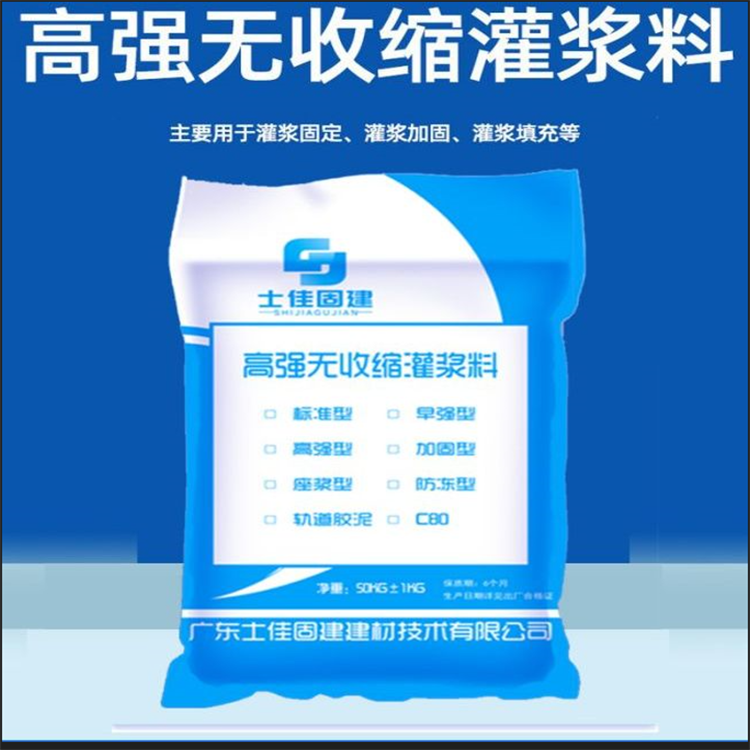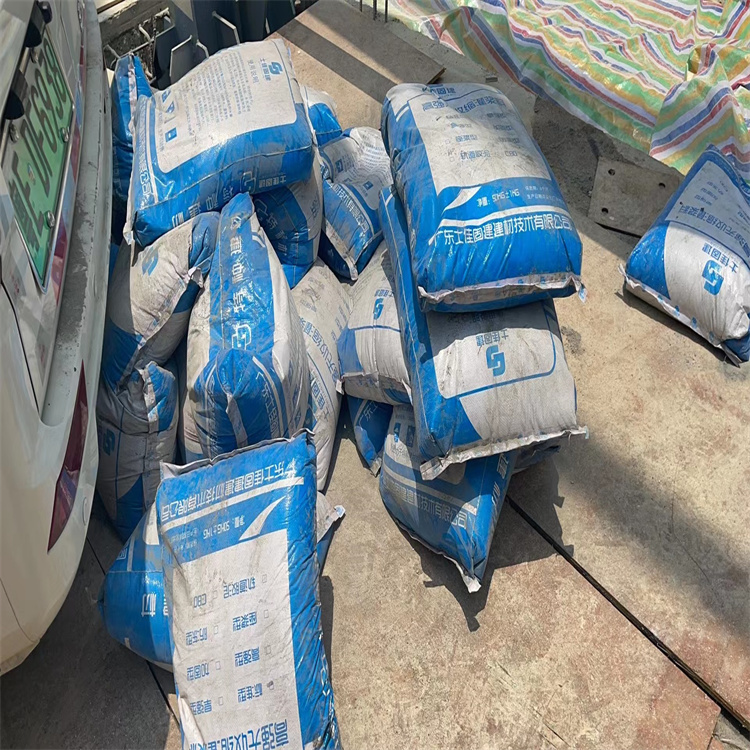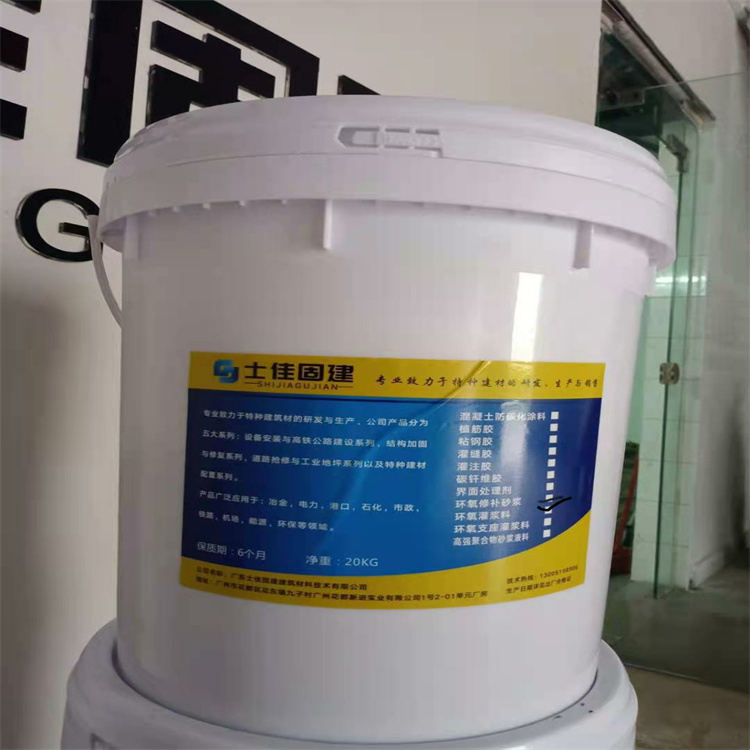
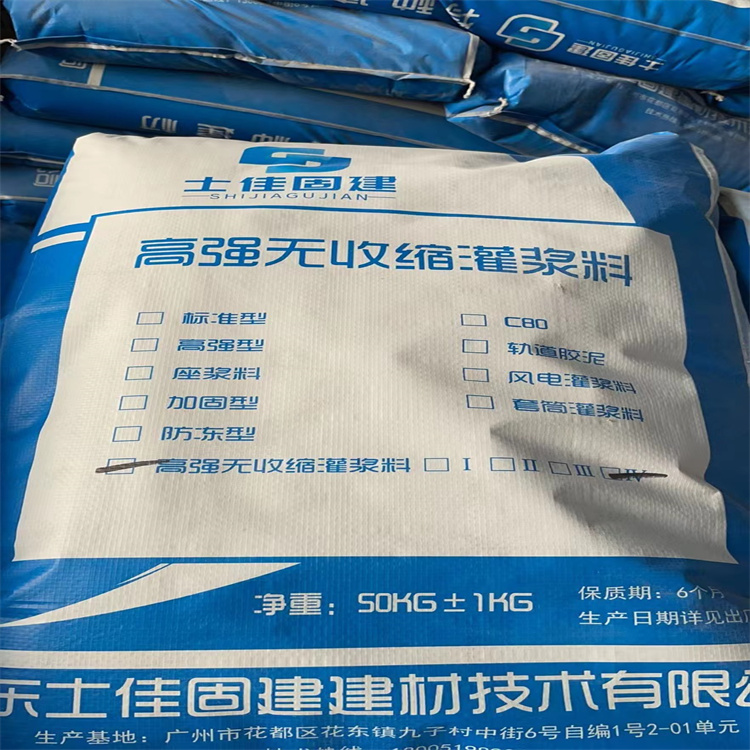
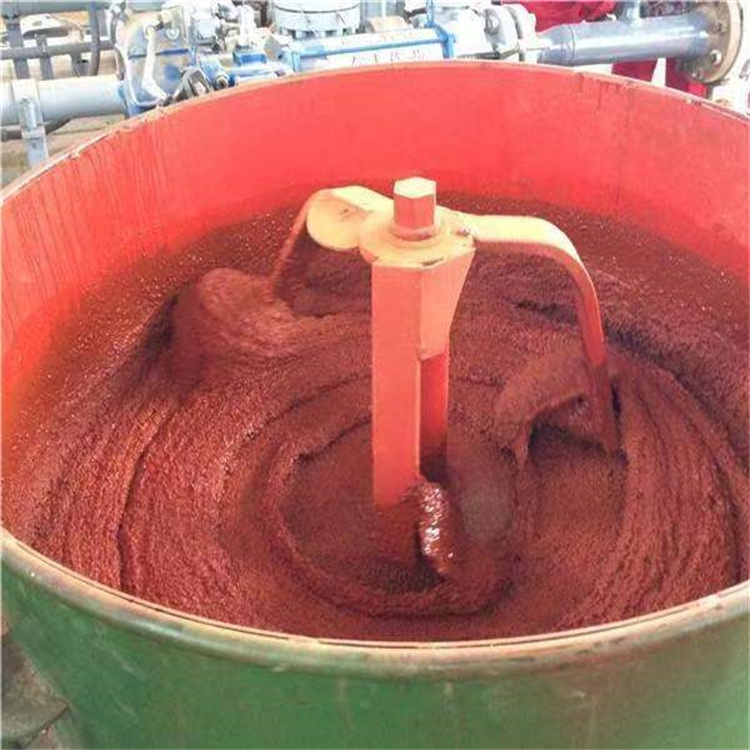
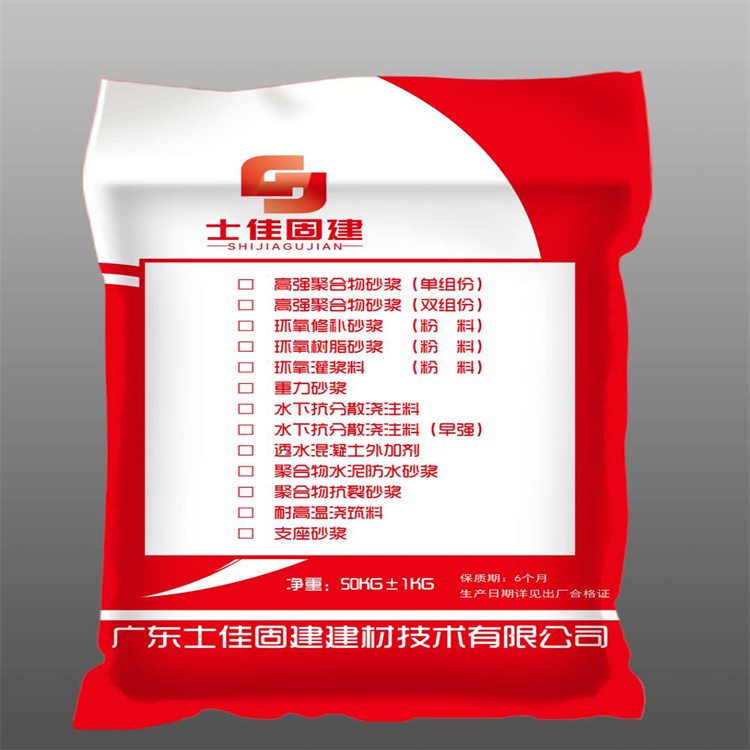

Guangdong Shijia Gujian Building Materials Technology Co., Ltd.'s High Strength Non-Shrink Grouting Material is mainly used for Road and bridge repairs, high-speed trains, expressways, water conservancy and hydropower projects, power plants, old building renovation and reinforcement, large machinery base materials, industrial flooring and wear-resistant series, etc.... (Complies strictly with the new national standards! Sample testing available!)
High-strength, Non-Shrink Grouting Material Product Features
1. Flowability greater than or equal to 300mm, allowing for even dispersion and free flow after casting. 2. Good self-sealing properties with excellent fluidity, non-dripping, non-segregating, and no need for vibration, as it can fill the casting area by its own weight. 3. Early high strength with high early strength, 1-day strength ≥ 30Mpa, 3-day strength ≥ 50Mpa, 28-day strength ≥ 60Mpa. 4. Micro-expansion grouting material uses composite expansion technology, featuring expansion before and after hardening, preventing settling shrinkage and water loss shrinkage in the grouting material, and preventing cracking and hollowing after casting, as well as reducing the effective bearing surface. 5. Durable as an inorganic mixture, resistant to corrosion and aging. Domestic studies show: no significant change in strength after 2 million fatigue tests, 50 freeze-thaw cycle tests, and strength significantly increased after soaking in engine oil for 30 days. 6. Environmentally friendly, harmless, non-corrosive to steel reinforcement, and non-polluting to water quality and surrounding environment. 7. Suitable for winter construction, allowing outdoor work at temperatures as low as -10°C.
Grouting material
High-strength, non-shrinking grouting material product applications
(1) One-time and second-time grouting for equipment foundations requiring high-precision installation. (2) Reinforcement embedding and anchor bolt anchoring in construction and geotechnical engineering. (3) Construction reinforcement and renovation projects, including beam-column joints, expansion joints, and construction joints. (4) Emergency repair construction for roads, bridges, tunnels, airports, etc. (5) Anchor construction for railway sleepers. (6) Column wet wrapped steel reinforcement for filling angle steel and column gap joints.
High-strength non-shrink grouting material recommended dosage
Reference dosage calculation is2.2 to 2.4 t/m3 basis, calculate the actual usage. It's because the grouting material has a high strength, far exceeding the strength that cement can achieve, and it also alters the shrinkage characteristics of cement during curing, hence the name "high-strength, non-shrink grouting material"!! There are different types of grouting materials, such as CGM, HGM, etc., which are determined based on different standards set by architectural research institutes. This does not represent the quality of the product; specific usage requires testing.
High-strength non-shrink grout application steps
1. Prepare mixers, grouting equipment, molds, and maintenance items, clean the grouting space, and pre-wet the concrete surface. 2. Set up molds and seal the joints with cement (sand) mortar and plastic tape to prevent leakage. 3. Add water to the grouting material at a rate of 12-15% of its weight and mix (mechanical mixing for 2-3 minutes, hand mixing for over 5 minutes). 4. Pour the well-mixed grouting material into the grouting area from one direction. Use bamboo sticks or steel rods for guidance if necessary, and gently vibrate or tap the mold. 5. After construction, immediately cover with plastic film and add straw mats or cotton blankets for damp curing for 3-7 days. 6. Use at temperatures between -10℃ and 40℃. Strictly prohibited to add any admixtures or external additives to the grouting material.
Unit DosageApproximately 2200 kg/m³. Note: The national standard specification for grouting materials, "GB50448-2008 Application Technology Specification for Cement-Based Grouting Materials," specifies compressive strength according to "GB177-85 Test Method for Compressive Strength of Cement Paste and Aggregate Mixture," and expansion rate according to "GB119-88 Application Technology Specification for Concrete Admixtures."