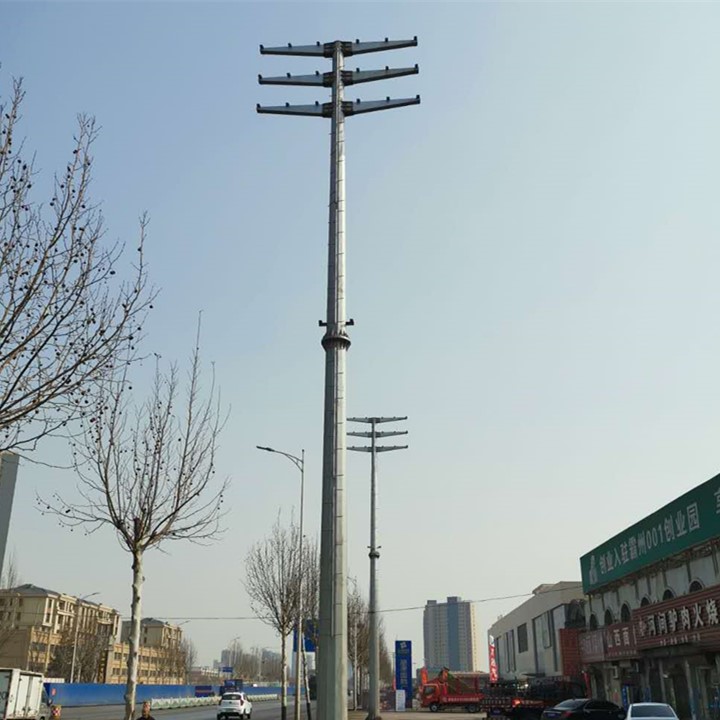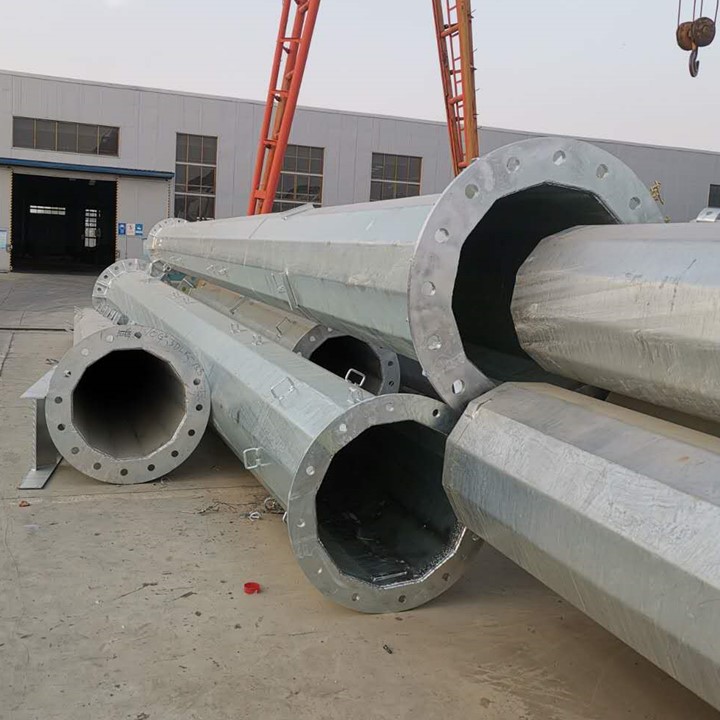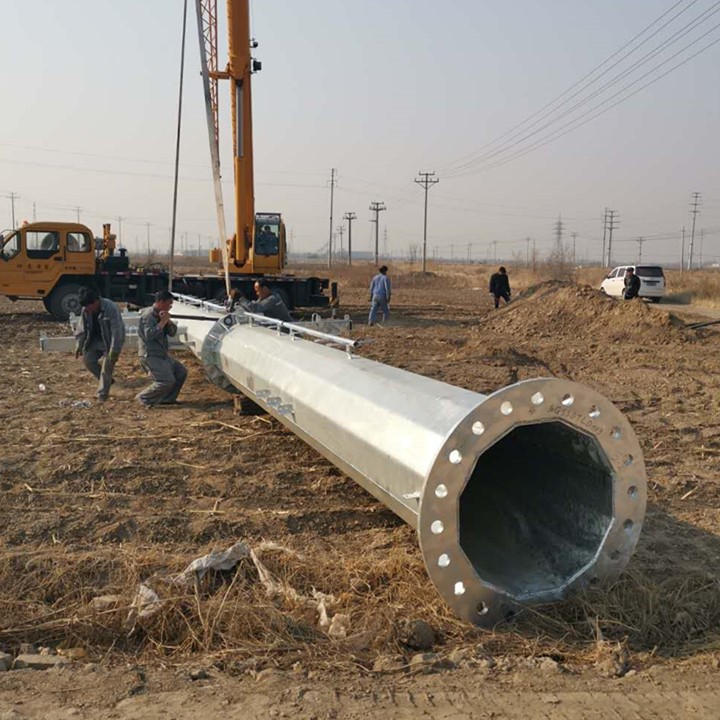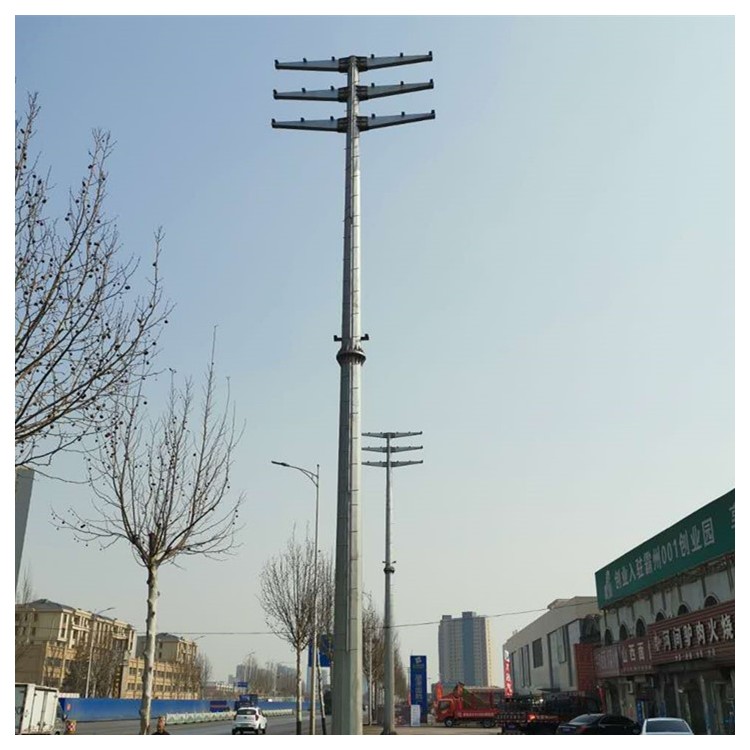










Power steel poles are a new type of power equipment for installing electrical lines that have emerged in recent years, serving as an alternative to traditional concrete pole electric wire poles.
Electric steel poles are made from steel materials such as polygonal steel tubes and round steel tubes. The main anticorrosion technique used is hot-dip galvanizing, along with hot zinc spray coating treatment. Electric steel poles are primarily used for electrical line installations, including the laying of high-voltage lines.
Advantages of electrical steel rods:
1. Electric steel poles occupy less land area
The small land footprint is a major advantage of steel poles, as traditional transmission towers and guyed towers both have the drawback of requiring a large area. Under today's market economy conditions, land prices continue to rise, making it increasingly difficult and costly to allocate land for transmission, especially in special areas like city centers where constructing towers is impossible. This is why steel poles have become the preferred choice for transmission line construction.
Steel poles occupy less land area, typically about 1/3 of a self-supporting steel tower, and the top dimensions of the steel poles are much smaller as well. Consequently, the required aerial line corridor is significantly reduced. Therefore, power steel poles generally meet various environmental requirements and can save a considerable amount of land costs.
2. The electric steel poles have an aesthetically pleasing appearance.
Aesthetically pleasing appearance is a major advantage of power steel poles. In today's society, with the surge of urban construction and transformation, the focus on the beauty and livability of cities has increasingly become a concern for residents. Consequently, the requirements for the construction of power line installations in urban settings have escalated, particularly for urban landscape roads where the standards are even stricter. Traditional iron towers are often insufficient to meet these requirements. However, steel poles are compact and visually appealing, offering these advantages that generally suffice to meet the criteria for beauty.
3. Easy and quick installation for electric steel poles
Constructing traditional steel towers requires a tower assembly process, whether it's a complete assembly or a segmented one; the construction period is roughly the same. In contrast, the construction of electric steel poles generally doesn't require the same assembly process as steel towers. It only needs to install the cross arms of the steel poles and then assemble them vertically. Relative to steel tower construction, steel pole construction is significantly faster. Typically, a construction crew can assemble about 10 poles per day under normal circumstances, whereas only 1.5 to 2 towers can be assembled in a day. This indicates that the construction speed of steel poles is five times faster than that of steel towers, thus shortening the construction period.
Electricity tower materials have historically been prone to loss, posing a major issue for the safe operation of transmission towers. Despite implementing certain preventive measures, such as installing anti-theft bolts below 6 meters, the problem of material loss still occurs occasionally. The steel poles, being constructed through overall insertion or flange connections, largely reduce the phenomenon of missing parts, effectively minimizing the potential for accidents.
Simultaneously, electric steel poles also have advantages such as short production cycle and high load-bearing capacity.